https://https://uk.trip.com/toplist/tripbest/recommend/dushan/best-things-to-do/10072354900000


Best Things to Do

Top 50 Best Things to Do near Dushan [2025]

Show All Photos
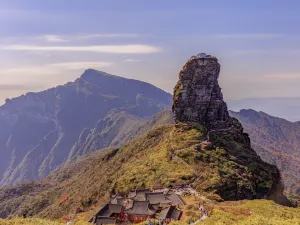
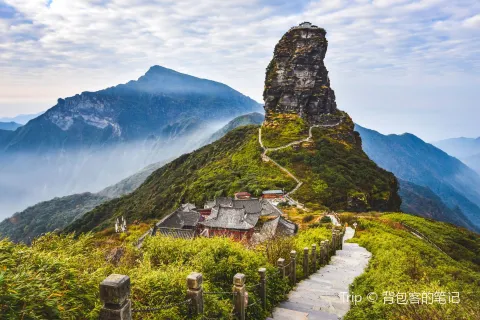
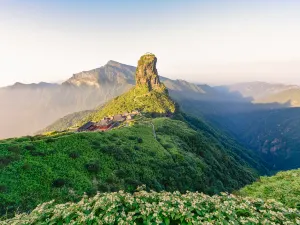
Mount Fanjing
4.5
/5
17810 reviews
9.0
From £10.93

Based on 81 reviews
>100 km from downtown
Phone +864009976999
Address: Fanjing Shan, Yinjiang, Tongren, China
Recommended sightseeing time: 0.5–1 day
Highlights:
Member of the UN-certified Biosphere Reserve Network
Climb to the top of Hongyun Golden Peak for panoramic views

Saved by 815 users12965 positive reviews
Verified user reviews



It's a 5-minute walk from the entrance to Fanjingshan Scenic Area! Very convenient. The room was south-facing and warm, and the bed was very comfortable! The owner was also very welcoming.
However, there's one issue I hope the owner will address: there was a strong smell of urine in the room that lingered for a long time! I don't know where it came from; it might be from the bathroom. I suggest the owner pay attention to this.
The scenic area is well-developed, and the shuttle bus stop at the East Gate is conveniently located. The staff are very friendly. With a well-planned itinerary, it's possible to visit two peaks in a day, but ultimately, it depends on the weather! 😄

Show All Photos

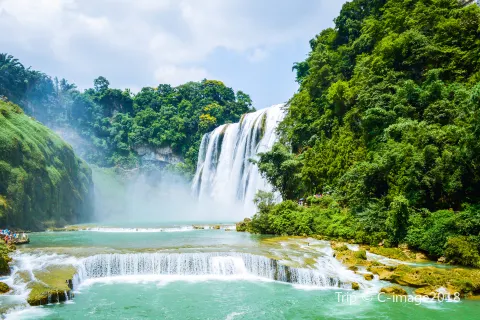
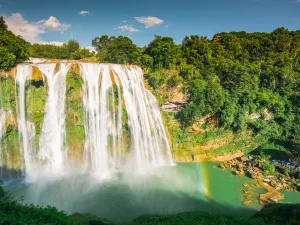
Huangguoshu Waterfall
4.6
/5
36111 reviews
8.9
From £27.86

Based on 635 reviews
Huangguoshu Waterfalls | >100 km from downtown
Phone +86085133592136
Address: Guihuang Highway (Huangguoshu Scenic Area), Huangguoshu Town, Zhenning Buyi and Miao Autonomous County, Guizhou Province
Recommended sightseeing time: 1 day
Highlights:
Experience the waterfall's majestic power as you pass through the Water Curtain Cave
Visit the filming location of the Water Curtain Cave from the 1986 version of Journey to the West
Saved by 740 users23363 positive reviews
Verified user reviews


The scenic area is well-developed with excellent facilities and services. The scenery is absolutely beautiful, and the waterfalls are breathtaking. However, climbing the waterfalls can be challenging for the elderly, so it's best to buy escalator tickets and walk slowly. Don't rush; the scenery needs to be appreciated at your own pace. Bring plenty of water! The only downside is that you have to walk through a sales area to exit.
Even during the dry season, Huangguoshu Waterfall remains magnificent, and Tianxingqiao Scenic Area is truly a must-see. The Silver Chain Waterfall is incredibly photogenic, and we even saw flowers at the Water Curtain Cave! It was definitely worth the trip. Although the walking distance within the scenic area is long, the paths are quite easy to follow, making it effortless even with parents.

Show All Photos
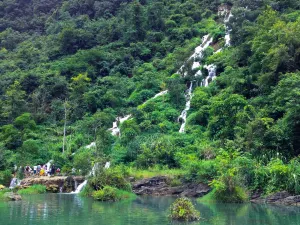
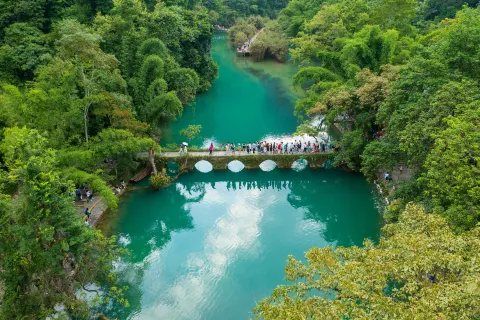
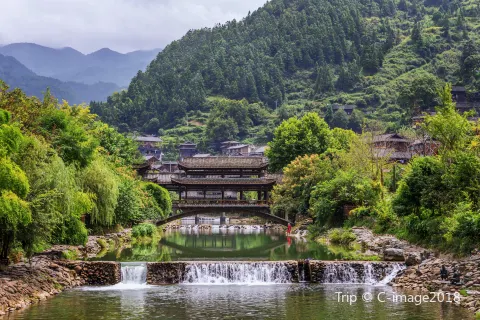
Libo Xiaoqikong Scenic Area
4.7
/5
22661 reviews
8.8
From £16.08
Based on 114 reviews
65.2 km from downtown
Phone +8608543516115
Address: Libo, Qiannan, Guizhou, China
Recommended sightseeing time: 0.5–1 day
Highlights:
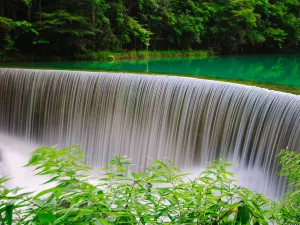
223-foot tiered waterfall spectacular
Seven-arch stone bridge spans river
Saved by 483 users16698 positive reviews
Verified user reviews
A truly worthwhile scenic spot. The various waterfalls are breathtaking and awe-inspiring; one visit is never enough. This trip was during the off-season, and with the rain, there weren't many tourists, allowing for a more thorough exploration. Xiaoqikong Scenic Area is undoubtedly one of the best in China. Perhaps due to the off-season, there were fewer activities, and relying solely on the natural scenery made it slightly less engaging. However, the scenic area has to consider costs, so this is understandable. I'll definitely come back in a different season.
The scenic area is beautiful. Early November is the perfect time to visit the water features, as the water level is consistent and doesn't disappear after a heavy rain like in summer. There are also fewer people then, making for a great experience. The scenic area is large, with ample shuttle buses and a well-designed layout. Daqikong and Xiaoqikong each possess a unique beauty.
No.
4

Show All Photos
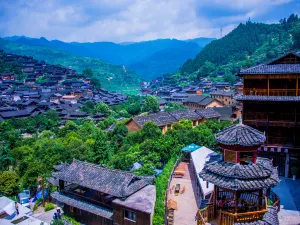
Xijiang Qianhu Miao Village
4.2
/5
23359 reviews
8.7
From £8.04
Based on 180 reviews
97.5 km from downtown
Phone +864001538866
Address: Nangui Village, Xijiang Town, Leishan County, Southeast Guizhou Miao and Dong Autonomous Prefecture
Recommended sightseeing time: 1–2 days
Highlights:
Observation deck overlooking over 10 mountain villages
Experience the Miao welcome wine ceremony and song and dance performances
Saved by 1008 users13605 positive reviews
Verified user reviews
This is a heavily commercialized tourist attraction, but the night view is still worth seeing. Several trendy cafes are located on the hill opposite the main commercial area. Wearing comfortable walking shoes will make the trip much easier.
A fantastic guesthouse experience! The location is incredibly convenient, the rooms are clean and hygienic, the facilities are complete, and the owner is warm and welcoming, even offering helpful travel recommendations. Definitely worth staying here! A truly satisfying trip.
No.
5


Show All Photos

Two Rivers and Four Lakes
4.4
/5
15733 reviews
8.5
Based on 551 reviews
Downtown/Elephant Trunk Hill/Two Rivers And Four Lakes | >100 km from downtown
Address: Wenchang Bridge Wharf, Liangjiang Four Lakes Scenic Area, Xiangshan District, Guilin City, Liberation Bridge, Six Horses Wharf, Riyuewan Wharf, Zhiyintai Wharf
Recommended sightseeing time: 1–2 hours
Highlights:
Underwater aquarium between twin towers
Osprey fishing & Yao performances
Saved by 1382 users4999 positive reviews
Verified user reviews


On our last night in Guilin, we took the Two Rivers & Four Lakes night cruise. The lights, reflections, and evening breeze made the city feel wonderfully gentle, giving our trip a perfect finale. A heartfelt thank you to Dylan from Trip.com for his prompt replies,
The night view was enchanting, and experiencing the two types of locks was fantastic. I arrived early, but the ticket inspector helped me change my ticket to an earlier departure if there were available seats. The fourteen bridges are all unique in design; pay special attention to the paintings and reliefs beneath the bridge surfaces.
No.
6


Show All Photos

Elephant Hill Scenic Area
4.5
/5
23688 reviews
8.5

Based on 1,301 reviews
Downtown/Elephant Trunk Hill/Two Rivers And Four Lakes | >100 km from downtown
Phone +8607732582112
Address: No. 1 Binjiang Road, Xiangshan District, Guilin City
Recommended sightseeing time: 1–2 hours
Saved by 1189 users8963 positive reviews
Verified user reviews
This was my first time visiting Guilin, and I found it to be truly beautiful. It's not far from other attractions, there are plenty of good restaurants nearby, and the photos I took there turned out beautifully. Highly recommended!
This is an iconic scenic place for a visit to Guilin. The place is quite crowded. The ticket is free. However, you can only buy one ticket for one person at one time.
No.
7

Show All Photos
Zhijindong Cave
4.7
/5
14846 reviews
8.3
From £13.93
Based on 53 reviews
>100 km from downtown
Phone +8608577812737
Address: Zhijin, Bijie, Guizhou, China
Recommended sightseeing time: 2–4 hours
Highlights:
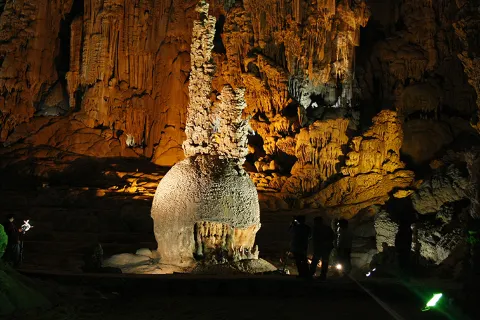
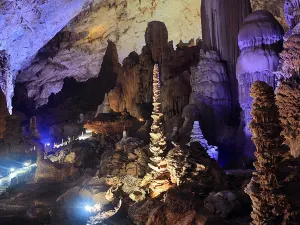
Diverse karst landscapes throughout cave
National 5A-level Global Geopark Scenic Area
Saved by 156 users11615 positive reviews
Verified user reviews

I've been to dozens of caves before, and I used to think they were all pretty much the same. The ones that impressed me the most were Huanglong Cave and Silver Cave. But I never expected that Zhijin Cave would far exceed my expectations. It is the most amazing cave I have ever seen!
It's very convenient to drive there; the roads are wide, and the underground parking lot is spacious and easy to park. There's a food street downstairs, and shopping malls are nearby. The rooms are large and clean, and there are many elevators, so even on higher floors, you won't have to wait long. Overall, the experience was excellent, and I would definitely consider coming back again.
No.
8

Show All Photos
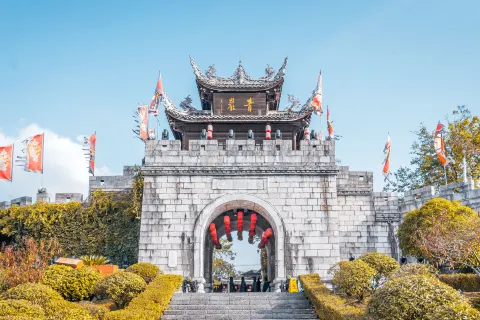
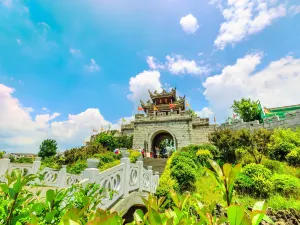
Solitary Beauty Peak Prince City Scenic Area
4.8
/5
22400 reviews
8.3
From £10.72
Based on 57 reviews
Downtown/Elephant Trunk Hill/Two Rivers And Four Lakes | >100 km from downtown
Phone +8617777366779
Address: No. 1 Wangcheng Road, Xiufeng District, Guilin City
Recommended sightseeing time: 3–4 hours
Highlights:
Hanfu exam simulation experience
Experience century-old mansion craftsmanship
Saved by 550 users17334 positive reviews
Verified user reviews


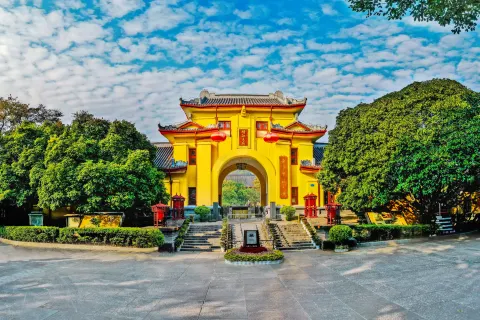
Jingjiang Prince City perfectly blends Guilin's natural beauty with its rich cultural heritage, allowing every visitor to appreciate the stunning scenery while deeply experiencing the profoundness of Chinese culture. Here, nature and humanity harmonize, history and modernity coexist—a place not to be missed. What surprised me most was the Imperial Examination Hall, the site of the ancient imperial examinations. Standing inside, I could almost see the scholars diligently writing their essays. It's especially suitable for taking photos in Hanfu (traditional Han clothing), creating a truly immersive atmosphere.
Duxiu Peak and Jingjiang Prince City Scenic Area, located in Xiufeng District, Guilin City, Guangxi Zhuang Autonomous Region, is a scenic tourist area rich in history and culture, covering an area of 283 acres.
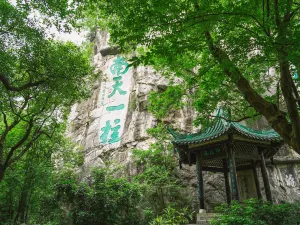
Duxiu Peak, along with Diecai and Fubo Peaks, forms a triad of mountains, one of the main peaks of Guilin, known as the "Pillar of the Southern Sky" and historically called the First Peak of Guilin. Rising abruptly, its shape is like a knife-cut hex, surrounded by other mountains, standing proudly like an emperor. Climbing 306 steps leads to the summit, the best viewing platform for panoramic views of Guilin. Located 1000 meters north of Diecai and 500 meters east of Fubo, it has an altitude of 216 meters, rising 66 meters above the plain, measuring 120 meters long and 50 meters wide, covering an area of 0.61 hectares. Surrounded by mountains in the distance, it resembles a courtier paying homage, creating a regal atmosphere of "a solitary peak not serving the other mountains," laughing at the surrounding peaks, and is known as the "Head of the Mountains, King of the Mountains." The cliffside inscriptions are scattered like stars, displaying a rich tapestry of history. Among them is the famous line, "Guilin's scenery is the best under heaven," which originated here.
The intangible cultural heritage of the Jingjiang Prince's Palace is "Prince's Palace Rubbings," pioneered by Zhu Zuojing, the fifth Prince of Jingjiang. Using color rubbing techniques, it stems from the study of the palace's stone inscriptions and boasts a 600-year history. The most representative rubbing, featuring the Five Blessings, was featured on CCTV's Spring Festival Gala.
No.
9
Show All Photos

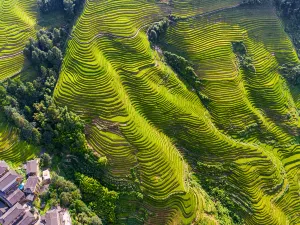
Longji Rice Terraces
4.5
/5
6966 reviews
8.2
From £8.58
Based on 954 reviews
>100 km from downtown
Phone +8607737583188
Address: Pingxiang Village, Heping Township, Longsheng County, Guilin City
Recommended sightseeing time: 1–2 days
Highlights:
Terrace views & cable car
Panoramic terraces view platform
Saved by 1814 users3969 positive reviews
Verified user reviews

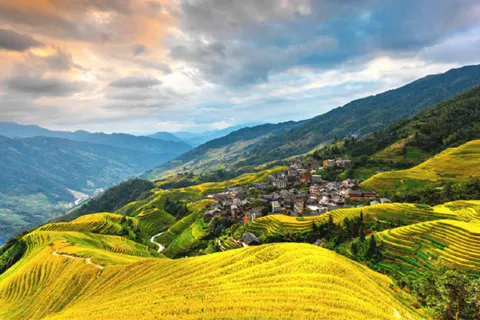
I came too late this time. April and May are for seeing the greenery, and September and October are for seeing the yellow. I came in mid-to-late November, so while there wasn't much left, it was still quite spectacular. Next time, I'll definitely come during the right season to see the beautiful scenery!
Visiting the Longji Rice Terraces in early November, it was drizzling. The rice was ripe, and the layers of golden rice fields, set against the backdrop of the misty rain, had a poetic beauty that made one marvel at the diligence and resilience of our Chinese ancestors.
No.
10
Show All Photos
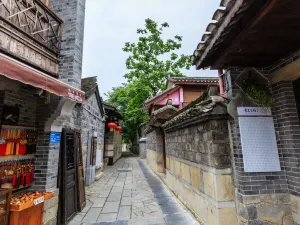
Qingyan Ancient Town
4.3
/5
9033 reviews
8.1
From £1.07

Based on 229 reviews
Qingyan Ancient Town | >100 km from downtown
Phone +864001169666
Address: Qingyan Town, Huaxi District, Guiyang City
Recommended sightseeing time: 2–4 hours
Highlights:
Cobblestone alleys: trendy photo spot
Upside-down stone lion arch from Qing
Saved by 464 users4869 positive reviews
Verified user reviews
I. Qingyan Braised Pig's Trotters
The braising liquid for these pig's trotters is made from over ten kinds of precious Chinese medicinal herbs, simmered over a low flame. After cooking, it's served with local specialty Shuanghua vinegar, creating a truly authentic Qingyan pig's trotter experience. The trotters are incredibly fragrant and tender, rich yet not greasy. Qingyan braised pig's trotters have a long history, dating back over a hundred years, and are also known as "Zhuangyuan Trotters" (Scholar's Trotters).
II. Huang Family Rose Sugar
Qingyan Huang Family Rose Sugar originated in Jiangxi and was introduced to Qingyan during the Kangxi period of the Qing Dynasty. It is made using a traditional Huang family recipe, now improved by Huang Linsheng, the tenth-generation inheritor. Using high-quality ingredients such as malt, glutinous rice, and rose petals, it undergoes thirteen meticulous processes with spring water. The result is a sweet and refreshing drink with the soft, chewy texture of malt and the delicate fragrance of rose honey, making it an excellent choice for tourist souvenirs.
III. Prickly Pear Glutinous Rice Wine
Prickly pears are a popular food, but their uses extend beyond just eating them directly; they can also be used to make wine. The people of Qingyan Ancient Town all know that wine brewed from prickly pears is exceptionally fragrant and mellow, with a unique flavor and texture. It is precisely because of this that prickly pear glutinous rice wine has become a major specialty of Qingyan Ancient Town, attracting a constant stream of visitors every year. Prickly pear glutinous rice wine not only tastes delicious but is also very beneficial to health. It is rich in various amino acids, vitamins, and active substances beneficial to human health, and has effects such as anti-cancer, anti-epidemic, cholesterol-lowering, and prevention of coronary heart disease.
IV. Qingyan Chicken Chili Peppers
Because freshly cooked chicken chili peppers don't taste as good as cold ones, they have now been developed into a convenient food product. Produced in bulk, customers can pick them up as they arrive, which is both convenient and quick, and the taste is even better than freshly cooked chicken chili peppers.
Besides the above-mentioned delicacies, Qingyan boasts many other unique and delicious snacks, such as Yangjia Salted Vegetables from the Ancient Town, Iced Yangmei (Chinese bayberry), Wooden Hammer Crisp, Guizhou Bull Demon King (a type of pastry), as well as Lao Tusi Filled Cake, Miwang Shanlan Crisp, Qingyan Tofu, Tofu Fruit, Tofu Balls, and many more, too numerous to mention.
V. Lao Tusi Filled Cake
This is a traditional Han Chinese snack from Guizhou, a customary food for the Qingming Festival. The history of making this cake dates back over 100 years, with many specialized stalls operating throughout Guizhou before and after the liberation. Early cakes were shaped like mooncakes, with fillings including ham, red bean paste, rose petals, and white sugar. They were pan-fried in a little lard over low heat until both sides were slightly golden brown, resulting in a fragrant, crispy, and sweet treat. Today, the varieties of cakes in Guizhou vary greatly depending on the fillings, and their flavors and shapes are also diverse.
VI. Wooden Hammer Pastry
Wooden hammer pastry is made by mixing cooked sugar syrup with roasted dried fruit, placing the mixture on a homemade work surface, and then quickly pounding it with wooden hammers by two strong men until it forms a thin, crumbly paste. It is then cut while still hot. It is fragrant, crispy, and sweet but not cloying. The dried fruit used is made from carefully selected green ingredients such as osmanthus, monk fruit, walnuts, peanuts, and sesame seeds.
I. Qingyan Braised Pig's Trotters
The braising liquid for these pig's trotters is made from over ten kinds of precious Chinese medicinal herbs, simmered over a low flame. After cooking, it's served with local specialty Shuanghua vinegar, creating a truly authentic Qingyan pig's trotter experience. The trotters are incredibly fragrant and tender, rich yet not greasy. Qingyan braised pig's trotters have a long history, dating back over a hundred years, and are also known as "Zhuangyuan Trotters" (Scholar's Trotters).
II. Huang Family Rose Sugar
Qingyan Huang Family Rose Sugar originated in Jiangxi and was introduced to Qingyan during the Kangxi period of the Qing Dynasty. It is made using a traditional Huang family recipe, now improved by Huang Linsheng, the tenth-generation inheritor. Using high-quality ingredients such as malt, glutinous rice, and rose petals, it undergoes thirteen meticulous processes with spring water. The result is a sweet and refreshing drink with the soft, chewy texture of malt and the delicate fragrance of rose honey, making it an excellent choice for tourist souvenirs.
III. Prickly Pear Glutinous Rice Wine
Prickly pears are a popular food, but their uses extend beyond just eating them directly; they can also be used to make wine. The people of Qingyan Ancient Town all know that wine brewed from prickly pears is exceptionally fragrant and mellow, with a unique flavor and texture. It is precisely because of this that prickly pear glutinous rice wine has become a major specialty of Qingyan Ancient Town, attracting a constant stream of visitors every year. Prickly pear glutinous rice wine not only tastes delicious but is also very beneficial to health. It is rich in various amino acids, vitamins, and active substances beneficial to human health, and has effects such as anti-cancer, anti-epidemic, cholesterol-lowering, and prevention of coronary heart disease.
IV. Qingyan Chicken Chili Peppers
Because freshly cooked chicken chili peppers don't taste as good as cold ones, they have now been developed into a convenient food product. Produced in bulk, customers can pick them up as they arrive, which is both convenient and quick, and the taste is even better than freshly cooked chicken chili peppers.
Besides the above-mentioned delicacies, Qingyan boasts many other unique and delicious snacks, such as Yangjia Salted Vegetables from the Ancient Town, Iced Yangmei (Chinese bayberry), Wooden Hammer Crisp, Guizhou Bull Demon King (a type of pastry), as well as Lao Tusi Filled Cake, Miwang Shanlan Crisp, Qingyan Tofu, Tofu Fruit, Tofu Balls, and many more, too numerous to mention.
V. Lao Tusi Filled Cake
This is a traditional Han Chinese snack from Guizhou, a customary food for the Qingming Festival. The history of making this cake dates back over 100 years, with many specialized stalls operating throughout Guizhou before and after the liberation. Early cakes were shaped like mooncakes, with fillings including ham, red bean paste, rose petals, and white sugar. They were pan-fried in a little lard over low heat until both sides were slightly golden brown, resulting in a fragrant, crispy, and sweet treat. Today, the varieties of cakes in Guizhou vary greatly depending on the fillings, and their flavors and shapes are also diverse.
VI. Wooden Hammer Pastry
Wooden hammer pastry is made by mixing cooked sugar syrup with roasted dried fruit, placing the mixture on a homemade work surface, and then quickly pounding it with wooden hammers by two strong men until it forms a thin, crumbly paste. It is then cut while still hot. It is fragrant, crispy, and sweet but not cloying. The dried fruit used is made from carefully selected green ingredients such as osmanthus, monk fruit, walnuts, peanuts, and sesame seeds.
1
2
3
4
5


About
Payment methods
Our partners
Copyright © 2025 Trip.com Travel Singapore Pte. Ltd. All rights reserved
Site Operator: Trip.com Travel Singapore Pte. Ltd.
Site Operator: Trip.com Travel Singapore Pte. Ltd.