Pop after Pop: Art around Us at National Gallery Singapore | Trip.com

Contents
- Pop after Pop: Art around Us — Discover Southeast Asia’s Largest Pop Art Group Exhibition
- See Pop from a Southeast Asian perspective
- Make an impact with PHUNK’s PEACE
- Step into the world of Life of Imitation
- Watch Pop come to life with KISS KISS KISS
- Expect the unexpected with How to Explain Art to a Bangkok Cock
- Look closer at Telah Terbit (Out Now)
- Discover Itak sa Puso ni Mang Juan
- Meet the unmistakable Pink Man
- Spot some of modern and contemporary art’s biggest names
- Keep looking beyond the exhibition galleries
- Why Pop after Pop belongs on your Singapore itinerary
- Go Big, Go Bold, Go Pop — Enjoy 30% Off!
Show more
Get ready to go big, bold and Pop.
From 11 December 2026 to 4 April 2027, National Gallery Singapore presents Pop after Pop: Art around Us, Southeast Asia’s largest Pop Art group exhibition. Bringing together over 200 artworks by more than 100 artists, the exhibition explores how artists transformed images, objects and experiences from everyday life into art.
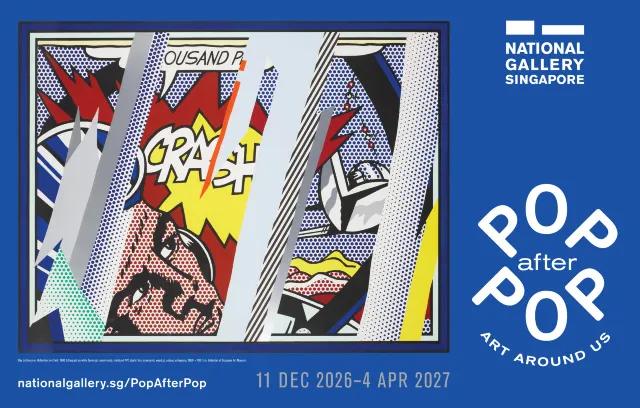
Organised by National Gallery Singapore in collaboration with the Solomon R. Guggenheim Foundation in New York, Pop after Pop brings together perspectives from Southeast Asia, the United States and beyond. Expect iconic works, larger-than-life installations and all things pop culture as the exhibition unfolds across Level 3 of the City Hall Wing and various locations throughout the Gallery.
Highlights include works by renowned artists such as Roy Lichtenstein (US), Andy Warhol (US), and Barbara Kruger (US), alongside leading Southeast Asian artists including Ming Wong (Singapore), Antipas Delotavo (Philippines), FX Harsono (Indonesia) and Manit Sriwanichpoom (Thailand).
Here’s a closer look at some of the works and ideas to discover.
Pop Art may often bring to mind the movement that emerged in Britain and flourished in the United States, but Pop after Pop broadens that familiar story.
The exhibition explores how Pop circulated internationally and how artists in Southeast Asia reinterpreted its vocabulary through their own popular and vernacular cultures. Imagery drawn from mass media, advertising and city life became material through which artists could respond to their own social changes, political realities and cultural contexts.
That makes Pop after Pop more than a showcase of familiar Pop imagery. By placing works from different places and periods alongside one another, the exhibition opens up new conversations around how everyday life can become art.
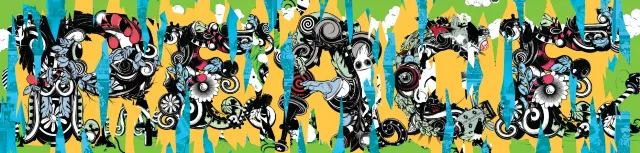
PHUNK. PEACE. 2026. Inkjet print on paper, ink and acrylic on printed sheet, mounted on wood, 1000 x 240 cm. Collection of the artist. Commissioned by National Gallery Singapore.
At an impressive 10 metres long, Singapore art and design collective PHUNK’s PEACE (2026) makes an impact through sheer scale.
Created using inkjet print on paper, ink and acrylic on a printed sheet mounted on wood, the work was commissioned by National Gallery Singapore.
Its monumental proportions offer a taste of an exhibition that moves beyond conventional framed works. Across Pop after Pop, visitors can encounter art in different media, formats and scales — from paintings and prints to installations and moving images.
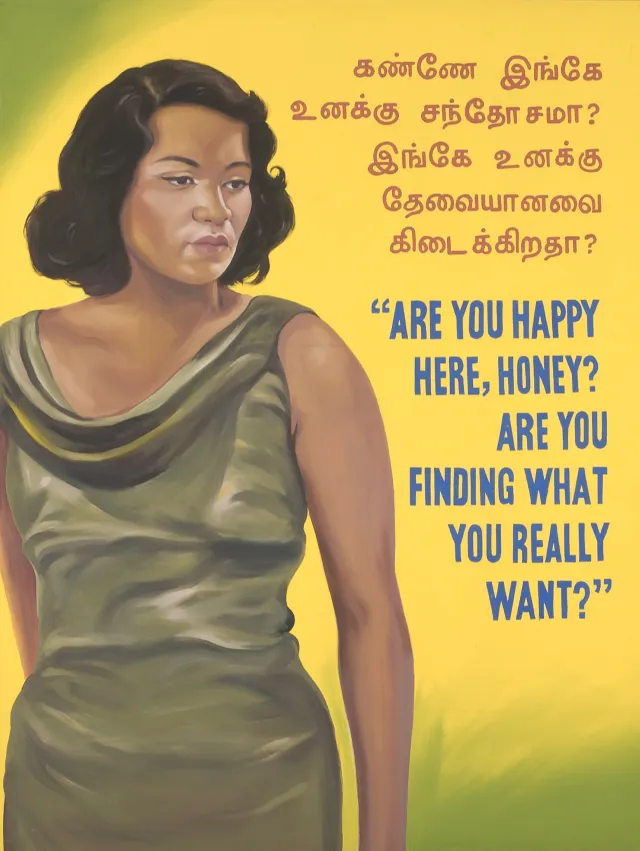
Ming Wong. Life of Imitation. 2009. Acrylic emulsion on canvas, 217 × 165 × 3 cm. Collection of Singapore Art Museum.
Singapore artist Ming Wong’s Life of Imitation (2009) is another work to look out for.
The large-scale acrylic emulsion painting measures 217 by 165 centimetres and belongs to the Singapore Art Museum collection.
Its inclusion forms part of the exhibition’s wider exploration of Southeast Asian artistic practices and the ways artists in the region engaged with popular and vernacular culture, adding new perspectives to the global story of Pop.
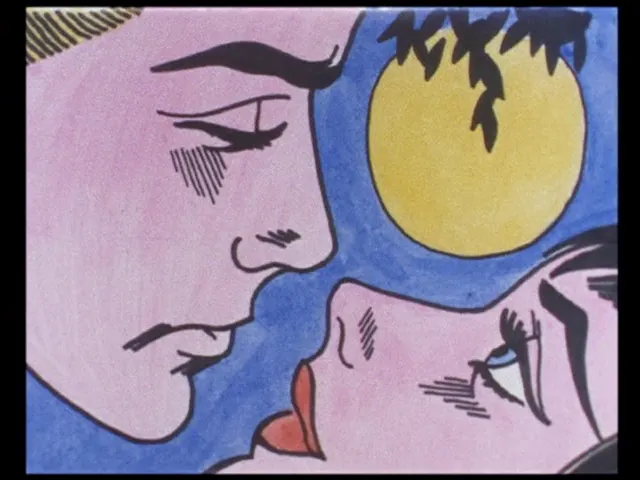
Tadanori Yokoo. KISS KISS KISS. 1964. Film, 16 mm, shown as video, single-channel, colour and sound (mono). 3 min. Production: Yokoo Tadanori, Director: Yokoo Tadanori, Photography: Furukawa Hajime, Hayashi Masamichi, Music: Akiyama Kuniharu, Sound: Shigenosuke Okuyama, Editing: Hiroko Moriya. Collection of Yokoo Studio.
Pop doesn’t have to stay still.
Tadanori Yokoo’s KISS KISS KISS (1964) is a three-minute 16mm film presented as a single-channel video in colour and sound.
Its inclusion reflects the variety of media found throughout Pop after Pop. Rather than defining Pop through a single look or format, the exhibition brings paintings and prints together with sculptures, larger-than-life installations, and other moving-image works.
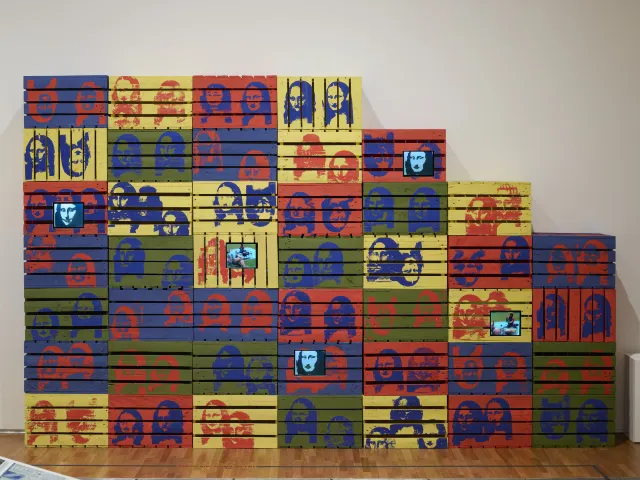
Apinan Poshyananda. How to Explain Art to a Bangkok Cock. 1985, remade 2019. Painted crates and LCD monitors; Video, 5 channels, each 4:3 format, colour and sound (mono), varying durations. Collection of National Gallery Singapore.
With a title like How to Explain Art to a Bangkok Cock, curiosity is almost inevitable.
Apinan Poshyananda’s work, first created in 1985 and remade in 2019, combines painted crates with five LCD monitors showing colour-and-sound videos of varying durations. The work is part of National Gallery Singapore’s collection.
The multimedia installation is another example of the different forms visitors can encounter throughout Pop after Pop, expanding the experience beyond the paintings and prints commonly associated with Pop Art.
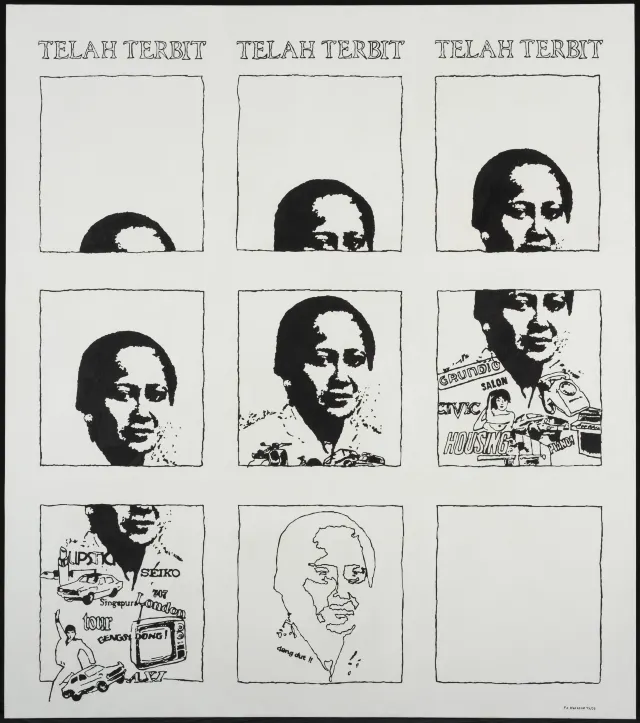
FX Harsono. Telah Terbit (Out Now). 1975, reconstructed 2006. Acrylic on canvas, 170 × 150 × 5 cm. Collection of National Gallery Singapore.
Indonesian artist FX Harsono’s Telah Terbit (Out Now) was created in 1975 and reconstructed in 2006. The acrylic-on-canvas work measures 170 by 150 centimetres and is part of National Gallery Singapore’s collection.
The work contributes to one of the exhibition’s most important conversations: the place of Southeast Asian artists within a broader understanding of Pop.
Rather than presenting the region simply as a recipient of ideas developed elsewhere, Pop after Pop examines how Southeast Asian artists actively reinterpreted imagery from mass media, advertising and everyday life through their own cultural and social contexts.
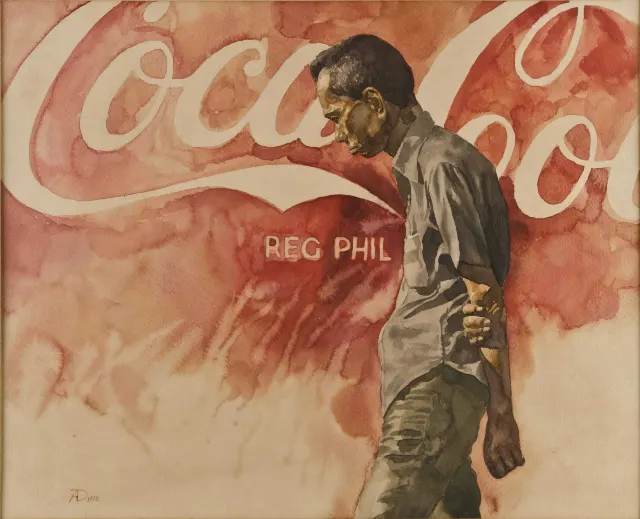
Antipas Delotavo. Itak sa Puso ni Mang Juan (Dagger at the Heart of Mang Juan). 1978. Watercolour on paper, 38.1 × 53.34 cm. Collection of Alexander A. Tee. © Handumanon ni Biboy (Antipas Delotavo). Courtesy of Tin-aw Art Management Inc.
Another work to look out for is Antipas Delotavo’s Itak sa Puso ni Mang Juan (Dagger at the Heart of Mang Juan) (1978).
Created in watercolour on paper, the work measures 38.1 by 53.34 centimetres and is part of the collection of Alexander A. Tee.
Seen within the wider context of Pop after Pop, the work contributes another Southeast Asian perspective to the exhibition’s exploration of how artists transformed imagery and experiences from the world around them.
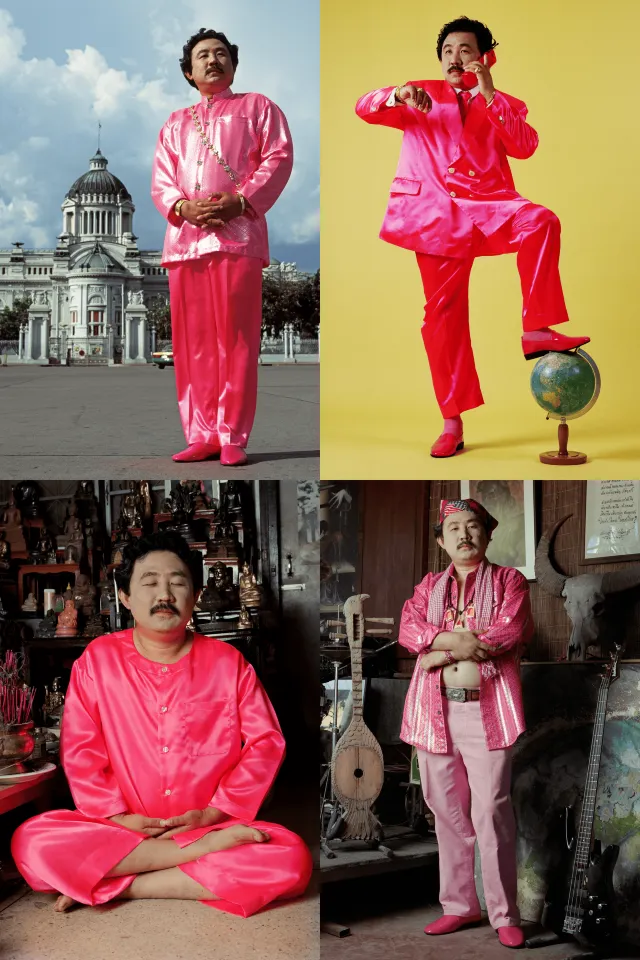
Manit Sriwanichpoom. Shocking Pink Collection: Globalizing Pink Man, Socialist Pink Man, Meditation in Pink, Pink Man Thai Hi-So.1998. Duratrans prints in light box, Editions 2/5 + 1 AP, 150 × 100 cm each. Collection of National Gallery Singapore.
Few figures featured in Pop after Pop are as immediately eye-catching as Manit Sriwanichpoom’s Pink Man.
The artist’s Shocking Pink Collection (1998) includes Globalizing Pink Man, Socialist Pink Man, Meditation in Pink and Pink Man Thai Hi-So, presented as Duratrans prints in light boxes. Each measures 150 by 100 centimetres and forms part of National Gallery Singapore’s collection.
Bold and unmistakable, the series adds another distinctive Southeast Asian voice to an exhibition exploring Pop’s global reach and the different ways its visual language has been interpreted.
There are plenty more names to look out for as you explore.
The result is an exhibition that moves between the familiar and unexpected, bringing different artistic practices together while revealing connections between Pop, popular culture and everyday life.
Don’t assume you’ve seen everything once you leave the main exhibition spaces.
Pop after Pop takes place across the City Hall Wing, Level 3, Singtel Special Exhibition Galleries 1 & 2, Special Exhibition Gallery 3, and various locations around National Gallery Singapore.
With artworks appearing beyond a single conventional exhibition space, exploring the Gallery itself becomes part of the experience.
You don’t need to be an art-history expert to recognise the world that inspired Pop.
Advertisements, movies, consumer goods, popular culture and mass media are all part of everyday visual life. Pop after Pop brings these ideas together on a major scale while expanding the conversation through perspectives from Southeast Asia, the United States and beyond.
Whether you come for the iconic names, larger-than-life installations or the chance to discover Southeast Asian perspectives on Pop, there’s plenty to explore across 200+ artworks by 100+ artists.
Ready to experience Pop after Pop: Art around Us?
Early Bird Offer: Starting from 1 October 2026, Singaporeans & PRs can enjoy 30% off All Access tickets (Standard & Concession) when purchasing tickets on Trip.com.
Check out this page from 1 October 2026 for the Early Bird offer and plan your visit to Pop after Pop: Art around Us.
The exhibition runs from 11 December 2026 to 4 April 2027 at National Gallery Singapore.
Tickets available on Trip.com and through authorised distributors.
Popular recommendations
The Best Things to Do in Ho Chi Minh City
 _marialina___