[5% Off] China Train Ticket Discount for New Users
24/7 Ticketing · 3-Minute Booking · E-Tickets
Great Wall of China Hikes: Routes, Difficulty & Trekking Tips


Trekking along the Great Wall of China is a world away from the typical visit of cable cars, viewing platforms, and photo ops. You go from walking along restored sections to navigating wilder stretches, complete with steep inclines, loose stones, and that incredible feeling of walking through history itself.
Many travellers in China don't even realise they can hike the Great Wall beyond the tourist hotspots. In reality, there are trekking routes for all levels, many of which are easily accessible from Beijing.
At Trip.com, we're here to help you choose wisely, because not every leg of the journey or every route is right for the same purpose.
🗺️ Where to Hike the Great Wall of China?
If you're wondering where to go trekking on the Great Wall of China, the first thing to understand is that there isn't just one single experience. Trekking on the Great Wall of China depends very much on the section you choose.
That said, each section has its own unique style. Let's take a look at the best Great Wall of China routes for hiking and what you can expect from each one.
💡 The Great Wall of China has an estimated length of 21,196 km (13,170 mi). Basically, you could walk across entire countries… and still have plenty of wall left to explore.
🔥 Jinshanling: A balanced and panoramic trek

If there's one section that everyone recommends, it's Jinshanling. And honestly, it makes perfect sense. For starters, the Jinshanling section of the Great Wall perfectly blends restored areas with more original, untouched sections. In short, you get the best of both worlds.
- Intermediate level, with constant but manageable climbs.
- Watchtowers every few minutes
- Open, crystal-clear views on sunny days
- One of the sections of the Great Wall of China with the best views
The best part is that you can walk for hours without feeling overwhelmed. Plus, it's not nearly as crowded as Badaling.
🥾 What to pack: bring water and some light snacks. There are no services along the route, so come prepared!
📌 Trip.com Tip: start early to avoid the tour groups and make the most of the soft light for your photos.
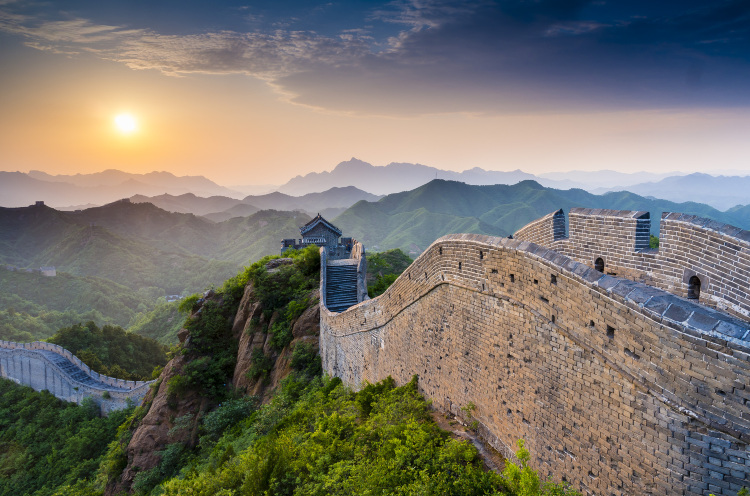
Jinshanling Great Wall
4.7/5
685 Reviews
 Business Hours:Address:Tips:Tips:Reasons to Recommend:Reasons to Recommend:Reasons to Recommend:jinshangling
£7
🏯 Huangyaguan: History, moderate inclines and fewer crowds
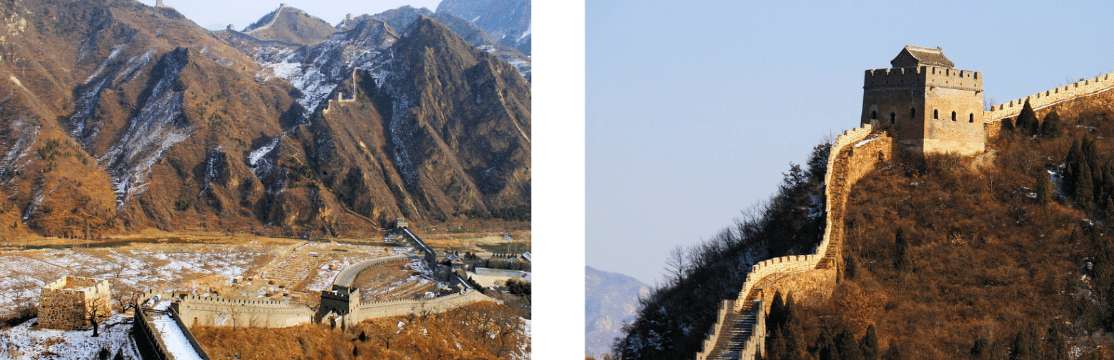
The Huangyaguan section of the Great Wall is that sweet spot many people are looking for without even realising it. It's not as touristy as other sections, but it's not extreme either. And that's the trick.
- A great balance between accessibility and authenticity
- Fewer visitors than in more popular areas
- Restored sections steeped in history
- Moderate incline, with some challenging stairs along the way.
Trekking in Huangyaguan has a more relaxed vibe, perfect for walking at your own pace and soaking up the historical details.
🥾 What to pack: comfortable footwear with good grip. There are sections with uneven steps.
📌 If you're a history buff, you'll find more information panels and interpretive areas here than in other sections.

Huangyaguan Great Wall
4.7/5
433 Reviews
 Lock away the fatigue from weeks of continuous overtime in your desk drawer, buy the next train ticket, and head in an unfamiliar direction. You don't need to go to a distant foreign land; just leave your familiar streets, and you'll stumble upon a completely different world. You can sit at a roadside stall and enjoy a bowl of local snacks, listen to the elderly chatting in a dialect you barely understand, and slowly stroll along a riverbank you've never walked before, watching the sunset paint the water with shimmering gold. Those worries that plague you in familiar surroundings simply find no place in this unfamiliar air. Traveling to a different place doesn't require you to have any sense of mission or force yourself to gain anything from the trip. It's simply about changing your surroundings and breathing different air. The world is vast, so go and see it. It's not about quitting your job to travel the world, but about leaving yourself an escape route in the daily grind, letting you know that beyond the mundane details, countless possibilities for relaxation await you. Even if you only go out for two or three days and come back, you'll find that those hurdles that once seemed insurmountable suddenly become much easier to overcome.
🧗 Jiankou: The wildest and most demanding section
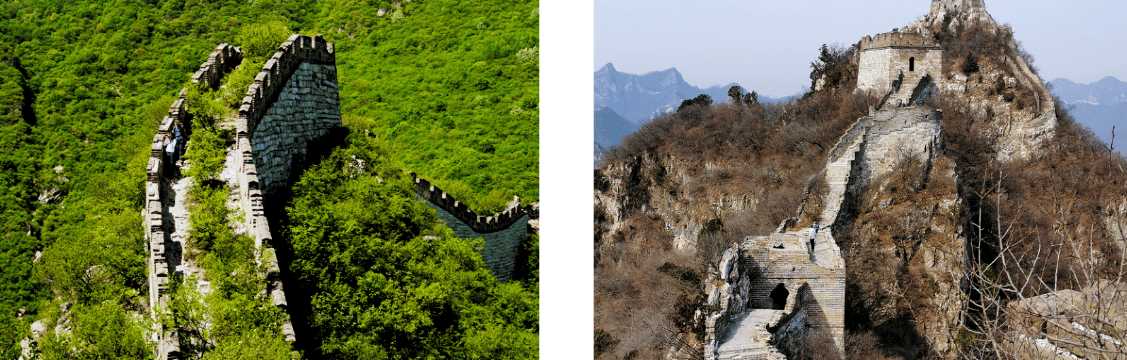
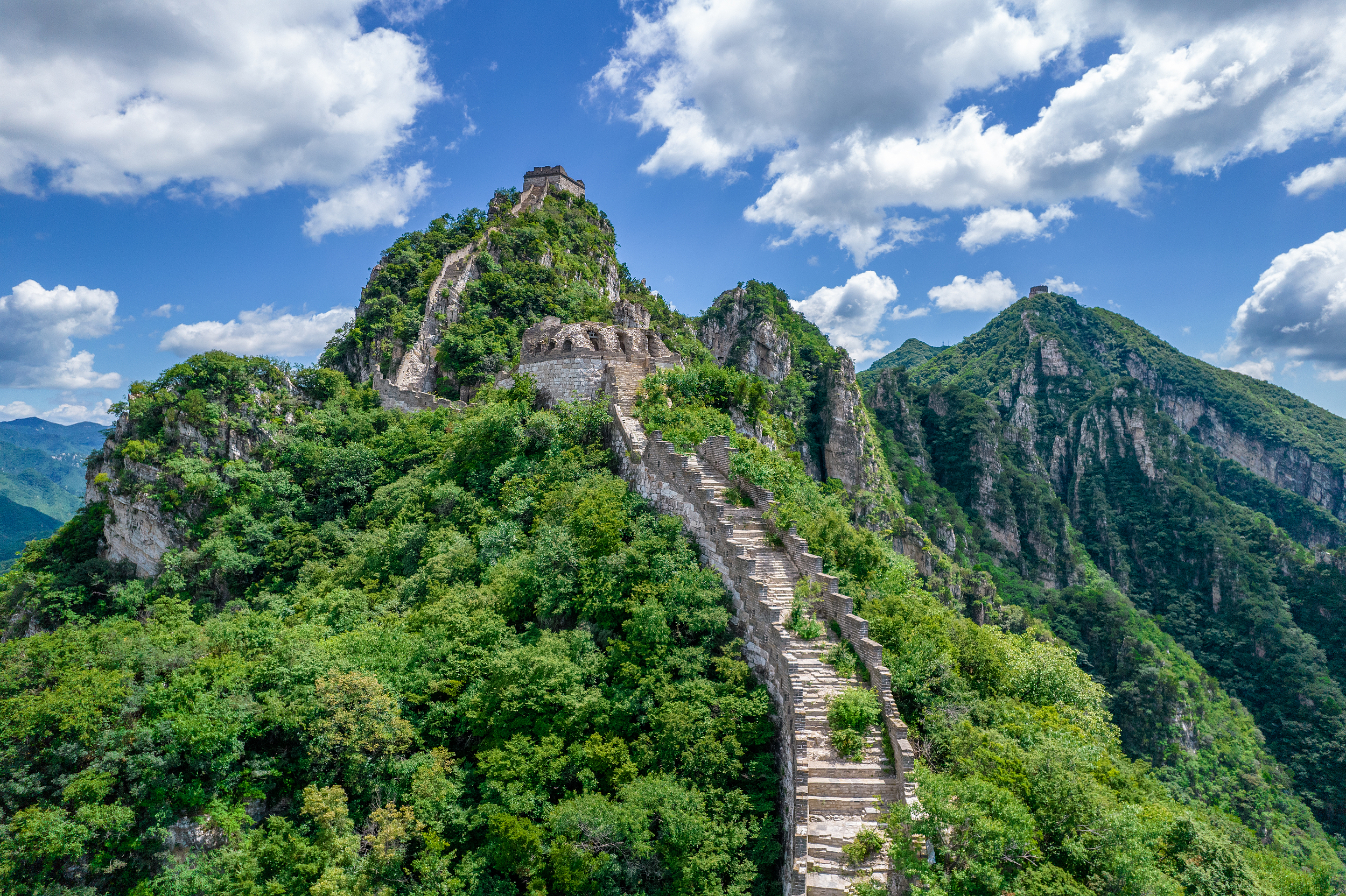
Jiankou isn't for everyone; ideally, you should have some previous hiking experience to tackle this stretch. It's probably the most famous section for photos… and also one of the toughest.
- Very steep climbs
- Ruined towers
- Narrow, unprotected paths
- Sections where you'll need to use your hands
It's a challenging trek along the Great Wall of China. But, of course, it's also the most spectacular one.
🥾 What to pack: trekking boots, plenty of water and, if you can, gloves for scrambling.
Jiankou Great Wall
4.7/5
19 Reviews
 Great Wall climbing on the top of hills and mountains. This is how can I describe the Jiankou Great Wall. Interesting location. It will text your physical fitness with frequent climbing up and down. That was the good time no doubt. I like it.
🪨 Yangbian and Futuyu: Authentic, off-the-beaten-path trekking

If you're looking for something a bit more off the beaten track, this is where things get interesting. Both Yangbian and Futuyu are prime examples of the 'wild' Great Wall in China.
And, of course, that implies a few things.
- Very few tourists around
- Long and challenging stretches
- Nature reclaiming the wall
- A complete sense of seclusion
There are no shops here, nor any clear signage. It's a much purer experience.
🥾 What to pack: food, water, and an extra battery.
📌 Top tip: go with a guide or use offline GPS.
🌄 Jinshanling to Gubeikou: A long and scenic route
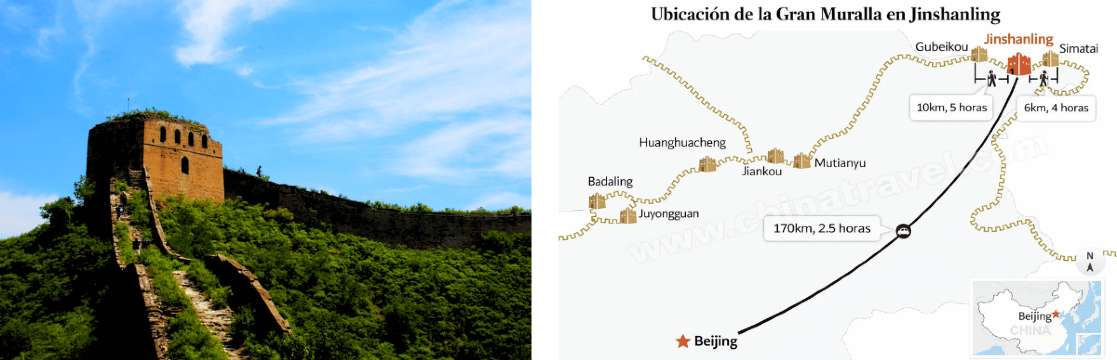
If you're more into a full-day adventure, the Jinshanling-Gubeikou Trek is probably your best bet. This section connects two less touristy areas, allowing you to explore a good stretch of the wall without any interruptions.
- Long route, between 6 and 8 hours
- Incredibly scenic, with ever-changing landscapes
- Restored sections and others that are completely original
- A powerful sense of flow
Here we're talking about a more comprehensive panoramic trek on the Great Wall.
Best Hiking Routes on the Great Wall of China
Section | Level | Experience | Estimated Time | Best For |
Jinshanling | Medium ⚖️ | Scenic and great for photos | 4–6 hrs ⏱️ | Intermediate hikers |
Huangyaguan | Medium ⚖️ | Historic and quieter | 3–5 hrs ⏱️ | Active travellers |
Jiankou | High 🔥 | Wild and challenging | 4–6 hrs ⏱️ | Experienced hikers |
Yangbian / Futuyu | High 🔥 | Remote and authentic | 5–8 hrs ⏱️ | Adventurous travellers |
Jinshanling – Gubeikou | Medium–high ⚖️🔥 | Long and scenic | 6–8 hrs ⏱️ | Full-day trekkers |
⏳ How Long Does a Great Wall of China Hike Take?

If you're wondering how long it takes to trek the Great Wall of China, the short answer is: it depends. Walking along a restored section with comfortable stairs is a completely different experience to tackling the wilder, steeper areas. In short, the time it takes to explore the Great Wall of China varies depending on the section, your pace, and how much of a challenge you're looking for.
To give you an idea:
Short trek (3–4 hours)
Perfect if you're looking for a first taste of the experience. These sections are usually accessible from Beijing, with manageable climbs and good signage.
Moderate route (4–6 hours)
Here, you're getting into more comprehensive routes. You'll combine restored and original sections, and you'll really start to feel the burn in your legs. This is the most common format for a one-day Great Wall trek.
Long route (6–8 hours)
This is on another level. More distance, more elevation gain, and fewer amenities. It's perfect if you're looking for a long trek along the Great Wall of China with non-stop views and fewer crowds.
Multi-day trekking (2–5 days)
It requires planning, logistics, and quite a bit of stamina. Here, you connect several sections and stay in rural areas or nearby accommodation.
Flights to Beijing
Hotels in Beijing
eSIM China
See all flights


 NO.1












🧱 Restored vs Wild Sections of the Great Wall: Which to Choose?
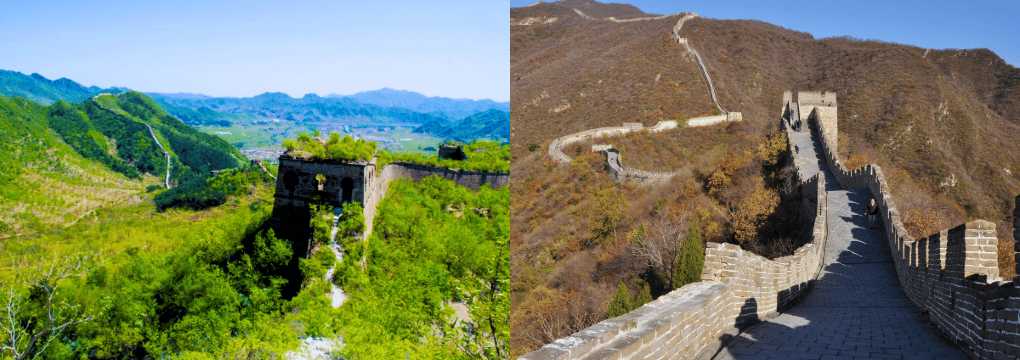
If you're torn between the restored wall and the wild wall, here's the lowdown, because they are two completely different experiences. And, of course, choosing the right one will completely change your trekking adventure. To start with, the restored Great Wall is the more accessible option. Expect stable paths, reconstructed stairs, and clear signage. On the other hand, the wild Great Wall offers more authentic terrain, but it's also much more demanding.
Restored sections
- Safer and more stable terrain
- More tourists around
- Easy access from Beijing
- Perfect for beginners or those short on time
The wild Great Wall
- Loose stones and crumbling sections
- Narrow paths and uneven terrain
- Far fewer crowds
- A real sense of adventure
Mind you, the wild wall is no walk in the park. It requires sturdy footwear, a bit of experience, and a sensible head on your shoulders. It all depends on what you're looking for: comfort and easy views, or an authentic Great Wall trek that truly feels like an adventure.
📱 Get your instant China eSIM with 5% off
🎡 Get 5% off & save up to £2 on your first Beijing Attractions & Tours booking!
Discover how to get to the Great Wall of China from Beijing
🥾 Great Wall of China Hiking Difficulty: Choose the Right Route

This is where a lot of people get a little confused. Because the difficulty of trekking the Great Wall of China isn't just about the kilometres; it's much more about the terrain, the elevation gain, and how well-preserved the sections are.
Between uneven stairs, unforgiving slopes, and rather worn-out sections, the effort required varies significantly from one route to another. To help you see it clearly at a glance, here is the trekking level for the Great Wall based on experience:
Level | Type of Terrain | What to Expect | Best For |
🔥 Active beginner | Restored or partly restored | Stable steps, moderate inclines, easy access | Travellers with a good basic fitness level |
🔥🔥 Intermediate | Mixed (restored + original) | Longer sections, steady climbs, fewer crowds | Regular hikers |
🔥🔥🔥 Advanced / technical | Wild Great Wall | Ruins, loose stones, narrow and demanding paths |
🍂 Best Time to Hike the Great Wall of China

Choosing the right time makes all the difference to your experience. Without a doubt, the best time to visit the Great Wall of China is usually spring or autumn. That said, every season has its own unique charm.
Season | Weather | Benefits | Drawbacks |
🌸 Spring | Smooth | Flowers, great visibility, and pleasant temperatures | More visitors on public holidays |
☀️ Summer | Hot and humid | Green scenery | Intense heat, humidity, and storms |
🍂 Autumn | Cool and dry | Better light, clear skies, autumnal colours | High demand for popular dates |
❄️ Winter | Very cold | Fewer crowds, a different vibe | Ice, wind and harsh conditions |
Discover fascinating attractions in Beijing
See all attractions


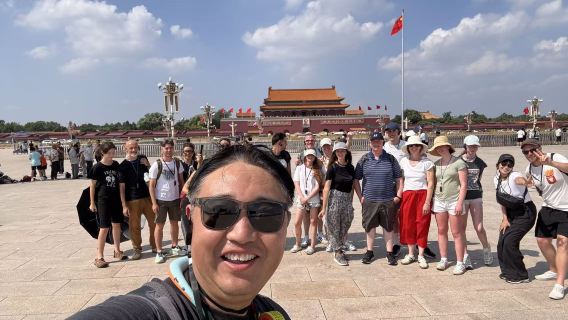



🚗 How to Get to Great Wall Hiking Routes from Beijing

If you're wondering how to get to the Great Wall from Beijing, here's the part that many people underestimate. It's not just about choosing a route; you also need to get your transport sorted out properly.
Because, let's be honest, not all areas are equally well-connected. Some are relatively easy to reach, while others require a bit more logistical planning.
🚐 Ways to get to the Great Wall from Beijing
To get you started, here are the most popular ways to organise your Great Wall trek from Beijing:
Private transfer or car with driver
- The most convenient option, hassle-free
- You'll be picked up from your hotel and dropped off at the start of the trek.
- Perfect for routes like Jinshanling or Gubeikou
Organised tours
- These include transport, a guide, and sometimes food.
- Super handy if you want to sit back, relax, and not worry about a thing.
- They usually head to Jinshanling, Mutianyu, or a combination of different sections.
Taxi or Didi (the Chinese equivalent of Uber)
- It works well for short distances.
- More challenging for remote routes (low return)
Taxis in China: best apps for foreigners and Uber-style options
⏱️ Accessible routes in about 2 hours
If you'd rather keep things simple:
- Mutianyu
- Badaling (less recommended for trekking)
Come on, these are the easiest options if you're short on time or just looking for something simpler.
🏔️ Stretches that require a 3–4 hour drive
Now, this is where things get interesting:
- Jinshanling
- Gubeikou
- Jiankou
And of course, this is where the real trekking begins. Fewer people, more nature… but also more planning.
📌 Top tip: set off early from Beijing, around 6–7 am, to make the most of your day and beat the traffic.
🧭 When it's worth booking a guide and transport
To be honest, it's not always necessary, but there are definitely clear cases where it is:
- If you're heading to Jiankou or any of the wilder sections
- If you're looking to tackle long-distance hikes like the Jinshanling to Gubeikou route
- If you're not too confident with apps or the local language
And here's one thing you should know: some entrances aren't signposted, so you might waste time trying to find your way in.
✈️ Book your flight + hotel in Beijing at the best price on Trip.com and organise your trek along the Great Wall of China, so everything is ready before you travel.
❓ FAQ – Great Wall of China Hiking
-
What is the best trekking route on the Great Wall of China?
-
Which part of the Great Wall is the most challenging?
-
Can you hike the Great Wall in a day from Beijing?
-
What is the best time of year to hike the Great Wall?
-
Is it safe to hike the wild (unrestored) sections of the Great Wall?
-
Do I need a guide to hike the Great Wall?
-
Can you camp on the Great Wall?
🧩 More Travel Guides
Great Wall of China: Tickets & Guide
Explore the Great Wall of China with tips on tickets, maps, top sections like Badaling & Mutianyu, history, travel advice, and the best time to visit.
October 6, 2026
Best Time to Go to the Great Wall of China: Weather, Scenery & Crowds
Discover the best time to visit the Great Wall of China based on weather, crowds and scenery. Plan your trip by season, time of day and travel style.
October 6, 2026
Discover the Best Sections of the Great Wall of China: Which One to Visit?
Explore the best sections of the Great Wall of China near Beijing, including Mutianyu, Badaling and Jinshanling, and choose the right one for your trip.
October 6, 2026
Great Wall of China Hikes: Routes, Difficulty & Trekking Tips
Discover the best Great Wall of China hikes near Beijing. Routes, difficulty levels, timings, and tips for choosing between wild and restored sections.
October 6, 2026
Where to Stay Near the Great Wall: Best Areas, Hotels & Attractions
Where to stay near the Great Wall? From Badaling to Jinshanling, find the best hotels, areas, and tips – for families, couples, or backpackers.
October 6, 2026
Top Things to do in Beijing: Best Activities & Must-Sees
Discover the best things to do in Beijing: top activities, vibrant neighbourhoods, local culture, and must-see attractions to make the most of your stay.
October 6, 2026
Universal Studios Beijing: Tickets & Guide
Explore the must-visit attractions of Universal Studios Beijing, grab cheap Universal Studios Beijing tickets, and find everything you need to know!
October 6, 2026
Summer Palace: Tickets & Guide
Plan your visit with Summer Palace tickets, opening hours, route map, history, and top sights. Find the best time to go and explore Beijing’s iconic palace easily.
October 6, 2026
Temple of Heaven: Tickets & Guide
Book discounted tickets to the Temple of Heaven! See maps, opening hours, how to get there and must-see highlights for travellers.
October 6, 2026
Beijing Metro: Map, Lines, Fares, Usage & Ride Guide
Beijing metro map, operating hours, lines, ticket fares, payment methods, riding & hotel tips for easy travel in China's capital. Perfect for first-time visitors!
October 6, 2026
Where to Stay in Beijing: Best Areas, Hotels & Attractions
Where to stay in Beijing? Explore top areas, hotels and attractions, including the Forbidden City, Qianmen, Wangfujing and historic hutongs like Nanluoguxiang.
October 6, 2026
Best China eSIM (with VPN) from £0.44
Find the best China eSIM plans, compare providers, learn how eSIM works, where to buy, setup steps, traveller reviews, FAQs, and tips for using eSIM in China.
October 6, 2026
What to Buy in Beijing: Souvenirs, Shopping Areas & Tips
Find the best souvenirs to buy in Beijing, top markets and shopping areas, what to avoid, useful apps, and practical tips for a smooth shopping experience.
October 6, 2026
Disclaimer: This article has been provided by an individual contributor or third party platform. If there is any discrepancy regarding the copyright, please contact us directly and we will delete the content immediately.
Trending Searches
-
Travel guides