
Things to do in Binyang
Explore top experiences
Top 10 attractions in Binyang

Binzhou Ancient Town
Formerly known as "Luwei Ancient Town", the ancient city of Binzhou is one of the four ancient towns in Guangxi and the political, economic and cultural center of Binyang County. The ancient city of Pennsylvania has been a famous commercial port since the Ming and Qing Dynasties, and now the handicraft workshops are even more developed. Every year on the 11th of the first lunar month of the lunar calendar, the "Cannon Dragon Festival" is an important festival in Luwei Ancient Town. At that time, everyone put on old clothes and threw firecrackers at the dragon dancing in the street until only the skeleton was left. Pass under the belly of the dragon to pray for good luck.Binyang · 2.8km from downtown


Qingxiu Mountain
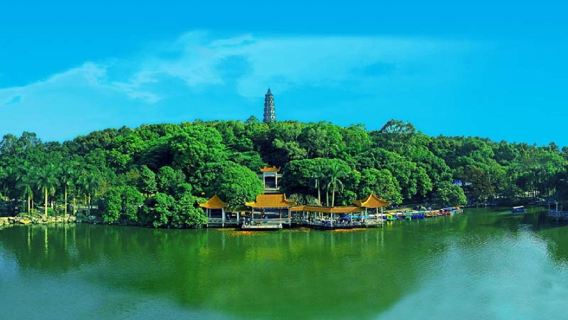
Qingxiu Mountain is one of the famous scenic spots in Nanning and is located on the banks of the Yongjiang River. Qingxiu Mountain has more than a dozen foothills such as Qingshan and Fenghuangling. Here, you can visit the Longxiang Pagoda, look out over the landscapes. Or you can stroll through the park and admire different kinds of flowers. In springtime, this is a great place to enjoy flowers blooming, especially peach blossoms on Peach Blossom Island.Nanning · 63.9km from Binyang

Great Sage Mountain
Binyang · 45.7km from downtown

Kunlun Pass
Kunlun Pass has been a battleground for military strategists since ancient times. The mountains here are dangerous, and the peaks of the east and the west are confrontational. There have been many battles in history, and the battle of Kunlun Pass took place here. There are many historical sites here, and it is a good place to visit the ancient and red tours. The Kunlun Pass is mainly to climb on foot, along the stone steps all the way up, surrounded by green forests, great inscriptions and arches can be seen everywhere. There is also a Kunlun Pass Battle Museum on the mountain, which displays many weapons and other weapons during the campaign period.Nanning · 19km from Binyang

Detian Transnational Waterfall Scenic Spot
The Detian Transnational Waterfall Scenic Spot is located on the upper reaches of the Guichun River along the China-Vietnam border in Guangxi. Here, the boundary river meets a cliff, cascading down in three tiers with a width of over 200 m and a drop of more than 70 m, facing Vietnam's Ban Gioc Waterfall across the cliff. During the rainy season, the two waterfalls nearly merge into one, and their roar can be heard across the valley. This site also served as a filming location for the TV series The Journey of Flower. The highlights of the visit mostly revolve around this border river: after passing through the Detian memorial archway, known as the "transnational gate," you can take a bamboo raft from the shore to the foot of the waterfall, looking up as the curtain of water crashes down from the cliff top, with mist spraying onto your face—effectively "traveling abroad" on the border river. On the river, you'll often encounter Vietnamese locals paddling small bamboo rafts to sell coffee, dried fruit, and other goods, and the haggling adds a fun cross-border market vibe. After disembarking, follow the waterfall-viewing boardwalk and multi-level observation decks to admire the waterfall's full panorama from different heights. Boundary markers No. 53 (erected during the Qing Dynasty and inscribed with "Guangxi, China") and No. 836 are popular photo spots. Along the boardwalk, you'll also find Detian Temple, built by villagers in the 1980s to commemorate the Zhuang historical figure Nong Zhigao—worth a quick visit. The waterfall view varies significantly with water volume: during the summer peak season, the water is torrential and awe-inspiring, while it appears more delicate in the dry season; the bamboo raft dock has long queues in peak season, so it's advisable to arrive early for a close-up view of the waterfall; the rafts get quite misty, so remember to waterproof your phone and camera.China · Daxin

Weizhou Island
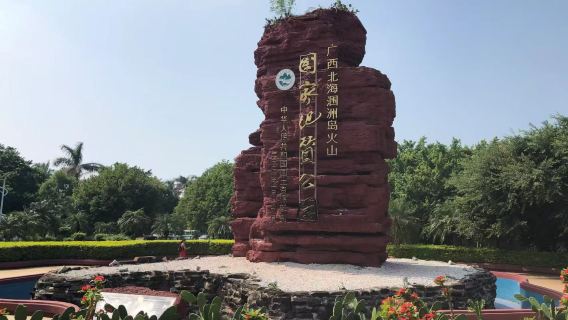
Weizhou Island is located in the southern part of Beihai. It is a large extinct volcanic island in China. Many people choose it as a graduation trip destination. The volcanic rocks in the Crocodile Mountain Attraction, the sea erosion landscape of Dishui Danping, the beaches with different styles, and the beautiful sunrise and sunset are all the charms of Weizhou Island. For food lovers, the delicious seafood is not to be missed. Island beauty: Various volcanic rocks Traces of volcanic rocks can be seen everywhere on the entire Weizhou Island, and the Crocodile Mountain Attraction is the essence of the volcanic geological landscape of Weizhou Island. Here you can see the crater of Weizhou Island, volcanic lava in various shapes and forms, and the peculiar landforms formed by volcanic eruptions. You can also take photos with the Weizhou Lighthouse. Beaches with different styles Weizhou Island is surrounded by the sea, and each beach has its own style. Dishuidanping has a large area of sea cliffs, with layers of rock textures and continuous dripping, and is also a place to watch the sunset on the island; Shiluokou Beach has a variety of water sports; Wucai Beach has a unique geological landscape and is also a good place to wait for the sunrise; Shell Beach is relatively primitive, quiet and beautiful. Long-standing religious culture In addition to beautiful scenery, Weizhou Island is also rich in cultural heritage. The Catholic Church is very old and still solemn and sacred. Not far away is a quiet and simple Church of Our Lady. There are also many residents on the island who believe in Mazu. The Sanpo Temple (also known as Tianhou Temple) in Nanwan is still popular today. Popular Experiences: Enjoy the gorgeous sunrise and sunset at the seaside Weizhou Island has many geological wonders and its beaches are clear and flat. No matter where you are on the island, the sunrise and sunset here are unforgettable. Shell Beach and Wucai Beach on the east side are popular sunrise viewing spots on the island. Tourists usually choose to wait for the rising of the red sun here at four or five in the morning. Dishui Danping and Shiluokou Beach on the west side are good locations for watching the sunset. Enjoy a variety of water sports In addition to the scenery, Weizhou Island is also a paradise for water sports. Among them, the activities near Nanwan Beach are more abundant, including jet skis, sea fishing, etc. It is also a popular diving spot on Weizhou Island. The suitable diving time is from 9:00 to 16:00. There are also fishermen who provide fishing projects at sea at Shell Beach. Enjoy a leisurely bike ride around the island Weizhou Island is not very big, and the transportation on the island is mainly bicycles and electric vehicles. There are car rental points near the docks where you land on the island. The colorful highway on the east coast is a famous ring road on Weizhou Island. It is black asphalt in the middle and red asphalt on both sides, which is very beautiful. The sea view along the way is very pristine. Whether you walk or rent a bicycle or electric bike, it is a very good experience. Recommended route: When visiting Weizhou Island, you will usually stay for one night. The recommended routes are:On the same day: Crocodile Mountain Attraction- Nanwan Ocean Sports Park - Dishui Danping - Nanwan Street; the next day: Wucai Beach - Catholic Church - Shiluokou Beach - Shell Beach”. Start to the Crocodile Mountain Attraction. You can also see the main sign of Weizhou Island along the way. Then go to Nanwan Ocean Sports Park. There are many photo-taking spots, Complimentary beach chairs and baths in the park. You can also experience regular water sports. In the evening, go to Dishui Danping to enjoy the sunset and sunset glow here. Eat and stay in Nanwan Street at night. Get up early the next day to watch the sunrise at Wucai Beach. Then you can rent a bicycle or battery car nearby and ride to visit the Catholic Church. Then ride along the colorful road. You can also go to Shell Beach on the way. Leave the island by boat in the late afternoon. So far, the fulfilling two-day tour of Weizhou Island has come to an end. Food and accommodation tips: The seafood on Weizhou Island is famous for its deliciousness. Nanwan Street is the agricultural trade center here, where you can buy seafood and take it back to the store for processing. Nanwan Street is also where bars are concentrated. In addition, there is a small market outside the Catholic Church, where many villagers set up stalls to sell local snacks, such as jelly, glutinous rice cakes, sweet potato cakes, etc., which are very affordable. Accommodation in Weizhou is mainly private inns. Nanwan is a popular place to stay. It is very convenient for eating and shopping, and the distance to the island's highlights is also suitable. May to October every year is the peak tourist season for Weizhou Island. It is recommended to book a room in advance when traveling to Weizhou Island during holidays.China · Beihai

Elephant Hill Scenic Area
The Elephant Hill Scenic Area is located in the heart of Guilin, at the confluence of the Li River and the Peach Blossom River. It derives its name from its resemblance to a giant elephant stretching its trunk to drink from the sweet waters of the Li River. In his work "Records of Elephant Hill," Shu Shu, a Qing Dynasty official from the Ministry of Works, wrote: "The marvels of Guangxi lie in its mountains; the marvels of Guangxi's mountains lie in their rocks, and the elephant-shaped hill facing the provincial capital is the most marvelous of all." With its lifelike form, the attraction captivates visitors and stands as a quintessential representation of Guilin's landscape. In 1995, it was designated as the city emblem of Guilin. The main attractions in the scenic area include: Elephant Hill and Water Moon, Puxian Pagoda, Elephant Hill Scenic Area and Guilin Sanhua Liquor, Elephant Hill Scenic Area - Love Island, and Elephant Hill Scenic Area - Yunfeng Temple Taiping Heavenly Kingdom Exhibition Hall. Elephant trunk hill and water moon cave "Elephant trunk hill and water moon" is a spectacular wonder here, as described in the poem by Ji Bei Hermit of the Song Dynasty.Harmony of water, moon and caveThe poem reads: "The moon is beneath the water, the moon floats upon the water. The water flows but the moon stays, the moon departs yet the water still flows." On a moonlit night, visiting the Water Moon Cave at the Elephant Trunk Hill attraction presents a magical scene where the moon in the sky, the cave, and the water reflect each other beautifully. Inside the cave, you can find the "Poem and Preface of the Morning Sun Pavilion" by Zhang Xiaoxiang from the Song Dynasty and works by Fan Chengda.Inscription on the water and moon caveAnd over 50 precious cliff carvings including Lu You's poetry manuscripts. Xiangshan scenic area - Puxian pagoda Winding up along the rocky cliffs, you can see the Puxian pagoda standing tall amidst the greenery from afar. Built during the Ming dynasty, this 13.6m-high solid brick lama-style pagoda has a history of over 400 years. On the northern side of the pagoda, there is a line-engraved bluestone statue of a bodhisattva, with the mantra "Namo Puxian Bodhisattva" inscribed above it, hence the name Puxian pagoda in the Xiangshan attraction. Buddhist scriptures record that Puxian bodhisattva's mount is a six-tusked white elephant, making the pagoda's location atop Xiangshan mountain a perfect embodiment of this scripture. Elephant Hill Scenic Area and Guilin Sanhua liquor This is a natural wine cellar, with two-thirds of the mountain being hollow. It stays warm in winter and cool in summer, maintaining a constant temperature of 19°C and humidity above 90% year-round. Since the Song Dynasty, it has served as an official cellar for storing Sanhua wine. Sanhua wine is colorless and transparent, with a fragrant yet spicy taste. It drawsLi RiverWith the essence of the mountains and the soul of the Li River, it has become a representative of China's rice-aroma liquor. The cellar liquor was designated as a tribute to the imperial court as early as the Northern Song Dynasty and is one of the three treasures of Guilin. To date, nearly a thousand tons of liquor are stored in the caves. Love island Love island is located on the north side of the attraction, adjacent toLi RiverIt is another scenic viewpoint for distant viewing. The island boasts a beautiful environment and lush vegetation, making it a popular dating spot for locals in the 1970s, hence the name "love island". Today, it serves as an outdoor photography base for wedding celebrations against the backdrop of Guilin's landscape, where couples make their vows of love under the witness of the elephant trunk hill and the moon reflected in the water.China · Guilin

Nanning Botanical Garden
Nanning Botanical Garden is not a single park in the traditional sense, but a "plant kingdom" formed by integrating three major parks: Qingxiu Mountain, Nanning Garden Expo Park, and Wuxiangling Forest Park, with a total planned area of 25.11 km². Its main park, Qingxiu Mountain, is a national 5A-level tourist attraction, known as the Emerald of the Green City. It has a forest coverage rate of over 98%, houses over 7,100 species of plants, and features 11 specialized gardens. The Millennium Cycad Garden within the park is a must-see highlight, and its crown jewel is a Cycas pectinata known as the "Cycad King," which is approx. 1,360 years old. In addition, the natural ecological Orchid Garden houses over 300 species and more than 300,000 orchids, simulating wild habitats and offering great ornamental value. Nanning Botanical Garden’s core mission is ex-situ plant conservation, with a focus on protecting medicinal and karst plants. It is not only an ark for plants but also an ideal place for residents and tourists to get close to nature and experience the ecological charm of the Green City. Stepping inside is like entering a vibrant, ever-living green treasure trove.Nanning · 63.7km from Binyang

Libo Xiaoqikong Scenic Area
The Libo Seven Small Arches Scenic Area is located among the karst peaks south of the Libo County urban area. The attraction gets its name from a seven-arched bluestone bridge that crosses the noisy river there. The site incorporates all the beauty of mountains, water, trees, caves, lakes, and waterfalls. This natural splendor has combined with the authentic cultural flavor of the Tujia and Yao people of the area to bring fame to the area. Attractions like the ancient seven-arched bridge, the water forest, the crouching dragon pool, and Mandarin Duck Lake make the area like an earthly fairyland.China · Libo

Nanning Fantawild Asian Legend
As the first customized theme park in the Fantawild theme park series, Fantawild Asian Legend presents the natural sceneries, history and folk customs of the ten ASEAN countries, allowing you to travel all over Southeast Asia in one day without going abroad.Nanning · 64.8km from Binyang
Experiences you can't miss in Binyang
Featured Cultural experiences in Binyang
View all Cultural experiences
Free cancellation
Instant confirmation
FromSAR 331.66
Free cancellation
Book now for tomorrow
FromSAR 252.14

FromSAR 894.83

FromSAR 832.45
Free cancellation
Book now for tomorrow
FromSAR 562.47
Free things to do in Binyang


What travellers say about Binyang

M22***5231 May 2020
4.0
Why do some people always say that the original name is Luxu Ancient Town! The original name is Binzhou, and now it has just been changed back to its original name! Paolong also came out of Nanjie and Sanlian Street. If you insist on saying it is Luxu Paolong, my grandparents have been from Nanjie for generations. It was once the most prosperous place in Binyang County.
Binzhou Ancient Town

Anonymous user26 October 2026
5.0
It's quite nice to stroll around here on a weekday during the off-season, although the plants aren't as green. The park is very large; it would probably take a whole day to see everything. I bought a 5 yuan sightseeing bus ticket and took a 20-minute ride around the north gate, which was pretty good.
Qingxiu Mountain


不可触碰撞的鱼11 August 2022
5.0
83 years ago, 14,000 Chinese heroes died in Kunlun Pass to fight against the Japanese invaders. The Battle of Kunlun Pass is recorded in history. Although the smoke of the past has dissipated, the descendants remember the heroes year after year! Kunlun Pass is located at the junction of Binyang County, Nanning City, Guangxi and Kunlun Town, Nanning City, 50 kilometers away from Nanning City, the capital of Guangxi. It is said that Kunlun Pass in Binyang was built by Ma Yuan, the general of Fu Bo in the Han Dynasty, and has a history of more than a thousand years. Kunlun Pass in Nanning is the gateway and barrier of Nanning City. It has a dangerous terrain and is easy to defend but difficult to attack. It can be said that "one man guards the pass, and ten thousand men cannot open it". It is valued by military strategists of all dynasties and is a place that must be fought for by military strategists. According to historical records, there have been several large-scale battles at Kunlun Pass in Binyang. Among them, the most famous are the battle between Song Diqing and Nong Zhigao and the Sino-Japanese Battle of Kunlun Pass in 1939. The three characters "Kunlun Pass" are engraved on the gate, and it is known as the "natural barrier in the south". On December 18, 1939, China and Japan fought a great battle here. Both sides were led by troops that were good at fighting tough battles: the main force of the Japanese side was the former troops of Sakagami who participated in the Battle of Taierzhuang, and the Fifth Division, which was known as the "Steel Army"; the main force of the Chinese side was the Fifth Army of the National Revolutionary Army, which was the best equipped at the time and led by General Du Yuming. With the support of the local people, the Chinese army fought bloody battles for more than ten days and finally recovered Kunlun Pass in Binyang. This was another major victory after the victory of Pingxingguan and Taierzhuang during the War of Resistance Against Japanese Aggression. After the war, people built a three-door and four-column stone archway at the foot of the mountain, and a cemetery, memorial tower, and pavilion for anti-Japanese martyrs were also built on the top of the mountain. There is a 331-step stone stairway from the archway to the top of the mountain. Chiang Kai-shek and other Kuomintang military and political leaders wrote inscriptions, couplets, or inscribed inscriptions to commemorate this battle. Every year around the Qingming Festival, many students and people come here to pay tribute, admire, and sweep the tombs.
Kunlun Pass

maoyfeng25 October 2026
5.0
Detian Waterfall truly lives up to its reputation as the most beautiful southernmost point in Vietnam. The waterfall cascades under the sun, and the scenery is breathtaking. You can also enjoy a wide variety of Vietnamese delicacies. The transportation is also very convenient, so it's definitely worth a visit.
Detian Transnational Waterfall Scenic Spot
Anonymous user25 October 2026
4.0
I recommend finding a hotel with a nice environment and view to relax in. Because once you leave the hotel, you're basically in the village. Good views are either found near hotels, cafes, or bookstores.
Weizhou Island
M45***4825 September 2026
5.0
When visiting Guilin, a must-see is Elephant Trunk Hill, the city's iconic landmark. It truly lives up to its reputation as the face of Guilin's landscape; only by seeing it in person can one truly appreciate the wonders of nature. The entire mountain sits on the banks of the Li River, resembling a giant elephant bowing to drink from the water. The Water Moon Cave cuts through the mountain, its reflection shimmering in the water, creating the famous Elephant Trunk Hill and Water Moon spectacle—a flowing ink painting.
The scenic area is clean and comfortable, with walking paths built along the Li River, shaded by lush trees, making for a delightful stroll. You can climb the mountain for panoramic views of Guilin, or find classic vantage points along the riverbank to capture stunning, atmospheric photos. Boat trips are also available, offering a different and breathtaking perspective of Elephant Trunk Hill from the river.
The scenic area is conveniently located in the city center, with excellent transportation and comprehensive facilities. Every step reveals a new vista, allowing you to truly experience the unparalleled beauty of Guilin's landscape. Don't miss it when traveling to Guilin; it's definitely worth a visit.
Elephant Hill Scenic Area

默墨慢漫游5 January 2026
5.0
This was my first time visiting Nanning Botanical Garden & Qingxiu Mountain. It was indeed very large, very green, and very comfortable. I walked around for more than four hours without feeling tired. I didn't take the shuttle bus out until I got hungry at 4 pm. It's a great place worth visiting many times. Northerners love it.
Nanning Botanical Garden

M58***2425 October 2026
5.0
Choosing to enter and exit from the East Gate offers a high-value option, allowing you to visit attractions along the way such as the Xiaoqikong Ancient Bridge, Laya Waterfall, Cuigu Waterfall, Yuanyang Lake, and Wolongtan. On a sunny day, each scenic spot is perfect for taking photos, giving you the feeling of "walking in a painting." It truly deserves to be called "the emerald on the Earth's belt."
Libo Xiaoqikong Scenic Area

噔噔girl24 October 2026
4.0
It had a great Halloween atmosphere, but there weren't many things to do. I only found out when I got there that buying tickets a day in advance would have saved me 30 yuan... The performance was okay, they were very energetic, but there was no storyline. It's good for kids to watch for fun.
Nanning Fantawild Asian Legend


