
Things to do in Changbai County
Explore top experiences
Top 10 attractions in Changbai County

Changbai Korean Folk Village
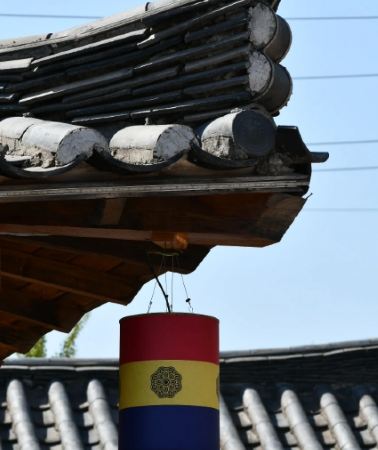
Changbai Korean Folk Village is located in Yuanguoyuan Village, Malugou Town, 3.5 kilometers east of the county seat. Changbai Korean Folk Village is located at the southern foot of Changbai Mountain and the source of Yalu River. Changbai Korean Folk Village is across the river from Huishan City, Liangjiang Road, Democratic People's Republic of Korea. Changbai Korean Folk Village is the only way to travel along the river to Tianchi in Changbai Mountain. land. The main body of the building of Changbai Korean Folk Village fully reflects the traditional customs and styles of the Korean nationality, and organically combines Korean culture, Changbai Mountain culture, Yalu River culture with rural environment, rural scenery and urban life; in terms of industrial development, Changbai Korean folk customs The village is mainly based on tourism development and supplemented by ecological characteristic agriculture. The construction projects of Changbai Korean Folk Village include residential projects, rural social welfare centers, folk customs exhibition halls, Korea Pavilion, etc.; horticultural projects include archways, scenic walls, strange stone gardens, water systems, squares, cultural walls, sculptures, etc. Changbai Korean Folk Village consists of six areas, namely: Folklore Exhibition Area, Sports and Entertainment Area, Cultural Landscape Area, Dining and Shopping Area, Residential Service Area, and Green Ecological Area. It is a comprehensive folk tourism place that integrates with vacation.Changbai County · 4.8km from downtown

Lingguang Tower
Lingguang Pagoda is located on the top of Tashan Mountain in the northwest suburb of Changbai Town, Changbai Korean Autonomous County, Jilin Province. It is 820 meters above sea level and has a history of more than 1,000 years. It is the Tang Dynasty tower-type style of the ancient building relics of the local government of the Tang Dynasty Bohai State in Jilin Province, and is a key cultural relic protection unit. The Lingguang Pagoda is made of blue-gray square bricks and is a pavilion-style hollow square tower. It is composed of five parts: passage, corridor, underground palace, tower body and Tasha. Although the bricks have been sporadically peeled off after thousands of years of wind, frost, rain and snow, and the tower is slightly inclined, it is still rock-solid and towering. There are currently three Bohai Towers (excluding the stone lighthouse), all of which are located in Jilin Province. One is Hunchun Madida Tower, the other is the Tomb Tower of Princess Helong Zhenxiao, and the third is Changbai Lingguang Tower. The first two both collapsed in the early years, leaving only the ruins, which cannot be seen in full; only the Lingguang Pagoda survives and is well preserved, which is extremely rare, and its academic research value is even more important.Changbai County · 830m from downtown


Lake Songhua Resort
Lake Songhuahu Resort is a year-round destination featuring seasonal tourism, with skiing as its main attraction and family vacations at its core. In winter, the resort focuses on ski vacation services at its world-class ski resort. During spring, summer, and fall, leveraging its own resources and comprehensive facilities and services while partnering with Songhua Lake National Scenic Area, it offers integrated mountain vacation products. Winter activities include skiing and snow entertainment, while summer features water recreation and team-building programs. The resort also features children's snow activities and a dedicated kids' activity zone, offering customized ski lessons and equipment within its instructional system to ensure safety while having fun. Additionally, along the 200m-long lifestyle street at the resort's core, inspired by successful models of renowned North American resorts like Whistler and Vail, you'll find diverse chain restaurants, international ski gear rentals and sales. The commercial street also offers local specialties like Songhua stone, black fungus, wild ginseng, and wild mushrooms at its souvenir shops—perfect gifts for friends and family.China · Jilin City

Changbai Mountain Wanda International Resort
Changbai Mountain Wanda International Resort is located in Fusong County, Jilin Province, at the west foot of Changbai Mountain, covering an area of 21 square kilometers, and is located in the golden skiing latitude zone at 42° north latitude. In 2015, it was rated as the first batch of chief national tourist resorts by the former National Tourism Administration. In 2017, it was awarded the China Tourism Industry Outstanding Contribution Award by the former National Tourism Administration;; the training base for the six major events of the 2021 Winter Olympics is listed in Changbaishan International Resort. The resort integrates skiing, snow entertainment, mountain sports vacations, high-end hotel groups, resort towns, hot springs, and water parks to meet the needs of different groups such as ski enthusiasts and family vacations. Changbaishan Wanda Yuehua Hotel, Holiday Inn Express, Wanda Jinhua Resort Hotel, Wanda Jinhua Suites Hotel, Sheraton Resort Hotel, Westin Resort Hotel, Hyatt Hotel, Park Hyatt Hotel, Wanda Ruijing Hannashan Hot Spring Hotel, a total of nine The international brand hotels embrace the terrain and are surrounded by mountains. There are more than 3,200 guest rooms ranging from quasi-four-star to super-five-star. In addition to holiday villas and apartments, they can accommodate nearly 10,000 people for vacation at the same time. Park Hyatt Ski House, Hyatt Ski House, and Westin Ski House allow vacationers to change their ski equipment without leaving home.Fusong · 95.1km from Changbai County

Mao'er Mountain National Forest Park
Mao'er Mountain National Forest Park is named for its shape, which resembles a straw hat when viewed from a distance, and its main peak has an elevation of 517.2 m. The mountain is covered in layers of pine, elm, and poplar trees, along with various shrubs, with a forest coverage rate exceeding 70%, reaching 92.6% in the main peak area. Mushrooms can often be seen on the grassy areas among the trees, and small wild animals such as hares and squirrels inhabit the mountain. The park is adjacent to the Bu'erhatong River and the Hailan River, and is known as the "natural viewing platform" for these two rivers. Hike along the wooden boardwalk to the summit for a panoramic view of Yanji city. Looking south, the Hailan River winds like a silver ribbon between rice paddies and orchards. In summer, the paddy fields shimmer with white light, and in the fall, the mountains are painted with colorful foliage, perfectly reflecting the line, "Rows of fruit trees beneath Changbai Mountain, the fragrance of rice flowers along the Hailan River." Signs in the park are mostly bilingual in Chinese and Korean. At the foot of the mountain, you will also find the Korean Folk Village and the Yanji Dinosaur Museum, both of which are part of the Mao'er Mountain (Dinosaur) Cultural Tourism Resort.China · Yanji

Erdaobaihe
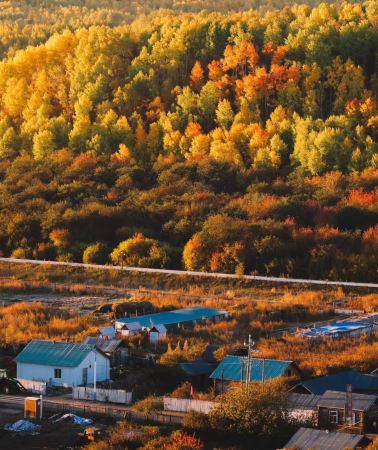
The town of Erdao Baihe is at the foot of Changbai Mountain surrounded by beautiful landscape. Erdao Baihe is not far away from the Shuangmufeng border and a gateway to Changbai Mountain. Erdao Baihe boasts a large number of resources and a high forest coverage rate, with over 100 types of plants in the forest zone and dozens of economically valuable trees such as pinus koraiensis, larix olgensis, Chinese oak, fraxinus mandshurica and juglans mandshurica.China · Antu

Yunding Market
Yunding Market is located in the Changbai Wanxiang Commercial Pedestrian Street area in town. The market's name is derived from "Yunding" in "Yunding Tiangong" from the novel *The Lost Tomb*. The project is promoted and built in combination with the "Yunding Tiangong" online IP, making it particularly endearing to fans of the book. The market is divided into north and south blocks. After nightfall, the approx. 500 m long commercial street is brightly lit, with stalls lined up on both sides, featuring local snacks, seafood barbecue, desserts and cold drinks, and Changbai Mountain-themed cultural and creative items laid out along the way. Cultural and creative stalls are an important part of the market. You can watch artisans polish small wood carvings, stop to admire traditional Chinese paintings at the stalls, or visit *The Lost Tomb*-themed DIY craft experience area. Interactive performances such as Yangge street parades and song and dance shows are also staged within the blocks. In summer, it serves as an open-air night market for cooling off, while in winter, it takes on an ice and snow theme, creating the "Ice and Snow Fireworks · Changbai Mountain Folk Food Market" special district, offering a different experience whether you visit in winter or summer.China · Antu

Changbai Mountains Huamei Resort(Former Luneng Victory Site)
Changbai Mountain Gorgeous ResortLocated in Manjiang Town, Fusong County, Jilin Province, it is close to Changbai Mountain in the east and is located at the intersection of three rivers. It is a national 4A-level Attraction and a provincial tourist resort. The project is an international ecological tourism and resort demonstration area integrating leisure and entertainment, ecological protection, and cultural tourism built in accordance with the strategy of "ecological priority and green development". The project combines the resource advantages of Changbai Mountain and interprets the three major cultural connotations of Changbai Mountain, namely "ice and snow", "folk customs" and "forest". It is planned to have three theme areas, namely the four-season sports area, Changbai hometown area and forest sound area, and ten key functional sections.Fusong · 82.9km from Changbai County

Yanbian Museum
Yanbian Museum is a comprehensive museum that integrates local history and ethnic characteristics. It operates under three names—Yanbian Museum, Yanbian Korean Folk Museum, and Yanbian Korean Revolutionary Memorial Hall—but is managed by a single administrative team. The museum has relocated three times, and the current new building was completed and opened in 2012. It is divided into functional areas for exhibitions, visitor interaction, and public services. The museum houses nearly 15,000 artifacts, including over 500 precious national-level artifacts, consisting of ancient, modern, and folk items. Among the ancient artifacts, the tombstone of Princess Zhenxiao of the Tang Dynasty Bohai Kingdom and the Tang Dynasty Bohai stone lions are particularly rare. The bronze seal of the "Ministry of Rites of the Shangshu" from the Dongxia Kingdom at the end of the Jin Dynasty, and the Neolithic Jingu-type jade ring, trace the history of civilization in the Yanbian region back even further. The folk artifacts here are highly distinctive; vintage items such as the 1890s Korean-style round copper dining table, copper fish locks, and silver spoons and chopsticks used for 60th birthday celebrations vividly depict the daily life, wedding customs, and festivals of the Korean ethnic group. Various items used by guerrillas quietly recount the history of revolutionary struggles in Yanbian. The renovated permanent exhibition is presented in the form of a general history, connecting the historical threads of Yanbian: from the historical footprints of ancient ancestors on the Yanbian land and the arduous journey of migration and development by various ethnic groups, to the memories of the revolutionary era, the colorful folk customs, and the footprints of the united struggle of the people of all ethnic groups in Yanbian.China · Yanji

Changbai Mountain Antler Village
Nestled at the foot of Changbai Mountain, this sika deer-themed micro-resort farm paints a winter fairy tale. It features a quality beginner-friendly ski slope where visitors can enjoy snow activities while capturing stunning views of Changbai Mountain. But the photogenic spots in Lujiao Village don't end there—you'll also find the uniquely styled Tianchi·Luyu Homestay where adorable deer might surprise you, and the picturesque "Pretty Meal" dining experience that arranges flowers and gourmet dishes into edible art, perfect for capturing lifetime photos. The bronze door snow sculpture from "The Lost Tomb" series will debut here, complemented by dazzling fireworks lighting up the night sky every evening. Lujiao Ski Resort, a high-quality experiential ski destination, is located within Lujiao Village Park. As the closest ski resort to Erdaobaihe Town, it features a beginner slope measuring 210m in length and 60m in width with a 7° gradient, along with two magic carpets.China · Antu
Free things to do in Changbai County
Changbai Korean Folk Village
Changbai County · 4.8km from downtownLingguang Tower
Changbai County · 830m from downtownLake Songhua Resort
China · Jilin CityChangbai Mountain Wanda International Resort
Fusong · 95.1km from Changbai CountyMao'er Mountain National Forest Park
China · YanjiErdaobaihe
China · AntuYunding Market
China · AntuChangbai Mountains Huamei Resort(Former Luneng Victory Site)
Fusong · 82.9km from Changbai CountyYanbian Museum
China · YanjiChangbai Mountain Antler Village
China · Antu
More ways to travel from Changbai County
Private Tours in Changbai County
View More Private Tours in Changbai County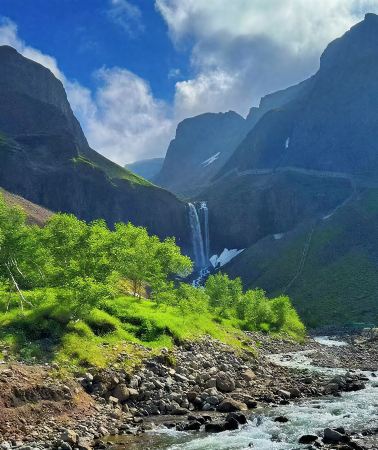


What travellers say about Changbai County

远行者695 August 2023
5.0
Changbai Korean Folk Village was developed on the basis of a natural village. The government renovated the original small village, which is very beautiful. The farmyard is now used as a homestay. In front of the small village, a Korean cultural exhibition hall and some antique buildings were built. It is very beautiful and you can go and see it.
Changbai Korean Folk Village

chenweiwen23 November 2020
5.0
Lingguang Pagoda, located on the top of Tashan Mountain in the northwest suburb of Changbai Town, Changbai Korean Autonomous County, Jilin Province, is 820 meters above sea level and has a history of more than 1,000 years. Lingguang Pagoda is the only ancient architectural relic of the local government of Bohai State in the Tang Dynasty in Jilin Province. It is a key cultural relic protection unit. The original name of Lingguang Pagoda has long been lost. It is said that a long time ago, when the earth's crust changed, everything overturned, only this tower stood tall, coupled with its peculiar shape, refreshing spirit, and striking people's eyebrows. Therefore, in 1908, Zhang Fengtai, the first prefect of Changbai Prefecture in the Qing Dynasty, likened it to the Lingguang Hall in Shandong during the Western Han Dynasty and named it Lingguang Pagoda. Lingguang Pagoda is built with blue-gray square bricks and is a pavilion-style hollow square tower. It consists of five parts: passage, corridor, underground palace, tower body and pagoda. Although the bricks have fallen off sporadically and the tower is slightly tilted after thousands of years of erosion by wind, frost, rain and snow, it is still as solid as a rock and towers high above the clouds. Even the fallen fragments are very hard and make a clear and pleasant sound when knocked. The passage is stepped, with a total of 11 steps.
Lingguang Tower

137***6730 August 2026
5.0
The overall environment was quite nice, but the glass on the cable car was a bit scratched, with significant human-caused wear and tear, which greatly affected taking photos. I suggest putting up a sign to prevent people from scribbling on the glass.
Lake Songhua Resort

M93***093 May 2026
5.0
The three-day, two-night stay was very fulfilling. The resort hotel facilities were quite good, nestled against the mountains and beside the water, and quite spacious. Even though Changbai Mountain was closed due to weather, there were still plenty of fun things to do in the resort area. The breakfast was plentiful, cleaning was prompt, and the service was excellent. 👍 A great place to play in the snow in winter and escape the heat in summer.
Changbai Mountain Wanda International Resort
行走毛毛16 April 2026
5.0
If you have time to visit Yanji, you absolutely must go to Mao'er Mountain, and you should definitely visit it in the early morning, as the scenery is exceptionally beautiful then. If you're lucky, you might even see the morning mist, which will give you a unique and special experience.
Mao'er Mountain National Forest Park

YoYo_D1l9r9b110 May 2025
5.0
二道白河镇位于吉林省安图县,是长白山北景区门户,因松花江源头的二道白河得名。小镇森林覆盖率高,生态极佳,拥有美人松公园、湿地花海等免费景点。作为旅游枢纽,这里住宿、餐饮齐全,朝鲜族美食丰富。夏季避暑、冬季滑雪,四季皆宜,交通便利(长白山/延吉机场可达),是游览长白山天池、瀑布等景点的理想中转站。
Erdaobaihe

sailing 1127 June 2025
5.0
In this beautiful scenic area, you can choose to hike or cycle 🚴🏻♀️, watch the sunrise in the morning and the sunset in the evening, relax in the natural oxygen bar, and immerse yourself in the embrace of the mountains to let yourself go.
Changbai Mountains Huamei Resort(Former Luneng Victory Site)

pan***he10 November 2022
4.0
We visited the Yanbian State Museum, which had few cultural relics. We borrowed an electronic induction guide to learn about Korean culture and history. For example, Koreans regard white as a symbol of purity, so marriage certificates are all white.
Yanbian Museum

Anonymous user7 February 2026
5.0
The frozen roses are beautiful; go early to avoid long queues. Find good photo spots in advance; each group of 10 people gets in for 5 minutes. The Swiss-style cabins are also photogenic, and you can feed the reindeer for 20 yuan.
Changbai Mountain Antler Village


