▲ Touching the traces left by history; the phoenix crown of Princess Li Chui, adorned with gold and gemstones, embodies the splendor of the flourishing Tang dynasty; the minimalist aesthetics from 1,400 years ago; a Sui dynasty translucent white porcelain cup, thin as an eggshell, and a Tang dynasty mother-of-pearl bronze mirror, its shell shimmering, reflecting the romance of ancient times; Qin dynasty bronze waterfowl, a pool of spring water in Emperor Qin Shihuang's underground realm, both tender and awe-inspiring; stories. Han dynasty murals, Tang tri-color pottery, Western Zhou bronze gui vessels—after touring the third-floor exhibition hall, one lifts their eyes to the mist-shrouded Qinling Mountains. Here we meet today, with millennia-old artifacts before us and the towering Zhongnan Mountains behind. Artifacts condense time, while mountains and rivers remain eternal—in this moment, past and present converge!!!


▲ Step into the Shaanxi Archaeology Museum, and you'll be greeted by a visual feast of national treasures. From simple stone tools of the Paleolithic era to the authentic epitaph of Shangguan Wan'er and the tomb inscription calligraphed by Yan Zhenqing, all the way to Li Chui's exquisitely crafted crown ornament—each piece is truly top-tier. Here, treasures aren't hidden away; instead, a vast collection of high-quality artifacts is displayed in abundance: the xi zun vessel, bronze-wheeled chariots, exquisite jade artifacts from the Western Zhou dynasty.... Walking through, you'll be dazzled by the sheer volume of artifacts—a veritable banquet for cultural relic enthusiasts~
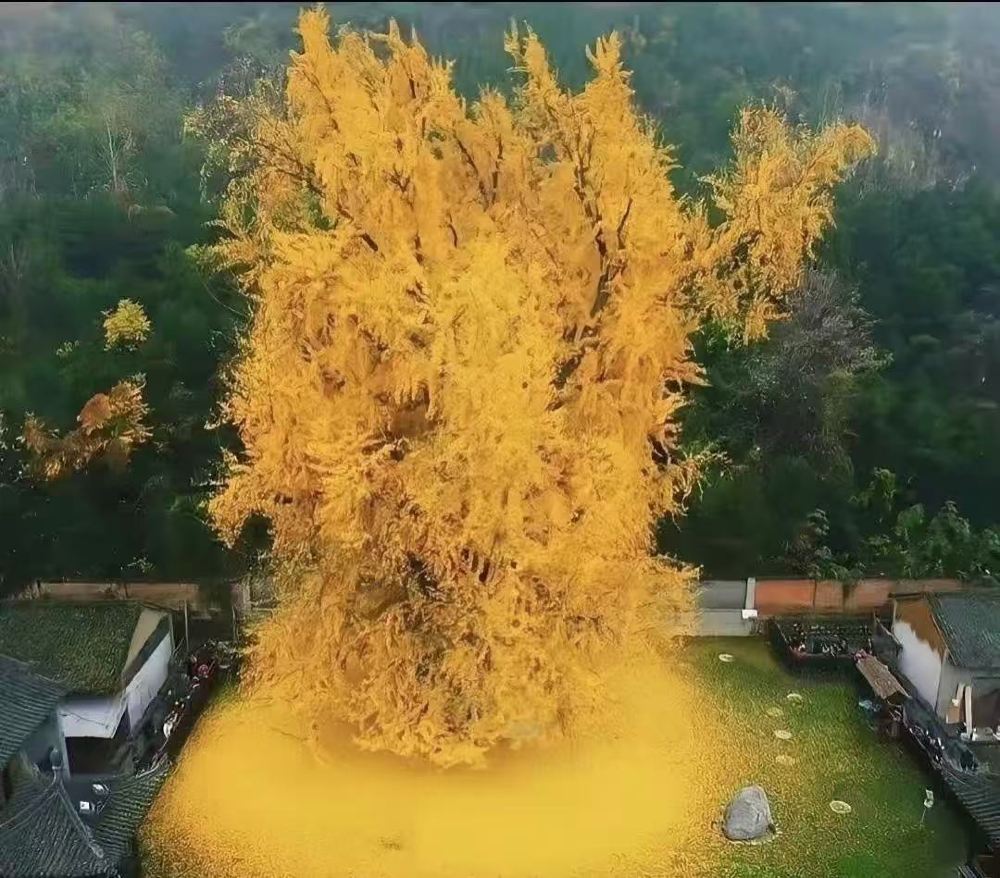
▲ Ancient Guanyin Temple was built during the Tang Dynasty's Zhenguan era, boasting a history of about 1,400 years, making it one of the millennium-old temples in the Zhongnan Mountains. The temple complex includes structures like the Guanyin Hall, Public Meditation Hall, and Great Compassion Courtyard, all grand in scale and majestic in presence, with thriving incense offerings. Inside the temple stands a thousand-year-old ginkgo tree, said to have been planted by Emperor Taizong of Tang, Li Shimin himself. This tree is now listed as a protected ancient tree by the state. In late fall, the ginkgo tree turns a brilliant gold, and when the wind blows, its leaves flutter through the air like golden snow, covering the ground like a golden carpet, drawing countless visitors to admire its beauty.


▲ Xiangji Temple: Only to embrace the Zen charm of the flourishing Tang dynasty depicted by Wang Wei "Not knowing where Xiangji Temple is, I walked miles into cloud-capped peaks. Ancient trees shade a path untrodden, from deep mountains where a bell tolls." The world knows this as a serene Zen monastery, an internet-famous ancient temple, and the ancestral court of Pure Land Buddhism. Yet few realize—this land filled with Buddhist chants and incense once buried the most tragic bones and lamentations of the Tang dynasty.