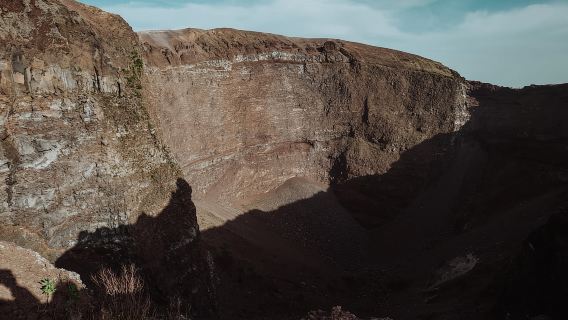
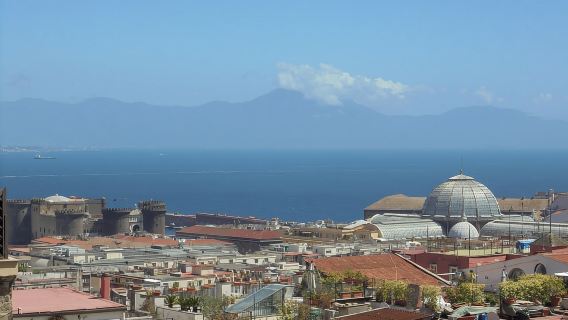
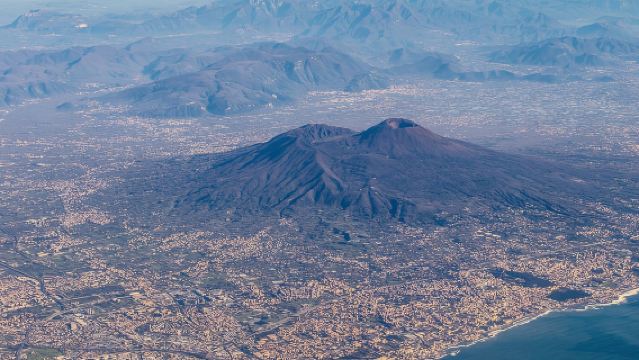
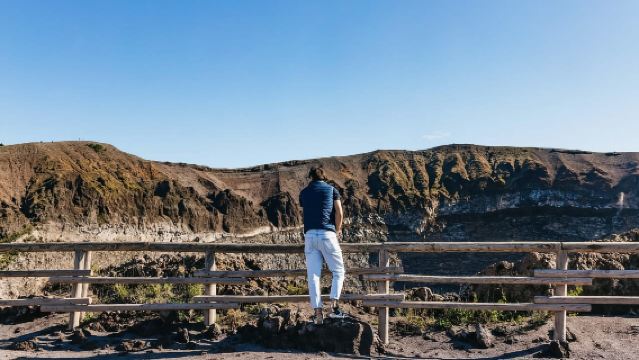
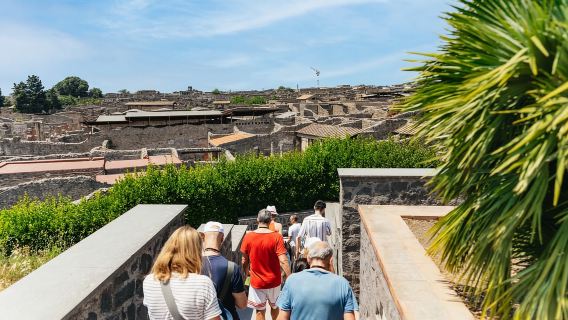
In 79 AD, Mount Vesuvius erupted, burying Pompeii in volcanic ash in an instant.
It was precisely because of this disaster that an entire ancient Roman city was "preserved," leaving behind a three-dimensional piece of history for future generations.


1. Why is it essential to have a guide for Pompeii?
The first time you step into Pompeii, many are left in awe—
The streets, houses, murals, and shops are so vividly preserved they hardly seem like ruins, yet the silence is unsettling.
But without a guide, what you see is often just "the remnants of buildings."
What truly matters is the life that once unfolded behind these buildings.
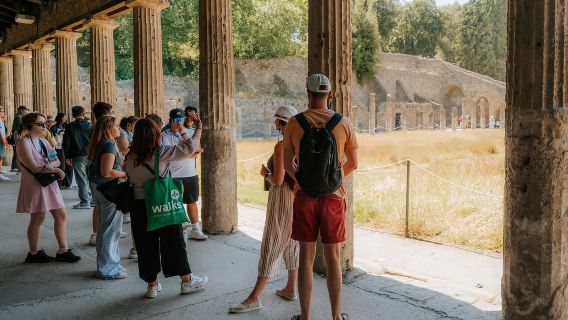
In the Chinese guide of [Panda Tour], we will reconnect the scattered ruins into a city, helping you understand:
- How the Pompeians Lived, Bathed, Did Business, and Socialized
- Why were the murals painted in this location, and for whom were they created?
- Before the volcanic eruption, Pompeii was not a "frozen ancient city" but a functioning urban center.
This is not a superficial tour, but a logical, emotional, and visually rich interpretation of the city.


2. What will we show you?
Cities and Streets
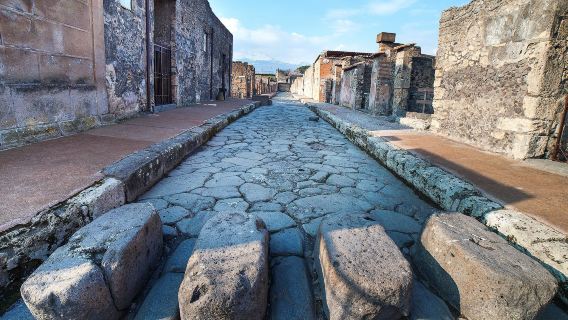
Walking along the 2,000-year-old stone-paved roads, you'll learn about Pompeii's urban planning, drainage systems, chariot tracks, and street details, gaining insight into the sense of order in ancient Roman cities.
Authentic living space
Step into residences of different social classes, from courtyards and gardens to mural decorations, to understand how wealth, status, and aesthetics become "visible" in spatial design.
The heart of public life
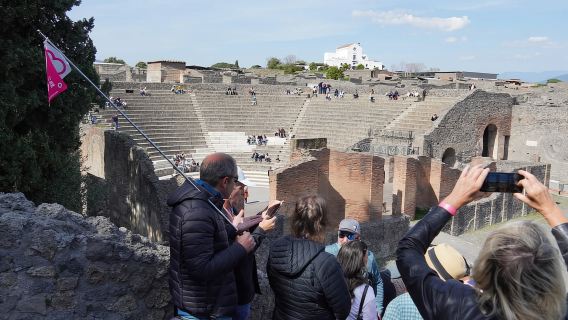
Public baths, theaters, and squares were not just buildings but also the centers of social, leisure, and political life for the people of Pompeii.
Street Commerce and Daily Life
Bakeries, taverns, and corner shops let you glimpse the "takeout culture" and urban vitality from two thousand years ago.
Plaster Statue of Human Figure
Through a clear timeline and archaeological explanations, the process of the volcanic eruption that day is reconstructed, helping us understand why these plaster casts have become Pompeii's unique and thought-provoking presence.

III. What's different about Panda Tour's guide method?
Speak clearly in Chinese, not just a lot.
- The content has been meticulously refined over time with clear logic.
- Not piling up eras, not pursuing novelty
- Using everyday language to explain complex archaeological and historical contexts
We hope you can understand and remember it.


️Regard Pompeii as "a city," not "a disaster site"
The volcano is just the finale.
What truly deserves understanding is how life was lived in Pompeii before the volcanic eruption.
Our guide consistently revolves around "how cities operate," allowing you to see the value of civilization itself beyond disasters.


Restrained yet warm human plaster figure guide
- Explaining the formation methods and archaeological significance of plaster statues
- Respect history without sensationalizing fear
- Focus on the position of ordinary people in the torrent of history
This is a guide that quiets the mind for reflection, not just a stop for curiosity.