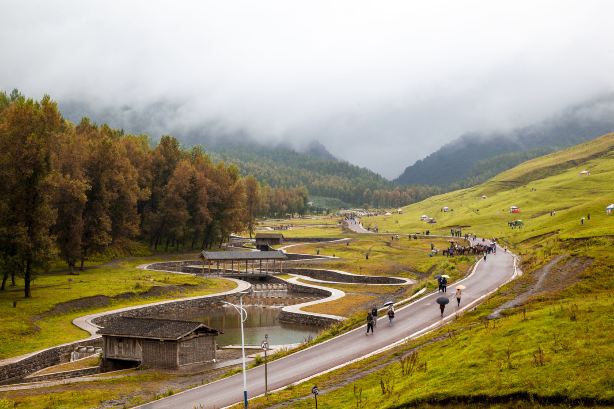
Kangle

Things to do in Kangle

Search attractions or local attractions & tours
Search

Explore top experiences

Top 10 attractions in Kangle

View all Attractions
Shapotou Scenic Area
No. 1 of Best Things to Do in Ningxia

Shapotou Scenic Area

8.3
4.8/5
38.9k reviews
The scenic spot is located 16 kilometers west of Zhongwei City, Ningxia, on the southeastern edge of the Tengger Desert. The scenic spot has successively won honors such as "the first batch of national 5A-level tourist attractions", "the top 500 global environmental protection units", and "the first batch of national tourism standardization demonstration units". The three major cultural elements of the scenic area include the "Yellow River Culture" based on the intangible cultural heritage sheepskin rafts, the "Desert Culture" based on straw grids and Desert Legend Park, and the "Starry Sky Culture" based on the Desert Star Hotel. The tourism resources of these three elements have created a unique and magnificent landscape of "sunset over the long river and starry sky in the desert". The "six major ways to play" are highly praised and loved by tourists. Among them, the Yellow River projects include sheepskin rafting, Huangtengda, Yellow River speedboat, drift boat, passionate sandboarding and high-altitude bungee jumping, etc. The desert projects include Desert Camel, Desert Flying (Stepping into the Blue Clouds), and Sand Sea. Surfing, etc., starry sky projects include stargazing lectures, meteor feasts, sand therapy experiences, star cakes and other special products. In addition, there are also privately customized products for hiking, desert expansion, and educational and entertaining study experiences. The scenic area not only has diverse cultural elements and fun project experiences, but also multi-level accommodation experiences waiting for you: the butler-style Diamond Hotel, the quiet Desert Star Hotel for stargazing, the quiet Yellow River Courtyard in the bustling city, and finally the economical and affordable business-style Tourist Service Center Hotel and other differentiated tourist accommodations for you to choose from.China · Zhongwei
Qinghai Tibetan Culture Museum
No. 2 of Best Things to Do in Qinghai

Qinghai Tibetan Culture Museum

8.2
4.8/5
10.2k reviews
Qinghai Tibetan Culture MuseumIt is a comprehensive museum themed on Tibetan medicine culture and featuring Tibetan culture.Qinghai Tibetan Culture Museum(also known as Qinghai Tibetan Culture Museum) is located in Xining, the capital of Qinghai Province in the eastern part of the Qinghai-Tibet Plateau. It officially opened in September 2006. The museum has basically formed a "one museum with two halls" layout, featuring 16 exhibition halls including the Silk Road and Tibetan civilization, the grand view of Chinese Tibetan art painting, and the history of Tibetan medicine.Qinghai Tibetan Culture MuseumThe collection is rich, historic, and diverse, possessing high historical, scientific, and artistic value. The museum houses the Guinness World Record-holding thangka masterpiece, "The Grand Thangka of Tibetan Culture and Art," which is 618 m long. It was planned by renowned thangka master Zongzhe Lajie and completed by 400 painters over four years. Its content encompasses the Tibetan understanding of the universe, the formation of the Qinghai-Tibet Plateau, history, religion, medicine, culture, art, and folklore. With its intricate details and brilliant colors, it is a magnificent sight and can be called an encyclopedia of Tibetan culture, hailed as a "contemporary national treasure." Through four major series—ancient books and documents, Tibetan medical thangkas, ancient Tibetan medical instruments, and Tibetan material specimens—the museum comprehensively displays the long history, profound theoretical system, clinical practice, and unique preparation techniques of Tibetan medicine, with four ancient books included in the National Catalogue of Precious Ancient Books. The Silk Road and Qinghai-Tibet Civilization exhibition hall uses history as its temporal dimension and the vast plateau landscape as its geographical dimension. Through thousands of precious cultural relics such as silk, gold and silver ware, and coffin paintings, it highlights Tibetan cultural elements and showcases the origin, inheritance, rise, and prosperity of the Qinghai-Tibet Plateau civilization throughout the long river of history. The Tibetan carpet exhibition hall is one of the largest exhibitions of ancient carpets in China, displaying more than 400 Tibetan carpet artifacts from different periods and eras, featuring magnificent patterns, intense colors, and unique ethnic styles and local characteristics. At the same time, there are also Tibetan-style architectural exhibition halls, Tibetan calligraphy art exhibition halls, as well as temporary exhibition halls, multimedia screening rooms, academic lecture halls, and cultural relic storage rooms, providing strong capabilities for inheritance, protection, and research, as well as conditions for cultural exchange.Qinghai Tibetan Culture MuseumIt will continuously improve the level of cultural relic preservation, exhibition design, scientific research, and management operations, becoming a platform for promoting ethnic unity and social development, a broad stage for cultural dissemination and academic exchange, a research center for cultural relic protection and Tibetan studies, and an exhibition center for treasured literature and collections, showcasing the splendid civilization and culture of the Tibetan Plateau to the world.China · Xining
Kumbum Monastery
No. 3 of Best Things to Do in Qinghai

Kumbum Monastery

8.2
4.7/5
18.7k reviews
Kumbum Monastery is one of the important monasteries of the Gelug (Yellow Hat) sect of Tibetan Buddhism and the birthplace of Tsongkhapa, the founder of the Yellow Hat sect. The monastery features magnificent architecture, abundant treasures, and a strong religious atmosphere, making it one of the more popular travel destinations in Xining. Overview of the visit It has distinct differences in architectural layout compared to Han Chinese Buddhist temples in inland China: the complex here is not symmetrically arranged along a central axis. The monastery is an ancient architectural complex composed of numerous halls, scripture halls, stupas, and colleges, with each sutra hall, main hall, and stupa irregularly distributed on a small hill. Travelers can explore the site in a relatively free manner rather than following a straight path along a central axis. The Great Golden Roof Hall of Kumbum Monastery is the center of the entire architectural complex. It is said that Master Tsongkhapa was born here, and when he was born, his umbilical cord blood dripped on this spot, from which a bodhi tree grew. Later, a stupa was built around the tree, and a monastery was constructed, hence the name. Believers hold that this tree and stupa are the embodiment of the master. The three unique features of the attraction: butter sculptures, murals, and appliqué embroidery. Butter sculptures are made by mixing butter with various pigments to mold and carve into figures of Buddhas, people, flowers, birds, animals, and pavilions. Travelers can admire exquisite butter sculptures at the butter sculpture hall inside the temple (located far from the main gate). Vibrant centuries-old murals can be appreciated in the main halls, corridors, and front galleries of the temple. Appliqué embroidery involves cutting colored satin into desired shapes, such as Buddha figures or animals, stuffing them with wool or cotton, and embroidering them onto cloth hangings. In the temple's great sutra hall, two rare large appliqué embroidery pieces—"Sixteen Arhats Displaying Divine Powers" and "Eight Immortals Crossing the Sea"—hang on either side. The four major religious festivals (based on the lunar calendar): 1. Cham dance (14th day of the first month) and butter sculpture exhibition (15th day of the first month); 2. Cham dance (14th day of the fourth month), Buddha unveiling, and Cham dance (15th day of the fourth month); 3. Buddha unveiling, Cham dance (6th day of the sixth month), and golden Buddha procession (8th day of the sixth month); 4. Full-day Buddha unveiling (22nd day of the ninth month) and Cham dance (23rd day of the ninth month). During these festivals, activities like Buddha unveiling and ritual dances take place, attracting large crowds of devotees and travelers, creating a lively atmosphere.China · Xining
Lanzhou Danxia Geological Park
No. 1 of Family-friendly Attractions in Gansu

Lanzhou Danxia Geological Park

8.1
4.5/5
3.7k reviews
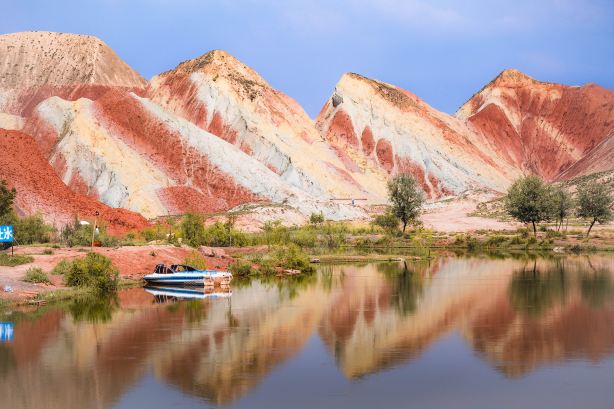
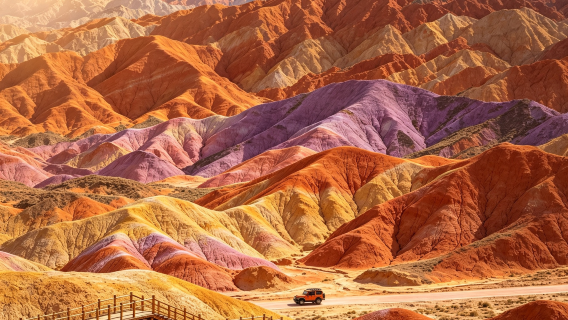
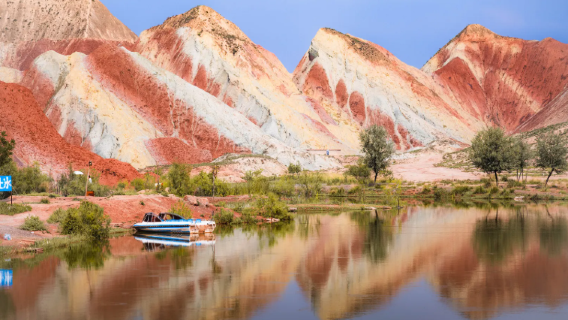
Lanzhou Danxia Geological Park is a key cultural tourism project in Gansu Province and a comprehensive cultural tourism initiative prioritized by the Lanzhou Municipal Committee and Government. Located by the Yellow River, the park is just 13 km from downtown Lanzhou and 30 km from Lanzhou Zhongchuan International Airport, making it one of the closest Danxia landform clusters to a major urban center in China. With a total planned area of 400 sq km and a core visiting area of 25 sq km in its first phase, it ranks among the largest discovered landscapes of its kind in the country. The park primarily features red mountain bay formations, along with spectacular Danxia cliffs, isolated peaks, secluded valleys, narrow gorges, and balancing rocks. Its colorful mountains set against winding waterways create a masterpiece of Danxia landform scenery. The attraction features seven viewing platforms showcasing the Danxia landforms: Silk Road Glow, Silk Road Eagle, Flying Apsaras Exploration, Nine-Colored Danxia, Danxia Reflecting Sky, Emerald Peaks Rippling Sky, and Danxia Summit Scenic View. It also includes the Ancient Silk Road Gateway, Shajing Tribe Cultural Square, Desert Bells Scenic Boulevard, and a 2,550m Danxia boardwalk viewing area. As a key cultural tourism project in the province, Lanzhou Danxia Geological Park adheres to the principles of "ecological protection, green development, preserving original features, and moderate development." Leveraging Lanzhou's unique resource advantages and focusing on the domestic tourism market, it aims to cultivate new growth drivers for Lanzhou's cultural tourism industry and establish a new highland for cultural tourism in the city.China · Yongdeng

Experiences you can't miss in Kangle

Featured Culture & history in Kangle

View all Culture & history
[Depart from Lanzhou] Liujiaxia and Bingling Temple Day Tour: Private Transfer Service
󱌍
Duration: 5 hrs
English
Instant confirmation
Book now for tomorrow
FromMXN$3,132.54
Lanzhou Highlights Day Tour | Statue of Mother Yellow River, White Pagoda Mountain, Zhongshan Bridge (Private Service)
󱌍
Duration: 6 hrs
English
Free cancellation
Instant confirmation
Book now for tomorrow
FromMXN$602.31
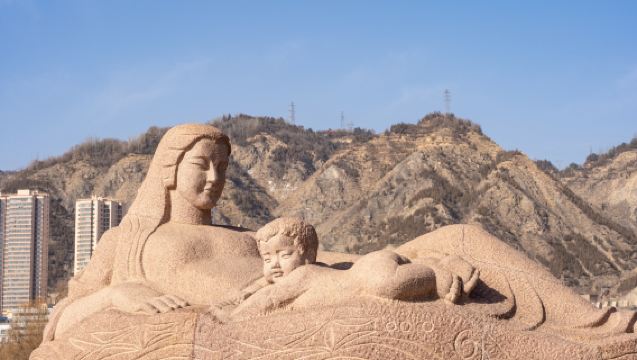
Private tour of Lanzhou's top attractions with an English-speaking guide
󱌍
Duration: 6.5 hrs
English
Free cancellation
Instant confirmation
Book now for tomorrow
9% off
Limited-time sale
FromMXN$700.32MXN$778.13
Pick-up service | Lanzhou ink danxia + Bingling Cave-Temple + Yellow and Tao rivers confluence 1-day tour
󱌍
5.0/5
· 3 reviews
Duration: 12 hrs
English
Free cancellation
Instant confirmation
FromMXN$2,819.29
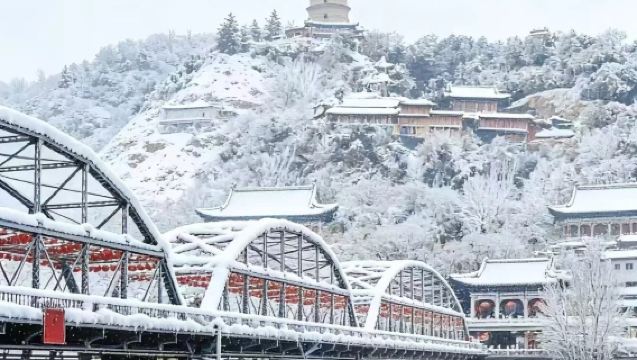
Lanzhou | English/Russian/minor language guide | exhibition translation | professional service
󱌍
FromMXN$4,805.6
Kangle Today's weatherCloudy 1-14℃
Kangle weather for the next 2 days10/31: 0-13℃, 11/1: 1-14℃

Free things to do in Kangle

What travellers say about Kangle

user-avatar
不安分的人呀12 December 2022
5.0
Zhuzigou in Luming Township, Kangle, Linxia is part of the Taizi Mountain series and is a great place to escape the summer heat. There is a gully sandwiched between two mountains. On one side is a meadow like a green carpet, on the other side is a pine forest, with a small river in the middle. You can camp and ride horses deep in the scenic area. It is truly a Feng Shui treasure land.

Zhuzigou Scenic Area

user-avatar
LHCY10 October 2021
5.0
The Birch Forest Scenic Area is located in Kangle County, Linxia Hui Autonomous Prefecture, Gansu Province. There are large tracts of birch forests with dense trees, overlapping mountains and gurgling streams. Climbing up the stairs, you can see the Bald Qiang wooden house in Boonie Bears, as well as many amusement facilities. Children love it very much.

Birch Forest Scenic Spot

user-avatar
Anonymous user29 October 2026
5.0
Beautiful lakes and parks. Worth to visit in once a life time.

Jiuzhaigou National Park

user-avatar
_TI***iq29 October 2026
4.0
This place is beautiful. Come on a sunny day so the pools look more green from the reflection of the sunlight. It can be done in around 4.5 hours (we were up at 12:30pm, and down by 5pm - we took the cable car up and walked all the way down). Make sure you buy both the cable car ticket AND the park entrance fee. They are listed separately on trip.com. Also, buy some oxygen if you are not used to being in high altitudes. I originally thought it was a tourist trap but I saw a lot of people with them and my partner and I did in fact feel some altitude sickness. The only qualm we had about it was how crowded it was. We had lovely weather but the wait for the cable car was 1 hour, and locals have no concept of personal space and WILL budge/push to get what they want (a bit of culture shock for us!). Overall it was still enjoyable though!

Huanglong National Scenic Area

user-avatar
M37***4216 January 2023
5.0
It's really a good place [scenery]

Rouge Lake Scenic Area

user-avatar
M2e***xp28 October 2026
5.0
Family, anyone understand?! This trip was absolutely amazing! The scenery was breathtaking, every corner a surprise and a moment of romance. The staff were incredibly welcoming, and the value for money was incredible. I wanted to go crazy for it!

Shapotou Scenic Area

user-avatar
Anonymous user29 October 2026
5.0
The Tibetan Culture Museum is well worth a visit; it's truly breathtaking, especially the 618-meter-long Thangka painting, which took over 20 years to complete and involved more than 400 Thangka painters. The museum's exhibits systematically introduce Tibetan culture and history, from clothing and architecture to writing, religion, and intangible cultural heritage.

Qinghai Tibetan Culture Museum

user-avatar
Anonymous user29 October 2026
5.0
Kumbum Monastery is also a monastery with distinctive Tibetan Buddhist characteristics. The Lotus Pagoda was built by Tsongkhapa's mother according to her son's request to "build a stupa at his birthplace," thus marking the origin of Kumbum Monastery. Later, because "the stupa came first, then the monastery," it acquired the Chinese name "Kumbum Monastery." It is one of the six major monasteries of the Gelug school of Tibetan Buddhism and the birthplace of Tsongkhapa, the founder of the Gelug school. It holds a high position among believers and is an important religious activity and pilgrimage site in Northwest China.

Kumbum Monastery

user-avatar
Patrick Woodbourne Clarke22 October 2026
5.0
Lanzhou Danxia Geological Park is fabulous. One of the top three things I have done on this tour. I used Trip.com to get out to the park and that was very easy. Shuttle buses are necessary to get between the various vantage points. I would come for longer next time and do the zip line. I got an 8am bus from Xiaoxihu Subway Station and it leaves the Park at 12pm to return back to the city.

Lanzhou Danxia Geological Park

Trip Moments in Kangle

Popular cities near Kangle

Frequently asked questions

How can I contact Trip.com customer support?

Get help anytime, anywhere within 30 secondsContact customer support

Change and cancellation policies vary by attractions and tours. Please check the product details page for more information.

Ticket prices may vary between weekdays and weekends, as well as during peak and off-peak seasons. When booking with Trip.com, you can also use Trip Coins to get extra savings. For more tips on booking discounted tickets, please visit Trip.com for the latest information.