
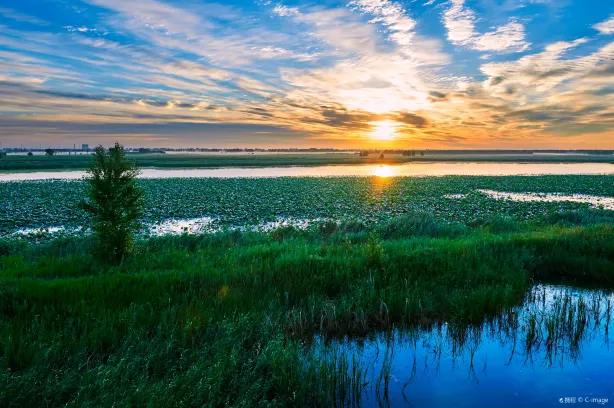
Things to do in Daqing
Explore top experiences
Top 10 attractions in Daqing





Daqing Today's weatherHazy -4-6℃
Daqing weather for the next 2 days11/12: -4-7℃, 11/13: -3-6℃
Free things to do in Daqing

What travellers say about Daqing
辽宁阿杰8 August 2026
5.0
Transportation isn't very convenient. There's a tall, magnificent tower at the entrance, and the Hall of Heavenly Kings is right inside, very grand. A vegetarian meal is served at 11 am. Before eating, we chanted scriptures together, and I suddenly burst into tears. There was watermelon, corn, and flatbread. Payment is up to you. I met a fellow Liaoning native who came to copy scriptures and also donated five paintings to the temple.
Jingjue Temple

郭润龙浪迹天涯18 August 2024
5.0
20240716 AM:
1. Fuyu Zhengjie Temple is a Tibetan Buddhist temple in the suburbs of Durbert Mongolian Autonomous County. It is the banner temple of Durbert Banner. It is abbreviated as "Heishuo Heide" in Mongolian, commonly known as the Great Temple. It was built in the 23rd year of Emperor Kangxi of the Qing Dynasty (1684). It has been relocated several times in 300 years. It was destroyed in 1968 and rebuilt in 2006. It covers an area of 100,000 square meters and is the only Tibetan Buddhist temple in Heilongjiang Province. The temple is divided into five parts: the outer perimeter, the Guanyin Hall, the Cochin Hall, the Sakyamuni Buddha Hall, and the Master Tsongkhapa Hall. It is a good place to worship Buddha and pray for blessings and learn humanities. You need to take off your shoes when entering the Tibetan Buddhist temple.
①Address: Linzhao Road, Yixin Township, Durbert Mongolian Autonomous County, Daqing City, Heilongjiang Province
②Transportation: No public transportation (taxi price is 40 yuan), easy to park
③Peak season: None
④Time: 1 hour
⑤Ticket price: Free
2. The periphery of Zhengjie Temple has:
①Main gate: 3-hole double-eaved gate with complex and bright colors. It is currently locked and not open. You can enter the temple through the side door
②Zhajiram Hall: A single hall on the east side of the temple, dedicated to Zhajiram, but the door is locked and not open. The flowers outside the temple are extremely beautiful. Zhajiram is the god of wealth in Tibetan Buddhism. There is a temple dedicated to her in Lhasa, Tibet, and the tribute is mainly wine
③Comprehensive building: No name, the interior is an empty lecture hall for chanting scriptures, the paint on the roof is mottled, there are scriptures on the chanting table for reading, and there are cats resting indoors
3. Thousand-hand Guanyin Hall is the main building of the courtyard, three floors, and the main deity is Guanyin Bodhisattva, but it is currently locked and not open. In the Tantric Dharma Department, Avalokitesvara, Manjusri and Vajrapani are collectively called the "Three Protectors of Dharma Department". Once you enter the courtyard, there are:
① Manjusri Hall: located next to the west side of the Avalokitesvara Hall, on the second floor, mainly dedicated to Manjusri, but the door is locked and not open
② Vajrapani Hall: located next to the east side of the Avalokitesvara Hall, on the second floor, mainly dedicated to Vajrapani, but the door is locked and not open
4. The Cochin Hall is the core building of the temple. It has three floors and houses more than 40 Buddha statues. It is the place where monks in the temple chant scriptures and hold ceremonies. "Cochin" means the Great Dharma Hall. The second and third floors are hollow and are currently under renovation. Each floor has:
① The first floor: is the Great Sutra Hall, which houses three disciples of Tsongkhapa, Sakyamuni Buddha and There are 3 statues of Ersheng, and the three protectors of the Department of Action
② The second floor: There are two Buddhist halls. The outer Buddhist hall enshrines the Eight Medicine Buddhas; the inner Buddhist hall enshrines Maitreya Buddha, Green Tara, Sakyamuni Buddha, the Three Longevity Buddhas, Vajrasattva, White Umbrella Mother, and Prajnaparamita Buddha
③ The third floor: There are two Buddhist halls. The outer Buddhist hall enshrines the Seven Buddhas of the Past; the inner Buddhist hall enshrines the Wonderful Sound Buddha Mother, the Five Buddhas, Manjusri Bodhisattva, etc.
④ Seven steps of lotus: There are 7 lotus pattern stones on the road leading directly to the temple door, which means the allusion of the Buddha's "Seven steps of lotus"
5. The Sakyamuni Buddha Hall is located on the west side of the Tsokchen Hall, on the second floor, and is dedicated to the founder of Buddhism, Sakyamuni Buddha. The hall also enshrines Venerable Jianlian and Venerable Sariputra, one of his ten great disciples. The two made great contributions to maintaining the unity of the monastic community and were honored as "Ersheng". The second floor is hollow, and you can overlook the two-story high golden statue of Sakyamuni. The small door leading to the roof of the building can be opened, and you can go up to the roof to overlook the temple...
The word limit is exceeded, continue in the last picture
Fuyu Zhengjie Temple
静水流深—迷1 February 2023
5.0
Hot springs in the north are more artistic than those in the south! The temperature of the human body, coupled with the cold weather, makes people like this feeling more and more
Feilongsiji Hot Spring

Ivy Meng9 November 2026
5.0
The park has adorable goofy animals, including Ermaidai and Ermihu, as well as tiger cubs and lion cubs, which we saw today. Thanks to the driver of bus number 29; his service was excellent, and he introduced all the tigers to us. I'll definitely take bus number 29 again next time! Hahaha!
Siberian Tiger Park

M34***044 September 2026
5.0
This guided tour offers exceptional value, allowing you to avoid crowds and see the iconic spiral staircase, crystal chandelier, and expansive banquet hall. You'll appreciate the most classic features and learn about the history and construction techniques of Harbin Pharmaceutical Group No. 6 Factory, as well as Chinese and Russian oil paintings and prints. Finally, you can even try your hand at printmaking!
Hayaoliu Print Museum

澄潭觀月14 June 2026
5.0
The famous Harbin Pharmaceutical Group No. 6 Factory produces many brand-name drugs.
The historic European-style buildings are beautiful and photogenic!
The print exhibition is also quite artistic. The free restaurant offers excellent value for money!
Harbin Drug Group Pharmaceutical Factory 6

喵小姐5203 September 2023
5.0
Every time I come to Panshi Cathedral, I will take a walk around Sanyong Lake! Walking on the plank road, the breeze blows, it's very comfortable! There are also flying birds on both sides, sometimes flying in the lake, sometimes flying over your head, and sometimes stopping on the plank road. When you walk over, they fly away naturally. Suddenly I feel that I have interacted with nature! The huge Chinese knot in the middle of the plank road is very beautiful, I like it very much! There are also sports equipment by the river, fishing, accordion, saxophone, camping, etc. You can feel the happiness of people...
Sanyong Lake
Trip Moments in Daqing


Popular cities near Daqing


Frequently asked questions
How can I contact Trip.com customer support?
Get help anytime, anywhere within 30 secondsContact customer support
Can I change or cancel my booking?
Change and cancellation policies vary by attractions and tours. Please check the product details page for more information.
How can I get discounted prices?
Ticket prices may vary between weekdays and weekends, as well as during peak and off-peak seasons. When booking with Trip.com, you can also use Trip Coins to get extra savings. For more tips on booking discounted tickets, please visit Trip.com for the latest information.