


A cultural journey of mindfulness, from ancient times to the Tang and Song dynasties and then to the Ming and Qing dynasties, experiencing the cultural depth of Chengdu.
Brief itinerary:
07:30-08:00: Door-to-door pick-up within Chengdu's third ring road
08:00-09:00: Visit Sanxingdui Museum
09:00-12:00: Sanxingdui Museum
12:00-13:00: Head to Du Fu Thatched Cottage
13:00-13:30: Lunch near Du Fu's thatched cottage
13:30-15:30: Du Fu Thatched Cottage
3:30 PM - 5:00 PM: Wenshu Monastery
17:00-17:30: Return to your hotel within the third ring road in Chengdu
——
09:00-12:00 Sanxingdui Museum | Three hours of communion with bronze deities
The Sanxingdui site is not suitable for a cursory visit. It is recommended to follow a "step-by-step progression" approach:
Pause for a moment in the new hall's lobby—look up at the ceiling lines with their bronze-patterned motifs, letting your body first settle into the ambiance.
Head straight to the "divine treasure of the museum" in the comprehensive hall: stop in front of the towering bronze figure, walk around it once, and feel those protruding eyes that seem to gaze at you across three millennia. Don't rush to take photos—first "lock eyes" for a minute.
The bronze sacred tree is worth sitting quietly to admire—nine sunbirds perch on its branches while a dragon winds down its trunk, the entire structure resembling an ancient sci-fi masterpiece cast in metal. The details at the tips of the branches leave one breathless at the patience of the ancient Shu craftsmen.
The area of the gold mask and scepter, where you can closely observe the patterns—designs of fish, birds, and arrows that remain undeciphered to this day. They are the "writing" of the ancient Shu people and a mystery left for modern times.
Hidden experience: A bronze casting interactive demo is set up in the corner of the exhibition hall (specific time slots are subject to the museum's daily announcement). If you happen to catch it, you can watch artisans restore the bronze casting process using ancient methods—far more impactful than any written description.


12:00-13:00 Head to Du Fu Thatched Cottage | From divine realm to mortal world
The drive from Guanghan back to Chengdu city takes about 1 hour. During this hour, it's recommended to refrain from scrolling through your phone and instead watch the scenery transition from fields to urban areas through the window, experiencing a psychological "descent" — having just emerged from sacrificial pits dating back three thousand years, you'll soon step into the home of a poet from twelve hundred years ago. This very span of time offers a rare experience in itself.
——
13:00-13:30 Lunch near the thatched cottage | Poetic satiety
We recommend having lunch at a small restaurant by the Huanhua Stream near the thatched cottage. There's no need for a lavish meal—a bowl of sweet water noodles with Zhong dumplings or a light serving of tofu rice will suffice. If time permits, order a pot of covered-bowl tea and soak in the poetic ambiance of “the stream's west end where flowers are washed,” as you'll soon meet the poet who wrote “My thatched roof torn by autumn winds.”
——
13:30-15:30 Du Fu thatched cottage | Read "The autumn wind" in front of the thatched house
The thatched cottage is small, but it requires slowing down to "read":
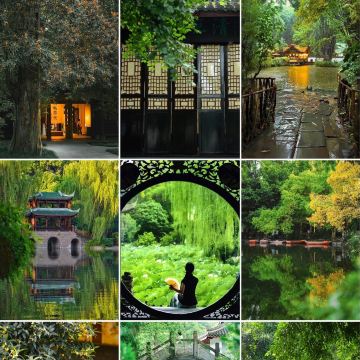
Enter through the main gate and follow the central axis: Daxie Hall, Poetry History Hall, Firewood Gate, and Ministry of Works Shrine — this is a passage leading to Du Fu's spiritual world. Each gate is like turning a page of his poetry manuscript.
Stop before the thatched cottage: The reconstructed thatched houses are so simple they border on rudimentary. Stand still, silently recite "My thatched roof is ruined by the autumn wind"—"Oh, for a great mansion with ten thousand rooms where all the poor of the world could find shelter." In this moment, you'll understand what grandeur in poverty truly means.
Don't miss the flower path and Huanhua stream: the red-walled alleyway and swaying bamboo shadows are the photogenic and enchanting corners of the thatched cottage. Walk slowly and imagine which line of poetry Du Fu was brewing in his mind as he strolled here.
Hidden details: near the Shaoling stele pavilion, pay attention to the stone slabs underfoot—some are engraved with fragments of Du Fu's poetry, like scattered time codes that can be read with a glance downward.
If time permits, you can visit the Tang dynasty ruins exhibition hall to see the daily utensils excavated from the thatched cottage, making the daily life of that era more tangible.

15:30-17:00 Wenshu Monastery | Silent closure amid incense smoke
From the poet's worries to the serenity of a thousand-year-old Zen monastery.
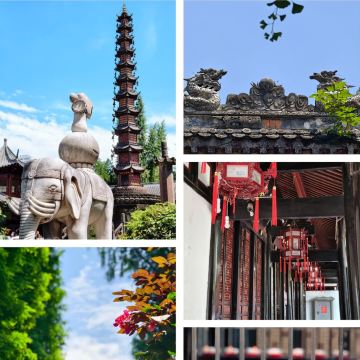
After entering the temple, it is recommended to walk clockwise around the courtyard: not rushing, not seeking check-ins, but simply observing devotees with palms pressed together and listening to wind chimes swaying in the breeze. The incense burner before Monju Pavilion emits continuous wisps of blue smoke—pause here awhile to watch the tendrils rise to the eaves and vanish into the daylight.
The plaque inscribed by Emperor Kangxi with the words "Empty forest" hangs in the Dharma Hall, where the calm brushwork conveys profound Zen meaning in just two characters.
The Thousand Buddha Peace Pagoda – circling the pagoda three times is a common practice among locals, all for the sake of attaining "tranquility".

17:00-17:30 return | Afterglow
On this day, you conversed with the faith of ancient Shu, the warmth of Tang poetry, and the serenity of Zen temples — three eras of Chengdu, three different kinds of "quiet." They do not disturb each other, yet on this day, you alone save them all.