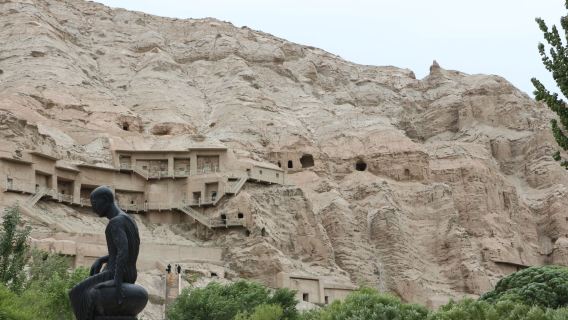
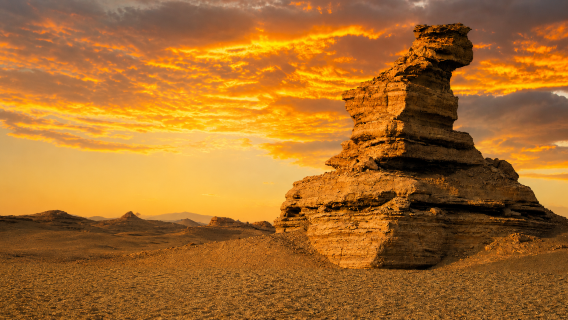
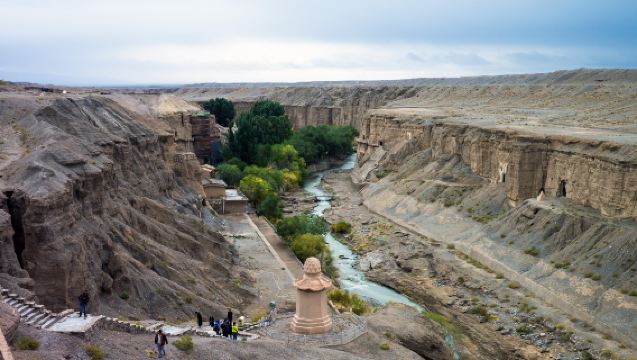
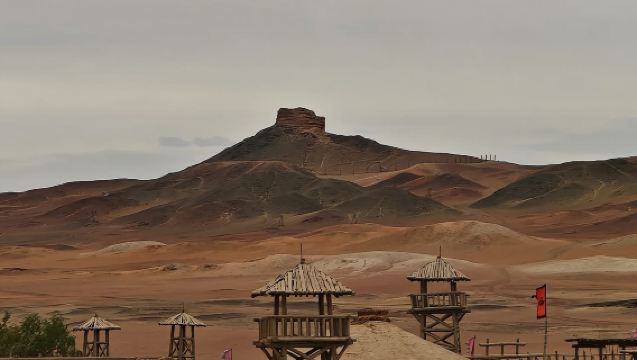
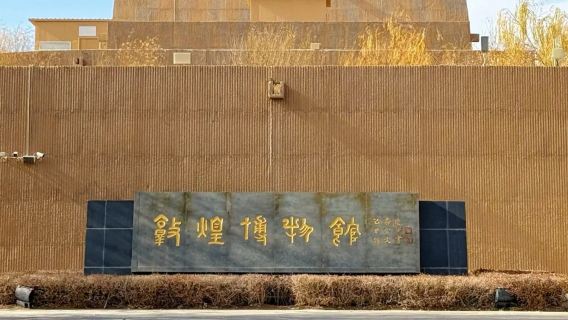
▲ [Dunhuang Museum] A national second-grade museum housing over 10,000 Silk Road artifacts. Its permanent exhibition "A metropolis where Chinese and foreign cultures converged" systematically presents Dunhuang's history from ancient times to the Ming and Qing dynasties, offering tangible insights into Silk Road civilization.


▲ [Dunhuang Bookstore] A Dunhuang-themed cultural space by the Dang River, gathering a vast collection of Dunhuang books and facsimiles of ancient manuscripts. With mural aesthetics integrated into the space, it combines reading, cultural creativity, coffee, and research into one—a paper Mogao Grottoes.


▲ White Horse Pagoda A provincial-level cultural relic protection site, this ancient pagoda was first built during the Later Qin dynasty. Legend says it was constructed to commemorate Kumarajiva's scripture-carrying white horse. The nine-story earthen Buddhist pagoda preserves Silk Road Buddhist tales, surrounded by woods in serene antiquity.


▲ [Leiyin Temple] A Han Buddhist temple of 3A grade at the foot of Mingsha Mountain, a key stop for Dharma seekers on the ancient Silk Road. Tracing its origins to the Xianyan Temple of the Western Jin Dynasty, its name carries the meaning of "Buddhist chants resonating like thunder." With solemn halls, it serves as a Dunhuang Buddhist activity site.