


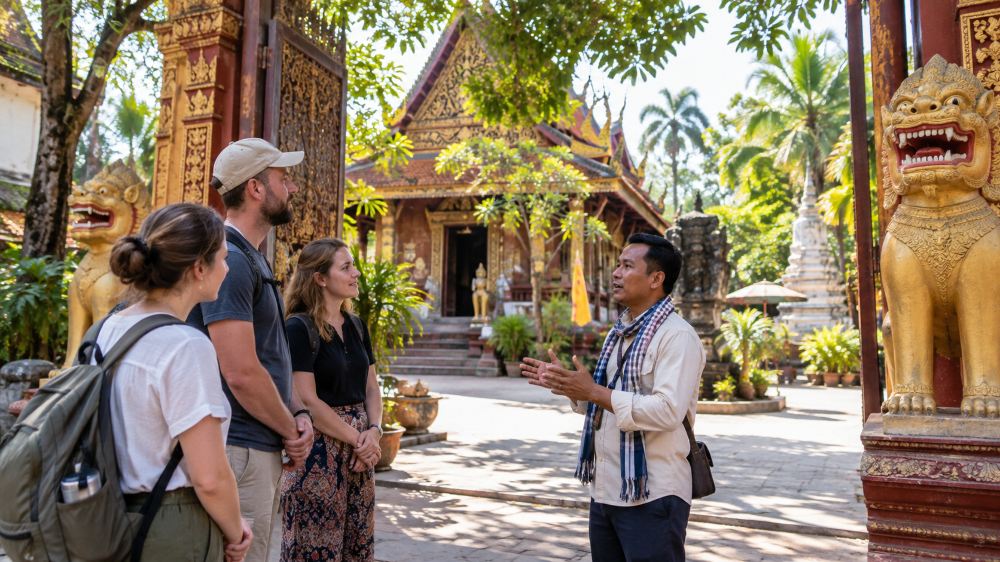
▲ Follow a local guide into the Siem Reap temple courtyard, starting from the temple gate, guardian statues, and surrounding offering spaces, to learn how Khmer local guardian spirits coexist with Buddhist beliefs in daily religious life, and understand the community culture behind the temple space.
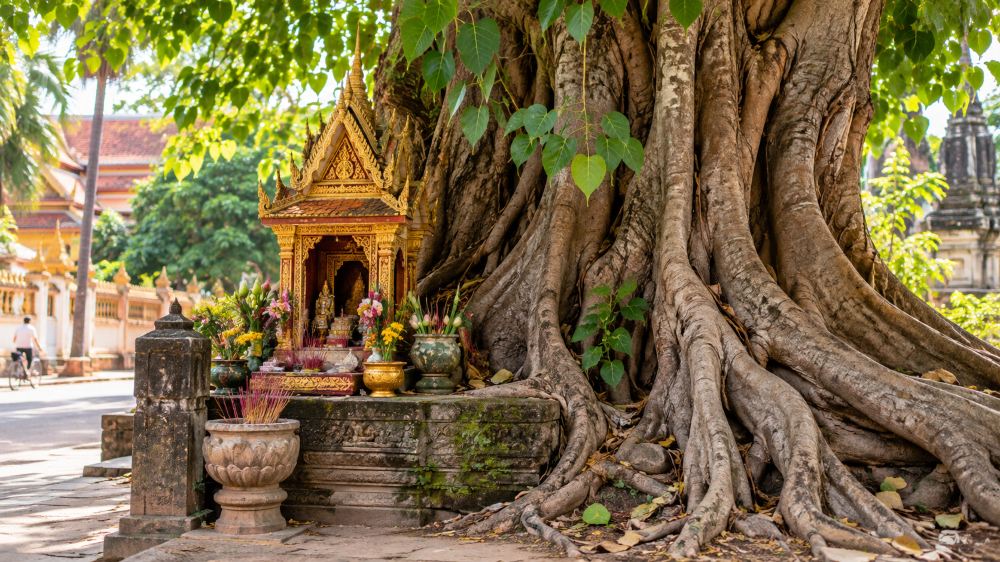
▲ Ancient trees and temple structures nestle together, with roots extending along stone platforms, showcasing the unique atmosphere of long-term coexistence between natural views and religious spaces in Siem Reap's temples.
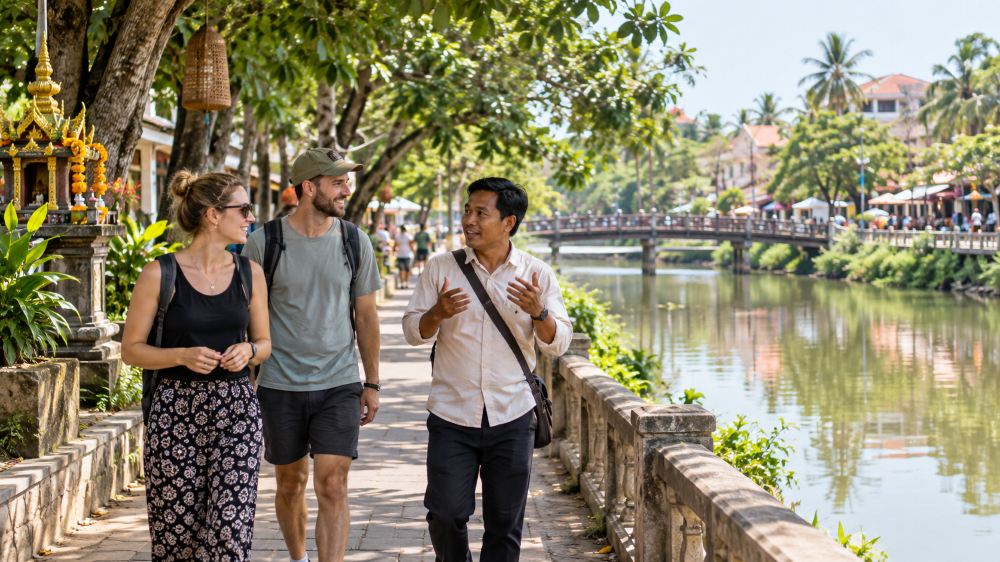
▲ Walk along the path by the temple pool, listen to the guide introduce the local residents' beliefs, offerings, and daily worship practices, and experience the life of the community temple in a tranquil setting.
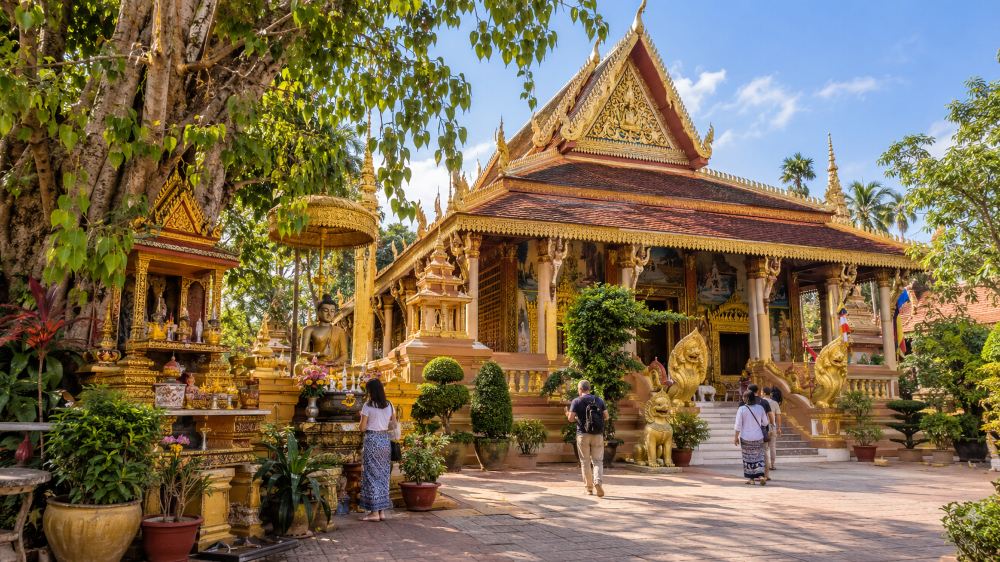
▲ Approach the vividly colored Khmer temple architecture, where the eaves, columns and courtyard layout retain strong local Buddhist characteristics, offering an intuitive scene to understand regional religious structures.
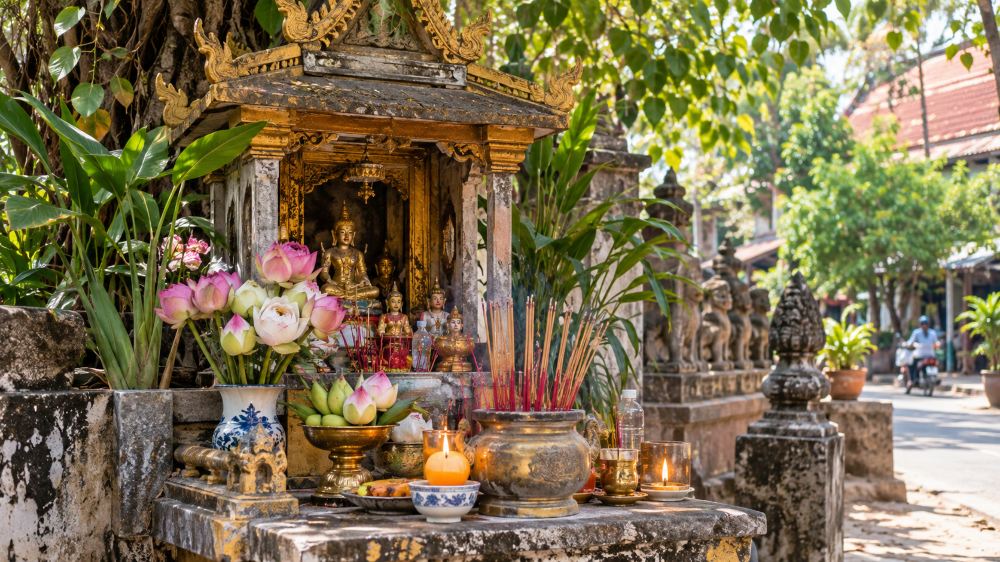
▲ Take a closer look at the altar, flowers, incense, and small shrines in the temple, and learn about the locals' religious practices and life beliefs through these daily worship details.
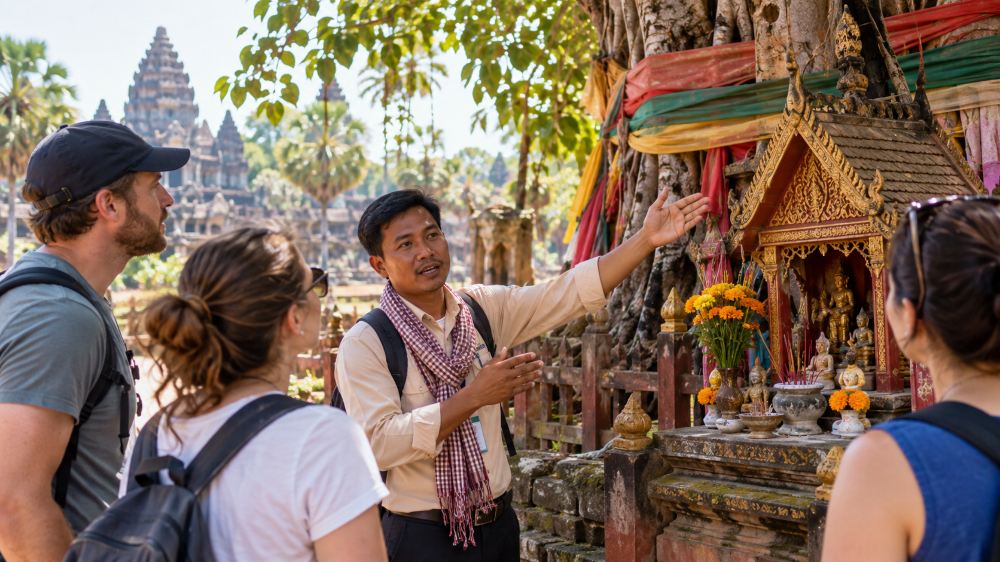
▲ The guide explains on site in front of the monastery buildings and worship spaces, helping travelers understand the cultural meanings behind Buddhist statues, decorations and worship facilities.
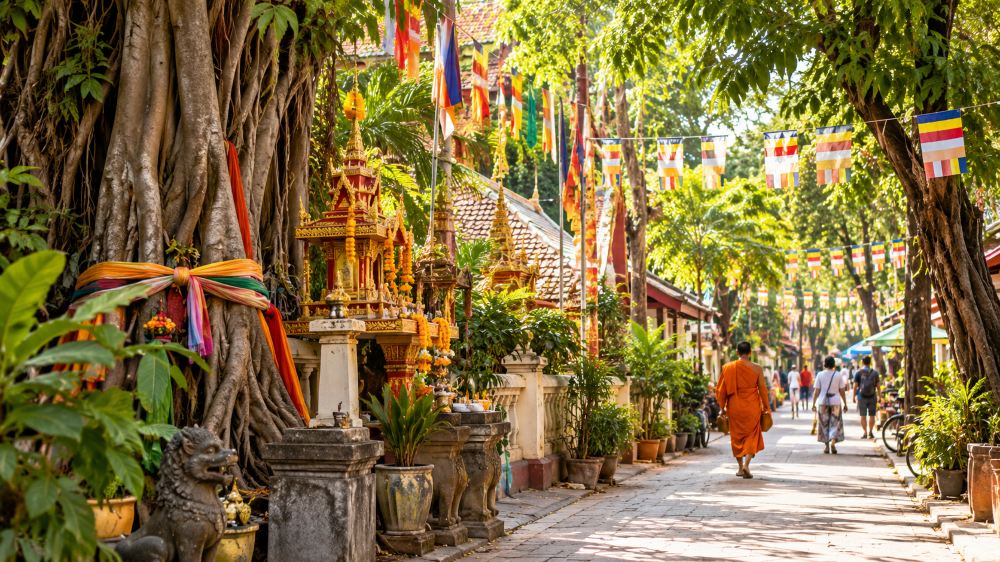
▲ Walk through the temple path adorned with colorful flags and decorations, and experience the lively, down-to-earth side of the local community temple amidst the greenery and traditional architecture.
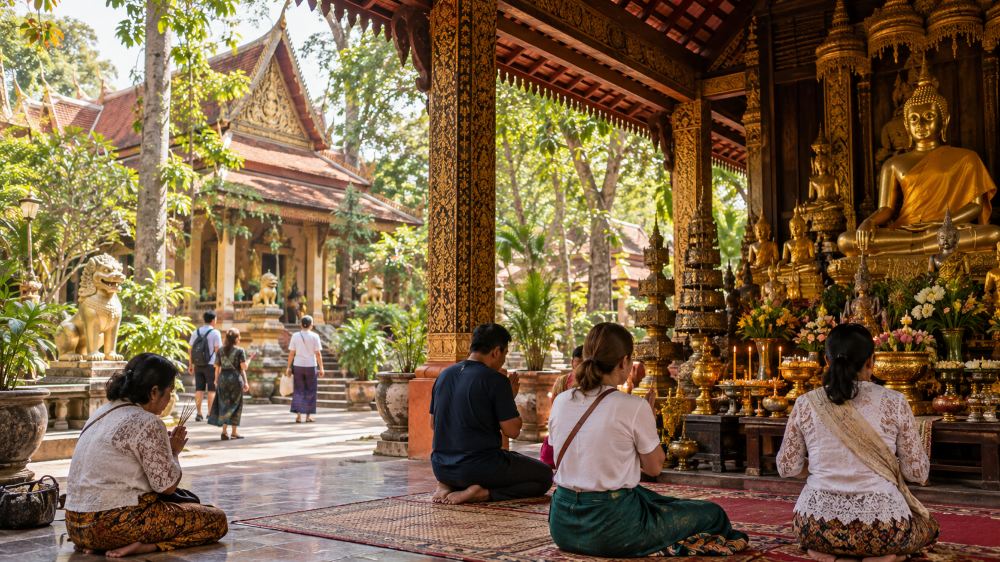
▲ Step into the open-air Buddhist hall, observe the locals' acts of faith and moments of rest in this tranquil space, and learn how temples serve not only as religious sites but also as integral parts of community daily life.
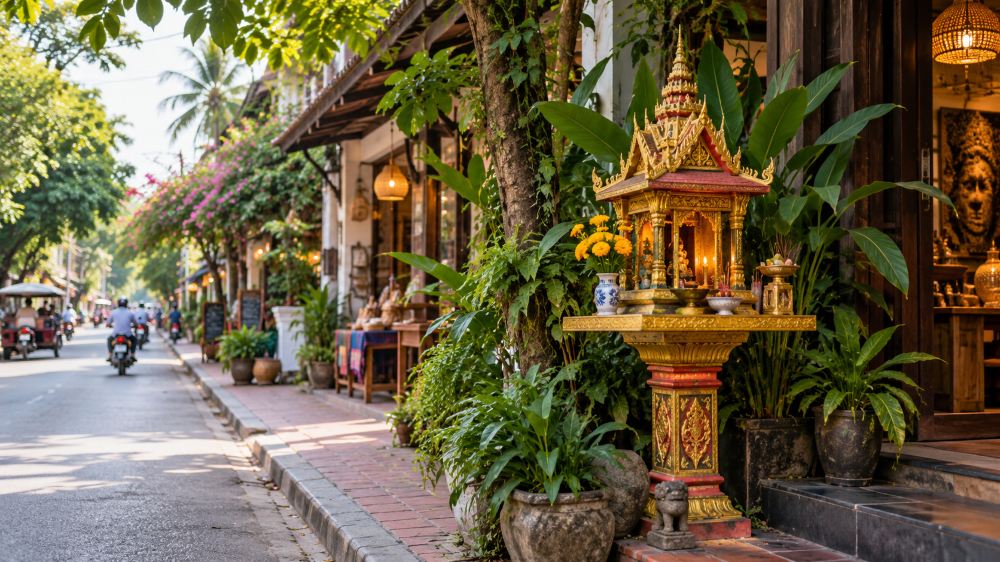
▲ Stroll along the temple path to admire exquisite shrines, plants and traditional architectural decorations, experiencing the characteristic natural blend of religious space and living environment in Khmer temples.
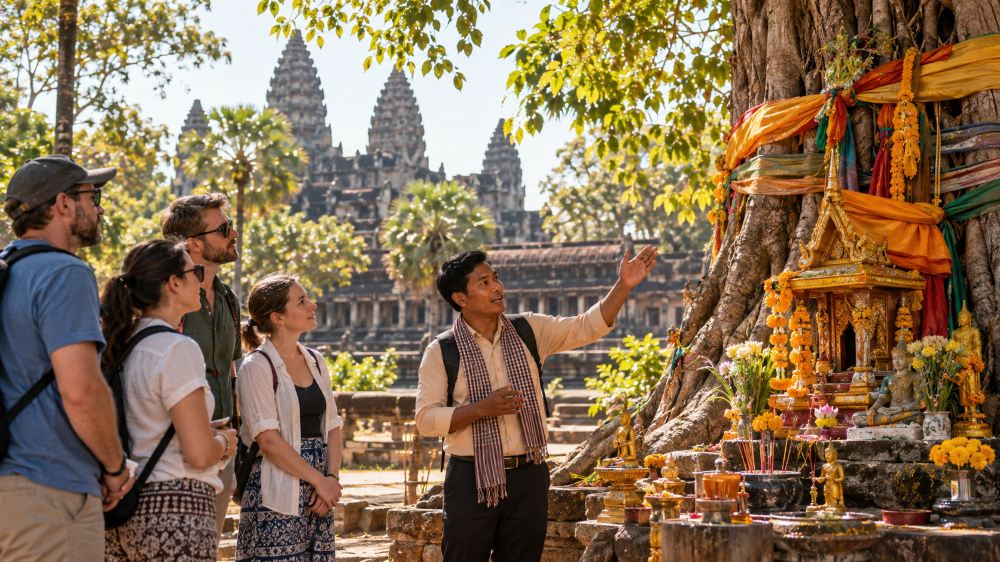
▲ Stop at the temple worship area with the guide, and further understand local Buddhist beliefs and community culture through Buddha statues, incense, and surrounding architectural details.