


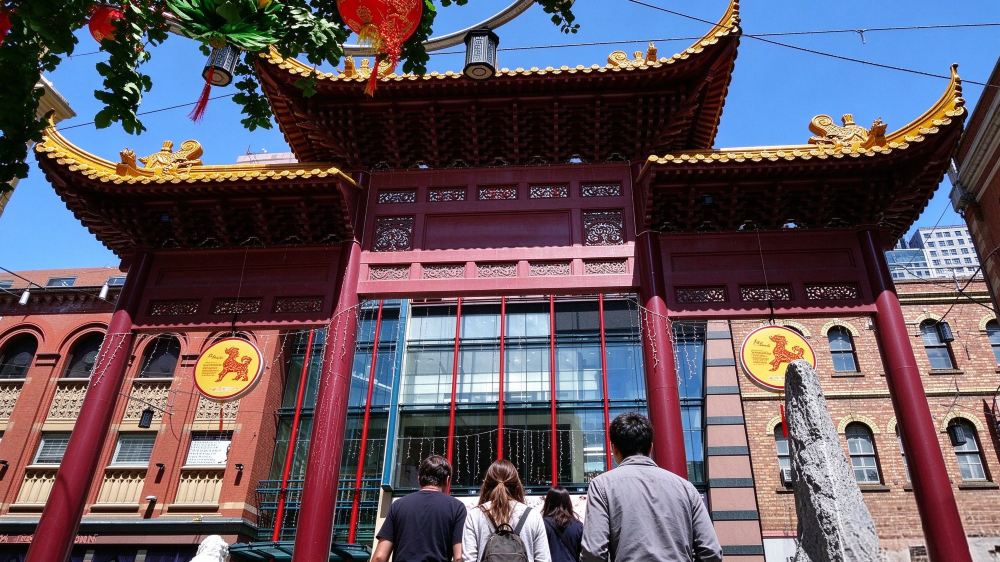
▲ Stop 1 | Chinatown Melbourne archway: the cultural gateway to the new gold mountain Melbourne Chinatown stretches along Little Bourke Street for approx. 900 m. Its history dates back to the mid-19th century, making it one of Australia's historic Chinatowns. The gold rush attracted large numbers of Chinese people to travel across the ocean, and they called Melbourne "New Gold Mountain," settling and doing business here. The Chinese-style archway before you features a golden roof, red pillars, and upturned eaves, following traditional architectural forms, adorned with red lanterns and auspicious beasts, and has become a cultural symbol of the Chinese community.
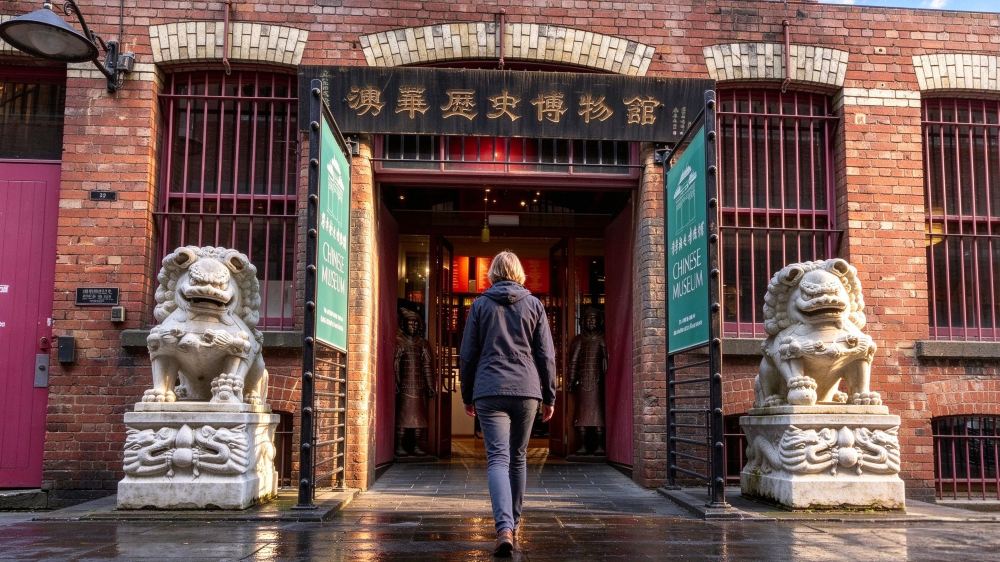
▲ Stop 2 | Chinese memories in the red brick warehouse The Chinese Australian History Museum, established in 1985, is a non-profit organization dedicated to preserving, researching, and promoting the history of Chinese Australians. Its building is a red-brick warehouse constructed in 1890, once used by Her Majesty's Theatre as a props and costume storage facility, and acquired and renovated by the Victorian government in 1984. A pair of white marble stone lions at the entrance follows traditional Chinese arrangement, and the lintel features a Chinese plaque. The collection now exceeds 8,000 items, leaving a tangible cultural foundation for Chinatown Melbourne.
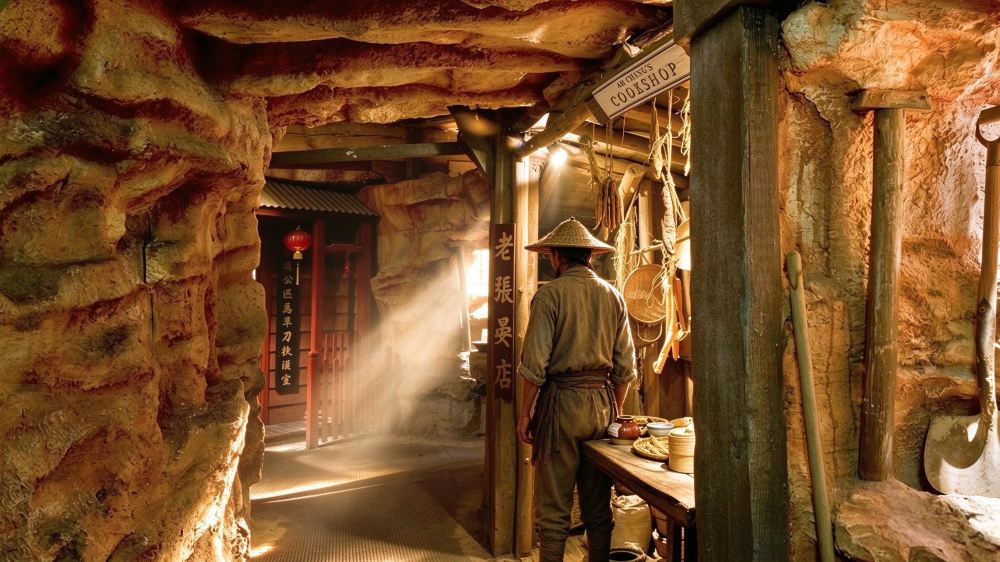
▲ Stop 3 | Chinese shops and houses in the mining district The "Seeking Gold" exhibition area uses life-size recreations to transport visitors back to a 19th-century Victorian gold mine. The Chinese storefronts before you hang Chinese signage, with wooden tables, bamboo utensils, and ceramic jars all present, recreating the eateries and general stores of the mining district from that era. The exhibition area also recreates a Cantonese opera stage and a Guan Gong shrine. Beyond their arduous labor, Chinese workers sustained their cultural identity through their native dialect, opera, and folk beliefs, preserving a touch of home in a foreign land.
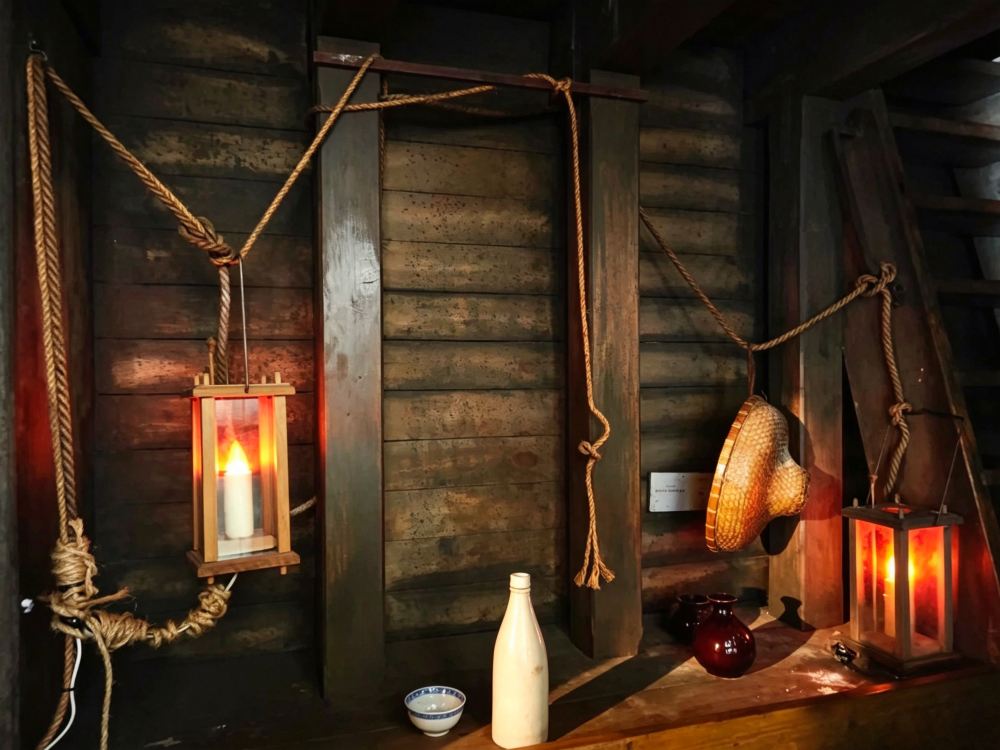
▲ Stop 4 | The years of crossing the sea under lantern light In the dimly lit wooden space, lanterns and ropes evoke the early Chinese laborers' sea crossing. They set sail from Hong Kong and endured months of rough seas before reaching Australia. In 1855, the colonial authorities in Victoria passed an anti-Chinese act specifically targeting Chinese people, imposing a £10 poll tax on every Chinese entrant and restricting the number of passengers ships could carry by weight; to avoid the heavy tax, nearly 20,000 Chinese laborers instead landed at Robe in South Australia and trekked hundreds of km to the goldfields, a route known as the "Robe Gold Rush Trail."
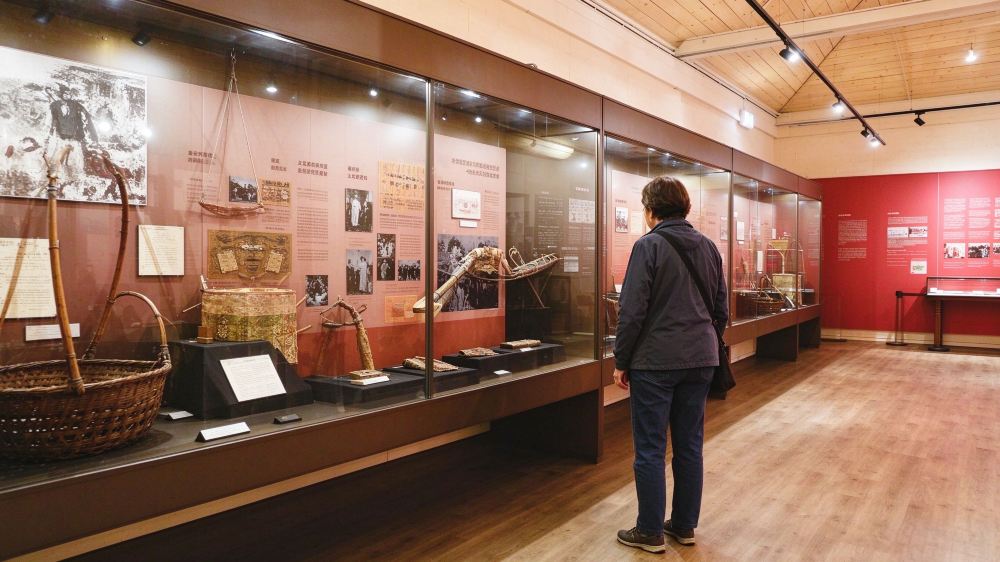
▲ Stop 5 | Daily life in bamboo baskets on a shoulder pole In the long display case, bamboo baskets, carrying poles, and various daily utensils are displayed side by side, accompanied by black-and-white historical photographs that document the daily life of Chinese laborers in the mining district. Gold panning was heavy manual labor; Chinese miners used carrying poles and bamboo baskets to transport earth and rock, patiently sifting and washing in barren gold veins, and were known for their mutual aid and cooperation. These unadorned objects bear witness to the toil and contributions of the Chinese in the local economic development, and bring the grand history of gold panning down to concrete details of everyday life.
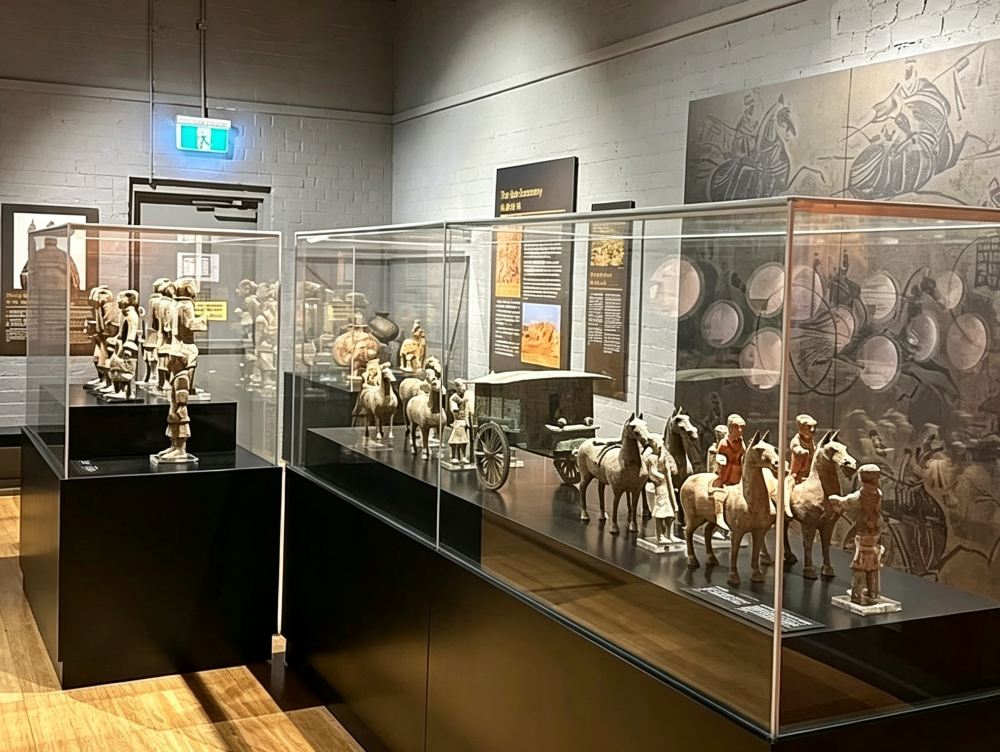
▲ Stop 6 | Pottery chariots and horses from afar The pottery sculptures of horses, chariots, and human figurines in the display case inherit the forms of ancient Chinese burial objects, using clay molds to shape images of horses, carriages, and attendants, recreating traditional travel and ceremonial scenes. Such artifacts bring Chinese cultural concepts of burial and craftsmanship to Australia, placing them alongside local Chinese-Australian history, allowing visitors to understand, beyond the gold rush stories, the profound cultural roots that Chinese workers carried with them.
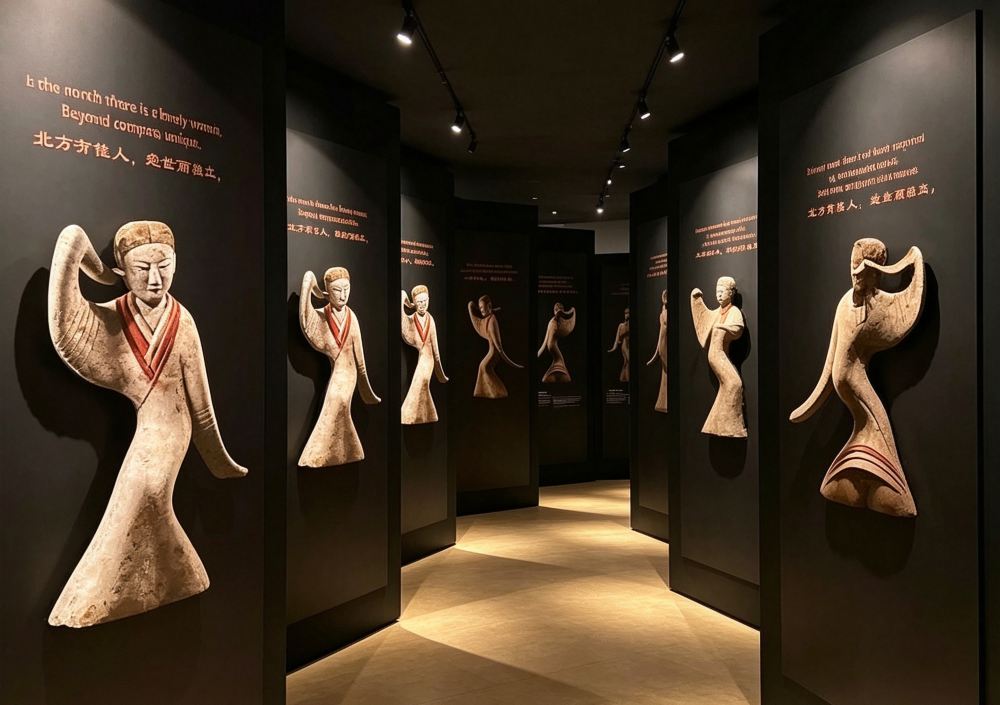
▲ Stop 7 | The lingering charm of Han dynasty music and dance Black display walls set off a row of long-sleeved dancing figurines, their figures slender and their water sleeves raised. The verse "In the north there is a beauty, peerless and independent" on the wall comes from Han Dynasty yuefu poetry, highlighting the aesthetic mood of ancient music and dance. The dancing figurines use subtle curves to capture a moment of dance, reflecting the music and dance traditions and costume culture since the Han Dynasty. The Chinese community uses this to preserve memories of classical art, and also brings flowing rhythm to the static exhibition hall.
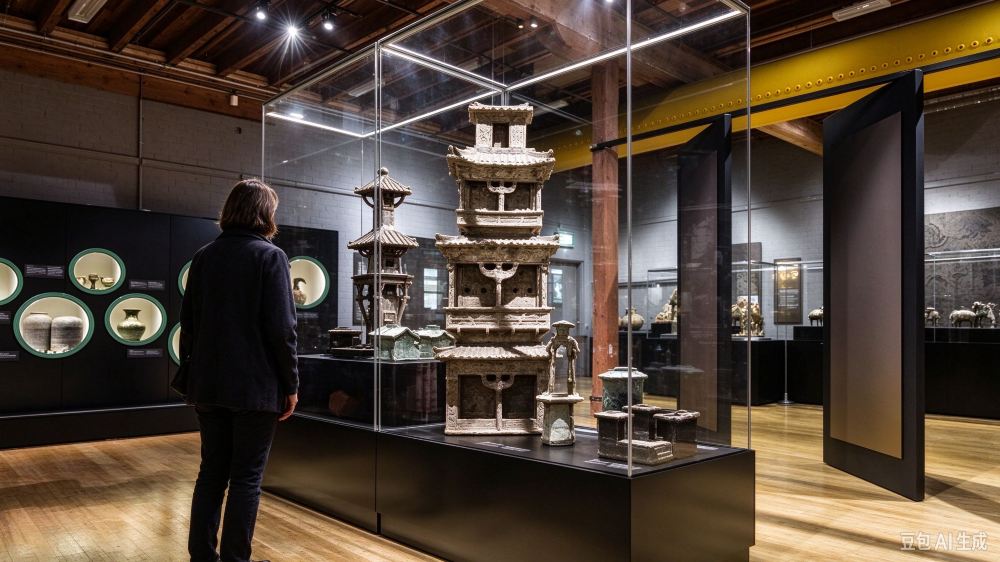
▲ Stop 8 | Architectural beliefs between double eaves The multi-story pottery tower in the glass display case features a double-eave structure, with meticulously rendered bracket sets, window lattices, and tiled roof, representing a typical form of ancient Chinese architectural mingqi (tomb models). Originally a funerary object, the pottery tower simulated a real residence, expressing wishes for the afterlife while also preserving architectural forms that have since vanished. From pavilions to towers, these models present the hierarchy and craftsmanship of traditional Chinese architecture in the Southern Hemisphere, serving as tangible footnotes to cross-cultural dialogue.
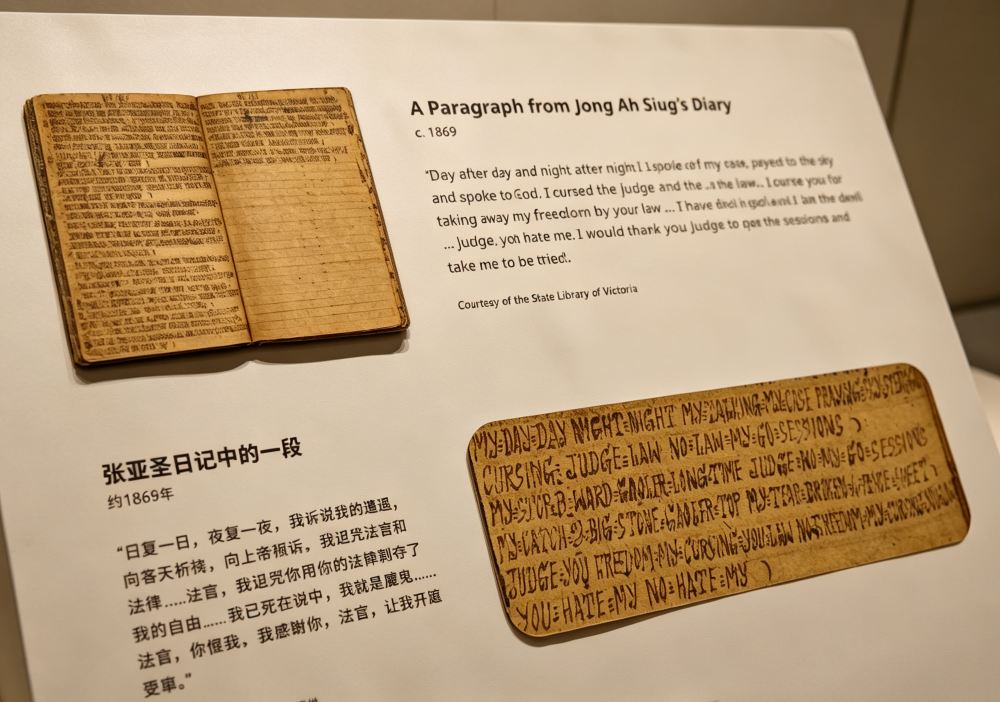
▲ Station 9 | Voices of resistance through words The yellowed diary in the display case was written in 1869, its author Zhang Yasheng pouring out his frustration at being treated unjustly by the courts in a mix of Chinese and English; the original is held by the State Library of Victoria. This private account is in the same vein as the 1879 pamphlet "The Chinese Question," jointly published by Chinese merchants Lowe Kong Meng and Louis Ah Mouy and missionary Cheong Cheok Hong, together presenting the efforts of Chinese people to fight prejudice and seek dignity through the written word. From the dream of gold mining to putting down roots, the voice of the Chinese community continues to this day in a multicultural society.