Pre-departure notice & meeting information (important tips)
Within 24 hours after booking, our staff will contact you via the WeChat/WhatsApp you provided. Please be sure to leave a valid WeChat/WhatsApp.
One day before your trip, we will confirm the departure time with you. Please gather at the designated location and time. As this is a join-in tour, there may be some waiting; we appreciate your understanding.
Meeting time and location:
Arrive at the Statue of Qin Shi Huang by 9:20 for the meeting
️Emperor Qinshihuang's Mausoleum Site Museum
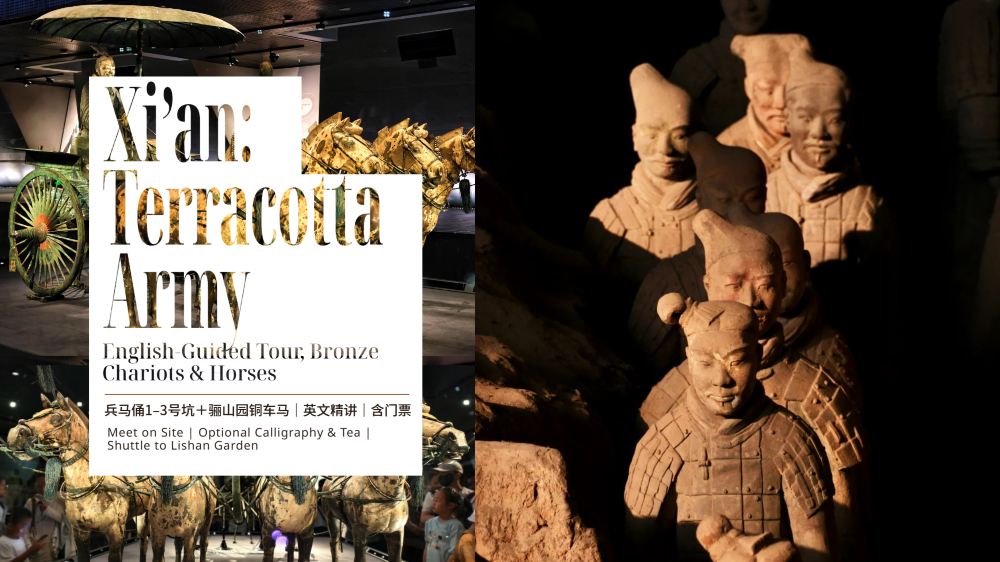
World natural heritage site: Also known as the Emperor Qinshihuang's Mausoleum Site Museum and the Qin terracotta warriors, it is a burial pit of the Mausoleum of the First Qin Emperor and is known as the Eighth Wonder of the World. The more than one thousand terracotta soldiers and figures unearthed here vary in appearance and are vivid in expression, making it a gem in the history of ancient Chinese sculptural art.
️Emperor Qinshihuang's Mausoleum Site Museum - Lishan Garden attraction
Emperor Qinshihuang's Mausoleum Site Museum - Lishan Garden is the core area of Emperor Qinshihuang's mausoleum ("Lishan" refers to Mount Li, and the mausoleum is named after the mountain). Hundreds of accompanying pits have been identified both inside and outside the mausoleum grounds, and the main ones currently open to the public are:
- Bronze Chariot and Horse Museum: On display are two painted bronze chariots and horses unearthed in 1980 on the west side of the earthen mound. Built at half the size of real chariots and horses and assembled from thousands of components, they are hailed as the "crown of bronze" and represent one of the pinnacles of ancient Chinese bronze craftsmanship
- Burial pit K9901: also known as the "Acrobatics Figures Pit," it has yielded pottery figurines with bare upper bodies and painted short skirts, believed to be performers of court acrobatics and wrestling, entirely different in character from the military formations of the Emperor Qinshihuang's Mausoleum Site Museum
- K0006 burial pit: The unearthed "civil official figurines" standing with hands clasped in sleeves provide physical evidence of the Qin Dynasty's civil official system