


Friendly reminder
1. Travelers aged 60 and above must ensure they are in good health and suitable for travel, and must be accompanied by at least one adult traveler aged 21-55 throughout the trip.
Minors under the age of 18 must be accompanied throughout the journey by at least one adult traveler aged 21-55.
3. This tour is not suitable for special groups such as pregnant women, people with heart disease, or acrophobia. There is a risk of being rejected, so please book with caution.
We regret to inform you that visitors aged 80 and above cannot be accommodated. We appreciate your understanding.
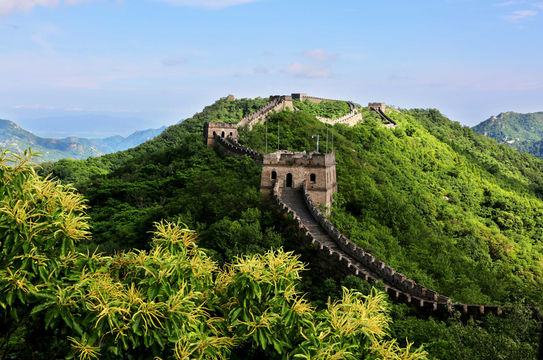
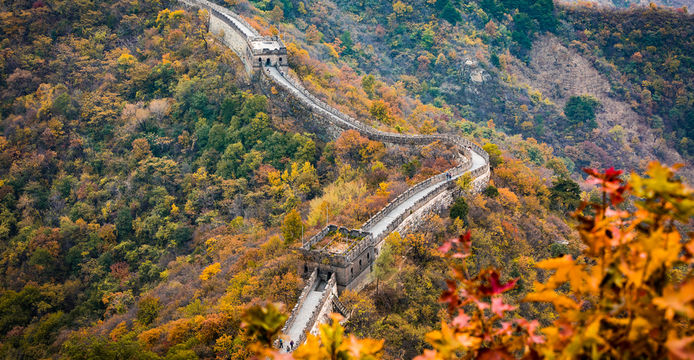
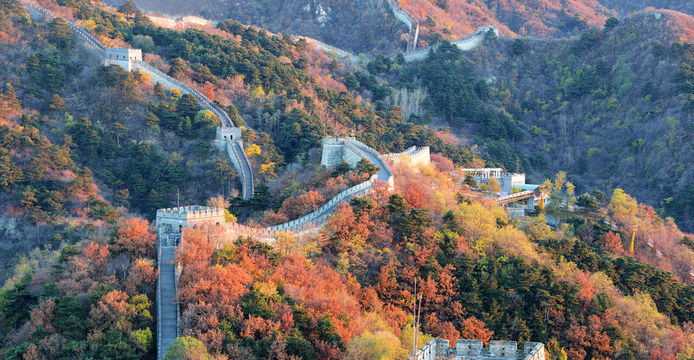
1. Mutianyu Great Wall

Located in Mutianyu Village, Bohai Town, Huairou District, Beijing, approximately 73 kilometers from downtown Beijing, the Mutianyu Great Wall is an important part of the Ming Dynasty Great Wall, renowned for its unique architectural style and historical significance. Constructed in 1368 under the supervision of General Xu Da, a subordinate of Emperor Zhu Yuanzhang, on the ruins of the Northern Qi Dynasty Great Wall, it represents the finest section of the Ming Dynasty's Great Wall. Stretching east to Gubeikou and west to Juyong Pass, this segment has long served as a crucial military stronghold defending the capital. The well-preserved walls of the Mutianyu Great Wall vividly showcase the ancient charm of the Great Wall, embodying profound historical and cultural value. In 1987, it was inscribed on the UNESCO World Heritage List. Converted into a scenic area in 2000, it was rated as a AAAAA-level tourist attraction by the China National Tourism Administration in 2011.

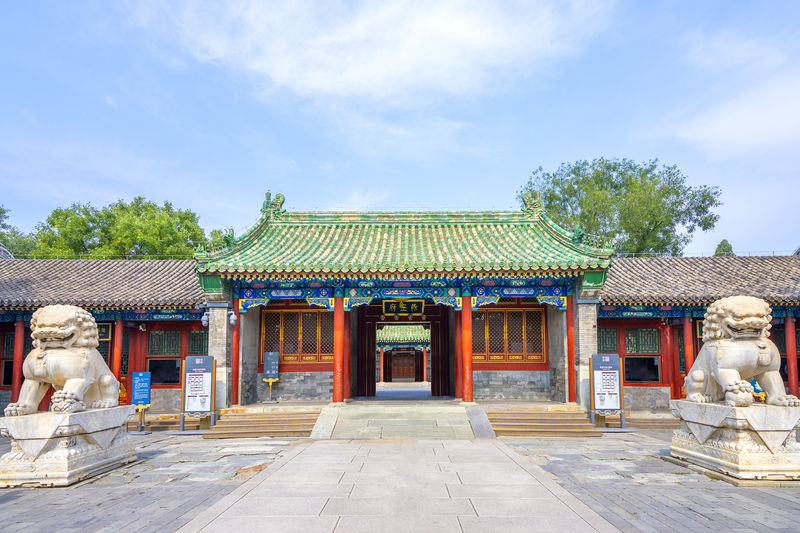
2. Prince Kung's Palace Museum

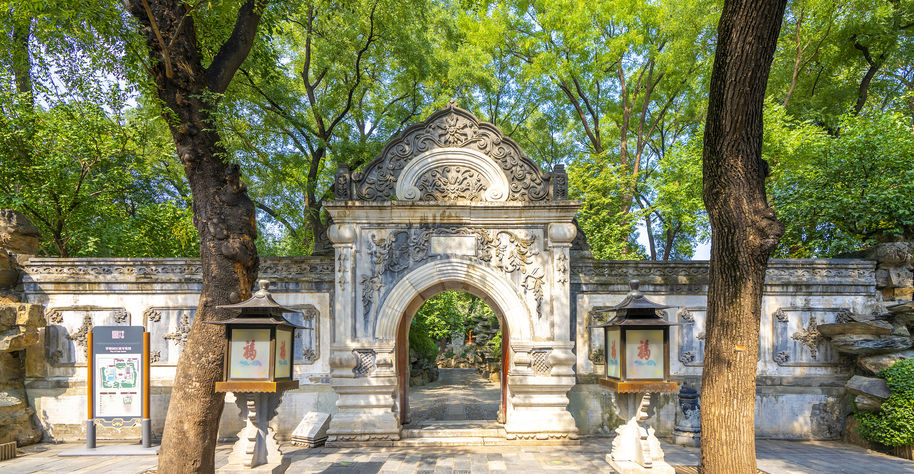
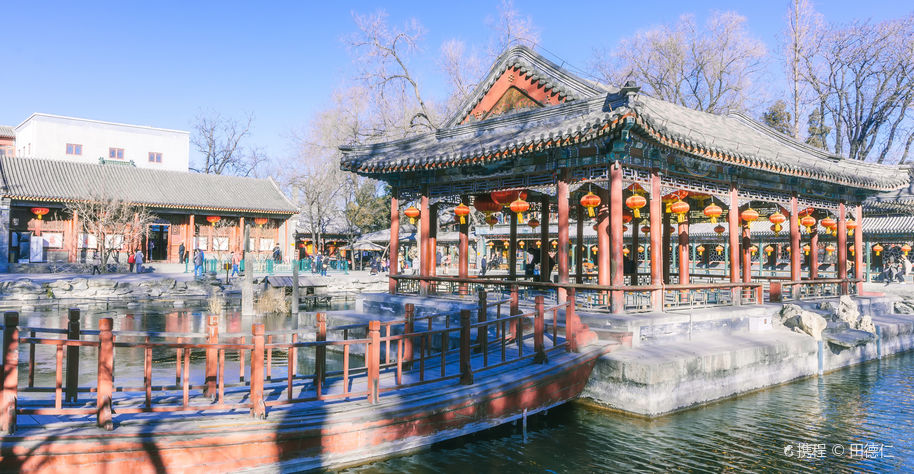
Prince Kung's Palace Museum is located at Qianhai West Street in Xicheng District, Beijing. As one of the largest princely mansions of the Qing Dynasty, it successively served as the residence of corrupt official Heshen and Prince Qing Yonglin, later gaining its name when Prince Gong Yixin inhabited it. Having witnessed the Qing Dynasty's transition from prosperity to decline, it's often said that "Prince Kung's Palace Museum encapsulates half of Qing Dynasty history."

Prince Kung's Palace Museum is one of the most well-preserved princely mansion complexes in China, featuring over 30 distinct architectural clusters with exquisite layouts and magnificent grandeur. The entire complex is divided into two main sections: the mansion area in the front (southern part) and the garden area in the rear (northern part).

The mansion covers an area of approximately 30,000 square meters, consisting of multiple courtyard houses strictly aligned along a central axis. It is divided into three architectural sections: central, eastern, and western, with each section containing three courtyards.
The central axis: The main structures along the central axis are the Yin'an Hall and the Jiale Hall. The roofs of these halls are covered with green glazed tiles, showcasing the majestic grandeur of the central axis and reflecting the identity of a prince.
Visitors photo souvenir


