![Forbidden City + Temple of Heaven + Summer Palace Day Tour [2-8 Person English-Speaking Group Including English Guide, Admission Tickets, and Transfers]](data:image/webp;base64,UklGRhYNAABXRUJQVlA4WAoAAAAgAAAAZAQAZAQASUNDUCQCAAAAAAIkYXBwbAQAAABtbnRyUkdCIFhZWiAH4QAHAAcADQAWACBhY3NwQVBQTAAAAABBUFBMAAAAAAAAAAAAAAAAAAAAAAAA9tYAAQAAAADTLWFwcGzKGpWCJX8QTTiZE9XR6hWCAAAAAAAAAAAAAAAAAAAAAAAAAAAAAAAAAAAAAAAAAApkZXNjAAAA/AAAAGVjcHJ0AAABZAAAACN3dHB0AAABiAAAABRyWFlaAAABnAAAABRnWFlaAAABsAAAABRiWFlaAAABxAAAABRyVFJDAAAB2AAAACBjaGFkAAAB+AAAACxiVFJDAAAB2AAAACBnVFJDAAAB2AAAACBkZXNjAAAAAAAAAAtEaXNwbGF5IFAzAAAAAAAAAAAAAAAAAAAAAAAAAAAAAAAAAAAAAAAAAAAAAAAAAAAAAAAAAAAAAAAAAAAAAAAAAAAAAAAAAAAAAAAAAAAAAAAAAAAAAAAAAAAAAHRleHQAAAAAQ29weXJpZ2h0IEFwcGxlIEluYy4sIDIwMTcAAFhZWiAAAAAAAADzUQABAAAAARbMWFlaIAAAAAAAAIPfAAA9v////7tYWVogAAAAAAAASr8AALE3AAAKuVhZWiAAAAAAAAAoOAAAEQsAAMi5cGFyYQAAAAAAAwAAAAJmZgAA8qcAAA1ZAAAT0AAACltzZjMyAAAAAAABDEIAAAXe///zJgAAB5MAAP2Q///7ov///aMAAAPcAADAblZQOCDMCgAAMC0BnQEqZQRlBD51OplKpKMiIaASCBiQDolpbuF3YR69H8pb0WcX4fAAVphqqTZMQ6qk2TEOqpNkxDqqTZMQ6qk2TEOqpNkxDqqTZMQ6qk2TEOqpNkxDqqTZMQ6qk2TEOqpNkxDqqTZMQ6qk2TEOqpNkxDqqTZMQ6qk2TEOqpNkxDqqTZMQ6qk2TEOqpNkxDqqTZMQ6qk2TEOqpNkxDqqTZMQ6qk2TEOqpNkxDqqTZMQ6qk2TEOqpNkxDqqTZMQ6qk2TEOqpNkxDqqTZMQ6qk2TEOqpNkxDqqTZMQ6qk2TEOqpNkxDqqTZMQ6qk2TEOqpNkxDqqTZMQ6qk2TEOqpNkxDqqTZMQ6qk2TEOqpNkxDqqTZMQ6qk2TEOqpNkxDqqTZMQ6qk2TEOqpNkxDqqTZMQ6qk2TEOqpNkxDqqTZMQ6qk2TEOqpNkxDqqTZMQ6qk2TEOqpNkxDqqTZMQ6qk2TEOqpNkxDqqTZMQ6qk2TEOqpNkxDqqTZMQ6qk2TEOqpNkxDqqTZMQ6qk2TEOqpNkxDqqTZMQ6qk2TEOqpNkxDqqTZMQ6qk2TEOqpNkxDqqTZMQ6qk2TEOqpNkxDqqTZMQ6qk2TEOqpNkxDqqTZMQ6qk2TEOqpNkxDqqTZMQ6qk2TEOqpNkxDqqTZMQ6qk2TEOqpNkxDqqTZMQ6qk2TEOqpNkxDqqTZMQ6qk2TEOqpNkxDqqTZMQ6qk2TEOqpNkxDqqTZMQ6qk2TEOqpNkxDqqTZMQ6qk2TEOqpNkxDqqTZMQ6qk2TEOqpNkxDqqTZMQ6qk2TEOqpNkxDqqTZMQ6qk2TEOqpNkxDqqTZMQ6qk2TEOqpNkxDqqTZMQ6qk2TEOqpNkxDqqTZMQ6qk2TEOqpNkxDqqTZMQ6qk2TEOqpNkxDqqTZMQ6qk2TEOqpNkxDqqTZMQ6qk2TEOqpNkxDqqTZMQ6qk2TEOqpNkxDqqTZMQ6qk2TEOqpNkxDqqTZMQ6qk2TEOqpNkxDqqTZMQ6qk2TEOqpNkxDqqTZMQ6qk2TEOqpNkxDqqTZMQ6qk2TEOqpNkxDqqTZMQ6qk2TEOqpNkxDqqTZMQ6qk2TEOqpNkxDqqTZMQ6qk2TEOqpNkxDqqTZMQ6qk2TEOqpNkxDqqTZMQ6qk2TEOqpNkxDqqTZMQ6qk2TEOqpNkxDqqTZMQ6qk2TEOqpNkxDqqTZMQ6qk2TEOqpNkxDqqTZMQ6qk2TEOqpNkxDqqTZMQ6qk2TEOqpNkxDqqTZMQ6qk2TEOqpNkxDqqTZMQ4Q4e4y8Rz16MvEc9ejLxHPXoy8Rz16MvEc9ejLxHPXYLrUl+0HaQA25DjLxHPXoy8Rz16MvEc9ejLxHPXoy8Rz16MvEZSAd+wyzHgIewW2Zlbas3+3QFqFHDvvz16MvEc9ejLxHPXoy8Rz16MvEc9ejLw9Oem0o0qUTd1njpSTxxvz+UIQ1SwN06+JGENVSbJiHVUmyYh1VJsmIdVSbJiHVUmyYh1ZEroH+qqbFYBP9f+zCmdQQ1VJsmIdVSbJiHVUmyYh1VJsmIdVSbJiHVTZQWid8vIAW6B5hydBNyCGqpNkxDqqTZMQ6qk2TEOqpNkxDqqTZMQ6qbKv34rDoky1oQFUQTontcIK0gBlWiXHIIaqk2TEOqpNkxDqqTZMQ6qk2TEOqpNkxDeQjCloCfdCs6qOS6zziWUYb7RZRbJluW8Rz16MvEc9ejLxHPXoy8Rz16MvEc9ejLxHKF4xmqUFetnXkhUW0VQPJl0/FzGoYKM9KJBJsmIdVSbJiHVUmyYh1VJsmIdVSbJiHVUmyCVP4Ff+iUBKzVlwfT5jYIyEgFVbFymfEgcFXFCAtNuYTLqbxGHiOevRl4jnr0ZeI569GXiOevRl4jnr0ZeI8SaOPt4QO5srn1JnYtiWrv0luwNavZsv1JgWnxWDljXjkENVSbJiHVUmyYh1VJsmIdVSbJiHVUmyYhvLJVIe3OSgh82JeTBxV/nYynNBDVUmyYh1VJsmIdVSbJiHVUmyYh1VJsmIdVSbKCl7789ejLxHPXoy8Rz16MvEc9ejLxHPXoy8Rz16MvEc9ejLxHPXoy8Rz16MvEc9ejLxHPXoy8Rz16MvEc9ejLxHPXoy8Rz16MvEc9ejLxHPXoy8Rz16MvEc9ejLxHPXoy8Rz16MvEc9ejLxHPXoy8Rz16MvEc9ejLxHPXoy8Rz16MvEc9ejLxHPXoy8Rz16MvEc9ejLxHPXoy8Rz16MvEc9ejLxHPXoy8Rz16MvEc9ejLxHPXoy8Rz16MvEc9ejLxHPXoy8Rz16MvEc9ejLxHPXoy8Rz16MvEc9ejLxHPXoy8Rz16MvEc9ejLxHPXoy8Rz16MvEc9ejLxHPXoy8Rz16MvEc9ejLxHPXoy8Rz16MvEc9ejLxHPXoy8Rz16MvEc9ejLxHPXoy8Rz16MvEc9ejLxHPXoy8Rz16MvEc9ejLxHPXoy8Rz16MvEc9ejLxHPXoy8Rz16MvEc9ejLxHPXoy8Rz16MvEc9ejLxHPXoy8Rz16MvEc9ejLxHPXoy8Rz16MvEc9ejLxHPXoy8Rz16MvEc9ejLxHPXoy8Rz16MvEc9ejLxHPXoy8Rz16MvEc9ejLxHPXoy8Rz16MvEc9ejLxHPXoy8Rz16MvEc9ejLxHPXoy8Rz16MvEc9ejLxHPXoy8Rz16MvEc9ejLxHPXoy8Rz16MvEc9ejLxHPXoy8Rz16MvEc9ejLxHPXoy8Rz16MvEc9ejLxHPXoy8Rz16MvEc9ejLxHPXoy8Rz16MvEc9ejLxHPXoy8Rz16MvEc9ejLxHPXoy8Rz16MvEc9ejLxHPXoy8Rz16MvEc9ejLxHPXoy8Rz16MvEc9ejLxHPXoy8Rz16MvEc9ejLxHPXoy8Rz16MvEc9ejLxHPXoy8Rz16MvEc9ejLxHPXoy8Rz16MvEc9ejLxHPXoy8Rz16MvEc9ejLxHPXoy8Rz16MvEc9ejLxHPXoy8Rz16MvEc9ejLxHPXoy8Rz16MvEc9ejLxHPXoy8Rz16MvEc9ejLxHPXoy8Rz16MvEc9ejLxHPXoy8Rz16MvEc9ejLxHPXoy8Rz16MvEc9ejLxHPXoy8Rz16MvEc9ejLxHPXoy8Rz16MvEc9ejLxHPXoy8Rz16MvEc9ejLxHPXoy8Rz16MvEc9ejLxHPXoy8Rz16MvEc9ejLxHPXoy8Rz16MvEc9ejLxHPXoy8Rz16MvEc9ejLxHPXoy8Rz16MvEc9eioAAP7/4vC2LEQAAAAAAAAAAAAAAAAAAAAAAAAAAAAAAAAAAAAAAAAAAAAAAAAAAAAAAAAAAAAAAAAAAABps4ATP0udazyHzBxVasdQajicYP97oruYQAXhittIvZot8O6bZlPg5MPkP1xm8kLCuntWV2Q4gF8bX0AGuY6RZaVpoUzaeFlE3lCqAqWpLgDnmhngAT2DovvpGMvyA78nzjPcKAYbg0oWvLfZ0gvK2MlQIAVO85VUeHh36OfDS9qFDVkgeQMRgQB4TTZK5HzzIyPyf3NtaKWqLEEcagCmiWjkz0Nxm3CPuBAACWaov5j+tGVnVHZ3hQBD8cA3MTW1L5m7w3NDAQ4WHBYspHl48O/AgBvye7T71zxOUOLz7NKj0sC8VKkIAAAAAAAAAAAAAAAAAAAAAAAAAAAAAAAAAAAAAAAAAAAAAAAAAAAAAAAAAAAAAAAAAAAAAAAAAA==)


[Important Notice] A successful booking does not guarantee a successful waitlist for the Forbidden City. Please carefully read the announcement on Trip.com's official website, as the merchant will need to secure tickets again. If the merchant fails to secure tickets, visitors will be notified by phone or SMS before 22:00 on the waitlist day (usually 7 days before the travel date), and they can cancel without penalty or reschedule for free. Please book with caution if this is a concern.
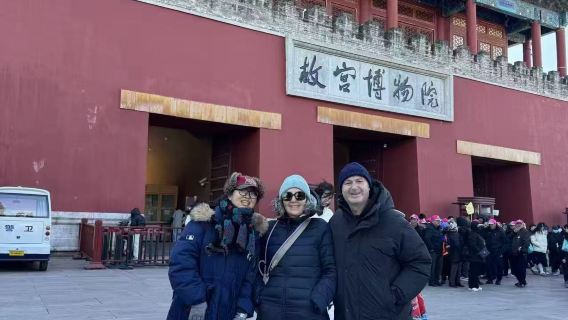
 Known as the Forbidden City, it served as the imperial palace during the Ming and Qing dynasties, standing as an iconic symbol of ancient China. When you walk through its majestic walls and grand courtyards, you can truly feel its former glory. Centuries of history have left behind magnificent architectural treasures and countless cultural relics, which now form the main highlights for visitors exploring the Palace Museum today.
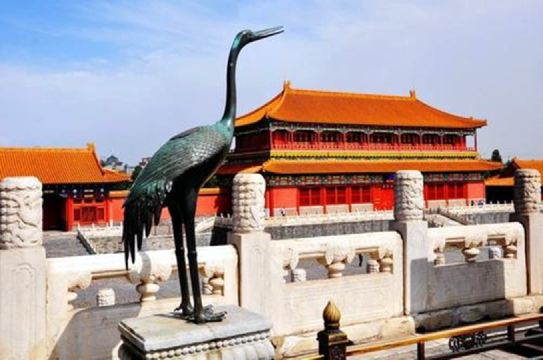
Tour the ancient architectural complex
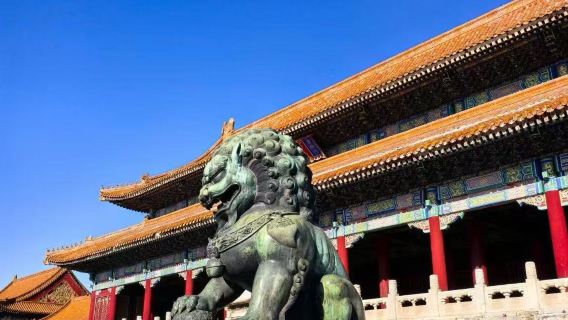
🌟The Forbidden City is one of the most well-preserved and largest ancient wooden architectural complexes in China and the world. These magnificent buildings can be divided into two main sections: the "Outer Court" and the "Inner Court." The Gate of Heavenly Purity serves as the boundary—the area south of it is the Outer Court, where emperors handled state affairs, while the area north is the Inner Court, housing the imperial family and the emperor's consorts. Walking through the Hall of Supreme Harmony, the Palace of Heavenly Purity, and the Palace of Earthly Tranquility, and strolling among the flowers in the Imperial Garden, you'll feel as if you've stepped into a historical drama.
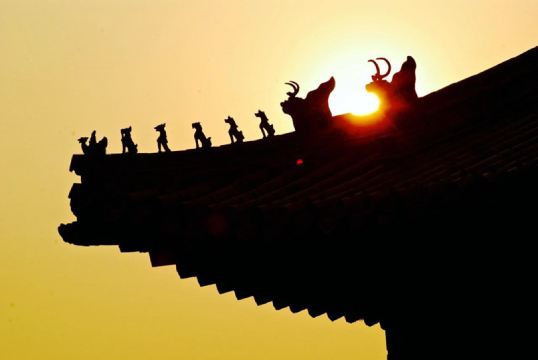
Temple of Heaven
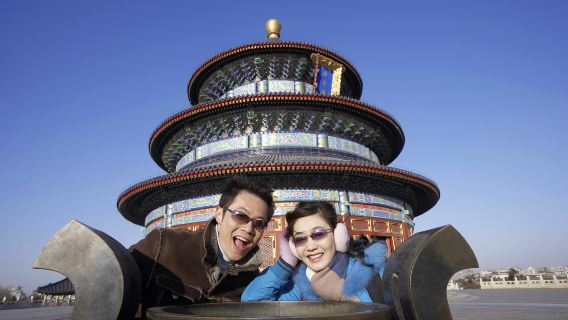
It was the exclusive altar for emperors of the Ming and Qing dynasties to worship heaven, pray for rain, and seek bountiful harvests, and is a renowned ancient architectural complex in China. The northern part of the altar area is circular, while the southern part is square, symbolizing "the round heaven and square earth." The entire Temple of Heaven is divided into the Inner Altar and Outer Altar sections, with iconic structures like the Hall of Prayer for Good Harvests and the Echo Wall located within the Inner Altar.
Area Overview
The inner altar is divided into northern and southern sections by palace walls. The northern part is the "Prayer for Good Harvest Altar," where emperors held grand ceremonies in spring to pray for favorable weather and abundant harvests. Key structures include the Hall of Prayer for Good Harvests, the Imperial Vault of Heaven, the East and West Side Halls, the Gate of Prayer for Good Harvests, the Divine Kitchen, the Slaughter Pavilion, and the Seventy-Two Corridors.

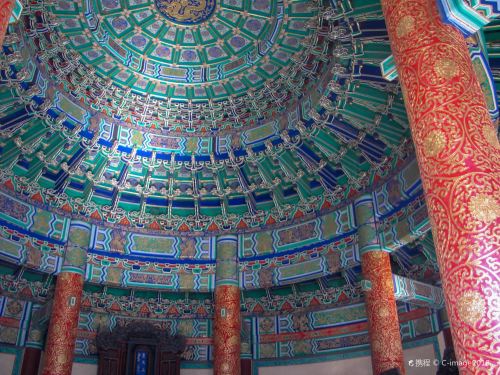
The southern section is the "Circular Mound Altar," an open-air three-tiered circular stone platform where emperors performed the winter solstice heaven worship ceremonies. The main structures include the Circular Mound Altar, the Imperial Vault of Heaven with its side halls, the Divine Kitchen, the Three Storerooms, and the Slaughter Pavilion.
Connecting the two altars is a 360-meter-long, 28-meter-wide, and 2.5-meter-high brick-and-stone platform called the "Sacred Way," also known as the "Seaside Avenue" or the "Danbi Bridge," symbolizing the long path one must traverse to reach the heavenly court.
Summer Palace
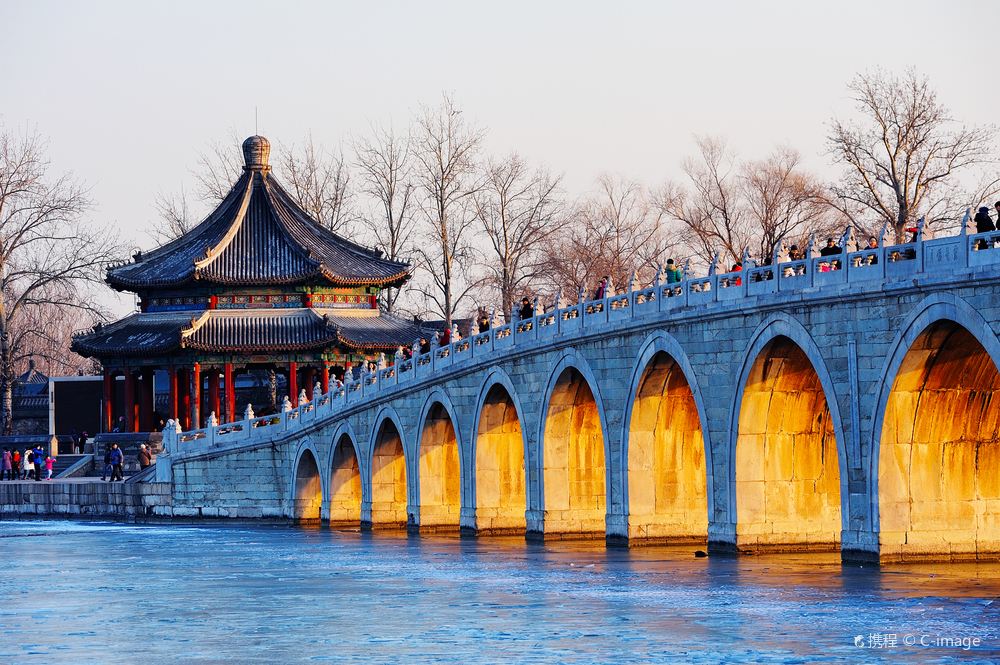
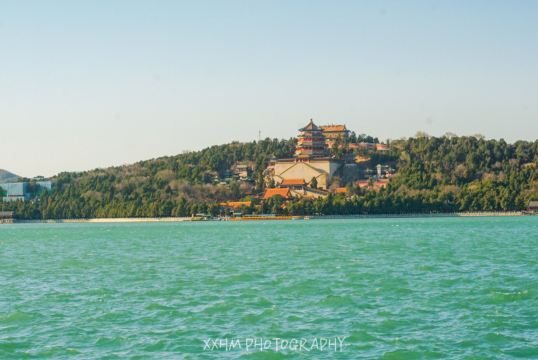
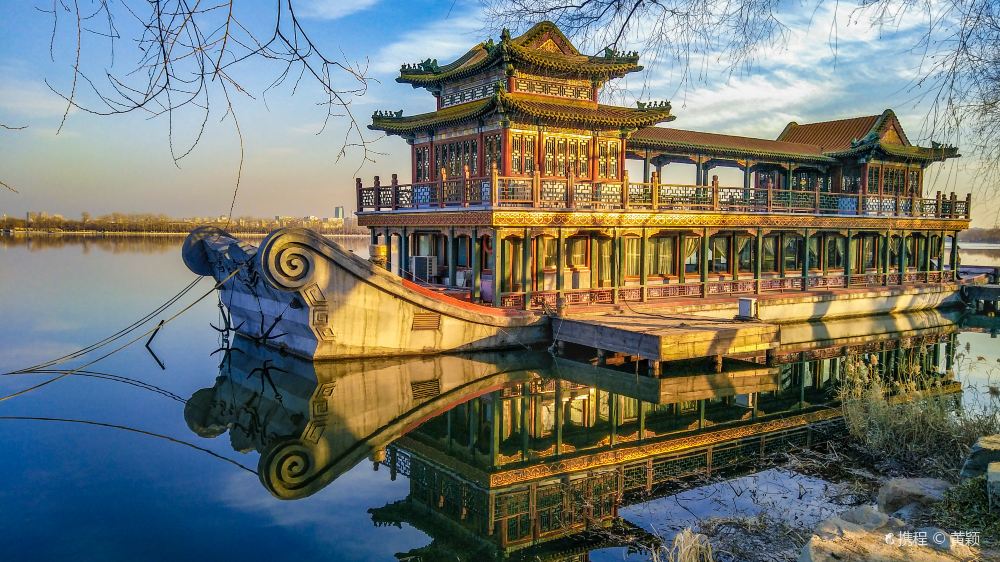
Originally serving as an imperial retreat and garden during the Qing Dynasty, also known as the Summer Palace, it was built around Kunming Lake and Longevity Hill following the design principles of Jiangnan-style gardens. As one of China's largest and most well-preserved royal gardens, it boasts exceptionally elegant scenery and houses numerous precious cultural relics, earning its reputation as the "Museum of Royal Gardens."