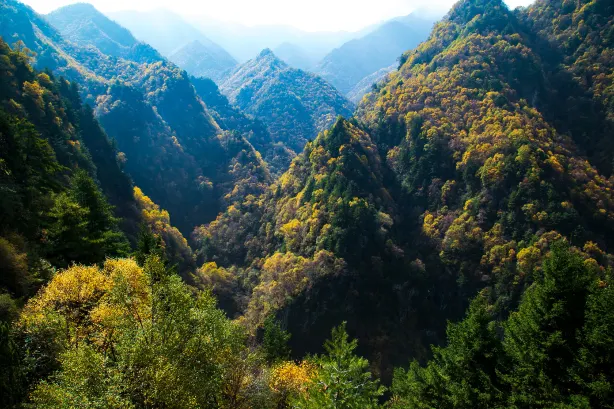
Jishishan

Things to do in Jishishan

Search attractions or local attractions & tours
Search

Explore top experiences

Top 10 attractions in Jishishan

View all Attractions
Bingling Cave-Temple Complex
No. 1 of Best Things to Do in Linxia Prefecture

Bingling Cave-Temple Complex

6.3
4.5/5
242 reviews

Located in the upper reaches of Liujiaxia Reservoir, on the north bank of the Yellow River in Sigouxia, southwest of Yongjing County. On the steep and dangerous red sandstone cliffs 2 kilometers long from north to south, the cave shrines are lined up one after another, and the plank roads are suspended in the air. It is magnificent and spectacular. It is one of the three largest caves in Gansu and one of the five largest caves in my country. Bingling Temple was formerly known as "Tangshu Cave", which means "ghost cave" in Qiang language. It was called "Longxing Temple" in Tang Dynasty, "Lingyan Temple" in Northern Song Dynasty, and "Bingling Temple" after the Yongle Period of Ming Dynasty. Bingling is called "Benlang" in Tibetan language, which means "one hundred thousand Buddhas". Bingling Temple Grottoes were first built in the first year of Jianhong in the Western Qin Dynasty (420 AD). Since the Sixteen Kingdoms period, it has gone through the Northern Wei, Northern Zhou, Sui, Tang, Song, Yuan and Ming dynasties, with a history of more than 1,600 years. During the period when the Western Qin Dynasty built its capital in Linxia, ​​the king personally visited the grottoes and wrote inscriptions, the originals of which are still preserved on the rock walls. From the time the grottoes were carved in 420 AD to the Song Dynasty, the grottoes had a great influence on Han Buddhism, Pure Land Buddhism, Huayan Buddhism and Zen Buddhism. At the end of the Yuan Dynasty and the beginning of the Ming Dynasty, the Yellow School (Gelug School) of Tibetan Buddhism was introduced to Bingling Temple. Bingling Temple Grottoes, based on the inheritance of folk art from previous generations, absorbed foreign Buddhist art and created vivid sculpture and painting art with a brand-new attitude and concise approach. Its relief pagodas and Tantric murals are as famous as those of Mogao Grottoes and Maijishan Grottoes. The grottoes are divided into three parts: the upper temple, the cave ditch and the lower temple. The lower temple is more spectacular. They are distributed on a cliff 200 meters long and 60 meters high. There are 196 caves and niches in Bingling Temple Grottoes, 694 stone statues, 82 clay sculptures, and more than 900 square meters of murals. The larger Maitreya Buddha statue from the Tang Dynasty is 27 meters high, and the smaller statue is 10 centimeters high. Among them, there are 2 caves and 1 niche excavated in the Western Qin Dynasty, 8 caves and 25 niches excavated in the Northern Wei Dynasty, 2 caves in the Northern Zhou Dynasty, 2 caves in the Sui Dynasty, and 20 caves and 113 niches in the Tang Dynasty. The artistic achievements of Tang Dynasty works were quite high, and there were more than 3,000 monks at that time. The ink inscription of the famous monk Faxian in the first year of Jianhong in the Western Qin Dynasty (420 AD) in this cave is the earliest chronological inscription preserved in the caves in China. It provides a mark for the dating of other ancient caves in the country and has very important historical value. The main body of the cave statues and murals is composed of the large seated Buddha in the natural cave No. 169 and all the small and medium-sized caves in the cliff face. Cave No. 169 was formerly known as Tangshu Cave, and is now called "Tianqiao Cave". It is 15 meters high, 8 meters deep and 20 meters wide. It is one of the earliest and best preserved caves in my country. There are three types of shapes in the cave: Buddha niches, stone carvings, and stone-based clay sculptures. Niche No. 171, located on the cliff of the cave, has a large seated Maitreya Buddha statue made of stone-based clay from the Tang Dynasty. It is carved against the mountain and is 27 meters high, majestic and solemn. The Western Qin "Manjusri Bodhisattva Asking about Illness" in the cave is one of the earliest Vimalakirti Sutra Transformations seen in my country. The original Cave No. 16 is now located in the Sleeping Buddha Hall opposite the cave group. The 8.6-meter-long clay sculpture of Bingling Temple Reclining Buddha is a reclining Buddha from the Northern Wei Dynasty, which has very important research value. The 25-cm-tall maid statue from the Tang Dynasty is one of the more precious existing cave statues in my country, and fully embodies the style of the prosperous Tang Dynasty. Next to the cliff at the entrance of Bingling Temple stands the steep Sister Peak, surrounded by scenic spots such as the Mandarin Duck Cave and the Medicine Spring, with green mountains and clear waters, dangerous peaks and strange rocks.

Yongjing · 18.3km from Jishishan
Mengda Heavenly Lake

Mengda Heavenly Lake

3.7
4.6/5
86 reviews

Mengda Heavenly Lake is located in the eastern part of Mengda Township, Xunhua Salar Autonomous County, about 180 km from Xining and about 90 km from Linxia city center. It is a highland lake surrounded by mountains, with dense forests and a tranquil environment. Visitors can hike and stroll here, view and photographHeavenly Lakeand the beautiful scenery around it, and experience a fresh landscape rarely seen in the Northwest, making it a great choice for those touring Qinghai and Gannan. Mengda Heavenly Lake covers a large area, and there are electric shuttles available within the scenic area. The visitor route involves taking a shuttle from the scenic area entrance to the foot of the mountain, then hiking or riding a horse up to theHeavenly Lakearea on the mountainside. After exploring aroundHeavenly Lake, you can head down the mountain and return to the entrance. The entire visit takes about 3-4 hours. Most visitors stop by while passing through, and will head to Tongren, Linxia, or Gannan to stay for the night. When visiting Mengda Heavenly Lake, the first thing to note is the scenery along the way. Whether you are coming from Xining or Linxia, you can see the spectacular crimson Danxia landforms along the road. Furthermore, theYellow Riveralong the way is clear and emerald green, creating a beautiful contrast with the fiery red Danxia, perfect for photography and sightseeing during the journey. Upon arriving at the scenic area, you can purchase a ticket to enter. You can take a sightseeing shuttle inside the scenic area or drive your own vehicle, though you still need to purchase a full-price ticket if driving. The distance from the scenic area entrance to theHeavenly Lakeparking lot at the foot of the mountain is about 3-4 km. The route is filled with dense forest scenery, a rare sight in the Northwest, making you feel as if you have entered a lush forest oxygen bar in the Jiangnan region. After getting off at theHeavenly Lakeparking lot, you can hike up the mountain. There are over 1,200 steps, and it generally takes over 1 hour to reach the edge ofHeavenly Lake. Due to the slightly high altitude (approx. 2,400-2,500 m), hiking can be relatively tiring, so be sure to walk slowly and avoid strenuous exercise. If you lack the energy, you can also choose to ride a horse up the mountain. Locals provide horses at the parking lot, and a one-way ride costs approx. 50 yuan. On the way up, you can see an ancient forest with many sturdy, centuries-old trees, which is quite amazing and worth a stroll. Upon reaching the mountainside, you will see the beautiful lake surrounded by mountains. Mengda Heavenly Lake is about several hundred meters long and wide. The lake water is emerald green, and the surrounding mountains and forests are dense, creating a very quiet and beautiful environment, perfect for photography. There is a wooden boardwalk aroundHeavenly Lake. Visitors can stroll along the boardwalk to view the lake, photograph the lake surface from various angles, and see the trees and cliffs on the hillsides by the lake. The boardwalk takes about 1 hour to complete. After exploring the boardwalk, you can walk or ride a horse down the mountain (you can negotiate the price for riding down, which is approx. 20 yuan), and then take a shuttle back to the scenic area entrance.

Xunhua · 19.9km from Jishishan
Lanzhou Danxia Geological Park
No. 1 of Family-friendly Attractions in Gansu

Lanzhou Danxia Geological Park

8.1
4.5/5
3.7k reviews

Lanzhou Danxia Geological Park is a key cultural tourism project in Gansu Province and a comprehensive cultural tourism initiative prioritized by the Lanzhou Municipal Committee and Government. Located by the Yellow River, the park is just 13 km from downtown Lanzhou and 30 km from Lanzhou Zhongchuan International Airport, making it one of the closest Danxia landform clusters to a major urban center in China. With a total planned area of 400 sq km and a core visiting area of 25 sq km in its first phase, it ranks among the largest discovered landscapes of its kind in the country. The park primarily features red mountain bay formations, along with spectacular Danxia cliffs, isolated peaks, secluded valleys, narrow gorges, and balancing rocks. Its colorful mountains set against winding waterways create a masterpiece of Danxia landform scenery. The attraction features seven viewing platforms showcasing the Danxia landforms: Silk Road Glow, Silk Road Eagle, Flying Apsaras Exploration, Nine-Colored Danxia, Danxia Reflecting Sky, Emerald Peaks Rippling Sky, and Danxia Summit Scenic View. It also includes the Ancient Silk Road Gateway, Shajing Tribe Cultural Square, Desert Bells Scenic Boulevard, and a 2,550m Danxia boardwalk viewing area. As a key cultural tourism project in the province, Lanzhou Danxia Geological Park adheres to the principles of "ecological protection, green development, preserving original features, and moderate development." Leveraging Lanzhou's unique resource advantages and focusing on the domestic tourism market, it aims to cultivate new growth drivers for Lanzhou's cultural tourism industry and establish a new highland for cultural tourism in the city.

Yongdeng · 86.1km from Jishishan
Shapotou Scenic Area
No. 1 of Best Things to Do in Ningxia

Shapotou Scenic Area

8.3
4.8/5
39.1k reviews

The scenic spot is located 16 kilometers west of Zhongwei City, Ningxia, on the southeastern edge of the Tengger Desert. The scenic spot has successively won honors such as "the first batch of national 5A-level tourist attractions", "the top 500 global environmental protection units", and "the first batch of national tourism standardization demonstration units". The three major cultural elements of the scenic area include the "Yellow River Culture" based on the intangible cultural heritage sheepskin rafts, the "Desert Culture" based on straw grids and Desert Legend Park, and the "Starry Sky Culture" based on the Desert Star Hotel. The tourism resources of these three elements have created a unique and magnificent landscape of "sunset over the long river and starry sky in the desert". The "six major ways to play" are highly praised and loved by tourists. Among them, the Yellow River projects include sheepskin rafting, Huangtengda, Yellow River speedboat, drift boat, passionate sandboarding and high-altitude bungee jumping, etc. The desert projects include Desert Camel, Desert Flying (Stepping into the Blue Clouds), and Sand Sea. Surfing, etc., starry sky projects include stargazing lectures, meteor feasts, sand therapy experiences, star cakes and other special products. In addition, there are also privately customized products for hiking, desert expansion, and educational and entertaining study experiences. The scenic area not only has diverse cultural elements and fun project experiences, but also multi-level accommodation experiences waiting for you: the butler-style Diamond Hotel, the quiet Desert Star Hotel for stargazing, the quiet Yellow River Courtyard in the bustling city, and finally the economical and affordable business-style Tourist Service Center Hotel and other differentiated tourist accommodations for you to choose from.

China · Zhongwei
Qinghai Tibetan Culture Museum
No. 2 of Best Things to Do in Qinghai

Qinghai Tibetan Culture Museum

8.2
4.8/5
10.3k reviews

Qinghai Tibetan Culture MuseumIt is a comprehensive museum themed on Tibetan medicine culture and featuring Tibetan culture.Qinghai Tibetan Culture Museum(also known as Qinghai Tibetan Culture Museum) is located in Xining, the capital of Qinghai Province in the eastern part of the Qinghai-Tibet Plateau. It officially opened in September 2006. The museum has basically formed a "one museum with two halls" layout, featuring 16 exhibition halls including the Silk Road and Tibetan civilization, the grand view of Chinese Tibetan art painting, and the history of Tibetan medicine.Qinghai Tibetan Culture MuseumThe collection is rich, historic, and diverse, possessing high historical, scientific, and artistic value. The museum houses the Guinness World Record-holding thangka masterpiece, "The Grand Thangka of Tibetan Culture and Art," which is 618 m long. It was planned by renowned thangka master Zongzhe Lajie and completed by 400 painters over four years. Its content encompasses the Tibetan understanding of the universe, the formation of the Qinghai-Tibet Plateau, history, religion, medicine, culture, art, and folklore. With its intricate details and brilliant colors, it is a magnificent sight and can be called an encyclopedia of Tibetan culture, hailed as a "contemporary national treasure." Through four major series—ancient books and documents, Tibetan medical thangkas, ancient Tibetan medical instruments, and Tibetan material specimens—the museum comprehensively displays the long history, profound theoretical system, clinical practice, and unique preparation techniques of Tibetan medicine, with four ancient books included in the National Catalogue of Precious Ancient Books. The Silk Road and Qinghai-Tibet Civilization exhibition hall uses history as its temporal dimension and the vast plateau landscape as its geographical dimension. Through thousands of precious cultural relics such as silk, gold and silver ware, and coffin paintings, it highlights Tibetan cultural elements and showcases the origin, inheritance, rise, and prosperity of the Qinghai-Tibet Plateau civilization throughout the long river of history. The Tibetan carpet exhibition hall is one of the largest exhibitions of ancient carpets in China, displaying more than 400 Tibetan carpet artifacts from different periods and eras, featuring magnificent patterns, intense colors, and unique ethnic styles and local characteristics. At the same time, there are also Tibetan-style architectural exhibition halls, Tibetan calligraphy art exhibition halls, as well as temporary exhibition halls, multimedia screening rooms, academic lecture halls, and cultural relic storage rooms, providing strong capabilities for inheritance, protection, and research, as well as conditions for cultural exchange.Qinghai Tibetan Culture MuseumIt will continuously improve the level of cultural relic preservation, exhibition design, scientific research, and management operations, becoming a platform for promoting ethnic unity and social development, a broad stage for cultural dissemination and academic exchange, a research center for cultural relic protection and Tibetan studies, and an exhibition center for treasured literature and collections, showcasing the splendid civilization and culture of the Tibetan Plateau to the world.

China · Xining
Kumbum Monastery
No. 3 of Best Things to Do in Qinghai

Kumbum Monastery

8.2
4.7/5
18.7k reviews

Kumbum Monastery is one of the important monasteries of the Gelug (Yellow Hat) sect of Tibetan Buddhism and the birthplace of Tsongkhapa, the founder of the Yellow Hat sect. The monastery features magnificent architecture, abundant treasures, and a strong religious atmosphere, making it one of the more popular travel destinations in Xining. Overview of the visit It has distinct differences in architectural layout compared to Han Chinese Buddhist temples in inland China: the complex here is not symmetrically arranged along a central axis. The monastery is an ancient architectural complex composed of numerous halls, scripture halls, stupas, and colleges, with each sutra hall, main hall, and stupa irregularly distributed on a small hill. Travelers can explore the site in a relatively free manner rather than following a straight path along a central axis. The Great Golden Roof Hall of Kumbum Monastery is the center of the entire architectural complex. It is said that Master Tsongkhapa was born here, and when he was born, his umbilical cord blood dripped on this spot, from which a bodhi tree grew. Later, a stupa was built around the tree, and a monastery was constructed, hence the name. Believers hold that this tree and stupa are the embodiment of the master. The three unique features of the attraction: butter sculptures, murals, and appliqué embroidery. Butter sculptures are made by mixing butter with various pigments to mold and carve into figures of Buddhas, people, flowers, birds, animals, and pavilions. Travelers can admire exquisite butter sculptures at the butter sculpture hall inside the temple (located far from the main gate). Vibrant centuries-old murals can be appreciated in the main halls, corridors, and front galleries of the temple. Appliqué embroidery involves cutting colored satin into desired shapes, such as Buddha figures or animals, stuffing them with wool or cotton, and embroidering them onto cloth hangings. In the temple's great sutra hall, two rare large appliqué embroidery pieces—"Sixteen Arhats Displaying Divine Powers" and "Eight Immortals Crossing the Sea"—hang on either side. The four major religious festivals (based on the lunar calendar): 1. Cham dance (14th day of the first month) and butter sculpture exhibition (15th day of the first month); 2. Cham dance (14th day of the fourth month), Buddha unveiling, and Cham dance (15th day of the fourth month); 3. Buddha unveiling, Cham dance (6th day of the sixth month), and golden Buddha procession (8th day of the sixth month); 4. Full-day Buddha unveiling (22nd day of the ninth month) and Cham dance (23rd day of the ninth month). During these festivals, activities like Buddha unveiling and ritual dances take place, attracting large crowds of devotees and travelers, creating a lively atmosphere.

China · Xining

Experiences you can't miss in Jishishan

Featured Culture & history in Jishishan

View all Culture & history
[Private charter] Liujiaxia 1-day tour + Bingling Cave-Temple Complex + Huangtao viewing platform + Liujiaxia Bridge
󱌍
5.0/5
· 10 reviews· 56 booked
Duration: 7.1 hrs
English
Free cancellation
Book now for tomorrow
FromMXN$969.63
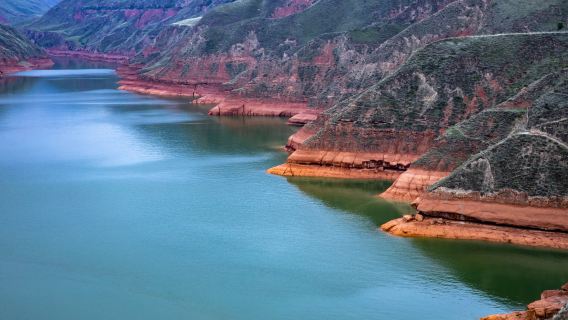
One-day tour from Lanzhou to Bingling Cave-Temple Complex, Liujiaxia, and the Yellow River-Tao River confluence
󱌍
Duration: 8 hrs
English
Free cancellation
Instant confirmation
Book now for tomorrow
FromMXN$854.89
[Depart from Lanzhou] Liujiaxia and Bingling Temple Day Tour: Private Transfer Service
󱌍
Duration: 5 hrs
English
Instant confirmation
Book now for tomorrow
FromMXN$3,095.88
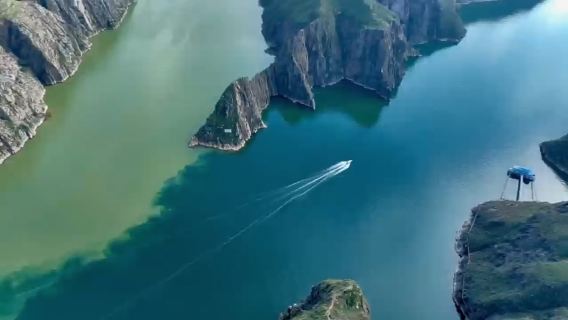
1-day private chartered tour to Liujiaxia (Binglin Temple Grottoes + Huangtao Viewing Platform + Liujiaxia Bridge)
󱌍
5.0/5
· 9 reviews· 29 booked
Duration: 5.5 hrs
English
Free cancellation
Instant confirmation
Book now for tomorrow
FromMXN$964.06
[Lanzhou Departure] Labrang Monastery & Sangke Grassland & Ganga Mijing Day Tour
󱌍
FromMXN$3,036.43
Private Tour to Labrang Monastery and Sangke Grassland (Departing from Lanzhou)
󱌍
Duration: 6 hrs
English
Free cancellation
Instant confirmation
Book now for tomorrow
9% off
Limited-time sale
FromMXN$1,178.61MXN$1,309.56
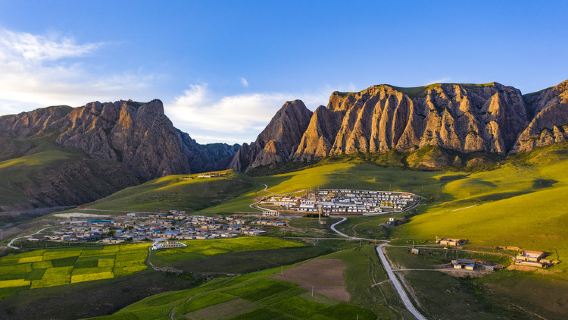
Jishishan Today's weatherClear -4-17℃
Jishishan weather for the next 2 days11/14: 0-12℃, 11/15: 0-6℃

Free things to do in Jishishan

What travellers say about Jishishan

user-avatar
游来游去的鱼鱼🐡30 September 2026
5.0
The Bingling Temple Grottoes are hailed by scholars as an "encyclopedia of Chinese grottoes," holding an irreplaceable and important position in my country's grotto art. It is not only one of the three major grottoes in Gansu, but also the first Yellow River grotto on the Silk Road.

Bingling Cave-Temple Complex

user-avatar
138***664 October 2025
5.0
The Dadun Gorge Scenic Area is located in Xining City. It's not far, but the hike up takes a while. The road is in good condition, though. Once you reach the top, the scenery is breathtaking.

Dadunxia Scenic Area
user-avatar
不可耻的小姐姐13 November 2026
5.0
I visited once in 1998 when I was a child, once in 2006, and again in 2026 with my daughter on her graduation trip. Each visit brought different feelings and perspectives. The landscape remains the same, but we have changed. Humans are insignificant in the face of nature.

Jiuzhaigou National Park

user-avatar
水漫三楼2 September 2026
5.0
The Lajia Site, located in Lajia Village, Guantang Town, Minhe Hui and Tu Autonomous County, Haidong City, Qinghai Province, was discovered to have been destroyed by an earthquake and flood 4,000 years ago. It is the only large-scale disaster site discovered in China to date. The site still contains remains of a mother protecting her child and turning back to rescue her relatives, thus earning it the nickname "Oriental Pompeii." The Lajia Site is a large prehistoric settlement site in the upper reaches of the Yellow River, primarily inhabited by the Qijia culture. Discovered in 1981, the site underwent nine years of archaeological excavation from 1999 to 2007, uncovering important remains of the Qijia culture, including settlement dwellings, high-level tombs, moats, small squares, and altars, yielding many groundbreaking new discoveries. From 2013 to 2019, the site underwent its second phase of fieldwork. More than 450 sites were discovered, including house foundations, moats, pottery kilns, sacrificial pits, tombs, large gullies, ash pits, and ash ditches. Over 2,000 artifacts related to production and daily life were unearthed, primarily from the Majiayao, Qijia, Xindian, and Han-Jin cultures. On June 25, 2001, the Lajia site was designated as a fifth batch of National Key Cultural Relics Protection Units by the State Council of the People's Republic of China. Key Discoveries: 1) A large jade knife, 35 cm long, 15 cm wide, and 0.5 cm thick, has a round hole and is broken at the second hole. Since ancient times odd numbers were considered auspicious, it is inferred that this jade knife had at least three holes, meaning the shortest piece was at least 70 cm long; 2) The Yellow River Chime King, 91 cm long, 61 cm wide, and 4 cm thick, is rectangular with a carved perforation for hanging and a symbolic blade. It was made in imitation of a rectangular stone knife from the same period, unlike the traditional bow-shaped or L-shaped chimes. Based on the discoveries at the Lajia site, the shape of the stone chime should be related to production tools, originating from the stone knives of the Qijia culture; 3) In 2002, an inverted pottery bowl was discovered on the ground of house F20 in the eastern area of ​​the Lajia site, containing noodle-like remains, the shape of which is basically the same as modern ramen. This is the earliest known physical evidence of noodles. Researchers took samples from the sediment, which is about 6 cm thick, every 1 cm, extracting samples from six locations: three from the location of the noodle-like objects and three from the soil layer beneath them. Through phytolith analysis, starch analysis, and biomarker compound analysis, it was determined that the noodles were mainly composed of millet, with a small amount of sorghum, which is consistent with the agricultural characteristics of the Qijia culture at the Lajia site inferred by archaeobotanists based on plant seeds.

Lajia National Archaeological Site Park

user-avatar
M41***913 October 2026
4.0
As the first stop in Gannan from Linxia, ​​it's a pretty good tourist attraction, with all three viewing platforms worth taking photos at. However, even during the off-season holidays, the shuttle buses are hard to find, so I can only imagine how ridiculous the queues will be during the summer peak season.

Ganjia Secret Realm
user-avatar
Invisible Wind27 May 2025
5.0
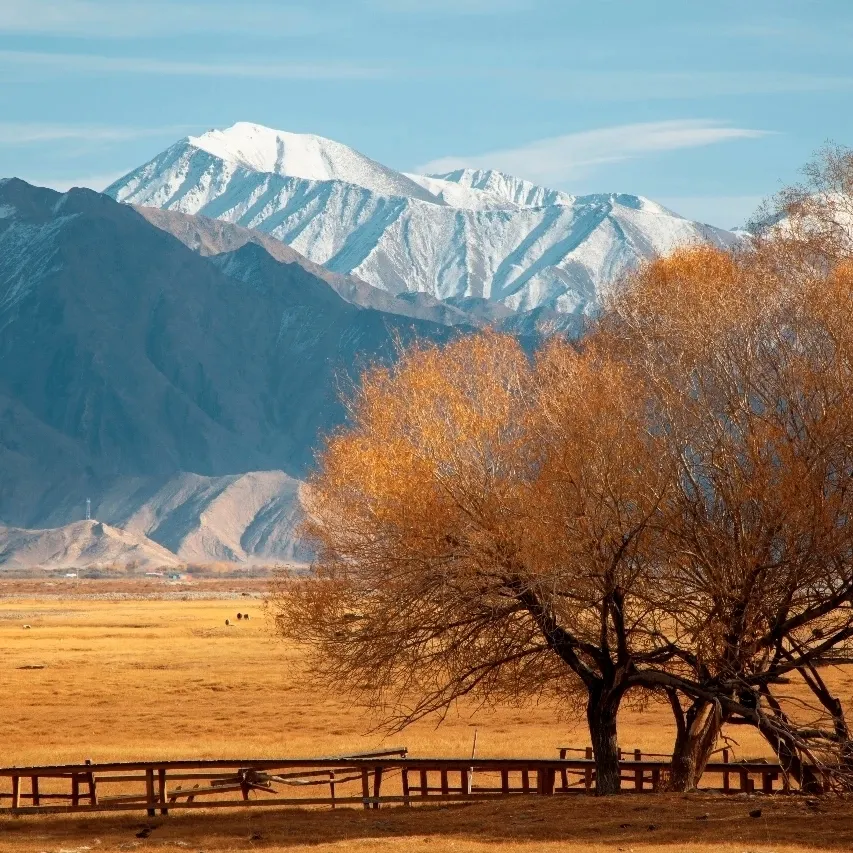
孟达天池被誉为“高原西双版纳,天域香格里拉”,面积约300亩,池水清澈碧澄与蓝天一色,群峰倒影,随波微动。湖中水鸟飞翔,鱼儿舒然游动。区内森林覆盖面积14万余亩,有亚热带、暖温带植物,林中栖息苏门羚、林麝、狍鹿、岩羊、狐狸、雪鸡、马鸡等珍禽异兽。去循化赏秋,首先要去的一定是孟达天池,秋季的天池是一年中最美的,那层林尽染的孟达山林与微波荡漾的一汪池水,足以满足你对秋景所有的向往。尤其是天池的彩虹瀑布,在秋叶灿灿中释放出所有的激情。

Mengda Heavenly Lake

user-avatar
Ana11sd9 November 2026
5.0
It was surprisingly entertaining 😍 we went thinking it was just a beautiful natural scenario but had a lot of fun with the equipments also. The waterslide its a must try!

Lanzhou Danxia Geological Park

user-avatar
阿细ฅ^._.^ฅ🎐12 November 2026
4.0
The camels at Shapotou are very well cared for; there's no odor at all. Each camel caravan consists of four camels led by a guide, and the entire journey takes about 10 minutes and is very safe and smooth. In the off-season, there's no need to queue, and you don't see the spectacular sight of long camel caravans waiting at traffic lights that you see online. At the end of the journey, the guide will help you take photos with your phone. Highly recommended!

Shapotou Scenic Area

user-avatar
_We***1812 November 2026
5.0
First, you should have seen the upper section of the South Wing and hired a guide; otherwise, the lower section of the North Wing and other exhibits won't be very beginner-friendly. Second, you need ample time; even a quick tour of the upper section of the South Wing takes half an hour, and the same goes for the lower section. Third, as a first-class museum, it naturally has its highlights and unique features. Fourth, please treat everything as folk art. Fifth, if you have some knowledge of Buddhist colleges and medical textbooks, you'll understand the value of the North Wing's collection—it contains items that are rarely seen, unless you become a lama.

Qinghai Tibetan Culture Museum

user-avatar
M40***129 November 2026
5.0
Time seemed to slow down amidst the sound of the prayer wheels turning. My body and mind received a baptism of light. The guide's explanations enhanced my understanding of religious culture.

Kumbum Monastery

Trip Moments in Jishishan

Popular cities near Jishishan

Frequently asked questions

How can I contact Trip.com customer support?

Get help anytime, anywhere within 30 secondsContact customer support

Change and cancellation policies vary by attractions and tours. Please check the product details page for more information.

Ticket prices may vary between weekdays and weekends, as well as during peak and off-peak seasons. When booking with Trip.com, you can also use Trip Coins to get extra savings. For more tips on booking discounted tickets, please visit Trip.com for the latest information.