Nanchang

Things to do in Nanchang

Search attractions or local attractions & tours
Search

Explore top experiences

Top 10 attractions in Nanchang

View all Attractions
Tengwang Pavilion Tourist Area
2026 Global 100 - Night Attractions

Tengwang Pavilion Tourist Area

8.7
4.5/5
30k reviews
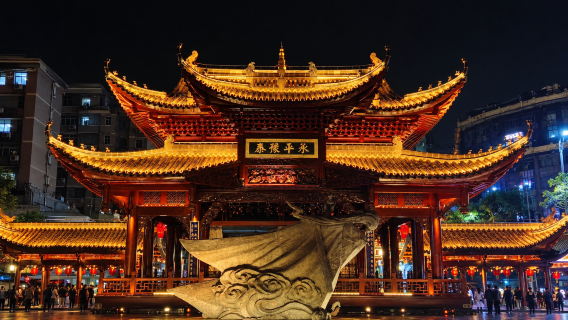
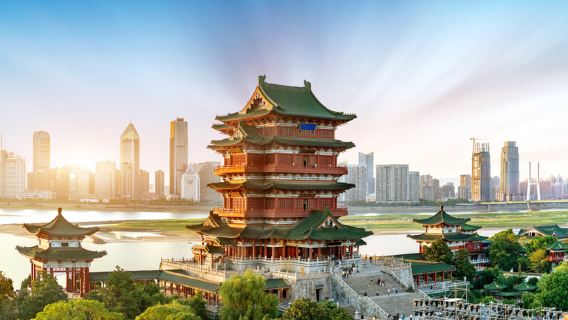
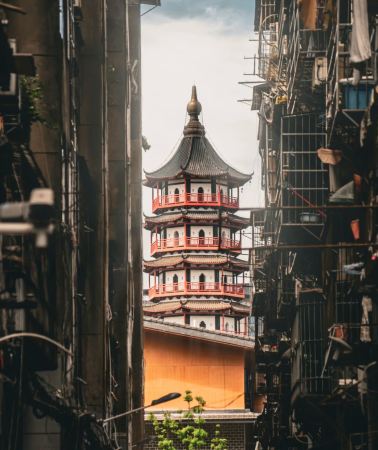
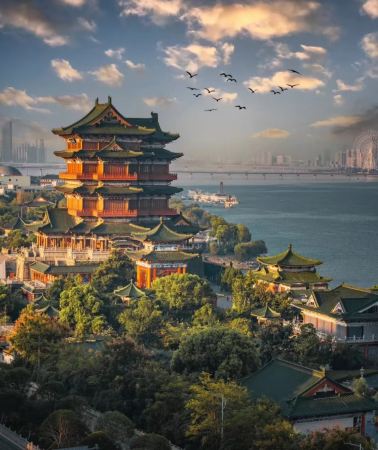
Tengwang Pavilion Tourist Area is located on the east bank of the Gan River in Nanchang, with the riverside Tengwang Pavilion as its centerpiece. Originally built in the fourth year of the Yonghui era of the Tang Dynasty by Li Yuanying, Prince of Teng and son of Emperor Gaozu of Tang, it gained eternal fame through Wang Bo's "Preface to Tengwang Pavilion." Alongside the Yellow Crane Tower and Yueyang Tower, it is hailed as one of the "Three Great Towers of Jiangnan." Historically destroyed and rebuilt nearly thirty times, the current structure is a Song-style replica completed in 1989, designed based on Liang Sicheng's reconstruction sketches. With its green tiles and layered eaves, it remains a landmark of Nanchang to this day. The main pavilion follows a "three visible, seven concealed" layout: appearing as a three-story structure with encircling corridors from the outside, while actually containing seven interior floors—nine levels including the two-tiered base symbolizing ancient city walls. Turquoise-roofed galleries extend north and south from the base's flanks, connecting at their ends to auxiliary pavilions named "River-taming" and "Greenery-embracing," forming a mountain-shaped silhouette with the main tower. Below, an artificial lake and the nine-bend wind-and-rain bridge add classical garden charm to the majestic architecture. Each floor of the pavilion offers something remarkable. The white marble relief "A timely wind delivers Tengwang Pavilion" in the first-floor preface hall depicts the legend of Wang Bo riding the wind to compose his famous preface. The second-floor mezzanine features the long scroll painting "Gallery of eminent figures," gathering Jiangxi's historical luminaries like Tao Yuanming, Ouyang Xiu, Wang Anshi, and Tang Xianzu in one artwork. The third-floor mural "Linchuan dream" recreates Tang Xianzu's staging of "The peony pavilion" here. The fourth-floor "Land of wonders" painting compresses Jiangxi's iconic landscapes—Mount Lu, Sanqing Mountain, Dragon-Tiger Mountain, and Poyang Lake—into a single masterpiece. The fifth floor is the highlight for panoramic views: its central hall displays a bronze tablet inscribed with Su Dongpo's calligraphic version of "Preface to Tengwang Pavilion," while the east hall exhibits a scale model of the pavilion. Strolling the veranda offers sweeping views of the Gan River and modern skyline across the water. The top floor bears the plaque "Ninth heaven," with its west hall housing an antique-style theater flanked by replica ancient instruments like chime bells and stone chimes. Above, spiral-arranged bracket sets adorn the caisson ceiling, and between the double eaves hangs Su Dongpo's gilded "Tengwang Pavilion" plaque. After descending from the main pavilion, take time to explore the garden area: the square in front of the pavilion, the grand Song-style archway, the antique street lined with calligraphy and antique shops, and the small Suzhou-style garden Fuchang Garden with its lake reflections and bridge views—perfect for slowing your pace. To experience the poetic scene of "a solitary wild duck flying with the sunset glow, while the autumn water blends with the vast sky," an evening ascent to the pavilion is ideal. The fifth-floor corridor offers an expansive view, making it a prime spot to admire the sunset over the Gan River.Nanchang · 2.3km from downtown
The National Archaeological Site Park of Nanchang Han Dynasty Haihun Marquis
No. 4 of Family-friendly Attractions in Jiangxi

The National Archaeological Site Park of Nanchang Han Dynasty Haihun Marquis

8
4.7/5
5.5k reviews
The National Archaeological Site Park of Nanchang Han Dynasty Haihun Marquis was developed based on the capital city ruins of Zijingcheng from the Western Han Dynasty Haihun Marquisate, the mausoleum of its first marquise Liu He, and the burial clusters to the west and south of the city. It represents the most well-preserved and structurally intact settlement ruins of a Han Dynasty marquise state capital discovered in China to date. Liu He, the tomb's occupant, was Emperor Wu's grandson who was deposed after merely 27 days on the throne, later becoming the Haihun marquise and moving south before being buried here. Since archaeological excavations began in 2011, over 10,000 artifacts including goldware, bronzes, jades, lacquerware, and bamboo slips have been unearthed, bringing this historically obscure "deposed Han emperor" back into public view with remarkable completeness. The park is divided into six functional zones: the ruins museum area, tomb exhibition area, Zijingcheng exhibition area, archaeological reserve area, entrance service area, and historical experience & ecological leisure area. The visitor center at the entrance adopts the shape of a jade bi disk—its white circular structure resembles a jade button when viewed from above, symbolizing "offering jade to heaven." The ruins museum takes its design inspiration from the dragon-shaped jade artifact unearthed from Liu He's tomb, appearing like a coiled dragon resting between mountains and waters. Permanent exhibitions such as "Golden Haihun," "Scholarly Haihun," and "Vermilion Lacquer Haihun" are housed here, alongside the interactive "Encountering Haihun" gallery. Among the over 1,000 displayed artifacts, gold items like cakes, horse-hoof ingots, unicorn-toe ingots, and plates are arranged in rows—their quantity and variety being exceptionally rare among excavated Han tombs. A complete set of bianzhong bells and bianqing stone chimes shares the stage with a bronze goose-fish lamp, whose curved neck holds a fish; rotating its dish adjusts brightness while smoke filters through water in the goose's belly without escaping, mirroring the ingenuity of the Changxin Palace lamp. A bronze lamp inscribed with "Nanchang" stands as a rare Han-dynasty physical testament to the city's name. Among the over 5,000 bamboo slips unearthed from the tomb of Liu He, the long-lost "Qi version of the Analects" was discovered after being missing for more than 1,800 years. The restoration achievements are showcased in the "Fragrance of Haichun" bamboo slips exhibition, where over a hundred newly restored original slips are displayed alongside Han Dynasty manuscripts like the "Book of Songs." Travelers who appreciate ancient texts and calligraphy will find it worth a closer look. The wooden back of the lacquered mirror depicting Confucius and his disciples features portraits and biographical accounts. While the original is still under restoration, the museum presents a full-scale replica with enlarged images to highlight details—another exhibit not to be missed. Beyond the museum, the Liu He Mausoleum at Guodun Mountain is another key attraction. The mausoleum complex features a trapezoidal layout, with the two main tombs of Liu He and his marquise wife sharing the same burial ground but in separate chambers at the central elevated platform. Surrounding them are auxiliary burial sites and remnants of ritual structures such as ancestral halls, resting chambers, garden walls, and gate towers. Outside the complex lies a rare chariot-and-horse burial pit seldom seen south of the Yangtze River. The Guodun Yuan ruins exhibition area built atop the mausoleum offers a panoramic view of the main tombs' wooden chamber structure from an encircling observation deck, while a 360-degree suspended screen recreates the mausoleum's construction process and Han Dynasty marquise funeral rites. The chariot pit preserves its original excavated state, with a restored quadriga carriage model showcasing the grandeur of Han nobility's travels. The park is planned around the grand heritage site, covering a vast area with its core visitable zones concentrated at the traveler center, ruins museum, and Liu He's tomb complex. The Zijingcheng city site is primarily preserved in its original state, so focus your visit on the museum and tomb area. As distances between zones are considerable, shuttle services are available—we recommend allocating half a day. The Han-style gate towers and golden imperial carriage at the entrance are popular photo spots. Throughout the park, Han cultural activities like costume parades and themed markets occasionally take place; keep an eye out while exploring the exhibitions.Nanchang · 39.2km from downtown
Star of Nanchang Ferris Wheel

Star of Nanchang Ferris Wheel

7.2
4.6/5
2.9k reviews
The Star of Nanchang Ferris Wheel stands on the banks of the Gan River in Honggutan, with a total height of approx. 160 m and a wheel diameter of approx. 153 m. When it was completed in 2006, such height ranked among the top in the world's Ferris wheels, and it has since remained a highly recognizable landmark of Nanchang. The wheel is equipped with 60 observation cabins, corresponding precisely to the 60-minute time scale. Each cabin can accommodate 6 to 8 people and is air-conditioned. A full rotation takes approx. 30 minutes at a gentle pace, making it effortless to ride with seniors and children. The ferris wheel takes on a different face after nightfall: thousands of LED lights on its surface illuminate to form a giant colorful clock, with hands and numbers moving in real time. It can also switch to various patterns, creating a striking sight when viewed across the river—a scene many deliberately wait to photograph. The highlight of riding the ferris wheel is the contrast between the "two banks of the river": as the cabin rises, you have the expansive Gan River beneath your feet, with rows of modern high-rises in Honggutan on one side and the old city skyline on the other. You can see the city's silhouette by day and the lights on both banks by night, each with its own charm. To capture the entire ferris wheel, you can take photos from the opposite bank of the Gan River or along the riverside promenade, framing both the river and the wheel in your shot. After comprehensive upgrades, the ship has added deluxe cabins in addition to standard viewing cabins. The travelers center below deck offers services such as rest areas, luggage storage, and guided tours, allowing you to settle your belongings before boarding the ship at ease.Nanchang · 3.1km from downtown

Traveller favourites curated for you

Experiences you can't miss in Nanchang

More things to do

Private Tours in Nanchang

View More Private Tours in Nanchang
Nanchang Today's weatherModerate rain 15-18℃
Nanchang weather for the next 2 days11/5: 16-21℃, 11/6: 16-18℃

Free things to do in Nanchang

What travellers say about Nanchang

user-avatar
Anonymous user3 November 2026
5.0
When it's not crowded, you can go upstairs to see the river view; it's a different experience, although the stairwells are indeed narrow. I didn't go inside the scenic area for the night view, but the photos I took outside were also very beautiful; the night view is truly stunning.

Tengwang Pavilion Tourist Area

user-avatar
望一诺3 November 2026
5.0
We drove for an hour to the museum in Nanchang with our family. The museum is very large, and the elderly in our family don't like walking. There was a long queue for the electric shuttle bus, probably because it was Sunday. You absolutely must take the electric shuttle bus; it's too big to walk. The farmhouse restaurant near the entrance was quite nice for meals. The main attraction is a buffet for 39 yuan per person.

The National Archaeological Site Park of Nanchang Han Dynasty Haihun Marquis

user-avatar
Anonymous user18 October 2026
5.0
Teacher Xiaoyu's explanation was excellent. She really wanted to tell us about the treasures of the Jiangxi Provincial Museum in a short time. You could feel her passion for her work. I am grateful to have had the opportunity to hear her explanation.

Jiangxi Provincial Museum

user-avatar
M27***4712 October 2026
5.0
We arrived early, so there wasn't much of a queue. Most importantly, there weren't many people, so each person could ride a car. My son and I were lucky enough to share one, and we could enjoy the view from above. It was nice to sit by the river afterward.

Star of Nanchang Ferris Wheel

user-avatar
黑豹A3 February 2025
5.0
The Nanchang Uprising Memorial Hall was established in 1956 and officially opened in 1959. The museum is located in the former site of the Nanchang Uprising Headquarters and manages 5 revolutionary sites. The basic exhibition in the museum displays 509 pictures and charts of various types and 407 cultural relics. It vividly reproduces the glorious history of the Nanchang Uprising and shows the process of the people's army from small to large and from weak to strong. It is a national first-class museum and a national patriotism education demonstration base, attracting a large number of tourists to visit and learn every year.

Nanchang August 1 Uprising Memorial Hall

user-avatar
Anonymous user2 November 2026
5.0
Definitely worth a visit! Board the decorated Nanchang warship for a close-up look at the weaponry and equipment, and the sailors' quarters, truly experiencing the glorious history of the navy. Solemn and dignified, it offers strong national defense education; standing on the deck evokes a sense of national pride. Highly recommended when visiting Nanchang.

Nanchang Destroyer

user-avatar
悠哉悠哉0112 September 2026
5.0
Nanchang August 1st Square: The place where the military flag was raised, with its nighttime lights and musical fountain dancing together – a must-see! 🌟 This scenery is so magnificent and spectacular! It took my breath away; someone save me! I'm so moved I'm crying! 😭

Bayi Square

user-avatar
Anonymous user29 September 2026
4.0
Teacher Chenxi's lectures were excellent and very engaging; I gained a lot of useful but ultimately useless knowledge. The reception staff were rather incompetent, constantly trying to get me to change my schedule to the morning or earlier, until I finally had no choice but to transfer me to Teacher Chenxi's group.

Nanchang Relic Museum For Haihun Principality of Han Dynasty

user-avatar
西格玛 12315 July 2025
5.0
Wanshou Palace Historical and Cultural District is located in the Zhongshan Road business district in the center of Nanchang. It integrates history, culture, commerce and tourism, and is a classic landmark of Nanchang's cultural and tourism integration. There are many late Qing Dynasty Gan-style houses, gray walls and tiles, and granite ancient roads. It can be said to be a "museum without walls". In the crowded district, you can also taste a variety of Jiangxi specialties, so that your taste buds can also start a journey here.

Wanshougong Historical and Cultural District

user-avatar
博览天下092129 July 2026
4.0
It was a particularly crowded day, and the evening was incredibly hot. There wasn't a breath of wind while standing on the boat, so we had to return to our air-conditioned cabin early to enjoy the view. The VIP tickets only included a few snacks and no water. Overall, it was just average, and a bit pricey for the price.

Tengwang Pavilion Cruise

Trip Moments in Nanchang

Popular cities near Nanchang

Frequently asked questions

How can I contact Trip.com customer support?

Get help anytime, anywhere within 30 secondsContact customer support

Change and cancellation policies vary by attractions and tours. Please check the product details page for more information.

Ticket prices may vary between weekdays and weekends, as well as during peak and off-peak seasons. When booking with Trip.com, you can also use Trip Coins to get extra savings. For more tips on booking discounted tickets, please visit Trip.com for the latest information.