
Things to do in Segovia
Explore top experiences
Top 10 attractions in Segovia


Alcázar de Segovia
Alcázar de Segovia is a uniquely shaped stone castle in Segovia, surrounded by cliffs on three sides and accessible only by a drawbridge. The castle began as a fortress and was later used as a royal palace, prison, and military academy. Its blue roofs and fairy-tale appearance are said to have inspired Disney's "Snow White castle." From a distance, the castle resembles a cruise ship sailing between the Rios Clamores and Ledesma rivers, with its towering turrets as sails. Climbing the turrets offers a panoramic view of the entire city of Segovia and the surrounding countryside. Today, in addition to the historic sites, the castle houses a dedicated exhibition hall on artillery history, displaying various weapons. The blue roofs are one of the castle's distinctive features, made from a type of schist found in local rivers that produces a metallic sheen under light. It is said that Disney used it as a blueprint to design the castle in the animated film "Snow White," earning it the nickname "Snow White castle."Segovia · 2.3km from downtown

Segovia Aqueduct
Segovia Aqueduct is a water diversion project left by the Roman Empire on theIberian Peninsulaand is also the symbol of this city; its stone arch design is even depicted in the coat of arms of Segovia. The entire aqueduct was built by the ancient Romans using granite boulders quarried from the Guadarrama Mountains. No mortar was used between the stones; they are held together solely by the weight of the precisely cut stone surfaces, making it one of the best-preserved Roman aqueducts in existence. Its water source comes from the Río Frío, located over 10 km away in the Guadarrama Mountains. The spring water flowed into the city by gravity along stone-lined channels, passing through sedimentation facilities to filter out sand and silt along the way. For nearly two thousand years after that, this aqueduct continuously supplied water to the city, remaining in use until the late 20th century. The final section near the old town is the highlight: the arcade turns at Plaza de Díaz Sanz and reaches Plaza del Azoguejo. More than 160 arches are stacked in two tiers, with the highest point reaching nearly 30 m. Standing in the square and looking up, the double-tiered arches resemble a stone bridge spanning the streets. Historically, a section of the arches was destroyed in war and restored to its original appearance in the 15th century. Today, Plaza del Azoguejo is a pedestrian zone where you can walk under the arches and look up to see the seamless joints between the stones. After nightfall, the entire arcade is illuminated, offering a completely different experience from the daytime. Walking along the arcade toward the main street of the old town, you can also conveniently connect to the churches and castles deep within the old town.Segovia · 943m from downtown

Plaza Mayor
Plaza Mayor of Segovia is the main square in the center of the old city of Segovia, where various buildings including city hall, theaters, restaurants, etc. are gathered, with all functions. To the east of the square is a Gothic church - Miguel Church. This Roman-inspired church was once the coronation site of the Queen of Lastilia, and its colorful spires stand out. Also nearby are the Segovia City Hall, built in 1610, and the Juan Bravo Theater, built in 1917. There are many characteristic small hotels around this square that is suitable for both static and dynamic. At night, you can sit on the balcony with floor-to-ceiling windows and enjoy the night view while drinking wine. There will also be events or weddings at the market in the square, and you can join the hilarious crowd and music.Segovia · 1.5km from downtown

Royal Palace of La Granja of San Ildefonso
Located 11 kilometers east of Segovia, the secluded castle of La Granja is a hidden gem. Nestled at the foot of the Sierra de Guadamala, it's a garden palace built by King Philip I in the 18th century. The historic Alcázar de Gheiro houses the royal palace and magnificent gardens. The castle's exquisite decor, from the overhead lighting to the floorboards, evokes the style of Versailles. A dedicated room displays porcelain from the Qing Dynasty, evoking a sense of history. Photography is prohibited inside the castle, so visitors can only capture this magnificent scenery with their own eyes.La Granja de San Ildefonso · 10.1km from Segovia

Old City
Segovia Old City is a historic city rich in culture, featuring exquisite architecture and artwork that offer visitors stunning views. Its historic building complexes and cultural heritage leave a deep impression, attracting visitors. Its historical sites includeancient city walls, castles, churches, and more, with the ancient Roman Aqueduct being particularly impressive.Segovia · 1.5km from downtown

Mirador de la Pradera de San Marcos
Segovia · 2.4km from downtown

Royal Palace of Madrid
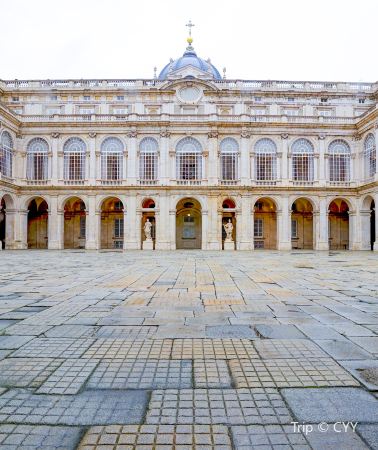
• Witness the history and royal anecdotes of Spain • Approx. 2 million travelers visit annually • Combining traditional Spanish royal architectural style with Baroque style, it covers a total area of approx. 130,000 m² with over 3,000 rooms △In the 9th century, this was once the castle of Arab rulers. After being recaptured by Christians, it became the residence of successive kings. A fire in 1734 destroyed the castle, and the royal palace seen today was rebuilt in 1764. △The Royal Palace of Madrid is an exquisitely crafted architectural marvel and one of the best-preserved palaces in the world. The entire palace is magnificent, with over 3,000 rooms in total, though only around fifty are open for travelers to visit. Particularly noteworthy is the palace's preserved set of five Stradivarius string instruments—two violins, one viola, and two cellos. △Adorned with golden ornaments, royal red velvet floors and walls, and chandeliers as magnificent as the room itself, while admiring the ceiling painted by Tiepolo. Marvel at the grand staircase designed by Sabatini, with over 70 steps in total.Madrid · 67.2km from Segovia

Prado Museum
The building that today houses the Museo Nacional del Prado was designed by architect Juan de Villanueva in 1785. It was constructed to house the Natural History Cabinet, by orders of King Charles III. However, the building's final purpose - as the new Royal Museum of Paintings and Sculptures - was the decision of the monarch's grandson, King Ferdinand VII, encouraged by his wife Queen Maria Isabel de Braganza. The Royal Museum, soon quickly renamed the National Museum of Paintings and Sculptures and subsequently the Museo Nacional del Prado, opened to the public for the first time in November 1819. Since it was founded in 1819 and over its multi-century history, the Museo Nacional del Prado has performed the important task of conserving, exhibiting and enriching a set of collections and works of art which, due to their close ties with Spanish history, are recognized as one of the most valuable compendiums of artistic expression known to humanity. Loans to temporary exhibitions are the Museum's most direct means of communication with society. They offer the opportunity of reinterpreting the collections while linking them to currentl issues. At the same time, they also provide an especially attractive scope for museography allowing for experimentation on new styles and technologies. They contribute to projecingt a new identity of the Museum by encouraging innovation, research and the public interest in its collections. With this intention in mind, the Museo Nacional del Prado offers its visitors a wide exhibition program while contributing to the promotion of its collections through the loan of works from its collection to exhibition projects organised by other cultural institutions, both national and international.Madrid · 68.5km from Segovia

Puerta de San Andres
Segovia · 1.7km from downtown

Palacio Real de la Granja Garden
Segovia Province · 10.1km from Segovia
Experiences you can't miss in Segovia
Featured Cultural experiences in Segovia
View all Cultural experiences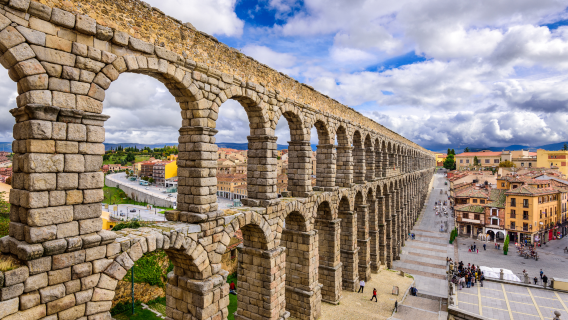
Free cancellation
Instant confirmation
Book now for today
FromSGD 7.15

5% off
Limited-time sale
FromSGD 88.28SGD 92.93


4.5/5
· 32 reviewsFree cancellation
Book now for today
5% off
Limited-time sale
FromSGD 21.73SGD 22.88

Free cancellation
Book now for tomorrow
FromSGD 42.89
Featured Food & drink in Segovia
View all Food & drink
Free cancellation
Book now for tomorrow
5% off
5% off
FromSGD 68.86SGD 72.49

4.8/5
· 198 reviewsFree cancellation
Book now for tomorrow
96.5% of travelers recommend
FromSGD 43.79


5% off
Limited-time sale
FromSGD 47.52SGD 50.03


FromSGD 10.41

Featured Outdoor experiences in Segovia
View all Outdoor experiences
Free cancellation
5% off
Limited-time sale
FromSGD 74.69SGD 78.63

4.9/5
· 14 reviewsFree cancellation
Book now for tomorrow
5% off
Limited-time sale
FromSGD 51.33SGD 54.04
![Madrid El Retiro Park 2-hr [classic featured edition] itinerary](https://ak-d.tripcdn.com/images/0351f12000u41qx157CCA_C_568_320.jpg?_fr=wc)

Free cancellation
Book now for tomorrow
5% off
Limited-time sale
FromSGD 81.49SGD 85.78
Free cancellation
Book now for tomorrow
5% off
Limited-time sale
FromSGD 81.49SGD 85.78
Free cancellation
Book now for tomorrow
5% off
Limited-time sale
FromSGD 12.22SGD 12.87
Free things to do in Segovia
Plaza Mayor
Segovia · 1.5km from downtown
Puerta del Sol
Madrid · 67.7km from SegoviaImmediate access, Book now for today
Old Town of Toledo
Spain · ToledoImmediate access, Book now for today
Plaza de España (Madrid)
Madrid · 66.8km from SegoviaImmediate access, Book now for today
Mercado de San Miguel
Madrid · 67.7km from Segovia
Plaza Mayor
Madrid · 67.7km from Segovia
El Retiro Park
Madrid · 68.8km from Segovia
Gran Via
Madrid · 67.8km from Segovia
Catedral de Santa María la Real de la Almudena
Madrid · 67.4km from Segovia
Temple of Debod
Madrid · 66.5km from Segovia
More ways to travel from Segovia
Private Tours in Segovia
View More Private Tours in Segovia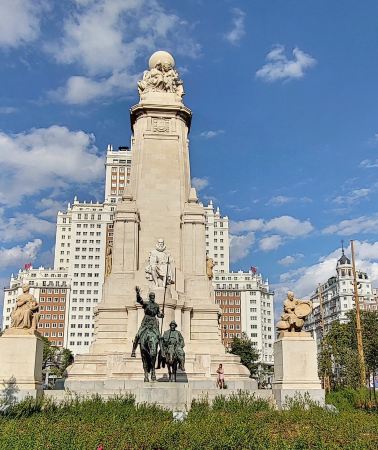


What travellers say about Segovia

Morpheus46227 November 2025
5.0
Definitely recommended, when visiting Segovia it's one of the main attraction of segovia
Alcázar de Segovia

游侠半仙13 May 2026
5.0
Drive through the aqueduct, a UNESCO World Heritage Site, at its end in Segovia and the Capitoline Hill.
In the 1st century BC, the ancient Romans began constructing aqueducts in Segovia, bringing spring water from a mountain 18 kilometers away to supply the city with drinking water and for public baths. In the 15th century, Queen Isabella repaired the aqueduct and placed a statue of the Virgin Mary in its center. Today, the aqueduct remains well-preserved, boasting 166 arches and 120 columns, and is over 2000 years old. Until Segovia was connected to running water a little over a century ago, it bore the heavy responsibility of providing the city's daily water supply.
Segovia Aqueduct

百合120324 March 2020
5.0
Madrid also has a Plaza Mayor, which seems to be quite famous. The square is very big, and the sculpture in the middle is an important landmark here. From the square you can overlook the city, which is very beautiful. Order a beer and sit in the square, it feels very comfortable!
Plaza Mayor

旅の径26 July 2023
4.0
The ancient city of Segovia is located in central Spain. It is the best preserved of the 15 world cultural heritage cities in Spain.
The ancient city stands proudly on a narrow and long rock. The most convenient way to visit the main landscape of the ancient city is to walk along the central axis of the ancient city.
Enter the city from Plaza Azoguejo. The ancient Roman aqueduct runs across the square, majestic and spectacular; go to Plaza San Martín/Church of San Martín, and then go to Plaza Mayor. The Cathedral of Segovia is located on the west side of the square. It is complex and gorgeous, and it is worthy of the reputation of "the lady in the church"; Alcázar Castle is located at the end of the ancient city. The dreamy castle has walked out of a real princess and has become the prototype of the "Princess Castle" in Disneyland.
Traveling through the dazzling scenery of thousands of years, the undulating and narrow ancient streets, and the tourists from all walks of life... It is so beautiful that you will never want to leave.
Old City

201***8310 October 2026
5.0
Actually, I missed the meeting point because I didn't pay attention to the ticket instructions; the meeting point wasn't at the palace entrance. I had to buy a separate ticket to get in, but it was definitely worth it. The palace is incredibly luxurious and magnificent, with stunning interiors. It was a truly worthwhile trip.
Royal Palace of Madrid

wendy051112 October 2026
5.0
The good thing about the Prado is that photography isn't allowed, so I can't upload photos of the exhibition halls, but I can upload a picture of the entrance. The classic Las Meninas is still very impressive, and there were many people looking at it. There are also many famous works by Goya, Velázquez, Bosch, and many others. Last time, I visited three floors and countless halls, but I couldn't see everything. It was a visual feast, and I can only marvel at how talented the older generation of European painters were! The paintings are so beautiful!
Prado Museum


