
Things to do in Tibet
Explore top experiences
Top 10 attractions in Tibet


Potala Palace
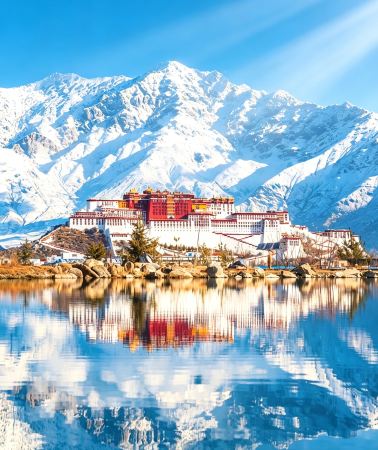
The Potala Palace is the symbol of Xizang and a sacred place in the hearts of all pilgrims! "Potala" is a Sanskrit word, also translated as "Putuo", which originally refers to the residence of Guanyin Bodhisattva. When you come here, you can not only view the large number of historical relics collected in the palace, appreciate the wonderful architectural art of the Tibetan people, but also have a baptism of the soul in that holy atmosphere. The origin of the Potala Palace According to historical records: In the 1930s of the seventh century AD, the 33rd Tibetan King Songtsen Gampo moved the capital to Lhasa and began to build the Potala Palace. Since then, major religious and political ceremonies have been held here, and it has become the ruling center of Xizang integration of politics and religion. The White Palace and the Red Palace The Potala Palace has a distinct Tibetan style and is majestic. It is the existing complete palace-style building complex in Xizang and is known as one of the world's top ten earth buildings. Its main buildings are divided into two parts: the White Palace and the Red Palace. The White Palace is named after its white exterior wall. It is the place where the lamas live and conduct political activities. Because the sun shines all day long, it is called the East and West Sunlight Palaces. The Red Palace is located at the top center of the Potala Palace. Its outer wall is red and it consists of many stupas and various Buddhist temples. Historical relics The Potala Palace houses and preserves a large number of historical relics, including stupas, statues, murals, thangkas, scriptures and books, as well as gold books, jade books, gold seals granted by the emperors of the Ming and Qing dynasties, which show the historical relationship between the Xizang local government and the central government, as well as gold and silver wares, jade wares, porcelain, enamel and handicrafts. Among them, the eight stupas from the fifth generation are eye-catching. They are all magnificent and decorated with a dazzling array of gems, which can be called a palace of art.China · Lhasa

Namtso National Park
Namtso National Park is located between Damxung County of Lhasa and Baingoin County of Nagqu, situated on the Qinghai-Tibet Plateau known as the "roof of the world." The attraction includes Namtso, the main peak of Nyenchen Tanglha, bird islands on the lake, rock carvings, Yangbajing, and other attractions. The core attraction of the park, Namtso, is one of the three holy lakes and also one of the world's highest-altitude saltwater lakes. Under sunlight, Namtso's lake surface appears sapphire blue, resembling jade fallen from the sky, earning it the title "heavenly lake" and making it a renowned site in Tibetan Buddhism. The lake contains three larger islands, which are rarely disturbed by the outside world and host diverse bird populations, hence called bird islands. To the south of Namtso lies the perpetually snow-capped Nyenchen Tanglha Mountains, while its northern and western sides feature plateau hills and expansive lakeshores. In the folk songs and legends of local herders and hunters, Nyenchen Tanglha and Namtso are not only striking sacred mountains and lakes but also inseparable lovers and spouses. Nyenchen Tanglha appears more majestic against the backdrop of Namtso, while Namtso becomes even more enchanting with the reflection of Nyenchen Tanglha.China · Damxung

Namtso
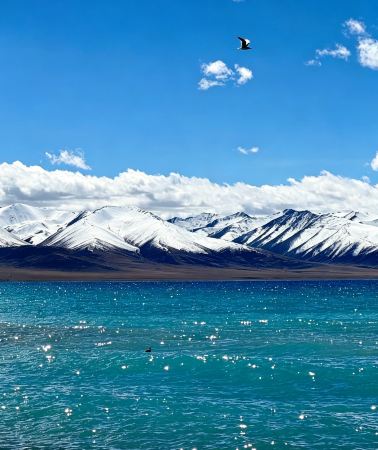
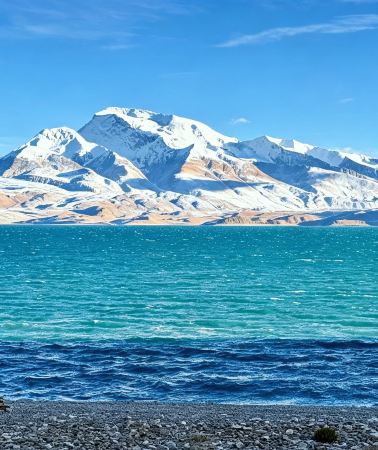
Namtso is located on the northern Xizang plateau north of Lhasa. "Namtso" means "heavenly lake" in Tibetan and is called "Tengri Sea" in Mongolian, both sharing the same meaning. Along with Yamdrok Yumtso and Mapam Yumtso, it is known as one of the three holy lakes of Xizang. With a surface elevation of over 4700 m, it stretches more than 70 km from east to west and covers nearly 2000 km², making it the second largest saltwater lake in Xizang. Its southern shore is backed by the continuous Nyenchen Tanglha snow-capped mountains, whose peaks reflect clearly in the sapphire-blue lake water on calm sunny days. According to local legends, these mountains and Namtso have been companions for millennia, adding a touch of tenderness to the landscape. Lake tour Namtso means "Tengri Sea" in Mongolian and is said to be the sacred site of the Buddhist deity Chakrasamvara, making it a renowned pilgrimage destination in Tibetan Buddhism. During the Year of the Sheep, it is believed that buddhas, bodhisattvas, and protector deities gather at Namtso to hold grand religious ceremonies. If devotees circle the lake and chant scriptures once during this time, it is considered more meritorious than doing so 100,000 times in ordinary years, bringing immeasurable blessings. Thus, during the Year of the Sheep, monastic and lay devotees undertake long journeys to circumambulate the lake. Many pilgrims visit Namtso during the Saga Dawa festival on the 15th day of the fourth month in the Tibetan calendar. 1-day tour Many travel agencies in Lhasa offer 1-day tour packages to Namtso. The typical itinerary involves departing in the morning, arriving after 3-4 hours, spending 2-3 hours exploring, and then returning the same way. If you don't want a private charter, this is the only option available and also the conventional way to visit Namtso. For those who prefer to avoid the crowds, you can arrange a private charter or find a shared transfer in Lhasa city. While the route remains the same, the advantage is greater itinerary flexibility, along with the option to stay overnight by the lakeshore. Leaving Damxung County and crossing the Nagen La Pass at an elevation of 5190 m, one can glimpse the vast sapphire-blue waters in the distance. By the lakeside stand two towering boulders side by side, known as the welcoming stones of Namtso or the husband-and-wife stones. Legend has it they are the gatekeepers of Namtso. It is said they represent the goddess who governs the wealth of northern Xizang's grasslands. Merchants would pray here for her blessing before business trips to ensure prosperity, hence these stones are also called the wealth deity stones. A number of prefabricated houses have been built near Tashi Peninsula, including restaurants and inns. This is where Namtso offers food and stay by the lake. If you come to Namtso by private charter, you can spend a night here. You can enjoy the beautiful sunset at dusk, wake up early to greet the sunrise on Tashi Peninsula, or gaze at the sky by Namtso's lake at midnight, where you can even discern the outline of the Milky Way. The lake area features high altitude, strong winds, and intense UV radiation. Even in midsummer, temperatures can drop to around 10°C in the morning and evening, so packing a thick coat, sunglasses, and sunscreen is advisable. Slow down when moving through mountain passes or along the lakeshore to allow your body time to adjust. Please show respect when observing pilgrims circling the lake or photographing mani stones and prayer flags, and avoid stepping on the mani piles. Most travelers make a round-trip from Lhasa in a single day, but we recommend setting aside a full day and bringing your own snacks and hot water. From June to September, the lakeside grasslands are lush with vegetation and wildflowers, offering exceptionally rich scenery. In winter, the frozen lake and vast landscape create a unique atmosphere, but pay close attention to weather conditions and your physical state before traveling.China · Damxung

Basomtso
Pagsom Co is also known as Gongga Lake. It means "three rocks" in Tibetan. Located in Gongbo'gyamda County, it is a sacred lake of the Nyingma Branch of Tibetan Buddhism. The shape of Pagsom Co is like a crescent embedded in the deep valley. The water is clear, reflecting the surrounding snowy mountains and primordial forests. The Tsozong Gongba Monastery stands on Tashi Island and was built during the late Tang Dynasty. The reefs on the island are carved into images of animals and Buddha statues. Tsozong Gongba Monastery is a two-story structure of earth and wooden materials. The three statues, Chenresig, Guru Rimpoché and Sakya Thukpa, are worshiped here.China · Gongbo'gyamda

Yarlung Zangbo Grand Canyon
Yarlung Zangbo Grand Canyon is a horse-shaped gorge that bends around Mount Namcha Barwa. The canyon offers spectacular views of Namcha Barwa, the Nyang River, and ancient villages. The gorge can be accessed by car or boat, or on foot. Visitors arriving by car can see ancient mulberry trees and stop off at a breathtaking viewpoint with views over Namcha Barwa. Boat trips pass by spectacular waterfalls, villages, and mountains. The canyon is also popular with hikers and outdoor enthusiasts.China · Mainling
Yamdrok Yumtso
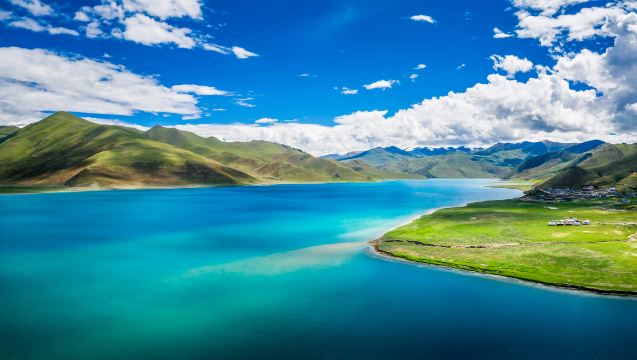
Yamdrok Yumtso means "swan pool" in Tibetan and is also called Yamdrok Yumtso Lake, locally referred to as "Yang Lake" for short. Along with Namtso and Mapam Yumtso, it is known as one of the three holy lakes of Xizang. Located on the south bank of the Yarlung Zangbo River in Nagarze County, Shannan City, the lake surface sits at an elevation of approx. 4400 m, making it a relatively large inland lake on the northern foothills of the Himalayas. Yamdrok Yumtso has numerous branching inlets and winding tributaries, resembling coral branches spreading among the mountains when viewed from above, hence its Tibetan name "upper coral lake." The lake water displays alternating layers of blue and green under different lighting conditions. The lake is dotted with over a dozen small islands and is home to plateau fish species such as the fine-scaled fish, Xizang schizothoracin, and plateau naked carp. It is also an important waterbird habitat in southern Xizang, where migratory birds like swans, bar-headed geese, yellow ducks, and ospreys gather in flocks along the lakeshore and on the central islands to overwinter each winter. Yamdrok Yumtso is more impressive when viewed from afar than up close. After crossing the Gambala Pass at an altitude of about 5,000 meters, the view suddenly opens up, and the winding lake surface can be seen like a ribbon below—a classic angle to admire Yamdrok Yumtso. Descending the winding mountain road for about half an hour leads to the lakeshore, with multiple viewing platforms along the way for stopping to take photos and appreciate the changing colors of the lake and the interplay of mountains and water from different heights.China · Nagarze County

Jokhang Temple
Jokhang Temple, known as "Jokhang" in Tibetan and also called "Tsulag Khang," is the ultimate destination for Tibetan Buddhist devotees. In their hearts, Jokhang Temple is as sacred as the Potala Palace. Both geographically and spiritually, Jokhang Temple is the true holy site and center of Tibetan Buddhism, holding an exceptionally lofty and pure status in Tibetan Buddhist history. Built in the mid-7th century by Tibetan King Songtsen Gampo to enshrine the 8-year-old life-sized statue of Sakyamuni brought by his Nepalese princess Bhrikuti from her hometown of Kathmandu, Jokhang Temple gained further prominence in 1409 when Tsongkhapa, the founder of the Gelug school, propagated Buddhist teachings and held the Great Prayer Festival here, solidifying its pivotal role in Tibetan Buddhist history. In the 8th century, the 12-year-old life-sized statue of Sakyamuni brought by Princess Wencheng of the Tang Dynasty from Chang'an was enshrined in Jokhang Temple, becoming its most treasured relic and a must-see for travelers and pilgrims alike. In addition, the temple houses nearly 1 km-long Tibetan-style murals depicting "Princess Wencheng's journey to Tibet" and "The construction of Jokhang Temple," as well as two embroidered thangkas of guardian deities from the Ming Dynasty, which are rare artistic treasures. Lhasa has three circumambulation routes—inner, middle, and outer—all centered around Jokhang Temple. The inner route, called "Nangkhor," circles the Jokhang Hall within the temple. The middle route, called "Barkhor," goes around the outer perimeter of Jokhang Temple. The outer route, called "Lingkhor," encompasses the Potala Palace, Chakpori Hill, Ramoche Temple, and Jokhang Temple. Attraction guide: Entering Jokhang Temple through the main gate leads to a courtyard. On the east side of the courtyard are rows of butter lamps, which remain lit year-round as devotees replenish the butter daily. Behind the butter lamps is the main entrance to Jokhang Temple's central hall. To the left of the entrance is a statue of Padmasambhava, founder of the Nyingma school, and to the right is Jampa Buddha, also known as Maitreya or the Future Buddha. The right wall features murals depicting the temple's founding, including scenes of the Potala Palace in the 7th century and the lake-filling construction of Jokhang Temple. Proceeding clockwise, visitors encounter the chapel dedicated to Tsongkhapa, founder of the Gelug school, and his eight disciples. Continuing right, passing the Yaksha and Naga chapels, and beyond hundreds of butter lamps lies the renowned "Jokhang" Hall—the heart and essence of the temple. At its center is the main assembly hall, where monks chant and meditate, surrounded by smaller chapels. The unmissable highlight is the central chapel housing the 12-year-old life-sized golden statue of Sakyamuni, brought by Princess Wencheng. This sacred center of Jokhang Temple is the ultimate destination for devout pilgrims. Stairs beside the courtyard lead to the second and third floors. The second floor features the Dharmaraja Chapel, with statues of King Songtsen Gampo, Princess Wencheng, and Princess Bhrikuti, as well as the Palden Lhamo Chapel dedicated to the protective deity. The spacious terrace on the second floor offers a panoramic view of the Potala Palace, making it an ideal photo spot. The third floor's golden roofs are another attraction, though this level is rarely open to the public. If fortunate enough to ascend, visitors are awestruck by the four resplendent golden pinnacles.China · Lhasa

Mount Namcha Barwa
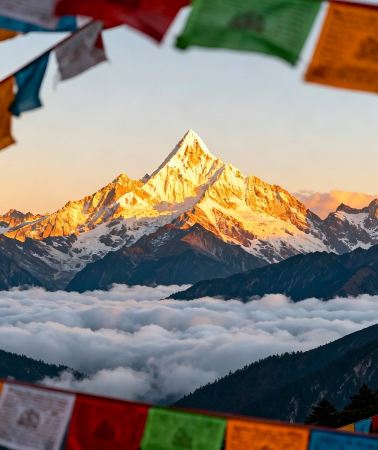
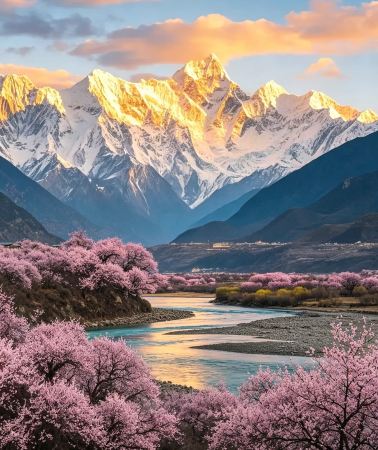
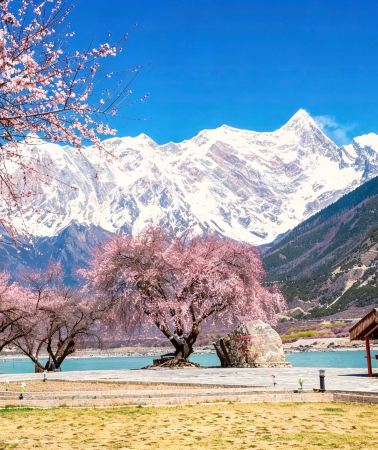
Namcha Barwa Peak is located in Nyingchi. Atop the mountains in the scenic spot are glaciers and thick misty clouds. The vegetation here grows thick and green, creating a beautiful natural environment. There are many places to take in the grandeur of Namcha Barwa Peak. From the Yarlung Tsangpo Grand Canyon Scenic Area Scenic Platform, visitors can take a sightseeing bus to the Yarlung Tsangpo Grand Canyon Scenic Area. The vista here is broad and open. From Sejila Mountain Pass, it is possible to see all the way to the rich scenery of Lunang Forest at the foot of the snowy mountains. Facing towards the snowy mountains, the traditional Susong Village can be seen. Every spring, the peach blossoms and snowy peaks as seen through the flowers make for an even more amazing sight.China · Mainling

Mt Qomolangma Base Camp
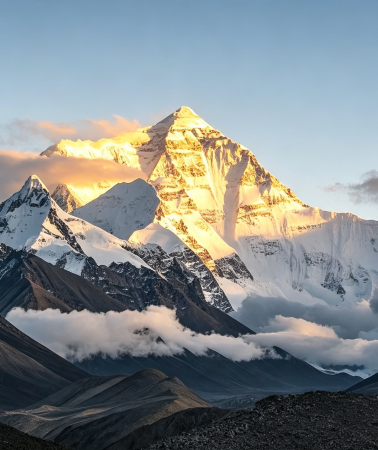
Mt Qomolangma Base Camp was established to protectMount EverestA protected zone established in the core area, ideal for viewing and photographyMount EverestOne of the prime locations, also serving as the starting point for mountaineering teams ascending from the Chinese side.Mount Everestthe base camp at that time. Every year from April–June is the climbing season, when Mt Qomolangma Base Camp is at its busiest and also the best time to captureMount EverestWhen the flag cloud appears. Transportation to Mt Qomolangma Base Camp is inconvenient - vehicles can only go as far as the tent camp near Rongbuk Monastery. Visitors usually take a private charter from Shigatse or Lhasa, with the round trip taking approx. 4 days. Some visitors stay overnight at the tent camp, which is affordable but has basic facilities. Armed police are stationed at Mt Qomolangma Base Camp, where there's a monument that serves as a popular photo spot. You can also buy postcards and get them stamped at the tent post office, including special stamps commemorating the 2008 Olympic torch ascent.Mount EverestThe postmark here is quite meaningful as a souvenir. Please note that since this area is located near the border, you'll need to apply for a border pass in advance before your trip. Also, some sections of the road are in poor condition.China · Tingri

Princess Wencheng Theater
Princess Wencheng Theater is located in Cijuelin Valley on the south bank of Lhasa River. It reconstructs the epic of marriage 1,300 years ago with an open-air stage at an altitude of more than 3,000 meters. This high-altitude live-action theater, backed by the mountains projected by the Potala Palace, uses the natural mountain as a curtain, and uses the starry sky, snow-capped peaks and Tibetan watchtowers to interpret the magnificent chapter of the integration of Han and Tibetan civilizations. The core of the theater is the 90-minute large-scale live-action drama "Princess Wencheng". On the stage of more than 20,000 square meters, more than a dozen Tibetan and Han actors recreate the legend of the princess carrying the life-size statue of Sakyamuni at the age of 12 into Tibet with scenes such as galloping horses, moving Buddhist temples, and pouring waterfalls. Scenes such as the collapse of the Winter Palace, the snowy wedding, and the Tibetan wedding, combined with laser-projected thangkas and real herds of cattle and sheep, draw the audience into the torrent of history. The theater is surrounded by rich supporting facilities, and the Princess Wencheng Tibetan Cultural Park is full of special cultural and creative products. Every time there is a performance, there will be a grand garden party, which is very lively.China · Lhasa
More ways to travel from Tibet
Private Tours in Tibet
View More Private Tours in Tibet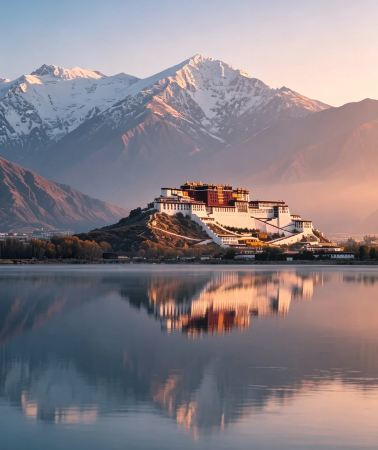


Free things to do in Tibet
Potala Palace
China · LhasaNamtso National Park
China · DamxungNamtso
China · DamxungBook now for tomorrow, Cancel anytimeBasomtso
China · Gongbo'gyamdaYarlung Zangbo Grand Canyon
China · MainlingYamdrok Yumtso
China · Nagarze CountyJokhang Temple
China · LhasaMount Namcha Barwa
China · MainlingMt Qomolangma Base Camp
China · TingriPrincess Wencheng Theater
China · LhasaImmediate access, Book now for today
What travellers say about Tibet

M29***0330 September 2026
5.0
Our tour guide, Mr. Cheng, was very handsome, gave a very detailed explanation, and had excellent service. If you have the chance, you must experience the charm of the Potala Palace. Highly recommended! 👍👍👍
Potala Palace

M22***0916 October 2025
5.0
You can't drive in, you can only take the scenic area's sightseeing bus. This is necessary to protect the ecological environment, so support it!
The lake is huge, with varying shades of blue from shallow to deep. There are many birds around the lake, and it's truly beautiful. A must-see when you're in Lhasa.
Namtso National Park

Anonymous user9 October 2026
5.0
Absolutely beautiful.
The shuttle bus ride takes over half an hour and is quite large.
There's so much trash on the mountain!!! It's not the scenic area's fault. People can bring oxygen cylinders up, so why can't they bring empty ones down?!
Namtso

闲庭漫步3014 October 2026
5.0
The scenery was beautiful, the experience was fantastic, and the management was excellent; the entire trip was very comfortable. I hope the sightseeing bus service to Jiba Village can be improved to make it easier for tourists to get in and out.
Basomtso

米存存18 October 2026
5.0
The advantage of the off-season is that you don't have to squeeze into crowds, you can enjoy a private car service, it's convenient to come and go, the driver is very nice, and it's a leisurely trip. Although I didn't see the true face of Namcha Barwa, I got a double rainbow 🌈, thank you!!
Yarlung Zangbo Grand Canyon

Z·H13 October 2026
5.0
Yamdrok Lake truly lives up to its reputation as one of the three holy lakes of Tibet; its beauty is breathtaking from the first sight. The lake water is a rich tapestry of turquoise, like a sapphire set amidst the mountains, with snow-capped peaks in the distance and prayer flags fluttering in the wind. The scenery is vast and soothing. The viewpoints along the way offer expansive vistas, every angle a masterpiece. Standing on the lakeshore, a profound sense of peace washes over you. A trip to Tibet is incomplete without experiencing such stunning scenery.
Yamdrok Yumtso

李肢强8 October 2026
5.0
Visiting Jokhang Temple again after many years, the entrance has been significantly improved, making it look more like a proper tourist attraction. The interior remains the same, but the management is more comprehensive; however, the third floor is no longer open to the public. It's a must-see attraction on any trip to Lhasa.
Jokhang Temple

205***1516 October 2026
5.0
Namcha Barwa is absolutely worth a visit! I went with my family. Located in Nyingchi, Tibet, Namcha Barwa is shrouded in mist year-round. At 7,782 meters, it's the highest peak at the eastern end of the Himalayas. At its foot lies the Yarlung Tsangpo Grand Canyon—the world's deepest canyon. The weather was pretty good the day I went; although clouds obscured the summit, I could still see almost the entire mountain, so I was lucky. It was a bit of a shame that the sun wasn't strong enough to see the golden sunrise on the mountain.
Mount Namcha Barwa
Anonymous user7 October 2026
4.0
The scenery was stunning; we were lucky with the weather and managed to capture the golden sunrise over the mountains and the Milky Way. However, aside from taking photos, the long drive was exhausting, so be aware of altitude sickness and the need for wind protection and warmth. Other services were limited, and there wasn't much to do, making it less convenient. Overall, it's worth a visit!
Mt Qomolangma Base Camp
Anonymous user31 July 2026
5.0
When visiting Lhasa, seeing the Princess Wencheng Theater is a must-do attraction. The theater is quite large, with a museum nearby, and the Potala Palace is visible in the distance directly opposite. It's definitely worth a visit.
Princess Wencheng Theater
Frequently asked questions
What are the must-do things in Tibet?
Don't miss these attractions in Tibet: Potala Palace, Namtso National Park, and Namtso. If you like Cultural experiences, try Lhasa, Xizang (Multilingual Services Available) - English, Japanese, Korean, French, Russian, and Other Languages. Contact customer support for inquiries.|guide|Local guide|Hiking tour|Translate. If you enjoy Outdoor experiences, try Sichuan-Tibet Highway: An Adventure Across the Roof of the World.
How can I contact Trip.com customer support?
Get help anytime, anywhere within 30 secondsContact customer support
Can I change or cancel my booking?
Change and cancellation policies vary by attractions and tours. Please check the product details page for more information.
How can I get discounted prices?
Ticket prices may vary between weekdays and weekends, as well as during peak and off-peak seasons. When booking with Trip.com, you can also use Trip Coins to get extra savings. For more tips on booking discounted tickets, please visit Trip.com for the latest information.
Trip.com picks
Popular cities in China
Popular Tibet Tours
Best Tibet Experiences
Recommended Car Rentals in China
Things to do in ShanghaiThings to do in QingdaoThings to do in GuangzhouThings to do in YulongThings to do in JiuzhaigouThings to do in ChinaThings to do in YangshuoThings to do in HarbinThings to do in SanyaThings to do in ShenzhenThings to do in SuzhouThings to do in TaipeiThings to do in BeijingThings to do in HangzhouThings to do in Macau
2026 APEC Shenzhen stop | International VIP reception | private car transfer | customized itineraryFuture Lifestyle, 9 hrs Private Shenzhen Hi-Tech Tour: EVs, Robots, Drones & 3D PrintingShenzhen Future Tech 1-Day Tour: Drone Delivery, Robot Dining & Driverless Taxi RideShenzhen Private Guided Day Tour: Judiaosha Beach, Dapeng Ancient City, Jiaochangwei & Chung Ying StreetPrivate tour | English-speaking guide | Shenzhen science 1-day tour | DJI/drones/giant exhibition/HuaqiangbeiShenzhen Technology Experience 1-day Tour Shenzhen Qianhai technology exploration 1-day tour: Unmanned driving technology and global robot 6S storeShenzhen private tour day trip to Ping An Finance Centre, Bay Glory Ferris Wheel, Nantou Ancient Town and Shenzhen Bay ParkShenzhen Fairy Lake + Luohu old town history 1-day tour / multilingual guide / foreign guest receptionShenzhen HUAFA QIANHAI SNOW WORLD official certified instructorsShenzhen Qianhai technology half-day tour: DJI flagship store and global robot 6S storeShenzhen Private Day Tour: Shanshuitianyuan Tourism Culture Garden & Countryside Hot Spring with Chartered Car & Tickets IncludedShenzhen High-Tech Adventure: Robot 6S + DJI + Bambu 3D | 2 Customizable ItinerariesShenzhen technology half-day tour: Unmanned driving technology, DJI and Inno100 flagship storeShenzhen Shekou Greater Bay Area cruise: 3-hour round-trip Hong Kong-Zhuhai-Macao bridge sea tour Shenzhen Spa & MassageShenzhen Costume ExperienceTibet SIM CardShenzhen TransportationShenzhen Group ToursShenzhen Transport CardShenzhen Visa Application ServicesWellness & Spa in ShenzhenShenzhen Travel ServicesShenzhen SIM CardShenzhen Yacht CharterShenzhen Flight ExperienceTibet Day ToursShenzhen Day ToursShenzhen ActivitiesCar rentals in Hong KongCar rentals in ShanghaiCar rentals in BeijingCar rentals in Taipei