
Things to do in Zagreb
Explore top experiences
Top 10 attractions in Zagreb


Ban Jelacic Square
Ban Jelacic Square is the central square of Zagreb, located at the junction of the Upper Town and the Lower Town. Multiple tram lines converge here, and the blue trams passing through the square are a highly recognizable image of the city. The square is named after the 19th-century Croatian Ban Jelacic, a national hero who ordered the abolition of serfdom in the same year he took office. The equestrian bronze statue in the center of the square was created by Austrian sculptor Anton Dominik Fernkorn in the mid-19th century, depicting the Ban with his right arm extended and holding a saber. This statue was once removed from the square due to historical changes, but it was returned in 1990 and is now one of the symbols of Zagreb. The square's predecessor was a market that formed spontaneously at the foot of the old town in the 17th century. It was initially called "Harmica," derived from the tax that had to be paid to sell goods in the market at that time, and it was renamed to its current name in 1848. The buildings surrounding the square were built in different eras, with facades of Classicism, Art Nouveau, and Modernism appearing together, making it worth walking around the square to compare them in detail. The Mandusevac Fountain on the east side was originally a spring that provided water for the entire city. Legend has it that in ancient times, someone asked a girl named Manda to scoop water from the spring, and the local phrase for "scooping a handful of water" is said to be the origin of the city name "Zagreb." Today, the spring has been built into a small circular fountain. This is the customary meeting place for the people of Zagreb. When locals say "meet under the clock," they are referring to the old clock near the statue. The square is bustling with people during the day, and it remains lively at night, illuminated by lights and the surrounding cafes. The square itself is a pedestrian zone where cars are not allowed. Shops and cafes line Ilica Street on the west side, and the slope to the north leads to the Upper Town. The nearby Dolac Market is easy to visit along the way, making this an excellent starting point for planning your sightseeing route.Zagreb · 47m from downtown

Saint Mark’s Church
Saint Mark’s Church is located on St. Mark's Square in the Upper Town of Zagreb, Croatia. It is the parish church of the old town, with a history dating back to the 13th century. In the second half of the 14th century, it was rebuilt into a late Gothic three-nave church, with sturdy stone pillars supporting stone rib vaults, creating a simple and solemn interior. A major iconic feature of the church is its tiled roof with colorful patterns. The tiles are arranged into two coats of arms: one side features the historical joint coat of arms of Croatia, Dalmatia, and Slavonia, while the other side displays the coat of arms of Zagreb, featuring a white castle. The patterns are vivid and striking, serving as an iconic symbol of Zagreb in tourists' photos, and can be easily captured from the square. The exquisite Gothic portal on the facade is believed to be the work of the Parler family stonemason workshop in Prague at the end of the 14th century. Above the niche are statues of Saint Joseph and the Virgin Mary holding the Christ Child, with Saint Mark and the lion visible below, flanked by the Twelve Apostles. The northwest exterior wall of the church also features the ancient coat of arms of Zagreb, carved in 1499. The interior of the church displays works by the Croatian sculptor Ivan Meštrović. The large crucifix above the main altar and the Pietà sculpture nearby are both his creations, complementing the medieval stone space.Zagreb · 499m from downtown
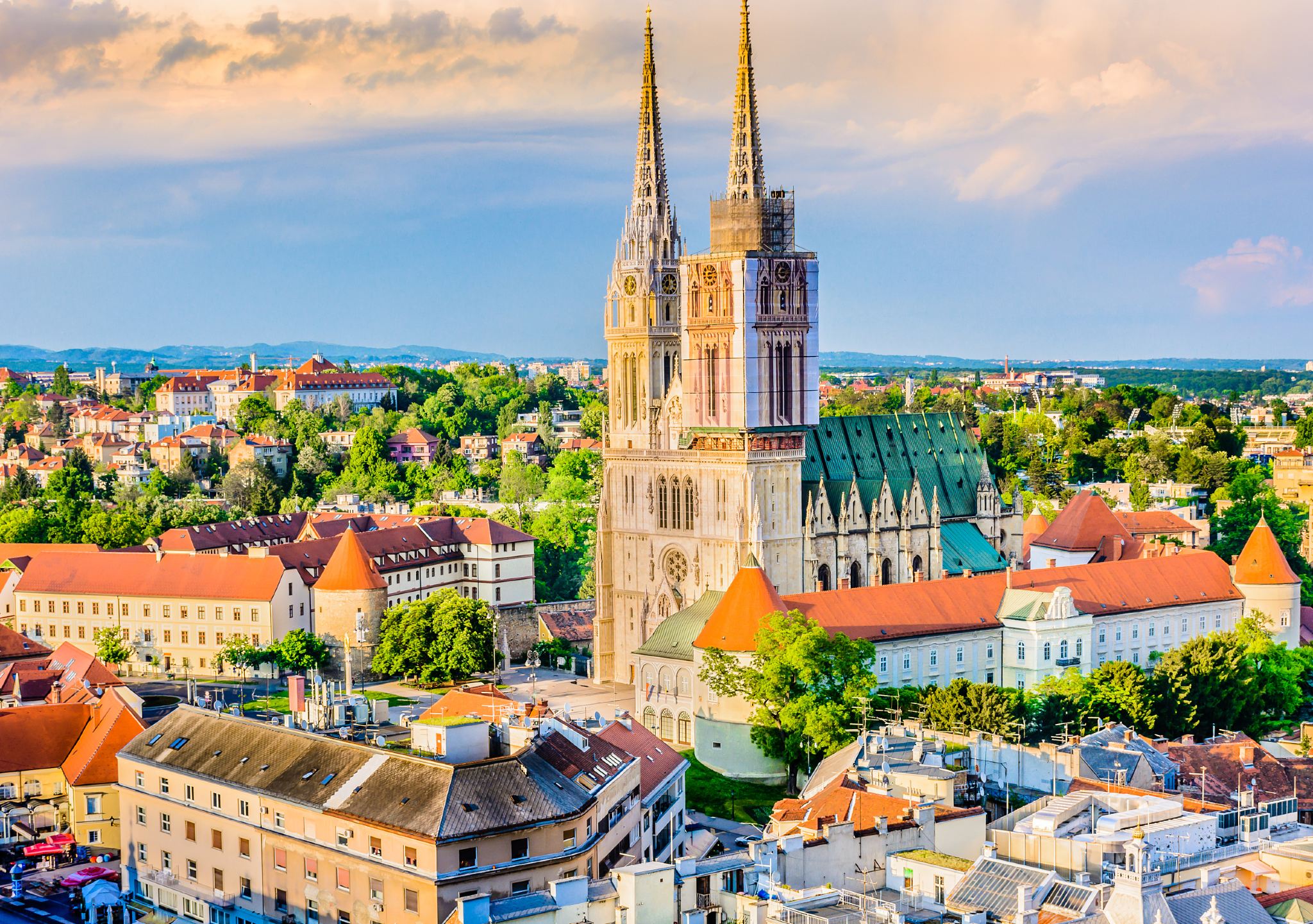
Cathedral of Zagreb
Cathedral of Zagreb, officially known as the Cathedral of the Assumption of the Blessed Virgin Mary, is the cathedral of the Catholic Archdiocese of Zagreb and a highly recognizable landmark of the city. Its history dates back to the end of the 11th century. The Diocese of Zagreb was established here around 1094, marking the beginning of the city's recorded history. The existing structure is primarily Gothic. The 1880 earthquake caused the nave to collapse and severely damaged the bell towers. Afterward, architect Hermann Bollé led the restoration in a Neo-Gothic style, erecting two spires over 100m high on the facade. This height is quite prominent among religious buildings in Croatia and can be seen by looking up from many street corners in the old town. The 2020 earthquake damaged the spires again, and the church immediately underwent restoration once more. There is much to see inside: the sacristy contains frescoes painted in the 13th century, considered one of the earliest surviving church paintings in northern Croatia; Renaissance pews, a Baroque marble pulpit, and a marble altar remain in use today; and the mid-19th-century organ is equipped with over 6,000 pipes. The church also houses the sarcophagus designed by sculptor Ivan Meštrović for Cardinal Stepinac. This Croatian cardinal, who was beatified in 1998, has made this a place of pilgrimage for many believers who visit specifically for this purpose. The church is surrounded by Renaissance walls and towers built to defend against the Ottoman army. Their outlines remain intact to this day but are often overlooked by tourists. The Fountain of the Virgin and Angels in front of the church is also the work of Bollé and is a popular attraction.Zagreb · 213m from downtown

Upper Town
Upper Town is the historic core of Zagreb, the capital of Croatia, situated on a hill overlooking the Lower Town, with its medieval hilltop town layout remarkably well-preserved. Cobblestone streets, vintage street lamps, and clusters of old red-tiled houses outline the city's early appearance. Several landmarks are close to each other and can be explored on foot. Founded in the 13th century, Saint Mark’s Church is a landmark here. Its colorful tiled roof features the coat of arms of Zagreb and the ancient kingdom, including Croatia's iconic red-and-white checkered pattern; the Gothic portal on the south side is the work of Prague craftsmen from the late 14th century, with stone statues of the Virgin and Child and the Twelve Apostles carved into the niches. Inside the church, you can also see stone carvings and bronze statues by Croatian sculptor Ivan Meštrović. The Croatian Parliament and government buildings are located on either side of St. Mark's Square, where the church stands. The Stone Gate is the only remaining medieval gate of the old town. A chapel to the Virgin Mary is built inside the gate passage. Legend has it that during an 18th-century fire that reduced the surroundings to ashes, the painting of the Virgin Mary inside the gate remained intact. Since then, it has become a place for locals to light candles and pray, and many votive plaques of gratitude are left on the walls. The Lotrščak Tower, also built in the 13th century, stands on the southern edge of the old town. The top of the tower has an observation deck overlooking the red-tiled roofs and the streetscape of the Lower Town. The Grič Cannon on the tower fires promptly at noon every day. This time-keeping tradition has continued for over a hundred years. The sound of the cannon is louder than you might expect, so don't be surprised if you hear it in the old town around noon. Passing through the Stone Gate and following the old street west leads to St. Mark's Square, and further south is the Lotrščak Tower. This route perfectly connects the highlights of the Upper Town. The upper station of the century-old cable car connecting the Upper and Lower Towns is located right next to the tower. The entire journey is only a few dozen m, taking just seconds to ascend the slope. After your tour, you can conveniently take it down to the Lower Town, which is time-saving and easy.Zagreb · 396m from downtown
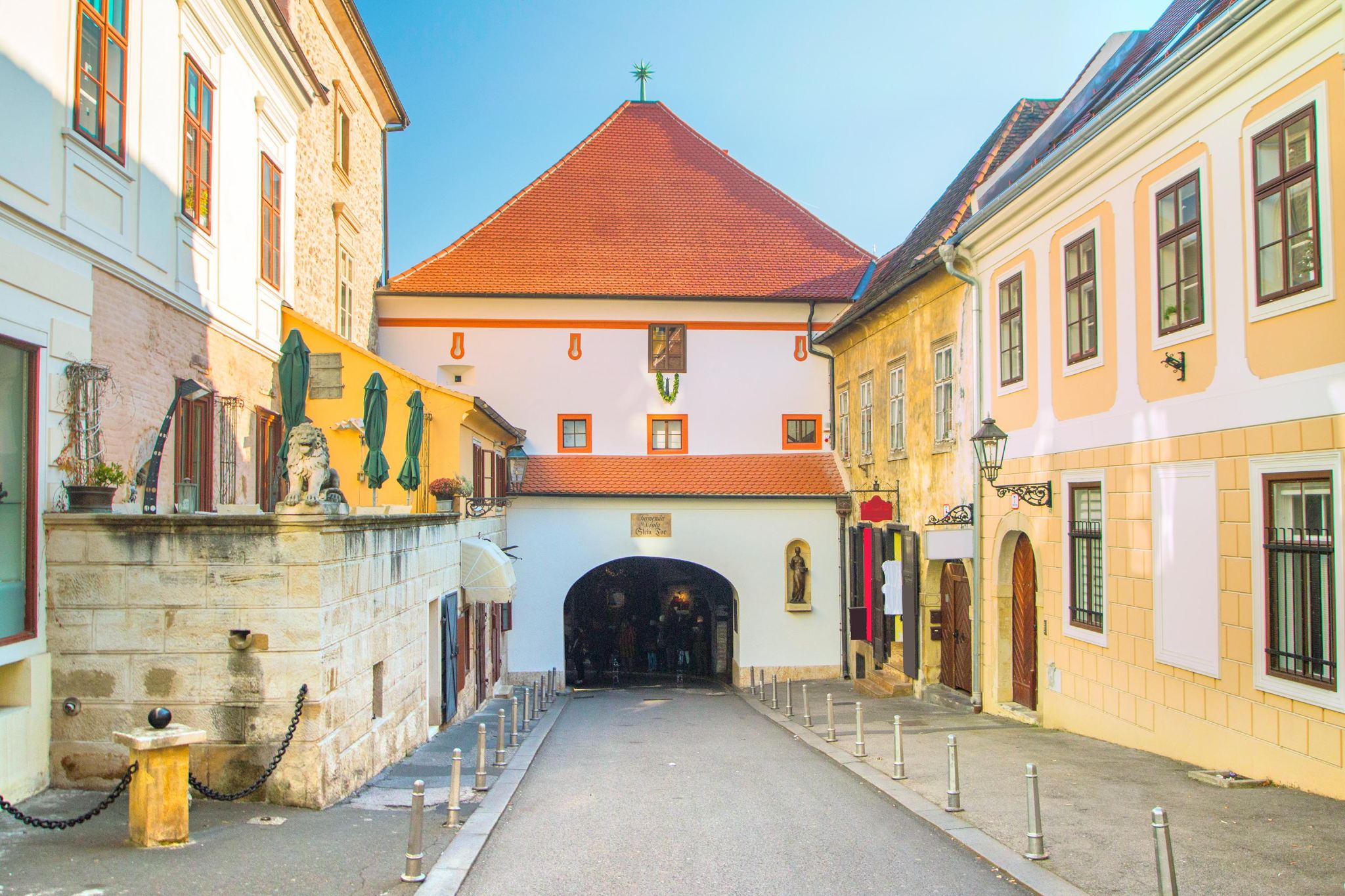
Stone Gate | Zagreb
Stone Gate | Zagreb is a surviving medieval gate in the Upper Town of Zagreb, the capital of Croatia. It was built in the 13th century, and it is the only one remaining of the several gates that were once on the old city walls. It connects the downtown area below the hill with the old town on the hill. Walking up the slope from the central square and passing through this gate means you have entered the Upper Town. To this day, it remains a busy pedestrian thoroughfare. The real highlight is hidden inside the gate passage: a small chapel that is still in use. The fire of 1731 almost destroyed the surrounding neighborhood, but the painting of the Virgin and Child inside the gate remained intact. Since then, it has been placed behind an ornate iron-grille altar, and the golden crown on the painting was added in 1931 on the 200th anniversary of the fire. Locals revere the painting as the city's guardian Virgin Mary. The walls of the chapel are covered with votive plaques expressing gratitude, and candles are always lit on the candelabra. People often stop to light a candle and pray quietly as they pass by, blending a thoroughfare for pedestrians and a chapel into one. When visiting, you can walk from Stone Gate | Zagreb along the streets of the Upper Town for a few minutes to Saint Mark’s Church, connecting the core of the old town. If the timing is right, you can also listen for the cannon fire from the Lotrščak Tower at noon every day, a time-keeping tradition in Zagreb that has continued since the 19th century.Zagreb · 370m from downtown

Ban Josip Jelačić Statue
In the middle of Ban Jelačić Square is the Ban Josip Jelačić Statue, an equestrian statue. He was a hero who devoted himself to the Croatian nationalist movement and was committed to Croatian independence.Zagreb · 49m from downtown

Fisherman's Bastion
The Fisherman's Bastion is located on the Castle Hill on the Buda side. It is a fortress named in memory of the fishermen who defended the Danube in the past. It is known as the three most shocking buildings in Hungary together with the Hungarian Parliament Building and the National Opera House. It also overlooks the Danube and overlooks the Lookout point for views of the Perth district. Historical background The Fisherman's Bastion stands on the Danube River, adjacent to the Matthias Church. It was built in 1895 and took six years to complete. This double-storey gray-white building is centered on the white minaret of the neo-Roman style. Together with several surrounding round towers, it represents the ancestral tribes of Hungary. The towers are connected by cloisters, like a labyrinth, which looks like a Disney Logo from a distance. in the castle. Several bronze statues on the Fisherman's Bastion are also quite eye-catching. One of the more famous is a horse-riding bronze statue of a Hungarian king. It was built in 1906 and is located between Matthias Church and Fisherman's Castle. The relief on the pedestal shows The king's life story. The guided tour of the Fisherman's Bastion has many steps and walking paths, and you can enjoy the scenery along the way as you climb the steps. Fisherman's Bastion has many high tower viewing platforms. It doesn't matter if it encounters windy, rainy weather, etc. The arched cloister of the viewing platform is a good shelter from the rain and summer. Take a break on the bench. Overlooking the scenery Standing on the Fisherman's Bastion, you can see the magnificent views that you can't even see from the top of the castle: the Danube, Margaret Island, the Chain Bridge, the Hungarian Parliament Building and the Freedom Hill are all in sight. The Fisherman's Bastion at night is also full of unique charm, and everything around is particularly charming under the illumination of special lights. The performance of street performers on the platform adds to the mood. It is also very romantic to come here to watch the night view. You can see many couples dating here. It is said that most of the first kisses of local young people happened here. The restaurant with the same name of the Fisherman's Bastion has seats in the north and south corridors of the Fisherman's Bastion. The dining environment is very good. The restaurant has a terrace on the high tower. Drinking coffee there and looking at the beautiful surrounding scenery is a pleasure. enjoy.Hungary · Budapest

Piazza San Marco
St. Mark's Square is unique among European city squares, being located in the city center, but not as noisy as other squares, thanks to Venice's quiet waterway traffic. As a Venice landmark, it is favored by tourists, photographers and even pigeons. Piazza San Marco has historically been the political, religious and festival center of Venice, the seat of all important Venetian government institutions, the seat of the Archbishop since the 19th century, and the venue of choice for many Venetian festivals. More than 200 years have passed since the style layout, this trapezoidal square on the edge of the Grand Canal still has its charm. The square is about 170 meters long, 80 meters wide to the east and 55 meters wide to the west. From New Year's Day to Carnival to Christmas, the Venetians host festivals big and small in Piazza San Marco, and even on normal days, people from all over the world flock to this square. There is a circle of exquisite Renaissance-style buildings on the side of the square. St. Mark's Basilica, the Mint, and the Doge's Palace are located on the east side of the square. On the south side are the bell tower and the new and old parliament buildings. Climbing the bell tower can overlook the whole square panorama. . On the west side is the Corell Museum, and on the back is a row of boutiques selling gold jewelry, glass, clothing, home decoration, etc. The storefront is not large, but the window design is very eye-catching. Between the Doge's Palace and the Venetian Prison on the other side of the river is the Bridge of Sighs, and between the square and the Grand Canal is the small Piazza San Marco, where you can see two tall columns standing on the river bank, one of At the top is the statue of San Marco's lion ready to fly. At the top of the other column stands a statue of the holy San Theodore accompanied by a crocodile, both patrons of Venice. During the day, the square is crowded with tourists, and there are groups of tourists everywhere, and large groups of pigeons are flying around the square. If you want to feed the pigeons, you can buy biscuits to feed them. If you encounter a black person who feeds pigeons and corn, don't take it. A small handful of rice is 10 euros. If you accept it, you can ask for money. However, white people generally only give 2-5 euros. If you see Asians in Italy, they will charge more. You can choose to stroll in the square, of course, you can also choose an outdoor cafe seat to sit and rest when you are tired. Although the restaurants and cafes in the square are very expensive, you won't mind because you can stop here for a while and let your eyeballs enjoy the feast of architectural art. The steeple church, Byzantine dome church, mosaic frescoes, marble carvings, and the elegant and elegant Doge's Palace next door are not to be missed. In addition, there are many street performers and mobile vendors in the square, selling some local souvenirs, the price ranges from 3-10 euros, you can buy some as souvenirs if you like. At the same time, the view of the square at night will not disappoint you. If you visit Piazza San Marco around 7:30 pm, you will be impressed by the sight in front of you. In each arch of the buildings around the square, there are lights emitting golden light, which illuminates the original white stone church with golden color, and the whole square is shrouded in a golden splendor. Some restaurants also have their own open-air LiveShow, and it is also a pleasure to watch a free performance here.Italy · Venice

St. Stephen's Cathedral
"St. Stephen's Cathedral is located in Stephansplatz in the center of Vienna's old town. It is the cathedral of the Archdiocese of Vienna and one of the city's symbols. The church was first built in the 12th century as a Romanesque parish church. In the 14th century, under the leadership of Duke Rudolf IV, it underwent large-scale expansion and gradually took on the form of a Gothic cathedral. From the late 15th century, it became the cathedral of the Bishop of Vienna. A fire at the end of World War II destroyed the roof, which was later rebuilt after the war. Over the centuries, many weddings and funerals of the Habsburg dynasty were held here. Mozart was married in this church, and his funeral also took place here. Particularly striking is the church's colorful roof: hundreds of thousands of glazed tiles form diamond patterns, with the Habsburg double-headed eagle emblem embedded on the southern slope and the coats of arms of Vienna and Austria on the northern slope, shimmering brilliantly under the sunlight. The roof has an extremely steep pitch, allowing rainwater to wash it clean and preventing snow from accumulating. The Gothic main tower on the south side stands over 130 m tall and is affectionately called "Steffl" (Little Steffl) by the locals. It once housed the watchmen's quarters, where they kept watch for fires across the city and sounded the alarm bells. The north tower, halted due to construction difficulties, reaches only half the height of the main tower. Upon entering the church interior, the baroque high altar at the far end depicts the martyrdom of the patron saint Stephen; the Wiener Neustadt altar on the north side is a gothic double-winged altar, revealing gilded wood carvings of the Virgin Mary's life when opened on Sundays, with Emperor Frederick III's "A.E.I.O.U." motto still visible on its base. The stone pulpit in the central courtyard features reliefs of the four doctors of the church, adorned with carvings of a toad and lizard biting each other on its handrail, while a self-portrait of the sculptor peeking from a window hides beneath the pulpit steps; the crucifix playfully nicknamed "Jesus with a toothache" by Viennese locals is also worth pausing to admire. The catacombs house remains of over ten thousand individuals, including victims relocated after plagues and the sarcophagi/copper urns of dozens of Habsburg family members; beside the apostle choir stalls, Frederick III's red marble sarcophagus carved with over two hundred figures is regarded as a masterpiece of medieval stone sculpture. If your physical condition allows, you can climb the observation deck via the over 300 spiral stone steps of the south tower to overlook the continuous red-tiled roofs of Vienna's old town. The north tower has an elevator, allowing you to admire the approx. 20-ton "Pummerin" bell up close—one of the few giant bells in Austria and among the top-ranking surviving large bells in Europe. It only rings during important festivals like Christmas and New Year, with its deep chimes resonating throughout the entire old town on New Year's Eve.Austria · Vienna

Grand Canal
The Grand Canal of Venice is the main waterway in Venice. It is in an inverse S shape along the natural waterway from St. Mark's Basilica to St. Chiara Church, and is connected with many small canals. Much of the city's traffic travels through these waterways. The Grand Canal is an inverted S shape, winding from the Roman Forum in the northwest to St. Mark's Square. It is about 4 kilometers long, about 6 meters deep, and 40 to 100 meters wide. It is the most important traffic artery in Venice. There are more than 100 ancient buildings on both sides of the coast. Every September, there is a traditional regatta in Venice, which is a race of gondolas and other traditional boats on the Grand Canal.Italy · Venice
Experiences you can't miss in Zagreb
Featured Cultural experiences in Zagreb
View all Cultural experiences
FromSGD 20.54


5.0/5
· 14 reviewsFree cancellation
Book now for tomorrow
FromSGD 58.49
Free cancellation
Book now for tomorrow
FromSGD 1,033.16
FromSGD 979.78
Free cancellation
Book now for tomorrow
FromSGD 1,014.03
Free cancellation
Book now for tomorrow
FromSGD 975.76
Free cancellation
Book now for tomorrow
FromSGD 1,033.16
Featured Food & drink in Zagreb
View all Food & drink
5.0/5
· 22 reviewsFree cancellation
Book now for tomorrow
22 consecutive positive reviews
5% off
Limited-time sale
FromSGD 3.69SGD 3.89
4.9/5
· 26 reviewsFree cancellation
Book now for tomorrow
26 consecutive positive reviews
5% off
Limited-time sale
FromSGD 27.32SGD 28.76
5.0/5
· 1 reviewFree cancellation
Book now for tomorrow
5% off
Limited-time sale
FromSGD 341.43SGD 359.41

5% off
Limited-time sale
FromSGD 107.90SGD 113.58

5.0/5
· 5 reviewsFree cancellation
Book now for tomorrow
5% off
Limited-time sale
FromSGD 89.52SGD 94.24

Free cancellation
Book now for tomorrow
FromSGD 127.95
5.0/5
· 9 reviewsFree cancellation
Book now for tomorrow
5% off
Limited-time sale
FromSGD 121.55SGD 127.95

4.9/5
· 149 reviewsFree cancellation
Book now for tomorrow
37 consecutive positive reviews
FromSGD 115.73
Featured Outdoor experiences in Zagreb
View all Outdoor experiences
4.9/5
· 737 reviews· 59 bookedFree cancellation
Book now for today
23 consecutive positive reviews
5% off
Limited-time sale
FromSGD 100.38SGD 105.67
4.9/5
· 330 reviews· 42 bookedFree cancellation
97.9% of travelers recommend
FromSGD 109.98

4.9/5
· 44 reviewsFree cancellation
Book now for tomorrow
44 consecutive positive reviews
5% off
Limited-time sale
FromSGD 129.75SGD 136.58

Free cancellation
Book now for today
5% off
Limited-time sale
FromSGD 54.63SGD 57.51
Free cancellation
Book now for tomorrow
FromSGD 1,014.03
![Postojnska caves + Predjama castle (Jackie Chan filming location) [departure guaranteed for two, bookable for one person]](https://ak-d.tripcdn.com/images/fd/tg/g3/M00/A7/E0/CggYGlXS6ceAWB45ABMTk5nOPuo025_C_568_320.jpg?_fr=wc)
FromSGD 170.67
Free cancellation
Book now for tomorrow
FromSGD 994.90
Free things to do in Zagreb
Ban Jelacic Square
Zagreb · 47m from downtownSaint Mark’s Church
Zagreb · 499m from downtownCathedral of Zagreb
Zagreb · 213m from downtownUpper Town
Zagreb · 396m from downtownStone Gate | Zagreb
Zagreb · 370m from downtownBan Josip Jelačić Statue
Zagreb · 49m from downtownFisherman's Bastion
Hungary · BudapestPiazza San Marco
Italy · VeniceImmediate access, Book now for todaySt. Stephen's Cathedral
Austria · ViennaGrand Canal
Italy · Venice
More ways to travel from Zagreb
Private Tours in Zagreb
View More Private Tours in Zagreb

What travellers say about Zagreb

YoYo_0T9A3B0L1 July 2026
5.0
Jelačić Square is located in the heart of Zagreb, in the kind of place where trams clang and clatter. In the center of the square stands a bronze equestrian statue of Jelačić, with pigeons often pacing its base. The surrounding buildings blend Austro-Hungarian and modern styles, and the yellow facades of Mandiçeva Street are particularly soft in the afternoon light. On weekends, there's a farmers' market, with tents selling honey and artisanal cheese. A few steps south is the green walking path of the lower town, where benches are always occupied by people sunbathing. The square itself isn't large, but it has a strong everyday atmosphere; locals meet for coffee, and suitcase wheels clatter on the cobblestones.
Ban Jelacic Square

Law伦斯_z6 November 2019
5.0
It is worthy of being the symbol of Croatia and a must-see place when you come to Zagreb. Although the church is much smaller than the other Ascension Cathedral, the beautiful symbol on the roof is enough to greatly enhance its status!
Saint Mark’s Church

老吴华哥12 March 2022
5.0
The Cathedral of the Assumption is an important and iconic ancient building in Zagreb, also known as the Zagreb Cathedral. It was built in 1094 and adopts the overall neo-Gothic architectural style. It has two Gothic spires and a twin-tower white church.
Cathedral of Zagreb

老少皆宜()21 November 2022
5.0
Croatia is not a big country, but it has a very good geographical location, rich resources and beautiful natural scenery. We were deeply impressed by our trip to Croatia and would go there again if we have the chance.
Upper Town

nj荇菜6 July 2022
5.0
This is the only remaining city gate built in the Roman period in the old city, and it has been well preserved to this day.
Stone Gate | Zagreb

苏河家园4 July 2026
5.0
Fisherman's Bastion, a complex of buildings that perfectly blends Neo-Gothic and Neo-Romanesque styles, is not only a symbol of Budapest but also a testament to the wisdom and courage of the Hungarian people.
Fisherman's Bastion

MARK MORDOVTSEV22 May 2026
5.0
The photo was taken at Piazza San Marco in the heart of Venice, near the famous St. Mark’s Basilica and the Campanile bell tower. This is one of the most iconic and historic places in the city, surrounded by beautiful architecture, cafes, and live music. The square is easy to reach on foot from Rialto Bridge or by Vaporetto water bus to San Marco station. Sunset and evening are especially beautiful here because the lights and reflections create a magical atmosphere perfect for photos and videos.I would recommend visiting Piazza San Marco both early in the morning and in the evening because the atmosphere feels completely different. Morning is quieter and better for photos without crowds, while the evening feels romantic with live music and beautiful lighting. I also suggest exploring the nearby small streets and canals because some of the most authentic Venice experiences are hidden away from the main tourist areas. Be careful with pigeons and always check restaurant prices before sitting down near the square.
Piazza San Marco

RuthR3 May 2025
4.0
Wonderfull place, so many Architecture and i hope i can back again
St. Stephen's Cathedral

Travelwithblueeyes27 November 2023
5.0
It’s so beautiful wow amazing views boats atmosphere even in November it’s no sobusy so much better to get about
Grand Canal


