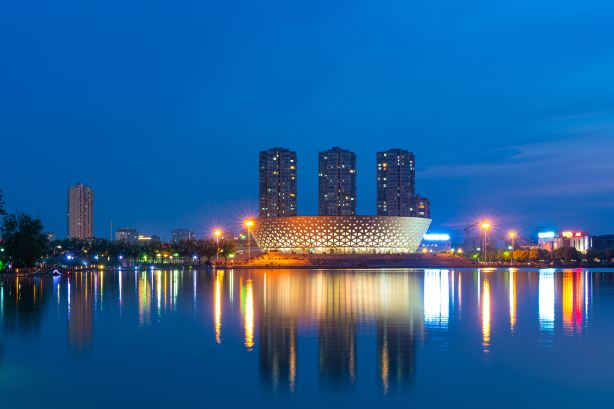
Things to do in Zhongxiang
Explore top experiences
Top 10 attractions in Zhongxiang


Xianling Mausoleum Cultural Tourism Scenic Spot
Built in the 14th year during the reign of Zhengde of the Ming Dynasty, Xianling Mausoleum of the Ming Dynasty is composed of large architectural complexes surrounded by mountains and water. Its layout and architecture are unique with a golden flask-shaped outer wall. The nine-bend imperial river and dragon scale road winding among the Mausoleum buildings are rare in Ming tombs. Two mysterious dumbbell-shaped underground palaces connected by towers have been hailed as a wonder — a masterpiece combining architectural art and environmental aesthetics.Zhongxiang · 6.3km from downtown

Mochou Village
Mochou Village is located in Zhongxiang City, Hubei Province. It is adjacent to the Ming Mausoleum, a world cultural heritage site, in the north and Mochou Lake National Wetland Park in the south. Mochou Village is named after the Chu State artist Mochounv who grew up here. For thousands of years, many moving stories have been circulated around Mochou Village, Mochounv, "Yangchun Baixue", Yangchun Terrace, Baixue Tower, etc., and have been admired and visited by literati and poets of all generations.Zhongxiang · 5.4km from downtown

Huangxian (Yellow Fairy) Cave
Huangxian Cave is located in the southern part of the Dahong Mountain Range. The cave gets its name because, according to legend, Huang Shigong once rested here. On the right side of the cave stands a great hall with a stone pool, which was created by a naturally formed dam of calcified rock. The pool, dam, stalactite said to resemble General Shi Yong from the Water Margin and a three-arched cavern are some of the wondrous sights within. Many magnificent and glorious scenes lay inside the cave, with evocative and imaginative names like Strong Cave Mouth, Jigong Prays, the Whisper, Panda and Butterfly, Yellow Fairy Promenade, Fairy Path, the First Night, Harmoniously Together, Nezha's Birth, the Golden Shower and a Fairy's Lost Dress.Zhongxiang · 45.2km from downtown
Mochou Lake National Wetland Park
Mochou Lake refers to Zhongxiang Mochou Lake, located in Zhongxiang City, Hubei Province. Mochou Lake Scenic Spot integrates mountain water resources and human resources, and is a bright pearl on the land of Jingchu! The hundreds of islands on the lake are handsome, and the water and sky are the same color. On Baixue Island in Yangchun, Baixue Tower and Yangchun Terrace face each other across the water, as if Mochou reappears; the Lantai Palace sings and dances, and King Xiang enjoys wine and recreates the charm of Chu State. On the Lower Riba Island, men ploughing and women weaving, fishing and hunting, folk songs are brilliant, and love is also Tao Tao. The military field island, with rumbling guns and killing sounds, is thrilling and fascinating.Zhongxiang · 3km from downtown

Yuanyou Palace
Zhongxiang · 888m from downtown

Zhangjiajie National Forest Park
Zhangjiajie National Forest Park is where Zhangjiajie tourism originates. "Everyone knows Zhangjiajie, but who recognizes Wulingyuan?" Many visitors are confused about the relationship between Zhangjiajie and Wulingyuan. Generally, Zhangjiajie refers to both Zhangjiajie City and the Zhangjiajie attraction. The Zhangjiajie attraction specifically means Zhangjiajie National Forest Park, which—together with Tianzi Mountain, Suoxi Valley, and Yangjiajie—forms the Wulingyuan scenic area. Since Zhangjiajie National Forest Park was developed earlier and gained greater fame, even Zhangjiajie City was renamed after it. As a result, people commonly use "Zhangjiajie National Forest Park" or "Zhangjiajie attraction" to refer to the Wulingyuan scenic area. "Three thousand spectacular peaks and eight hundred beautiful waters." The three thousand spectacular peaks, in particular, are world-renowned. Wulingyuan's mountains stand apart from famous peaks around the world. Across its 398-square-kilometer area, over 3,000 densely packed sandstone pillars rise dramatically, with 243 exceeding 1,000 meters in height. When sea of clouds roll in, these pillars appear to float without foundation, soaring straight into the sky. Alongside North America's redwood forests and Greenland's glaciers, they form one of Earth's four great geological wonders. Located at low altitudes in the subtropical zone, Wulingyuan thrives with lush forests and abundant water sources, supporting numerous endangered plant and animal species. Each pillar teems with life. The natural pillars, bridges, canyons, waterfalls, streams, pools, caves, and dense broadleaf forests often shroud in mist and clouds, enhancing their breathtaking beauty. This unique landscape creates a spectacular scene described as "majestic mountains, elegant waters, peculiar peaks, secluded gorges, and exquisite caves," earning its reputation as "an enlarged bonsai and a miniature fairyland." On December 14, 1992, the UNESCO World Heritage Committee unanimously voted to include Wulingyuan on the World Heritage List, filling China's gap of having no World Natural Heritage sites. Its recognized outstanding universal value lies in its exceptionally rare quartz sandstone peak forest landform, which possesses extremely high aesthetic value. UNESCO states: "Wulingyuan's scenery can be compared to several national parks and monuments in the United States, such as the Grand Canyon, as well as the sandstone peaks of Western Australia's Purnululu region. However, due to Wulingyuan's lower elevation and subtropical location, it boasts lush forests, abundant water sources, and numerous towering peaks that display more vertical profiles than the heritage sites in the U.S. and Australia." The visually stunning Pandora planet in the globally popular 2009 movie "Avatar" captivated countless viewers, with its floating mountains inspired by Wulingyuan. Additionally, Wulingyuan served as the filming location for Chinese literary classics like "Dream of the Red Chamber" and "Journey to the West," as well as movies such as "Zhong Kui: Snow Girl and the Dark Crystal" and "Monster Hunt." In 2010, Wulingyuan's unique landform was officially named the "Zhangjiajie landform," becoming a globally recognized term and one of the few landform types in the world named after a specific region. Attraction highlights Yuanjiajie: Step into Pandora from Avatar Yuanjiajie served as the filming location for the "Hallelujah Mountains" in the movie Avatar. Here, you can explore the magical world of floating peaks scattered like stars across the landscape. If you're lucky enough to visit during a light rain or just after the rain clears, you'll witness the breathtaking scenery of mist-shrouded, layered mountain peaks. Mihun Terrace is the ideal vantage point, offering panoramic views of hundreds of towering stone peaks that create a majestic atmosphere. You can also see the renowned "World's First Bridge," a natural wonder spanning two mountains with a vertical drop of 357 meters. Tianzi Mountain: Where the Emperor's Return Makes Other Mountains Pale in Comparison Exploring Tianzi Mountain, you'll encounter extraordinary geological formations and peculiar peaks like the Imperial Writing Brush, Fairy Presenting Flowers, Commander's Platform, Sky-High Farmland, and Immortal Bridge. Don't focus too much on how closely these natural shapes resemble their names - the true charm lies in the mountain's "primordial natural beauty." The misty atmosphere after rainfall creates an ethereal fairyland experience, while winter transforms the landscape into an even more enchanting silver wonderland. Huangshi Village: Reach the summit for breathtaking mountain views "Without ascending Huangshi Village, your trip to Zhangjiajie is incomplete." Huangshi Village is a scenic viewpoint within Zhangjiajie National Forest Park, surrounded by sheer cliffs and lush greenery, with its summit often shrouded in mist. Reaching the top of Huangshi Village offers panoramic views that let you experience the majestic feeling of "seeing all other mountains appear small." Yangjiajie: Thrills Amidst the Peaks Yangjiajie is primarily known for its pristine natural beauty, featuring towering mountains and narrow paths that make it famous for its "perilous" reputation, beloved by backpackers and adventurers. Within the attraction, Black Dragon Village is one of Zhangjiajie's most magical spots. Once inhabited by bandits from western Hunan, it was later renamed after the TV series "The Suppression of Bandits in Black Dragon Mountain." The village is built along the mountainside, with only one path leading up and down—requiring visitors to use both hands and feet to climb to the summit. Suoxi Valley: Nature's Ink Wash Masterpiece Suoxi Valley, also known as Suoxi, gets its name from the rope-like shape of its winding streams. Unlike the more rugged areas of the forest park, this mist-shrouded valley features crystal-clear streams that flow year-round, surrounded by graceful peaks at every turn. The Ten Mile Gallery stands as the crown jewel of Suoxi Valley—a 5km-long canyon filled with fragrant wildflowers and extraordinary rock formations. Walking through this landscape feels like stepping into a living Chinese landscape painting. Golden Whip Stream: Filming Location of "Journey to the West" Golden Whip Stream Canyon is the earliest developed area in the attraction, where a crystal-clear stream flows through the valley flanked by towering peaks and lush greenery. This location served as one of the filming sites for the classic TV series "Journey to the West," allowing fans to visit iconic scenes like the Water Curtain Cave and the Mountain-Splitting Rescue.China · Zhangjiajie

The Three Gorges Dam Tourism Area
The Three Gorges Dam Tourism Area is located in the Xiling Gorge section of the Yangtze River in Yichang, Hubei. It is a scenic attraction built around the Three Gorges hydro project, covering over ten square kilometers. Currently, it offers travelers three viewing spots: Tanzi Ridge, the 185 viewing platform, and the river closure memorial park. The dam crest itself is not open to travelers, so visits primarily revolve around these three attractions. Tanzi Ridge is the highest accessible point in the dam area, named for its jar-shaped summit viewing platform resembling an overturned jar. It also served as the survey site for the dam's initial location selection. From the ridge top, visitors can overlook the Three Gorges Project in its entirety—the dam, power station, and twin five-level ship locks are all visible. The five lock chambers cascade down the mountainside, earning the nickname "Fourth Gorge of the Yangtze." The park displays engineering artifacts like ancient riverbed stones, river closure rocks, and foundation stones from the dam site, complemented by model exhibits that help visitors intuitively understand the origins and development of this mega-project. The 185 observation platform is located on the left bank of the dam. It gets its name from sharing the same elevation of 185 m as the dam crest. Standing on the platform feels like being atop the dam: on one side, the dam and vertical ship lift are within close reach, offering a chance to witness ships "riding the elevator" over the dam; on the other side lies the vast, tranquil reservoir upstream. The stark contrast between the stillness above and the dynamism below the dam is striking. The closure memorial park is situated on the right bank downstream of the dam, preserving artifacts like tetrahedral closure stones and large loading machinery used during the construction. It's an ideal spot to view the dam's full frontal grandeur. During flood seasons when the dam releases water, torrents rush out from the deep outlets, creating towering mist and thunderous echoes that reverberate through the valley—a truly awe-inspiring spectacle. The three attractions are far apart, and the scenic area provides shuttle buses for transportation. It is recommended to reserve half a day to visit them in order.China · Yichang

Yellow Crane Tower
Yellow Crane Tower is a landmark building of Wuhan. It is located on the bank of the Yangtze River and above Snake Hill in Wuchang. Many celebrities have written famous poems about the tower. Yellow Crane Tower was built during the Three Kingdoms period, but it was destroyed many times. What we see now is the reconstructed version built in 1985. When you climb the Yellow Crane Tower, you can see the spectacular view of the Yangtze River and Wuhan's three districts.China · Wuhan
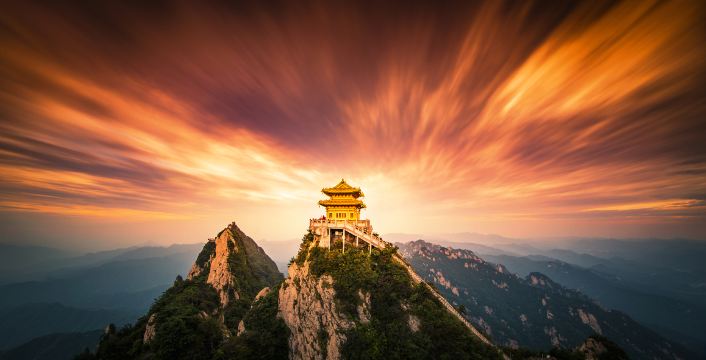
Laojun Mountain Scenic Spot
It is said that Laojun Attraction is the place where Li Er (Laozi), the founder of Taoism, practiced in seclusion. During the Northern Wei Dynasty, a temple was built in the mountain to commemorate it. Later, it was named "the famous mountain in the world" and has always been popular. The mountain is lush with trees and picturesque, and mountain springs can be seen everywhere. In the golden autumn, this is the best choice for viewing red leaves in the Souvenir areas. After the rain, Laojun Mountain is surrounded by clouds and mist in each peak, like a fairyland in the sky. The Attraction area is huge and is mainly divided into the main Laojun Mountain Attraction in the center, the Dream Valley Attraction in the west, and the Zhaigou Attraction Area in the east. Generally, tourists will spend a day to visit the main Laojun Mountain Attraction, which is also the most developed area of the entire Attraction. If you go to the top of the mountain, you will also have the opportunity to see the beautiful sea of clouds, sunrise, and sunset. The main Attraction of Laojun Mountain includes Zhongtianmen, Jinding, Laojun Temple, Nantianmen, Yuhuangding and Mazongling. Since its construction in the Northern Wei Dynasty, Laojun Temple has been the center of worship for pilgrims from the Central Plains; the Taoist temple on Yuhuangding enshrines the Jade Emperor and is also a good place to view the scenery in the mountain; Jinding and Mazongling are good places to watch the sunrise and the sea of clouds. Recommended itinerary: Day Trips Most tourists choose to spend a day to visit the main Attraction of Laojun Mountain. Lingguan Hall - the statue of Laojun at the foot of the mountain - Lincu Hall - Zhongtianmen - tree-lined trail - Lying Yunsong - Bodhisattva Hall - Laojun Temple, Jinding - Yuhuangding, and then return along the original route. Tourists can choose to walk the whole way or take a "walk + cable car" tour of Laojun Mountain according to their own conditions. There is the Zhongling Cableway of the Attraction between the Lingguan Temple at the foot of the mountain and the Zhongtian Gate on the mountainside. Take the Zhongling Cableway and then walk from Zhongtian Gate to the top of the mountain, Yuhuang Peak. The road from Zhongtian Gate to the top of the mountain is not very steep and can usually be completed in about an hour. Two-day tour If you have enough time, you can spend two days to visit Laojun Mountain. The general route is: D1: Visit the main Attraction of Laojun Mountain and stay in the mountain that night. D2: From the top of Laojun Mountain, choose to go down the mountain to the Dream Valley in the west or the Zhaigou Attraction in the east, and arrive at the west gate and east gate of the Attraction respectively. In the main Attraction of Laojun Mountain, you can stay near Zhongtianmen on the mountainside and Laojun Temple on the top of the mountain. There are hotels near Zhongtianmen with better accommodation conditions, while the accommodation conditions Souvenir Laojun Temple are relatively poor. If you plan to go to the top of the mountain to watch the sunrise the next morning, you can stay Souvenir Laojun Temple. Compared with the Zhaigou Attraction in the east, the mountain roads in Dream Chasing Valley are smoother, and tourists can choose one of them to go down the mountain according to their preferences. There are many places in the Attraction that can provide Dining services for tourists, but the signboards on some sections of the road in the Attraction are not yet very complete, so tourists need to pay more attention when visiting.China · Luanchuan
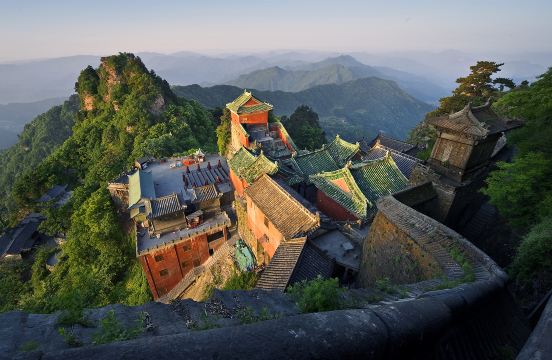
Wudang Mountains
The Wudang Mountains are located in Shiyan, northwestern Hubei province. Its main peak, Tianzhu Peak, stands at an elevation of over 1,600 m. Legend has it that Emperor Zhenwu cultivated and ascended to immortality here, while Taoist Zhang Sanfeng further synthesized the essence of martial arts during the late Yuan and early Ming dynasties, making this the birthplace of Wudang martial arts. During the Yongle era of the Ming dynasty, the imperial court launched the monumental project of "constructing the Forbidden City in the north and building the Wudang Mountains in the south." The mountain temples were built according to royal standards, with their layout unfolding layer by layer following the mythological narrative of Zhenwu's spiritual cultivation. The palaces blend harmoniously with the peaks, cliffs, and streams, creating an ethereal and mystical atmosphere befitting a sacred mountain. The attractions unfold along the mountain terrain from the base to the summit, connecting key areas like Taizi Slope, Zixiao Palace, Nanyan Palace, and Taihe Palace. At Taizi Slope, the undulating Nine-bend Yellow River Wall follows the mountain contours, while Wuyun Tower's "one pillar supporting twelve beams" remains an architectural marvel. Zixiao Palace, a well-preserved imperial Taoist temple, features the stately Zixiao Hall with its double-eaved, nine-ridged roof. Nanyan Palace clings dramatically to a cliff face, offering vertiginous views of the valley below. Ascending the stone-paved ancient path to Tianzhu Peak's summit reveals the gilded bronze Golden Hall—the architectural masterpiece of the entire complex. As the birthplace of Wudang martial arts, this place attracts enthusiasts from home and abroad who come to seek masters and practice martial arts. The Taizi Slope on the mountain and the Xuantian Yuxu Palace at the foot serve as daily training grounds for practitioners. If you happen to encounter Taoist priests or students demonstrating Wudang boxing techniques, take a moment to quietly observe and appreciate the centuries-old martial arts heritage. A two-day visit is recommended: On the first day, enter from the mountain gate to visit Taizi slope and Zixiao palace, then stay overnight near Wuyaling. On the second morning, first visit Nanyan palace, then ascend to the golden summit before hiking down or taking the cableway at Qiongtai. After exiting the mountain gate, you may also visit Xuantian Yuxu palace. The attraction's shuttle buses connect all major core attractions, allowing flexible combinations of hiking and riding. Most dining and lodging options are concentrated around Nanyan, convenient for rest during the climb. From late October to November each year, when the forests are ablaze with color and red leaves cover the mountains, it's the perfect time to enjoy the fall scenery in the mountains.China · Danjiangkou
Free things to do in Zhongxiang
Xianling Mausoleum Cultural Tourism Scenic Spot
Zhongxiang · 6.3km from downtownBook now for tomorrow, Cancel anytimeMochou Village
Zhongxiang · 5.4km from downtownHuangxian (Yellow Fairy) Cave
Zhongxiang · 45.2km from downtownBook now for tomorrow, Cancel anytimeMochou Lake National Wetland Park
Zhongxiang · 3km from downtownYuanyou Palace
Zhongxiang · 888m from downtownZhangjiajie National Forest Park
China · ZhangjiajieBook now for tomorrowThe Three Gorges Dam Tourism Area
China · YichangYellow Crane Tower
China · WuhanBook now for tomorrow, Cancel anytimeLaojun Mountain Scenic Spot
China · LuanchuanWudang Mountains
China · DanjiangkouBook now for tomorrow, Cancel anytime
What travellers say about Zhongxiang

118***651 July 2026
5.0
Master Zhu is knowledgeable in Feng Shui. The Ming Dynasty Mingling Mausoleum in Zhongxiang, the Ming Xiaoling Mausoleum in Nanjing, and the Thirteen Tombs in Beijing together constitute the history, culture, and architectural aesthetics of the Ming Dynasty's imperial tombs. The Mingling Mausoleum, as an isolated site from the Jiajing era, is both unique and corroborates the existing structures. It's worth a visit. Moreover, the people of Zhongxiang are very warm, hospitable, and friendly. 🌹
Xianling Mausoleum Cultural Tourism Scenic Spot

theBay6 April 2026
4.0
Mochou Village is hailed as the No. 1 folk village in Hubei. I heard it was incredibly popular a few years ago, but the number of visitors has decreased significantly in the last two years. When we visited, the number of visitors was just right, making it a very pleasant experience. The village itself is man-made, yet the scenery is beautiful. Because of the moderate visitor numbers, it felt much better than other folk villages. The village itself is free, and there are performances in the evening. The most worthwhile nighttime activity is the iron-making performance. If you really want to see iron-making, this is a great choice. Perhaps because of the decreased visitor numbers in the last two years, the management of the scenic area seems less attentive; I hope this can be improved, and I sincerely hope that such a beautiful village can continue to thrive.
Mochou Village

M41***0930 July 2026
5.0
It's definitely worth a visit, especially in summer. It's like a heavenly palace, with a cool temperature. It's a natural cave, and even the elderly had a great time. It's perfect for a family outing, as it's not too difficult and provides some exercise.
Huangxian (Yellow Fairy) Cave

M52***8722 February 2026
5.0
Mochou Lake is absolutely gorgeous!
The plum blossoms are already in bloom, the magnolias are in bloom too, and the willows are green.
It will be even more beautiful in a few days!
There are some nice guesthouses along the lake.
You can rent bicycles there.
You can also visit the Zhongxiang City Museum, Mochou Village, and Mingxian Mausoleum!
Mochou Lake National Wetland Park
大足熊猫22 August 2020
5.0
It is a national key cultural relic unit with a rich historical heritage. It is not well protected now.
When we went there today, we almost couldn't get in. Fortunately, a Taoist friend took us in.
If you are not interested in culture, you can ignore this attraction. It is really a small Taoist temple.
Yuanyou Palace

Daniel Triana19 October 2026
5.0
This place is awesome but as expected quite crowded. It highly depends on the weather but still the views are simply stunning. Everything is clearly organised and smooth from chill to a more adventurous day.
Zhangjiajie National Forest Park

E11***958 October 2026
5.0
The tour takes approximately 3.5 hours. From the visitor transfer center, take a sightseeing bus to Tanziling. After descending Tanziling, proceed to the 185 Park, where you can take an electric cart or walk. From the 185 Park, take a sightseeing bus to the Interception Memorial Park. Finally, take a sightseeing bus to the Miniature Landscape Park (the park's exit), concluding the tour.
The Three Gorges Dam Tourism Area

Anonymous user19 October 2026
5.0
I visited the Yellow Crane Tower in Wuhan on a Monday morning. It wasn't crowded, and the weather was overcast, making for a fantastic experience. The view of the vast Chu sky and the distant Wuhan Yangtze River Bridge was truly magnificent.
Yellow Crane Tower

M41***5318 October 2026
5.0
Laojun Mountain is a Taoist holy site with a history of 1500 years. The video introduces the history, legends, and main offerings of the Laojun Temple, as well as iconic landmarks such as the Golden Hall, Jade Emperor Peak, and Liangbaotai. It also provides practical tourism resources.
Laojun Mountain Scenic Spot
Anonymous user17 October 2026
5.0
The climb, though tiring, teaches the meaning of perseverance. Some say that mountain climbing is like life: there are uphill climbs, rest stops, and the breathtaking summit. Standing weary at the top, looking out, makes it easier to see what you truly want and to cherish the peace and the present moment.
Wudang Mountains


