

- Why did the London Overground create new names?
- The Liberty line
- The Lioness line
- The Mildmay line
- The Suffragette line
- The Weaver line
- The Windrush line
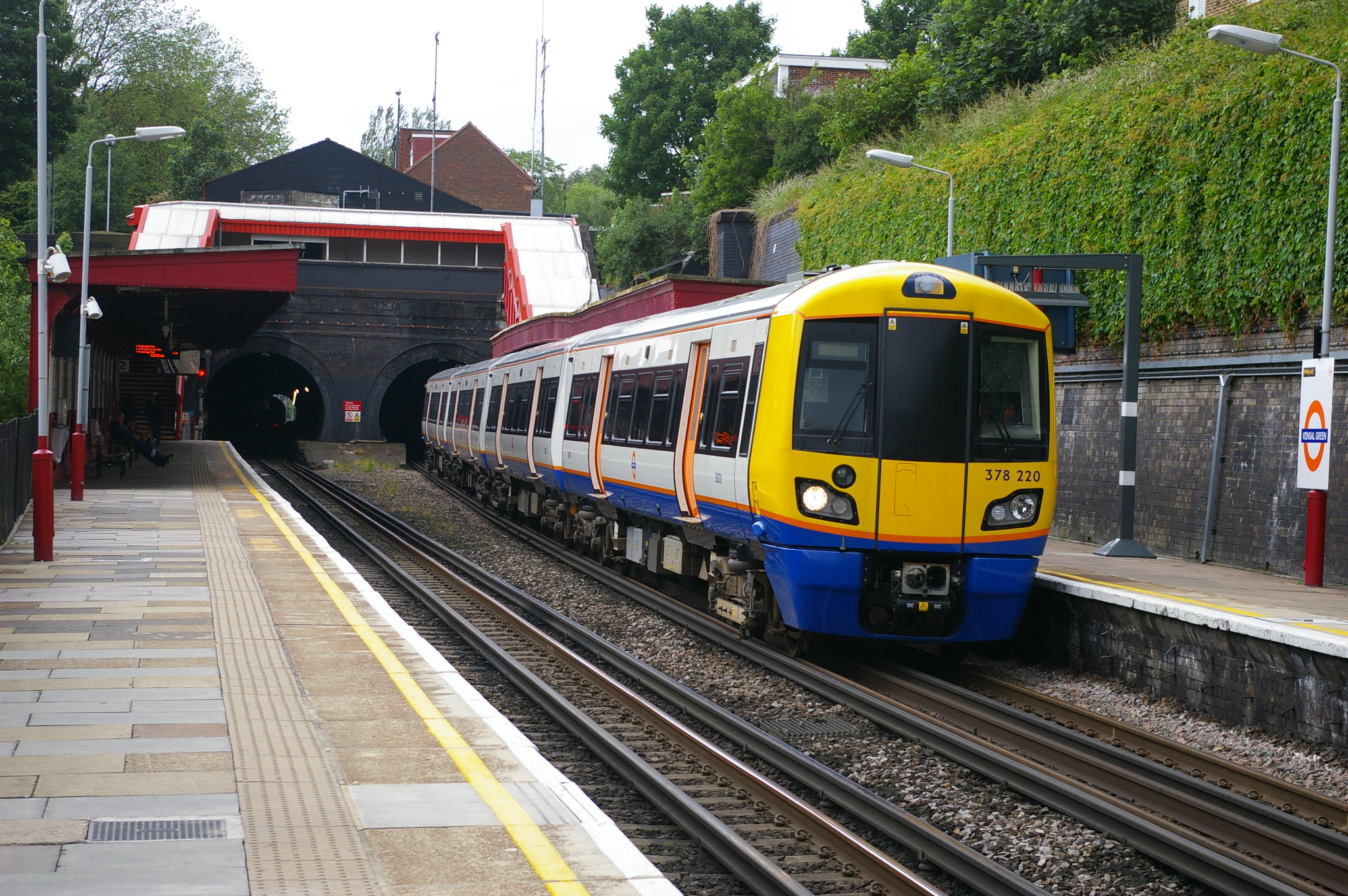
Transport for London (TfL), the organisation that runs the London Underground, London Buses network and the London Overground Line, recently decided to rename many of its services. But why? In this article, we'll take a look at the reasons behind the London Overground name changes, what the new names are and how you can ride on the new services. Keep reading to find out all about it!
Photo by Clive G'
Why did the London Overground create new names?
The London Overground is made up of several train lines that cross London. They used to be operated by other companies until TfL took them over at various points. They were all drawn in the same colour on the Tube Map, even though they were different routes. This confused users of the network, so it was decided that the individual lines should each be given a different colour, and that new London Overground names should be used, just like on the Tube.
You can see the full routes for the new named services on TFL's famous Tube Map. They are all illustrated with parallel lines in different colours, as opposed to Tube routes, which are shown as single, solid lines in different colours.
It's worth checking them out for yourself on the London Overground Line map.
The names that have been chosen for the new London Overground Lines are:
- Liberty
- Lioness
- Mildmay
- Suffragette
- Weaver
- Windrush
But how did TfL choose the new names for the London Overground Lines? Well, they engaged an agency, which interviewed hundreds of travellers on the network, spoke to expert academics to learn about what the names meant, and also went through various technical processes to ensure that they wouldn't cause confusion or issues when in use. The chosen names all have stories behind them that reflect London's heritage and outlook, and particularly the area of London that they serve, so let's go through them one by one...
The Liberty line
The London Borough of Havering was one of only a handful of Royal Liberties - historical jurisdictions established by the monarch that differed in significant ways from the laws of the rest of the nation. Havering's status as a liberty dates back around 600 years. The different rules were abolished in the late 1800s, but it is still a source of local pride and is celebrated in several ways to this day.
It was decided to use this name to reflect both the historical uniqueness of this London Borough, as well as to represent the freedom that public transport provides to its residents.
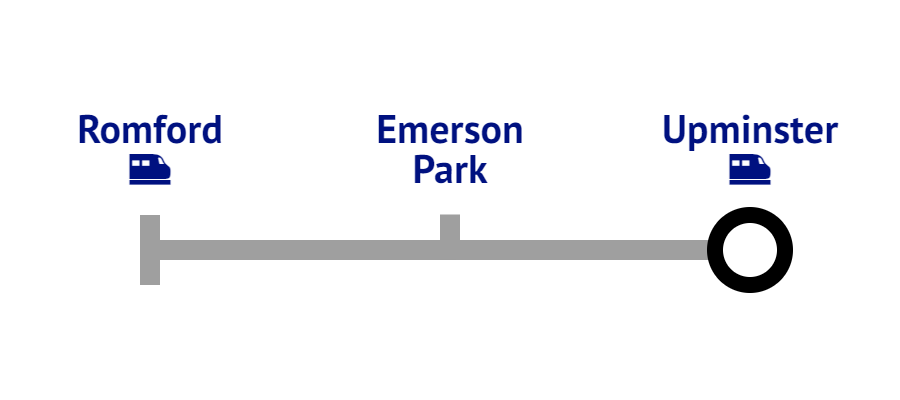
The Liberty Line is short, going from Romford to Upminster, via Emerson Park. All three of the stations lie in Zone 6. It is shown on the map in dark grey.
The Lioness line

Anyone present at Wembley Stadium on the 31st of July 2022 will have no trouble understanding the name of our next line. That was the date on which the England national women's football team won Euro 2022 - the first major football trophy won by an England team since the 1966 World Cup.
The line was named to honour the team's achievements - not only their on-pitch success, but also their work in widening access for women and girls to participate in traditionally male sports.
The line starts at London Euston Station in Zone 1, before quickly ducking into Zone 2, travelling westwards towards Queen's Park. It then changes direction, going north and passing via Wembley Central, before terminating at Watford Junction.
The Lioness Line passes through Zones 1–8, though Watford High Street is the final zoned station - Watford Junction is outside of the fare zones. It is shown on the map in yellow/orange.
The Mildmay line

This line is named after Mildmay Hospital. Now based in Bethnal Green, it has relocated several times, but dates all the way back to 1877, when it was established as a charitable care centre. It evolved through several different guises until the 1980s, when it became Europe's first hospital for people with HIV and AIDS.
These days, it also provides specialist care to homeless people, aiming to provide medical treatment before discharging patients into the care of suitable charities.
The eastern terminus is Stratford. From there, it heads west through Hackney and Homerton, continuing past Highbury, Camden and Hampstead Heath, then on to Willesden Junction. After that, it turns southbound, with one leg going through Kensington to Clapham Junction. The other through Acton and Kew, then terminates at Richmond.
The Mildmay Line passes through Zones 2, 2/3, 3 and 4. It is shown on the map in mid-blue.
The Suffragette line

The suffragettes were the people who led the campaign to obtain the right for women to vote in elections in the United Kingdom. The term was first used in a newspaper report and was intended to poke fun at the women making demands for universal suffrage. However, that intention backfired, as the followers of the cause took up the name as a badge of honour, and it passed into common usage.
It was, of course, ultimately a successful campaign, but it was certainly not an easy one, taking decades to reach its goal.
The line terminates in the east at Barking Riverside. From there, it heads northeast, through Leytonstone and Tottenham, across to Crouch Hill and down through Upper Holloway to Gospel Oak.
The Suffragette Line is mostly in Zone 3, with some westerly stops in Zones 2 and some easterly ones in Zone 4. It is shown on the map in light green.
The Weaver line

London has a long history of garment manufacturing, one that is intertwined with the city's tradition of being a home to people of so many different backgrounds. The Weaver Line passes close to Petticoat Lane, the site of London's traditional clothing market, and so aims to honour the many people who have devoted their lives to the textile industry.
The line starts at London Liverpool Street. It travels through Bethnal Green before heading north through Hackney Downs, then splits into three branches. The first goes via Clapton and Walthamstow to Chingford. The second goes via Stoke Newington, Seven Sisters and White Hart Lane, then either to Enfield Town or Cheshunt.
The Weaver Line starts in Zone 1, but it then travels all the way through the Zones to end in Zone 9. It is shown on the map in deep purple.
The Windrush line

The HMT Empire Windrush has come to symbolise an entire generation of people, many of whom are West Indian, who immigrated to Britain in the aftermath of the Second World War. Though at the time, and for many years after, they faced significant intolerance, the cultural influence of these and subsequent immigrants on London is hard to overstate.
The line's northern terminus is Highbury and Islington. It heads south through Dalston Junction, Hoxton, Shoreditch and Wapping, then crosses the river to Rotherhithe and Surrey Quays. There, the line splits. One branch heads west through Peckham, then terminates at Clapham Junction. There is a spur to New Cross, but the other main branch goes south through Brockley and Sydenham before either spurring to Crystal Palace or continuing to Norwood Junction, before ending at West Croydon.
The Windrush Line is mostly in Zone 2, with a station in Zone 1 and several in Zones 3 and 4. It is shown on the map in red.
You can check out our extensive guide to the London Overground and buy your tickets here.