
Things to do in Changde
Explore top experiences
Top 10 attractions in Changde


Liuye Lake Tourist Resort
Willow Lake is in the northeast of the ancient city of Changde. It is named after tree because of its shape. Baihe Mountain, Huashan Mountain and Sun Mountain surround the northern part of the lake. Baihe Mountain is a treasure, where white cranes live. Every season, many white cranes and egrets arrive. They fly in blue skies over clear water, adding wonderful colors to the Willow Lake. The vast water of Willow Lake is ideal for water sport competitions. A water course has been built, and many events are successfully held.Changde · 7.8km from downtown

Taohuayuan Ancient Town
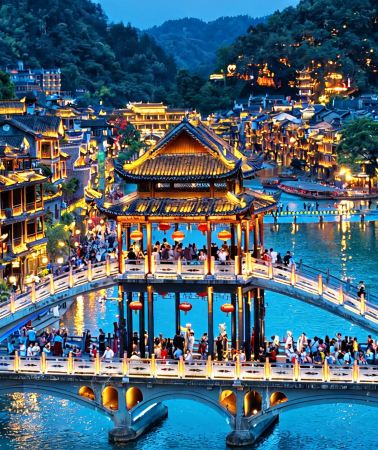
Taohuayuan Ancient Town is located about 50 kilometers southwest of Taoyuan County, Changde City, Hunan Province, adjacent to Taohuayuan Scenic Area. It was built based on the legend of "Utopia" written by Tao Yuanming. The ancient town covers an area of about 1,600 acres, with a core Ming and Qing style building complex of more than 400,000 square meters. The small bridges and flowing water, blue tiles and white walls, and archway bridges complement each other. It has both the charm of Jiangnan water town and the folk customs of Hunan. Walking through the streets, you can see attractions such as Chenghuang Temple, Fubo Tower, Ancient Theater, and Marriage Tower, as well as cultural venues such as Baichuang Hall and Calligraphy and Painting Academy. Wuliu Lake is located between Taohua Mountain and Taoyuan Mountain. The lake and mountains are interdependent, and the shore is shaded by weeping willows. It is the spiritual place of the ancient town; there is a Taoyuan Craft Museum on the lakeside to display local intangible cultural heritage handicrafts and cultural and creative products. In spring, peach blossoms bloom all over the mountains, in summer, lotus leaves are in the fields, in autumn, red leaves are in full bloom, and in winter, there are green pines and cypresses, each with its own style. The ancient town has developed special projects such as Hanfu experience, Leicha performance, and winemaking skills through the model of cultural tourism integration and rural revitalization, combining the millennium intangible cultural heritage with contemporary cultural creation to create a variety of brands such as "Peach Blossom Spring in Tea" and "Peach Blossom Spring in Wine".Taoyuan · 15.6km from downtown

Changde Museum
Changde Museum is located on Wuling Avenue Middle Road, covering an area of 32 mu and a total construction area of 10,000 square meters. The building is an antique quadrangle, consisting of the main building and the north and south special pavilions. The main building is divided into the front hall, central hall and backyard. The front hall has four floors, and the front wall of the first floor is a large "Tang Sancai" mural - Peach Blossom Spring Wonderland; the central hall is partially two-story, with a glass roof above, the hall is well lit and spacious, and it is a multifunctional and comprehensive exhibition hall; the second floor of the backyard is a fully enclosed exhibition room and cultural relic warehouse, with a total of 10 standard rooms and 2 cultural relic warehouses, mainly used for the display and storage of precious cultural relics. There are more than 30,000 cultural relics of various types in the museum, including: 148 first-level cultural relics, 258 second-level cultural relics, and 676 third-level cultural relics. The special pavilions on the north and south sides have 3 exhibition rooms, which are mainly used for various special exhibitions. In addition to various temporary exhibitions, the museum also holds long-term exhibitions such as "Changde Historical Relics Exhibition", "Changde Industrial Products Exhibition" and "Changde Folk Customs Exhibition". In recent years, exhibitions such as "Root Carving Art Exhibition", "Changde Modern and Contemporary Celebrities Exhibition", and "Changde Calligraphy Exhibition" will be held.Changde · 932m from downtown

Changde Shiqiang Park
Changde Poetry Wall Park is based on the flood control embankment on the north bank of the Yuanjiang River in the urban area. It melts poetry, calligraphy, paintings and engraves in a furnace, with a total length of 3,000 meters. The immortal masterpiece, comprehend the broad and profound Chinese civilization's artistic grand view garden. The entire poem wall is divided into "vicissitudes of a hundred generations", "inscriptions on famous sages", "Wuling Jiazhi", "Lanzhi Fenghua", "Chinese New Voices", "Five Continents", "The Style of the Times", "Eternal Songs" Eight chapters, as well as 43 exquisite Chinese and foreign stone murals, were written by 1,213 calligraphers from all over the country, including Hong Kong, Macao and Taiwan. Zhen, Xing, Li, Zhuan and Cursive were collected on one wall, with rich cultural connotations. Contemporary poetry, calligraphy and painting circles call it "Three Excellent Poetry, Calligraphy and Painting". The four pavilions of Wuling Pavilion, Chunshen Pavilion, Paiyun Pavilion and Fisherman Pavilion stand on the Poetry Wall. They are not only the gates for flood control, but also add a profound cultural heritage to the ancient city. The Poetry Wall and the park look antique. Wandering beside the Poetry Wall, Changde's rich Jing-Chu culture and Xianghu culture are coming.Changde · 854m from downtown

Xingde Mountain
Xingde Mountain is located in Xingxing Village, Reshi Town, Taoyuan County, Changde City, Hunan Province. It is located on the border of Taoyuan, Shimen and Cili counties, and at the junction of "three threes" of Reshi, Guangfuqiao and Mengquan towns. Xingde Mountain is mainly reflected in the "four wonders" - wonders, pines, rocks, and peaks, especially the wonders.Taoyuan · 56.7km from downtown

Shatan Park
Changde · 9.9km from downtown

West Dongting Lake Wetland Ecotourism Scenic Area
West Dongting Lake is a national fifth-level ecological tourism resource with a vast expanse of waters and rivers. It has a wetland area of 26,960 hectares, 865 species of plants, more than 200 species of birds, including more than 20 species of national first- and second-level protected birds, more than 100 species of fish, and tens of thousands of acres of natural reed forests, which are habitats for many wild animals, especially rare waterfowl. It is a typical representative of subtropical inland wetlands, listed in the International Important Wetland List, and a national wetland park. The West Dongting Lake area is known as the capital of Chinese wetlands, the source of Canglang culture, and the "hometown of Chinese poetry", where historical figures such as Qu Yuan, Li Bai, Liu Yuxi, Yang Yao, and Shuai Mengqi have emerged. Water Village Folk Culture Village, Dongting Water People, Canglang Island, Linhai Bird Watching Platform, Yang Yao Water Village, Shuai Mengqi Memorial Hall, Dongting Wild Food Restaurant, Lover's Island Port, Dragon King Lake Temple, and Longyang Eight Scenic Spots have been developed. .Hanshou · 25km from downtown

Qingshui Lake Tourist Area, Changde
Hanshou · 11.3km from downtown

Orange Isle Scenic Area
Orange Isle Scenic Area is a narrow sandbar lying across the heart of the Xiang River in Changsha, stretching approx. five km. It faces Yuelu Mountain to the west and borders Changsha's old city to the east, surrounded by water on all sides. Named after the abundant orange trees planted on the isle, it was historically called Shuiluzhou. Formed by river alluvium, this sandbar has existed for over a millennium, where the "River and sky in evening snow" scenery was once among the Eight Views of Xiaoxiang. In 1925, the poem "Spring in a pleasure garden - Changsha" was composed here, with its iconic line "Alone I stand in the biting fall, watching the Xiang River flow north past Orange Isle's head," which made this riverine landmark widely renowned. The highlights of the visit are concentrated at the islet's head: A granite art sculpture over 30 m tall, modeled after the 1925 youth image, stands facing the river as Changsha's highly recognizable landmark. Nearby, the Questioning Heaven Platform extends toward the river center, where leaning on the railing reveals the mighty Xiang River flowing northward, with Yuelu Mountain and the city skylines on both banks facing each other across the water. The Songju Pavilion, white marble poetry stele, and the 200-year-old ancient phoenix tree at the islet head are all in this area. Heading north from the islet head, a hundred-acre orange orchard bears golden fruits in fall, while bamboo groves, peach orchards, plum gardens, and osmanthus groves take turns showcasing seasonal flora. The historic Zhuzhang Ferry (where Zhu Xi and Zhang Shi once crossed the Xiang River for lectures) and the Huxiang Culture Exhibition Hall are scattered along the way. At the islet's tail, the reconstructed Jiangshen Temple and Gongji Tower area was precisely where ancients admired the "River and sky in evening snow" scenery. The island is long and narrow, making round-trip walks quite tiring. A sightseeing train is available for transportation, with multiple stops along the way for hopping on and off. Travelers with limited time are advised to head straight to the island's tip to see the sculpture and river views, then stroll leisurely along the riverside path. At dusk, watching the sunset over the Xiang River and seeing the lights gradually illuminate both shores from the island's tip is especially worth setting aside time for.China · Changsha

The Three Gorges Dam Tourism Area
The Three Gorges Dam Tourism Area is located in the Xiling Gorge section of the Yangtze River in Yichang, Hubei. It is a scenic attraction built around the Three Gorges hydro project, covering over ten square kilometers. Currently, it offers travelers three viewing spots: Tanzi Ridge, the 185 viewing platform, and the river closure memorial park. The dam crest itself is not open to travelers, so visits primarily revolve around these three attractions. Tanzi Ridge is the highest accessible point in the dam area, named for its jar-shaped summit viewing platform resembling an overturned jar. It also served as the survey site for the dam's initial location selection. From the ridge top, visitors can overlook the Three Gorges Project in its entirety—the dam, power station, and twin five-level ship locks are all visible. The five lock chambers cascade down the mountainside, earning the nickname "Fourth Gorge of the Yangtze." The park displays engineering artifacts like ancient riverbed stones, river closure rocks, and foundation stones from the dam site, complemented by model exhibits that help visitors intuitively understand the origins and development of this mega-project. The 185 observation platform is located on the left bank of the dam. It gets its name from sharing the same elevation of 185 m as the dam crest. Standing on the platform feels like being atop the dam: on one side, the dam and vertical ship lift are within close reach, offering a chance to witness ships "riding the elevator" over the dam; on the other side lies the vast, tranquil reservoir upstream. The stark contrast between the stillness above and the dynamism below the dam is striking. The closure memorial park is situated on the right bank downstream of the dam, preserving artifacts like tetrahedral closure stones and large loading machinery used during the construction. It's an ideal spot to view the dam's full frontal grandeur. During flood seasons when the dam releases water, torrents rush out from the deep outlets, creating towering mist and thunderous echoes that reverberate through the valley—a truly awe-inspiring spectacle. The three attractions are far apart, and the scenic area provides shuttle buses for transportation. It is recommended to reserve half a day to visit them in order.China · Yichang
Free things to do in Changde
Liuye Lake Tourist Resort
Changde · 7.8km from downtownTaohuayuan Ancient Town
Taoyuan · 15.6km from downtownChangde Museum
Changde · 932m from downtownChangde Shiqiang Park
Changde · 854m from downtownXingde Mountain
Taoyuan · 56.7km from downtownShatan Park
Changde · 9.9km from downtownWest Dongting Lake Wetland Ecotourism Scenic Area
Hanshou · 25km from downtownQingshui Lake Tourist Area, Changde
Hanshou · 11.3km from downtownOrange Isle Scenic Area
China · ChangshaThe Three Gorges Dam Tourism Area
China · Yichang
More ways to travel from Changde
Private Tours in Changde
View More Private Tours in Changde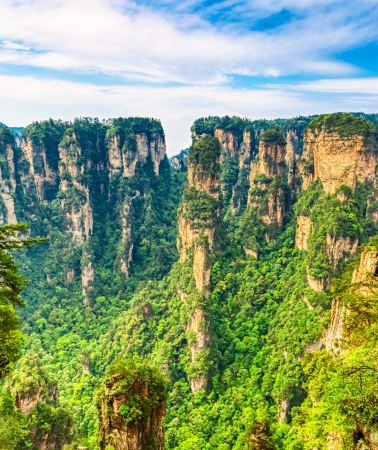

What travellers say about Changde

无为海之风2 July 2025
5.0
Changde Liuye Lake is the core tourist resort of Changde City, Hunan Province. It integrates natural scenery, human history, sports events and music culture, and is known as the "No. 1 Lake in Chinese Cities".
Along the lake, there are fisherman and woodcutter cultural relics and a group of sculptures themed on the Battle of Changde; Dahe Street, Xiaohe Street and Mayang Street are national-level tourist and leisure districts, integrating ancient buildings and intangible cultural heritage.
When Liu Yuxi was exiled to Changde (ancient Langzhou), he wrote "Humble House Inscription", and Sima Tower was built on the lakeside to commemorate him. Myths and legends such as "Liu Hai Cutting Wood" and "Chang'e Flying to the Moon" are circulated.
Liuye Lake Tourist Resort

gz当地向导伊妹儿14 July 2021
5.0
The scenery of Taohuayuan Ancient Town is so beautiful. There are not many people. There are many antique buildings with unique features. It is suitable for taking photos and checking in. It is very interesting. You can stroll around the ancient town and eat local food. It is very cost-effective and good!
Taohuayuan Ancient Town

银川!!!!!!!21 October 2025
5.0
Prehistoric Origins: Displays stone tools, pottery, and other relics of prehistoric civilization. 67
Treasures of the Post-Han Dynasty: Includes porcelain, jade, bronze mirrors, and other cultural relics, with a Western Han Dynasty gold cake set as a featured exhibit. 68
Special Exhibitions:
Changde Root Art and Folk Customs Exhibition Hall: Displays large-scale root carvings and folk culture of northwestern Hunan. 68
Anti-Japanese War Hero City Exhibition Hall: Recreates scenes from the Battle of Changde using historical images and sculptures. 6
Changde Museum

弘扬师兄2 August 2025
4.0
Changde, formerly known as Wuling, has a history spanning over 2,000 years and is renowned as a city of cultural relics.
In recent years, the state invested 108 million yuan to construct a poetry wall, named the "China Changde Poetry Wall," along a 4-kilometer-long flood control wall.
The Poetry Wall features a collection of exquisite poems, calligraphy, and fine art by contemporary Chinese masters, earning it a Guinness World Record.
The 4-kilometer-long Changde Poetry Wall, built along the Yuanjiang River flood control embankment, features eight chapters: "Crossroads of Generations," "Poems by Famous Scholars," "Wuling's Elegance," "Orchids, Zhi, and Phoenix," "New Voices of China," "Selections from the Five Continents," "Grace of the Times," and "Masterpieces of the Ages."
The wall features 1,530 poems about Changde dating back to the pre-Qin period, as well as famous Chinese and foreign poems. Poetry is expressed in calligraphy by 1,213 calligraphers from across China, including Hong Kong, Macao, and Taiwan. The wall features calligraphy in regular, regular, official, seal, and cursive scripts.
Forty-three exquisite stone murals from China and abroad are inscribed within. The wall titles and chapter titles are inscribed by renowned contemporary Chinese calligraphers such as Zhao Puchu, Chen Peng, Qi Gong, Yan Jialong, Sun Qifeng, Wang Xuezhong, Xiao Xian, Zhang Ding, Zang Kejia, Fang Yi, and Chen Tianran. Cao Yu, Shu Tong, and Wu Zuoren also inscribed poems such as "Wuling Fengliu" and "The Scenery Is Unique Here."
The Poetry Wall attracts visitors from all over the world for its rich cultural connotations, positive ideological content, and exquisite artistic form. Contemporary poets, calligraphers, and painters have hailed it as "the three wonders of poetry, calligraphy, and painting," "a timeless artistic scroll," "a pioneering work of the Ming Dynasty," and "a unique masterpiece of China."
Renowned Taiwanese scholar Yu Guangzhong called it "the Great Wall of Poetry" and "half of the history of literature."
On the Poetry Wall, there are four large pavilions: Wuling Pavilion, Chunshen Pavilion, Paiyun Pavilion and Fisherman Pavilion. They serve not only as flood control gates, but also add profound cultural heritage to the ancient city. The Poetry Wall and the park appear ancient and charming.
Changde Shiqiang Park

喜欢猫的虎11 December 2022
5.0
Xingde Mountain is located in Taoyuan County, Changde City, Hunan Province. It is located on the edge of Taoyuan County, Shimen County, Zhangjiajie Cili County, and at the junction of Reshi, Guangfuqiao and Mengquan Town. It is a pearl dotted on the Provincial Highway 1801 to Changci Highway. The characteristics of Xingde Mountain's tourism resources are mainly reflected in the "four wonders" - wonders, strange pines, strange stones, and strange peaks. The wonders are the most prominent, so the function is mainly to appreciate and experience the profound Taoist culture. The beautiful Xingde Mountain is 842.5 meters high and faces the Taoist holy place Wulei Mountain in Cili across the mountain. It is a famous Taoist mountain that integrates natural and cultural landscapes and has a very profound cultural heritage.
Xingde Mountain

artistfx11183 February 2026
4.0
Located on the north side of Liuye Lake, the park covers an area of 2.26 million square meters, with a 1,530-meter-long beach, making it the largest inland beach park in China.
Themed "Happy Golden Sands," the sand, imported from Fujian and Guangxi, is fine and soft. Combined with palm trees and other landscaping, it creates a "mini Sanya" atmosphere.
The park integrates leisure, sports, and family entertainment, offering activities such as beach bathing, beach volleyball, beach buggies, sandboarding, and beach camping. There is also a children's water play area, suitable for visitors of all ages.
The park is open to the public free of charge year-round, with some attractions charging separate fees.
Transportation and Parking: Parking available.
Shatan Park

柔实先生19 February 2021
5.0
There are ripples on the lake because there aren’t that many of us!
West Dongting Lake Wetland Ecotourism Scenic Area
一只老虎爱跳舞8 March 2023
5.0
Qingshui Lake Tourist Resort is built on the mountain and on the lake. After several years of development, it has initially formed a new type of scenic spot integrating education, gardening, sightseeing, entertainment, health and leisure.
Qingshui Lake Tourist Area, Changde

Anonymous user8 October 2026
5.0
There were no assigned seats, so you could sit anywhere. We spent most of our time on the third deck enjoying the view and taking photos. Although it was very hot outside, there was a breeze on both sides of the deck, so it wasn't too bad. There were karaoke machines and vendors selling snacks and drinks on both the second and third decks. The air conditioning on the second deck was very strong. We arrived at the pier half an hour early, and there was already a queue.
Orange Isle Scenic Area

E11***958 October 2026
5.0
The tour takes approximately 3.5 hours. From the visitor transfer center, take a sightseeing bus to Tanziling. After descending Tanziling, proceed to the 185 Park, where you can take an electric cart or walk. From the 185 Park, take a sightseeing bus to the Interception Memorial Park. Finally, take a sightseeing bus to the Miniature Landscape Park (the park's exit), concluding the tour.
The Three Gorges Dam Tourism Area


