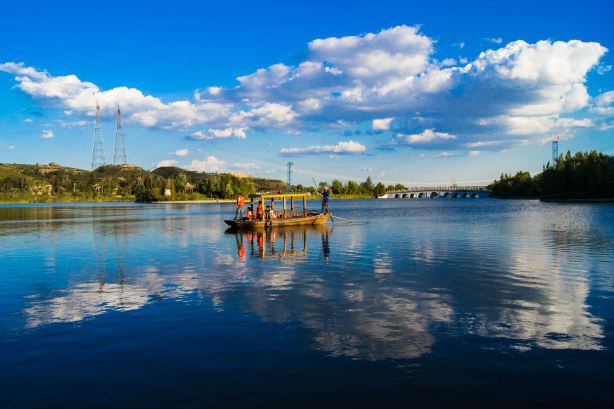
Things to do in Togtoh County
Explore top experiences
Top 10 attractions in Togtoh County

Huanghuagou Grassland Tourism Resort
Huanghuagou Grassland Tourism Resort is located in Ulanqab City, Inner Mongolia Autonomous Region,Located at the junction between the northern range of the Yin Mountains and the eastern section of the Greater Khingan MountainsWith a total area of approx. 600 km and an average elevation of 2100 m, Huanghuagou Grassland Tourism Resort is one of the world's three major alpine meadow flower grasslands. Renowned for its unique volcanic lava landforms, alpine wetlands, and grassland views, it boasts a vegetation coverage rate of 80%-95% and an average summer temperature of 18°C, earning it the titles "Cool paradise beyond the Great Wall" and "Core experience zone of China's grassland summer retreat." The resort features Quaternary glacial relics and volcanic rock formations shaped by crustal movements hundreds of millions of years ago, creating a landscape of crisscrossing ravines and towering peaks. Visitors can enjoy yurt stays, obo worship ceremonies, and the cultural performance "Meeting at the Obo." As the primary filming location for the documentary "Magnificent Inner Mongolia," celebrating the region's 70th anniversary, the resort blends natural and cultural grandeur. Centered on geological wonders, alpine meadows, and Mongolian-Yuan culture, Huitengxile Huanghuagou Grassland Tourism Resort offers both outdoor adventure and cultural immersion. It is the closest Inner Mongolian grassland to Beijing, ideal for family trips, outdoor enthusiasts, and travelers seeking deep cultural experiences.China · Qahar Right Middle Banner


Heng Shan Mountain
Mount Heng is the northern mountain of the famous "Five Sacred Mountains". Mount Heng Scenic Area comprises the Tianfengling Scenic Area, the Cuipingfeng Scenic Area and the Qianfoling Scenic Area. Generally speaking, "visiting Mount Heng" refers to touring the Tianfengling Scenic Area. Mount Heng not only has beautiful scenery but is also an important birthplace of Taoism. There are many Taoist temples on the mountain. It is said that Zhang Guolao, one of the “Eight Immortals”, practised and achieved the Tao on the mountain.China · Hunyuan

Donghu Vinegar Garden
Explore Donghu Vinegar Garden and discover the history of vinegar brewing in Shanxi. As a national AAAA-level tourist attraction, a national industrial tourism demonstration base, and a provincial research and practice education demonstration base for primary and secondary schools, Donghu Vinegar Garden covers a total construction area of approximately 16,667 square meters. Rooted in Shanxi's long-standing Yellow River farming culture, it preserves and innovates the history of the "Meiheju" vinegar workshop founded during the Hongwu period of the Ming Dynasty, the national intangible cultural heritage "Meiheju" aged vinegar brewing technique, and Shanxi's vinegar history and culture. Based on the ancient brewing process of "steaming, fermenting, smoking, filtering, and aging," it truly embodies "inheriting traditional craftsmanship and realizing a health-oriented philosophy." Since its opening in 2000, Donghu Vinegar Garden has launched distinctive "intangible cultural heritage" vinegar culture study tours, offered Shanxi aged vinegar DIY courses, added "intangible cultural heritage" vinegar-making experience programs, and developed traditional Shanxi vinegar-themed banquets. It has welcomed over 5 million visitors from home and abroad, with annual visits by minors exceeding 30,000, making it a highlight for promoting traditional Chinese agricultural culture and vinegar culture in China's condiment industry. The garden features twelve specialized exhibition halls including "Donghu Meiheju Development History Museum," "Vinegar Therapy Garden," "Vinegar Museum," "Vinegar Cellar," and "Craft Brewing Workshop," each displaying agricultural tools and vinegar-making equipment from different historical periods. Donghu Vinegar Garden showcases the unique charm of "National Intangible Cultural Heritage - Traditional Vinegar Brewing Techniques" to visitors from around the world through displays of ancient and modern utensils, vinegar product exhibitions, and hands-on experiences of intangible cultural heritage vinegar-making techniques. It opens a time tunnel for people to understand Shanxi's vinegar culture, deeply experience the intangible heritage vinegar-making process, and recognize the health benefits of Shanxi aged vinegar. Visitors can not only explore the profound history of Shanxi vinegar culture, breathe in the rich aroma of Donghu vinegar, enjoy a "Donghu vinegar sauna," and taste authentic Donghu aged vinegar, but also deeply engage with the national intangible cultural heritage of traditional vinegar brewing techniques. Visitors can also sample various vinegar-infused specialties like vinegar-soaked beans and vinegar snacks, as well as traditional Shanxi vinegar banquets, gaining a deeper understanding of Shanxi aged vinegar. Over its 20+ years of operation, Donghu Vinegar Garden has earned honors such as the "Certificate of Origin Registration," "National Silver Quality Award," and inclusion in China's "Intangible Cultural Heritage" protection list. It is highly revered by domestic and international biology experts as the "Living Fossil of Chinese Grain Vinegar Brewing" and the "Finest Vinegar in China." Praised by Europeans and Americans as the "Secret of China" and by Japanese merchants as the "Chinese Mystique," it has evolved into an immersive vinegar experience center integrating production, tourism, dining, and research, becoming a cultural landmark of Shanxi with distinct ethnic charm.China · Taiyuan

Hadamen National Forest Park
Hadamen International Forest Park is located in Wuchuan County, Hohhot City, Inner Mongolia Autonomous Region. It is famous for its magnificent scenery of mountains, grasslands, canyons and forests. It is also famous for its profound cultural charm. For many years, it has been like a bright natural pearl, shining with unique light. The forest coverage rate is as high as 82.5%, and the total area of the forest park is 3,600 hectares. The mountains are winding, the canyons are deep, the trees are lush, and the flowers are gorgeous. The forest and grassland are perfectly integrated, like a colorful huge painting. The majestic Liaomu Shenshan Mountain allows you to feel the "magnanimity" of the Grand Canyon; the mysterious and charming Internet celebrity forest is like stepping into a fairy tale world; and there is also the wild birch forest, which is green in spring, cool and pleasant in summer, golden in autumn, and ink-filled in winter. Every season is beautiful. Hada Gate not only has amazing natural scenery, but also has a profound cultural history. After the upgrade and opening, Hada Gate has deeply explored the cultural charm. After careful restoration, the ancient nomadic city of Dalinhal has more perfectly reflected the nature and original ecology. This center, which was once a rest and dining center for the ancient kings and nobles when hunting, can now accommodate more tourists. Here, tourists can personally experience the ancient hunting culture, as if traveling back to that mysterious era. Hada Aobao has become more solemn and majestic after the upgrade. Aobao, which means "pile" in Mongolian, is a sacred symbol in the hearts of herdsmen. Tourists gather around Aobao, express their blessings and wishes, and find a peaceful sustenance for their souls. The cycling route is more optimized, whether riding a horse or a camel, tourists can explore the grassland hinterland more deeply and enjoy the more charming scenery in different seasons. The sea of flowers in summer is more gorgeous, and the colorful jungle in autumn is more magnificent. The winding nomadic plank road is like a flexible ribbon that shuttles through the green fields. Tourists walking on the plank road can feel the deep dialogue between nature and the soul. Yunsong Campground and Wudaogou Folk Village are places for tourists to return to nature and experience rural customs. With fresh and pure air and surrounded by green mountains and clear waters, this mysterious ecological secret place is even more fascinating after the upgrade. The perfect combination of nature and humanity, an ideal place to get away from the hustle and bustle and relax. Come to Hattamen and start a new journey of nature, humanity and soul.Wuchuan · 87.5km from Togtoh County

Dai Wang Fu·Daming Baixi Garden
Dai Wang Fu·Daming Baixi Garden is located in the northeast corner of the ancient city of Datong. It was the mansion built after Zhu Gui, the 13th son of Emperor Taizu of Ming Zhu Yuanzhang, was granted the title of Dai Wang and stationed in Datong. Due to its design imitating the imperial palace in Nanjing and its grand layout, it has long been known as the "Little Forbidden City in the northern frontier." The mansion was first constructed in the 25th year of the Hongwu era (1392) on the former site of the Imperial Academy of the Western Capital during the Liao and Jin dynasties. Its central axis runs from south to north, featuring Yu Gate, Duanli Gate, Chengyun Gate, Chengyun Hall, Chongxin Gate, Cunxin Hall, Changchun Palace, and Guangzhi Gate. Following the principle of "ancestral temple to the left and altar to the right" as in the capital, it had a front court for governance and rear quarters for residence, with temples to the east and altars to the west. Over ten generations of Dai Wang lived and governed here. At the end of the Ming dynasty, the mansion was destroyed by war, leaving only the Nine-Dragon Screen wall in front of the mansion standing to this day. The current complex of halls and palaces seen today is a contemporary reconstruction on the original site, restoring the layout and grandeur of this frontier mansion. By day, this is an open "garden of a hundred shows": small theater performances cycle through various courtyards, with ming dynasty-costumed characters like imperial guards and palace maids patrolling and interacting with travelers. Folk arts like shadow puppetry, puppetry, ancient magic tricks, acrobatics, and nuo dances take turns on stage. The indoor performance "Carrying the mandate of heaven" uses gauze screen projections and laser dome effects to create an immersive space of flowing light and shadow. At night, a different scene emerges: the walking live-action show "Datong under heaven" guides audiences through palace halls and corridors, recreating the ming dynasty frontier town's events and the grand spectacle of nations paying tribute. A thousand-lantern festival illuminates the mansion's nightscape, with intangible cultural heritage fire skills like iron-flower forging and fire pots, plus the mansion's flame show, bringing the atmosphere to its climax. When touring, you might as well save the highlight for the night, carefully observing the architecture and encountering scattered performances between courtyards during the day, then immersing yourself in the storyline after dark. The illuminated halls and corridors are particularly photogenic. The original nine-dragon screen wall in front of the mansion still stands nearby and can be visited along the way.China · Datong

Jingtu Temple
It is located in the northeast corner of Ying County, also known as the North Temple. Founded in the second year of Jintianhui (1124). The main hall is the Daxiong Hall, which was rebuilt in the twenty-fourth year of Dading (1184). The temple originally had a mountain gate, a stupa, the Hall of Heavenly Kings, the Bell and Drum Towers, the East and West Side Halls, the Mahavira Hall, the apse, and the Tibetan Sutra Building. Today, only the Mahavira Hall remains. The Daxiong Hall is the main hall of the whole temple. It was built in the twenty-fourth year of Jin Dading. The single eaves rest on the top of the mountain, the roof of the hall is covered with tubes and tiles, and the eaves are inlaid with green glaze. The building is magnificent. The caisson in the hall is surrounded by golden dragons on all sides, with beautiful shape and fine composition. The murals on the four walls of the hall were painted in the Qing Dynasty, mainly describing the Buddhist deeds of Sakyamuni Buddha and various Bodhisattvas.China · Ying County

Laoniuwan Yellow River Grand Canyon Tourist Area
The Laoniuwan Yellow River Grand Canyon Tourist Area is located in the southwest of Qingshuihe County, covering an area of 9.5 square kilometers. It is located in the core area of the Shanxi-Mongolian Yellow River Grand Canyon and the hinterland of the Yellow River "J" bend. It was rated as a national 4A-level tourist Attraction in 2016 and is currently actively creating a national 5A-level tourist Attraction. It is the place where the Yellow River and the Great Wall "shake hands" and is known as "the first bay of the Yellow River in the world", "one of the ten most beautiful canyons in China", and "the Little Three Gorges in the North". The Laoniuwan Village, where the Attraction is located, was rated as a traditional Chinese ancient village in 2015. There are many cultural relics and historical sites in the Laoniuwan Yellow River Grand Canyon tourist area, with beautiful natural and cultural landscapes and profound historical and cultural heritage. The canyon section of more than 30 kilometers has strange peaks and cliffs on both sides, with various postures. It has the unique wonder of the place where the Great Wall and the Yellow River shake hands, the ruins of the ancient city of Ningbianzhou, the Laoniuwan ancient village, the natural Shiping Square - Shenniu Square, the Nine Bends of the Yellow River with the symbolic significance of the 99 bends of the Yellow River, the quiet and profound Yangjiachuan Small Canyon, the 270-degree Taiji Bay, the walking trail winding through the canyon, the Wanghe Tower with a panoramic view of the canyon scenery, the parent-child paradise on the bank of the Yellow River - Shenniu Paradise, the VR Experience Hall, the historical memory of the beach crawling - the relief wall of the Yellow River trackers, and more than 30 scenic spots along the Yellow River waterway tour line, such as the Dahe Zisai, the Shenshi water-protecting stone, the water-controlling stone pillar, the Xicha Temple ruins, the Taiji Peak, the Ruyi Island, and the Wanli Jiangshan rock wall, which are of great scientific and ornamental value.Qingshuihe · 72.2km from Togtoh County

Togtoh Museum
The Tuoketuo County Museum was established in 1992 and is located in Shuanghe Town, Tuoketuo County, Hohhot City. The main building is a two-story, antique-style structure made of concrete, brick, and wood. It features four permanent exhibition halls: the Biological Fossil Specimen Exhibition Hall, the Historical Relics Exhibition Hall, the Ancient Currency Exhibition Hall, and the Yellow River Folk Culture Exhibition Hall. The historical relics on display range from the ancient Neolithic Age to the Ming and Qing dynasties and modern times, with relics from the Liao, Jin, and Yuan dynasties being particularly distinctive.Togtoh County · 1.1km from downtown

Nine-Dragon Wall
The Nine-Dragon Wall was originally the screen wall in front of the residence of Zhugui, the king of the early Ming Dynasty. Among the three existing well-known Nine-Dragon Walls, it is the one with the earliest architectural age and full of artistic charm. The building structure of this wall is all made of yellow, green, blue, purple, black, white and other colored glazed components. The wall is composed of three parts: the bottom is the Xumi seat, the middle is the wall, and the upper is the top of the wall. At the east and west ends are the patterns of the rising sun and the bright moon in the sky respectively, and are lined with river cliffs and sea water, and flowing cloud patterns. The waist of the Xumi seat is inlaid with two layers of glazed beasts: the first layer is a unicorn, a lion, a tiger, a deer, a Pegasus, etc., and the second layer is a small dragon. These glazed beasts have different postures and are lifelike. There are 62 sets of glazed bucket arches with imitation wood structure on the wall, supporting the glazed tile roof. The top of the wall is a single eaves and five ridges. The two sides of the main ridge are high-relief multi-layered petaled flowers and dragons. The top of the ridge is full of beasts, ridge beasts, and dragon beasts. The two ends are owl kisses with delicate carving techniques.China · Datong

Huitengxile Grassland
Huitengxile, meaning "cold plateau" in Mongolian. The grassland is located inYinshanNorthern foothills. The grassland is dotted with 99 natural lakes, earning it the nickname "Ninety-nine springs." It combines the vast, majestic style of pastoral grasslands with the bright, delicate hues of southern Chinese water towns. Huitengxile Grassland has cold winters and cool summers, making it a renowned summer retreat since ancient times. The tourist season here runs from May to September, when the land is carpeted with flowers, and it is one of the few highland wetlands in the country. Locals believe the lakes on the grassland mostly formed from underground springs, hence they often refer to lakes as springs. This area was a prehistoric volcanic belt, where eruptions created countless "volcanic craters." Over the years, these craters became overgrown with wild grass and filled with rainwater, forming circular lakes. Legend has it that Genghis Khan, the proud son of heaven, once reined his horse at the "Ninety-nine Springs," admiring the scenic beauty. However, as the springs fell short of a hundred, he reluctantly departed, and thus the Yuan Empire never established its capital here. Legend has it that these 99 lakes never diminish or dry up during droughts,Tianlao LakeThe water neither rises nor overflows, calm as a mirror. The Ninety-nine Springs nourish and moisten like a mother's milk.HuiThe vibrant life of Tengeri. With its green mountains and clear waters, the attraction is divided into two main areas, Shencong Valley and Huanghua Beach, featuring 15 breathtaking views. Here, you can ride horses and camels, practice archery and shooting, watch Mongolian wrestling performances, climb the aobao mountain, visit local herders' homes, taste ethnic dairy products and milk tea, enjoy hand-grabbed mutton, and drink kumis... Through these diverse activities, you can fully experience the rugged and natural Mongolian customs.China · Qahar Right Middle Banner
Togtoh County Today's weatherClear -1-13℃
Togtoh County weather for the next 2 days10/30: -1-13℃, 10/31: -2-13℃
Free things to do in Togtoh County


What travellers say about Togtoh County

Anonymous user26 October 2026
5.0
Before going, I wondered if it was worth it, but once inside the scenic area, I was truly awestruck; the scenery was indeed beautiful. We entered in the afternoon, bought a combined ticket, and used different modes of transportation, which was both an experience and helped reduce the children's fatigue. The volunteer service within the scenic area was excellent, and the sunset in the evening was beautiful. If time allows, it should definitely be a full day.
Huanghuagou Grassland Tourism Resort

M22***8028 October 2026
4.0
Climbing Mount Heng, although it's considered one of the less difficult of the Five Sacred Mountains, I still opted for a cable car ride. The mountain path was relatively flat and easy to walk, and with the clear autumn weather, the air was crisp and refreshing, making for a comfortable experience. Successfully completed the climb.
Heng Shan Mountain

酷姐驾到28 September 2026
4.0
The vinegar-making experience presented so far is too simplistic and crude. I hope it can be further optimized to include more scientific knowledge and engaging elements. Could you explain how the fumigation method was discovered, the detailed principles behind each process, the corresponding chemical reactions, and the role of microorganisms? And how does this compare to industrial vinegar-making processes?
Donghu Vinegar Garden

erx***0417 October 2026
5.0
I drove there myself; it's about an hour from Hohhot, a 20-minute drive along a winding mountain road with breathtaking scenery. There are five stops along the way, and the whole trip takes about half a day, including visits to the Misty Forest and the Sea of Clouds viewing platform. The shuttle bus to the Hongqi Trail is also quite convenient.
Hadamen National Forest Park

Ping Punnapa28 October 2026
5.0
It's a perfect place for evening and night activities. Start with the extra show at 17:00 and continue watching the open-air shows until late at night. The performers are superb. The techniques, costumes, and light/sound are stunning. Above all, the staff are very friendly and helpful, with a lot of patience for tourists. I highly recommend this place when visiting Datong.
Dai Wang Fu·Daming Baixi Garden

186***2817 October 2026
5.0
Although Jingtu Temple is a lesser-known tourist attraction, it boasts a wealth of cultural significance. The murals on the ceiling of the main hall, in particular, are breathtakingly beautiful, making the trip worthwhile. Definitely worth seeing.
Jingtu Temple
118***2622 October 2026
5.0
Laoniu Bay is a place where the Yellow River and the Great Wall embrace each other on the Loess Plateau. The emerald green river meanders gently through the canyon, drawing a near-perfect Taiji Bay; the Ming Great Wall winds down the mountain ridge, quietly meeting the Yellow River at the cliff top. Stone castles, cave dwellings, and knife-cut cliffs intertwine with the gentle shimmering water, creating a scene that is both desolate and beautiful, majestic yet tranquil, like a landscape painting unfolding for thousands of years.
Laoniuwan Yellow River Grand Canyon Tourist Area

水漫三楼10 August 2025
4.0
Tuoketuo Museum, a county-level museum, was established several years ago as a separate institution from the Tuoketuo County Cultural Center and has flourished. Upon entering, one is immediately greeted by a vibrant expanse of lush greenery and a variety of fruit trees. The museum houses a history exhibition hall, a numismatic exhibition hall, a paleontological fossil exhibition hall, and a folk culture exhibition hall, each showcasing a diverse range of themes and exhibits.
Togtoh Museum

_We***087 October 2026
5.0
One of the three major Nine-Dragon Walls, it's definitely worth a visit. The venue is rather small; it's actually only one side, so you can see the whole thing from the outside. However, there are explanations inside, so if you want to learn about the history, it's worth going in.
Nine-Dragon Wall

202***0213 October 2026
5.0
In mid-October, the Huitengxile Grassland was ablaze with yellow grass, the wind was strong, and tourists were few, lending the landscape a sense of vastness and tranquility. We chartered a car to enter the grassland, our first stop being the Niubaba Scenic Area. Without the hustle and bustle of peak season, the grassland revealed its true nature. Driving along the Windmill Avenue, huge white windmills lined the road, turning slowly in the wind, creating a picturesque scene against the golden grassland. The white yurts stood out against the backdrop of the grassland; the nearby lake was serene, with withered grass swaying on the banks, adding a unique autumnal charm. Along the way, we also saw vast golden pine forests, sunlight filtering through the branches and casting dappled shadows; herds of cattle and sheep grazed peacefully. Though the wind was strong, it couldn't dispel the vastness and serenity. Late autumn in Huitengxile, while lacking the lush green of summer, offered a truly pure grassland experience with its golden hues, open spaces, and free-flowing winds.
Huitengxile Grassland
Trip Moments in Togtoh County


