Jiang County

Things to do in Jiang County

Search attractions or local attractions & tours
Search

Explore top experiences

Top 10 attractions in Jiang County

View all Attractions
Jiangbei Grand Canyon

Jiangbei Grand Canyon

3.6
2.8/5
45 reviews

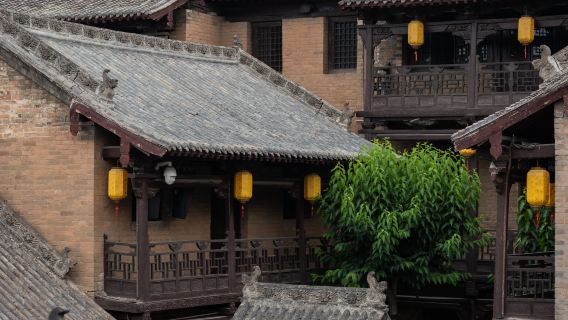
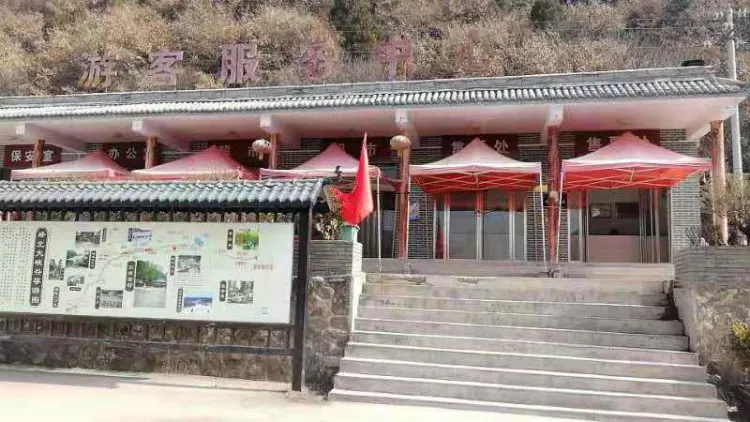
Jiangbei Grand Canyon Tourist Scenic Area is located in Moli Town, Jiang County, Shanxi Province, with a viewing area of ​​20 square kilometers. Currently, the Attraction has developed multiple tourism projects. It is a tourist destination in southern Shanxi that integrates food, accommodation, travel and entertainment. The four major features of the Jiangbei Grand Canyon Tourist Scenic Area: Canyon rafting: The total length of the rafting river is 5.2 kilometers, with a drop of 204 meters. It is a rafting attraction with a strong drop in height in North China. You can take a boat at leisure time, feel the breeze on the river, appreciate the gentleness and elegance of nature without any danger, and cultivate your soul; the brave can paddle the boat, strike the water in the middle of the stream, and fight the raging waves. Although there are dangers, you can fully appreciate the magnificence of nature and exercise your body; explorers can cross mountains and waves and drift in dangerous situations, appearing on the crest of the waves and sinking into the water, just to conquer nature. Water Challenge: The water challenge is divided into several levels. Crazy treadmill, stepping up to the top, light steps, Omega turntable, traveling through time and space, flying to success. The overall design is novel and unique, with bright colors, suitable for players of all ages. Unique landscape: Jiangbei Grand Canyon Scenic Area combines the majesty of Mount Tai, the steepness of Mount Hua, the tranquility of Mount Lu, the peculiarity of Mount Huang, and the beauty of Mount Emei. The scenery changes endlessly in four seasons. Spring is a sea of ​​flowers, summer is a summer resort, late autumn is full of red leaves, and winter is covered with silver. The Attraction includes many ancient villages such as Shi'e, Dajintang, Xiaobeishan, etc. You will see very local folk snacks, labor scenes, and on-site handicrafts of southern Shanxi; exquisite dough sculptures and embroidery; authentic freshly ground soy milk, freshly braised tofu brain, tofu, handmade steamed buns, and elegant farmhouse dormitories, which reflect the folk delicacies with southern Shanxi characteristics. You can also participate in these scenes for a close experience and enjoy the different mood of self-reliance.

Jiang County · 20.2km from downtown
Emperor Qinshihuang's Mausoleum Site Museum
2026 Global 100 - Best Things to Do

Emperor Qinshihuang's Mausoleum Site Museum

10
4.7/5
151.3k reviews

Emperor Qinshihuang's Mausoleum Site Museum is a large site museum built on the site of the Terracotta Army pits, which are located approx. 1.5 km east of the mound of Emperor Qinshihuang's Mausoleum. In March 1974, farmers from Xiyang Village accidentally unearthed fragments of terracotta figures while digging a well, and archaeological exploration confirmed Pit 1; in 1976, Pits 2 and 3 were successively discovered to the north of Pit 1. This army, which had slumbered for over 2,000 years, was thus brought back to light, and the discovery of the Terracotta Army has been hailed as "one of the great discoveries in the history of 20th-century archaeology." Pit 1 is the main military formation among the three pits, stretching over 200 m from east to west, with an estimated 6,000 pottery figurines and horses buried inside. Standing at the edge and looking down, armored warrior figurines, war chariots, and pottery horses are arrayed eastward in battle formation. A closer look at each figure reveals different facial shapes, hairstyles, beards, and even hand gestures. The figurines were originally painted all over, but most of the paint has peeled off and discolored due to fire and long burial. Pit 2 is L-shaped, with crossbowmen, cavalry, and charioteers arranged in a mixed formation; the vividly expressive kneeling archer was unearthed here. Pit 3 is small in scale, and scholars believe the ceremonial guard figurines and war chariots unearthed there indicate it served as the command center—known in ancient times as a "military tent"—directing the formations in Pits 1 and 2. The bronze swords, pi halberds, spears, crossbow triggers, and large quantities of arrowheads unearthed from the pits—many still sharp after more than 2,000 years—demonstrate the sophistication of Qin dynasty metallurgy. The Emperor Qinshihuang's Mausoleum Site Museum and the Qin Shi Huang Mausoleum at the foot of Mount Li were originally one integrated whole. After Qin Shi Huang ascended the throne at the age of 13, he began constructing the mausoleum, conscripting hundreds of thousands of laborers over a period spanning more than 30 years; the terracotta army, which replaced human sacrifice with figurines, served as the underground guard for this imperial mausoleum. To avoid the crowds during your visit, you might want to see Pit 3 and Pit 2 first, and then take your time to experience the awe-inspiring scene of Pit 1 last. After viewing the terracotta pits, you can also take the attraction's shuttle bus to Lishan Garden, where Emperor Qinshihuang's mausoleum is located; the Acrobats Pit, the Civil Officials Pit, and the Bronze Chariots and Horses Museum are all within the garden. The two painted bronze chariots and horses, cast at half the scale of real chariots, are exquisitely crafted with brilliantly gleaming gold and silver fittings, and are well worth a special trip to see.

China · Xi'an
Shaanxi History Museum
2026 Asia 100 - Family-friendly Attractions

Shaanxi History Museum

9.5
4.8/5
35.5k reviews

Shaanxi History Museum is a large modern museum built after China's reform and opening up and officially opened in 1991. The building was designed by architect Zhang Jinqiu and adopts a Tang-style architectural layout of "central hall and four corner towers," with a symmetrical central axis and a clear hierarchy of primary and secondary structures; in 2016 it was included in the first batch of the "Chinese Architectural Heritage of the 20th Century" list. Shaanxi was once the political center of dynasties such as the Zhou, Qin, Han, and Tang, and the museum's collection spans a million years of history, covering categories such as Shang and Zhou bronzes, pottery figurines of successive dynasties, Han and Tang gold and silver wares, and Tang tomb murals, with a total of over one million items. The permanent exhibition "Ancient Civilization of Shaanxi" follows a chronological main line and presents the historical process from prehistoric Lantian Man to the eve of the Opium War across three galleries, with the Zhou, Qin, Han, and Tang periods as the focus. The east and west sides of the central hall each host a thematic exhibition: on the west side, "Treasures of the Great Tang: Hejiacun Hoard Unearthed Artifacts Exhibition" concentrates on fine gold and silver wares of the High Tang, while on the east side, the "Tang Dynasty Mural Treasures Gallery" displays authentic murals removed from Tang tombs, with subjects covering figures, architecture, ceremonial guards, and more, making it a uniquely distinctive category of the museum's collection. Among the many artifacts in the museum, several are particularly notable. The agate cup with gold-inlaid beast head, from the Hejiacun hoard, is carved from a single piece of banded agate into the form of a curved-horn beast head, resembling Central Asian rhyton cups, and is one of the first batch of cultural relics prohibited from being exhibited abroad. The tri-color glazed camel carrying musicians figurine vividly recreates the lively scene of musicians playing and singers performing on a camel's back, with bright glaze colors and figures with distinct expressions. The Empress's Seal is made of Western Han Hetian mutton-fat jade and carved with a chi-tiger knob, and is the only known actual jade seal of a Han dynasty empress discovered to date. In addition, the gilt silver flask with a dancing horse holding a cup design, the celadon ewer with an overhead handle and bottom-filling design, and the black-glazed oil-spot bowl each have their own distinctive features. The gold and silver wares unearthed from the Hejiacun hoard are concentrated in the thematic gallery and are a highlight of any visit; visitors are advised to allow time to examine them closely.

China · Xi'an
Jinguo Museum

Jinguo Museum

4.9
4.7/5
320 reviews

Located in Qucun Town, Quwo County, Jin State Museum is the first site museum in the province with Jin culture as its theme, built on the basis of the national key cultural relic protection unit "Qucun-Tianma Site". It was officially opened to the public on National Day in 2014. It is the first large-scale site museum in Shanxi Province that integrates cultural relic collection, protection, research and cultural relic display, and is a platform that fully displays the historical and cultural features of Jin State. The Jin State Museum takes Jin culture as its theme and has created three highlights: the history of Jin State, the history of excavation, and the site exhibition. The History and Culture Exhibition Hall uses the history of Jin State as a clue and, through a large number of precious cultural relics unearthed from the tombs of Jin Hou, shows a series of major events that have influenced the course of ancient Chinese history, including the enfeoffment of Tang by Shu Yu, the change of Tang to Jin by Xie Fu, the loyalty of Wen Hou to the king, the expansion of territory by Xiangong, the hegemony of Wen Gong, the dictatorship of the six nobles, and the division of Jin by the three families. The Site Excavation History Exhibition Hall shows the hardships, extensive reading of geography, and search for evidence by three generations of archaeologists from the School of Archaeology and Museum Studies of Peking University and the Shanxi Provincial Institute of Archaeology, as well as a series of major achievements in archaeological excavation; the Site Exhibition Hall adopts a method of one site and one display method, focusing on the four groups of tombs of Jin Hou and his wives and three chariot pits, presenting the audience with a panoramic picture of the tombs of kings and princes of the state during the Western Zhou period. The "Qucun-Tianma Site" where the Jin State Museum is located is large in scale, starting from Tianma Village in Yicheng County in the east, Qucun Town in Quwo County in the west, starting from the bank of Fu River in the south, and reaching Qiaoshan slope in the north. The site is 3,800 meters long from east to west, 2,800 meters wide from north to south, and covers an area of ​​nearly 11 square kilometers. After more than ten consecutive large-scale explorations and excavations by Peking University and the Shanxi Institute of Archaeology, a total area of ​​12,000 square meters was revealed, and more than 1,000 tombs were excavated, including more than 800 tombs from the Zhou Dynasty. Especially in the core area of ​​the site, nine groups of 19 tombs of early Jin monarchs and their wives, ten chariot pits, and more than 12,000 precious cultural relics of various types were discovered. The excavation results provided support for the solution of the chronicle of the Western Zhou kings in my country's "Xia, Shang and Zhou Chronology Project". It was listed as one of the top ten archaeological discoveries in China in 1992 and 1993, and was rated as one of the 100 major archaeological discoveries in China in the 20th century in 2001.

Quwo · 27.2km from Jiang County
Longmen Grottoes
2026 Asia 100 - Best Things to Do

Longmen Grottoes

8.9
4.7/5
62.5k reviews

Longmen Grottoes are located in the southern suburbs of Luoyang, Henan Province, on the cliffs along both banks of the Yi River. As one of China's three major grotto art treasures, they were inscribed on the World Cultural Heritage list in 2000. The grottoes were first carved when Emperor Xiaowen of Northern Wei moved the capital to Luoyang, and construction continued through the Eastern Wei, Western Wei, Northern Qi, Sui, and Tang dynasties, with the vast majority of niches and statues left from the Northern Wei and Tang periods. Today, more than 2,000 niches and over 100,000 statues remain, along with a large number of inscriptions and steles, making the site an important representative of Chinese stone carving art. The attraction is divided by the Yi River into two parts: West Hill and East Hill. The West Hill Grottoes are the essence of the site, carved from the Northern Dynasties through the Sui and Tang periods. Famous caves include Guyang Cave, Binyang Cave, Lotus Cave, Wanfo Cave, and Fengxian Temple. The Lushena Buddha at Fengxian Temple stands about 17 m tall, making it one of the larger Buddha statues at Longmen Grottoes. Its face is dignified and serene, with a faint smile, and legend holds that it was modeled on the appearance of Wu Zetian, earning it the name "Oriental Mona Lisa." The inner walls of Wanfo Cave are densely covered with about 15,000 small Buddha statues, each only a few cm tall, neatly arranged and finely crafted. Guyang Cave is the earliest cave carved at Longmen, and its inscription calligraphy is exquisite; the selected "Twenty Masterpieces of Longmen" are representative works of Wei stele calligraphy. Binyang Cave consists of the South, Middle, and North caves and took more than twenty years to complete. Its original reliefs depicting emperors and empresses worshipping the Buddha were looted and lost overseas in the 1930s. In Binyang North Cave, a Buddha statue has a distinctive hand gesture, with the right index and middle fingers raised in a shape resembling the modern "scissors hand," though it is actually a Buddhist mudra, and it once sparked heated discussion online. The East Hill Grottoes are mostly Tang dynasty works and are smaller in scale than those on West Hill, but from the opposite bank visitors can enjoy panoramic views of West Hill from different angles, especially distant views of the Lushena Buddha. The attraction also includes Xiangshan Temple and Bai Juyi Memorial Park (Bai Garden). The Tang dynasty poet Bai Juyi lived in Luoyang in his later years and once praised it, saying, "Of the scenic splendors of Luoyang's surrounding mountains and waters, Longmen ranks first." When visiting, simply follow the route West Hill—East Hill—Xiangshan Temple—Bai Garden, proceeding in one direction without backtracking. The West Hill Grottoes are densely packed with content, so it is advisable to set aside ample time for a closer look; East Hill is quieter and more secluded, suitable for a brief visit and gazing across the river when energy is limited.

China · Luoyang

Experiences you can't miss in Jiang County

Jiang County Today's weatherFoggy 6-12℃
Jiang County weather for the next 2 days11/16: 3-8℃, 11/17: -2-7℃

Free things to do in Jiang County

What travellers say about Jiang County

user-avatar
行走毛毛8 July 2026
4.0
Although it's just a gate located on the street and still serves as a passageway, it's a key cultural relic. Many people who love cultural relics will come here specifically to take a set of photos. Locals, seeing this, are very curious about what's so special about it. That's the essence of tourism, I guess.

Nanfan Stone Memorial Archway

user-avatar
sangjingyin9 August 2025
4.0
It's a remote location, free, and no reservations required. Many online claims that a temple facing south is called Taiyin Temple are incorrect. The temple originally got its name from Taiyin Mountain, but was later moved. The reclining Buddha is unique, but the later-replaced head of the statue above is quite poor...

Taiyin Temple

user-avatar
可爱的旅游生活891 August 2026
4.0
The dense forest canyon is lush and cool, offering a variety of activities such as rafting and viewing the Buddha's Hand scenic spot. It also has complete farmhouses and attractions. Some attractions charge extra for a second time. It is suitable for families to enjoy water activities and escape the summer heat. A 3-hour visit is recommended.

Jiangbei Grand Canyon

user-avatar
M37***456 October 2026
4.0
Qiaosi Stele Tower (Qiaosi Stele Tower | Qing Dynasty, Daoguang 17th year) is the largest existing single-unit brick and stone imitation wood stele tower in my country, integrating architecture, brick carving, stone carving, and calligraphy. It is about 15 meters high. Facing east, it stands by the lotus pond at the entrance of the village. It has a single-eave hip roof with brick and stone imitation wood brackets under the eaves. The front has five stele chambers with seven steles. The upper part of the tower is decorated with brick-carved railings, window lattices, and hanging flowers on all four sides. The tower body is carved with scenes of two dragons playing with a pearl, flowers and birds, farming, merchants traveling, and journeys. The mythical beasts on the roof ridge and the multi-layered pagoda-shaped ridge are very distinctive. It is a masterpiece of southern Shanxi brick carving.

Qiao Temple Stele Pavilion

user-avatar
Klimova14 November 2026
5.0
You have to be there to experience it. Definitely worth it. Hard to believe the warriors are some 2,200 years old. You can almost smell the history. Avoid peak hours at all costs! Best to arrive in the afternoon. Lishan garden can be skipped. The park is massive, to see everything will take around 3 hours (if you don't want to pay 15RMB for a shuttle) and to be honest, it does not offer much unless you are a massive history lover.

Emperor Qinshihuang's Mausoleum Site Museum

user-avatar
M34***9114 November 2026
5.0
Short Version (Directly copied from platform) ⭐⭐⭐⭐⭐ Five-star review! The tour guide was exceptionally professional, knowledgeable about the history of the Zhou, Qin, Han, and Tang dynasties. Their explanations weren't just rote recitations; they brought the stories behind each artifact to life in a vivid and easy-to-understand way. The pace was comfortable and unhurried, and they patiently answered all my questions. Without a guide, it's easy to just skim through everything. This visit to the Shaanxi History Museum was incredibly rewarding. Highly recommended! Detailed and Thoughtful Version ⭐⭐⭐⭐⭐ Highly recommend this tour guide! The Shaanxi History Museum has so many artifacts that it's difficult to understand them all on your own. The tour guide has a solid foundation in history and literature, clearly outlining the historical context. From Shang and Zhou bronzes and Qin and Han artifacts to Tang dynasty treasures, the background and stories behind the museum's most prized possessions were explained in a engaging and humorous way, bringing the cold artifacts to life. The itinerary was well-planned, catering to both adults and children. They were patient and enthusiastic throughout, answering all questions. This wasn't just a simple checklist visit; it was an immersive historical journey that exceeded my expectations and was definitely worthwhile! Family Version (For Parents with Kids) ⭐⭐⭐⭐⭐ Five-star review! This tour guide is perfect for taking care of children! The explanations were easy to understand, with many interesting anecdotes. The children listened attentively throughout and didn't find it boring at all. The knowledge points were explained clearly, the pacing was just right, and it helped us avoid the crowds. The key exhibits were explained in detail, and after the visit, the children remembered many national treasures and learned a lot about history. Highly recommended!

Shaanxi History Museum
user-avatar
许泱流18 October 2026
5.0
The Jin State Museum, which recently reopened after renovations for the Mid-Autumn Festival, is divided into three main sections: the first section displays the history and ancient artifacts of the Jin State and the pre-Qin period; the second section features a realistic display of Jin State tombs; and the third section showcases porcelain. The overall flow of the exhibits is well-organized, providing a comprehensive experience from understanding and reading about history to witnessing it firsthand.

Jinguo Museum

user-avatar
Jieyu18 February 2026
4.0
The overall area is quite large, and the planning and design are generally well done. It features mountains, water, and cultural elements. The water area is substantial, and the reservoir capacity is also very large. However, it appears to have undergone secondary development, with several submerged buildings in the water. There are quite a few businesses operating there, offering a variety of dining and entertainment facilities. The biggest drawback is the extreme inconvenience of parking during holidays. The parking lot is quite far from the scenic area, and it costs 10 yuan per vehicle.

Quwoxian Chunqiu Jin Guocheng Sceneic Area
user-avatar
Chris14 November 2026
5.0
Visiting Longmen Grottoes was one of the highlights of my trip to Luoyang. I was genuinely amazed by the sheer scale of the site and the incredible details of the Buddhist statues carved into the limestone cliffs. It is quite mind-blowing to think about how these masterpieces were created more than a thousand years ago, especially considering the tools and technology available back then.Walking through the grottoes gave me a real appreciation of China's rich history, culture and craftsmanship. Every section seemed to have something interesting to discover, and I found myself stopping frequently to admire the intricate carvings. The scenery along the river also made the experience even more enjoyable.Definitely worth visiting if you're in Luoyang! My advice is to set aside at least 2–3 hours, wear comfortable shoes and take your time exploring rather than rushing through. An unforgettable experience!

Longmen Grottoes

Trip Moments in Jiang County

Popular cities near Jiang County

Frequently asked questions

How can I contact Trip.com customer support?

Get help anytime, anywhere within 30 secondsContact customer support

Change and cancellation policies vary by attractions and tours. Please check the product details page for more information.

Ticket prices may vary between weekdays and weekends, as well as during peak and off-peak seasons. When booking with Trip.com, you can also use Trip Coins to get extra savings. For more tips on booking discounted tickets, please visit Trip.com for the latest information.