Pingyao County

Things to do in Pingyao County

Search attractions or local attractions & tours
Search

Explore top experiences

Top 10 attractions in Pingyao County

View all Attractions
Pingyao Ancient City
2026 Asia 100 - Night Attractions

Pingyao Ancient City

8.4
4.6/5
27.2k reviews
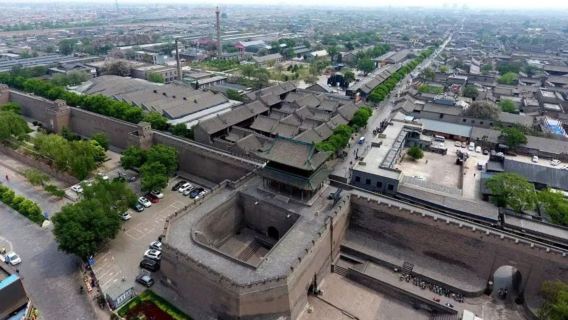
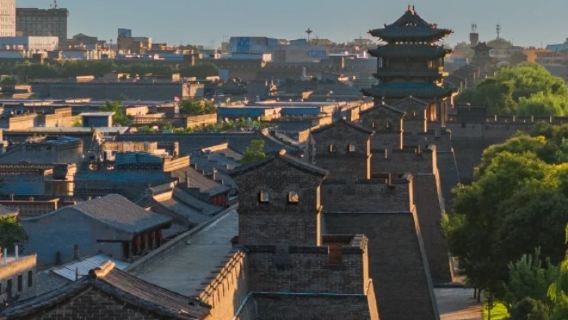
Pingyao Ancient City is approx. 85 km from Taiyuan. The streets, shops, and residences within the ancient city still maintain their traditional layout and appearance, making it one of the best-preserved ancient cities in China. It is also the only ancient county town in China that has successfully been listed as a UNESCO World Heritage Site as an entire city. Pingyao was once the financial center of China during the late Qing Dynasty. Walking through this once-prosperous ancient city, you can feel the essence of Shanxi merchant culture everywhere. The ancient city has six gates in total, with the north gate near Pingyao bus station and the west gate nearPingyao train stationThe south gate and west gate are places with many travelers. Entering the ancient town does not require an admission ticket, but if you want to climb the city wall or visit attractions like the ticket number, you need to purchase a pass for the ancient town. The ancient town is not very large, and walking is enough to explore it all. If you prefer not to walk, you can also take electric bikes. The streets of the entire ancient city are laid out in the shape of the Chinese character "土" (earth). When visiting, you usually enter the city from the West Gate and walk along West Street to Rishengchang Draft Bank, known as the "ancestor of modern Chinese banking". Here you can not only learn about the development history of ancient banking, but also have the old manager in a long robe and mandarin jacket write a draft for you using the early draft method, which is particularly historical. Moving forward is the north-south spanningSouth street, it is the central axis of the ancient city. During the Ming and Qing dynasties,South streetControlling over half of the nation's financial institutions, it was hailed as the "Wall Street of China" in its heyday. Today, it remains a bustling area of the ancient city, known as the Ming-Qing Ancient Street. Most attractions in Pingyao Ancient City are concentrated here, centered around the landmark structure, the Ancient City Tower. Surrounding it are attractions like Xie Tong Qing ticket number (China Banking Museum) and Wei Tai Hou (Ticket number museumAttractions such as Baichuantong, China Escort Museum, Tongxinggong Escort, Weishengchang, China Rare Newspaper Exhibition Hall, and Tianjixiang are available, along with restaurants, musical instrument stores, cafes, and bars. After strolling along the street, you can dine here, buy some souvenirs, and then continue south for more sightseeing. At the Pingyao Ancient City's county government office on the south side of the ancient city, you can see a large number of ancient documents and torture instruments, with daily performances of court sessions; near the Shangdong Gate are the Pingyao Ancient City's Chenghuang Temple andConfucian templeIt is quite grand and meticulously built, with thriving incense offerings where you can burn joss sticks. The Pingyao Ancient City wall is also one of the highlights of the ancient city, being not only majestic but also remarkably well-preserved. Climbing the wall offers a panoramic view of the entire ancient city. Among the gates, the tower of the south gate (Yingxun Gate of Pingyao Ancient City wall) is exquisitely crafted, and this area is close to residential buildings, allowing visitors to observe the daily life of the locals. If time permits, you can walk around the ancient city along the wall to fully appreciate its charm, which takes about an hour. Watching the sunset from the wall in the evening presents a beautiful scene. Besides the ancient town itself, Pingyao has two other major attractions: Zhenguo Temple and Shuanglin Temple. Zhenguo Temple was built without a single nail, with all structures joined by interlocking wooden components. Shuanglin Temple houses over 10 halls containing exquisitely crafted painted sculptures dating from the Yuan to Ming dynasties. It is highly recommended to stay overnight in the ancient town to enjoy its night view. You can also rent a bicycle to explore the small alleys and experience the authentic Pingyao, where the local culture and customs or photography make excellent subjects. Especially during the Chinese New Year, Pingyao is full of festive atmosphere. The town features old courtyards converted into inns, which are usually affordable, with clean and tidy accommodations available for just a few dozen yuan. Additionally, Pingyao is renowned for its beef. In the late Qing Dynasty, Empress Dowager Cixi passed through Pingyao and was so fond of the local beef after tasting it that she designated it as a royal tribute. Shops bearing the name "Guanyun beef" can be seen everywhere in the ancient town, making it hard to distinguish authenticity, and prices are generally high. You may consider buying some outside the town to try or give as gifts to friends and relatives.Pingyao County · 124m from downtown
Pingyao Ancient City City God Temple Scenic Area

Pingyao Ancient City City God Temple Scenic Area

4.3
4.3/5
372 reviews
Pingyao's Pingyao Ancient City City God Temple Scenic Area, founded in the early Ming dynasty, is one of the most well-preserved Pingyao Ancient City City God Temple Scenic Area in China. It is a fully regulated Taoist temple complex rich in religious and historical culture. Aside from the main hall and sleeping quarters, it is mainly composed of the Six Cao offices, Pingyao County Government Museum - Land God Shrine, Kitchen God Temple, andGod of Wealth Temple. Pingyao Ancient City City God Temple Scenic Area follows the ritual system of harmony between heaven and man, using South Street inside the city as its axis, and is symmetrically aligned east–west with Pingyao Ancient Government Office, with Pingyao Ancient City City God Temple Scenic Area occupying the foremost position. The Pingyao Ancient City City God Temple Scenic Area has an orderly layout, distinct layers, a grand presence, and a distinctive style. The functional division of a front court and rear sleeping quarters is very clear, and everywhere it reflects a solemn atmosphere of the underworld and the living world turning in cycles, as well as the traditional idea that heaven's net is wide yet nothing slips through. The overall layout feature of the Pingyao Ancient City City God Temple Scenic Area is also shown by the temple within a temple arrangement: Kitchen God Temple and Pingyao Ancient City City God Temple Scenic Area are placed on the east and west sides of the City God Hall, forming the peculiar scene of all the deities sharing one temple and jointly receiving incense offerings. In addition, a major characteristic of the Pingyao Ancient City City God Temple Scenic Area is its architectural structure and glazed tile art: throughout the temple area, the halls, corridors, pavilions, arches, and terraces vary in form and feature ingenious structures, and the glazed tiles that cover the roofs are especially striking and moving. The cool palette of blue and green, interspersed with yellow, creates a mysterious atmosphere, and the immortals, beasts, and dragon ridge ornaments are exquisitely modeled with colors as fresh as when new, making the complex an outstanding example of Qing-dynasty glazed tile craftsmanship.Pingyao County · 535m from downtown
Xietongqing Ancient Bank Museum

Xietongqing Ancient Bank Museum

4
4.3/5
174 reviews
Xietongqing Bank was founded in the sixth year of Emperor Xianfeng (1856) and closed in 1913, a total of 58 years. During its opening, Xietongqing Bank had 33 branches all over the country, with a focus on the northwest and southwest. The Xietongqing Bank counter room you see now is the basic furnishings of the bank counter at that time. Xietongqing Bank is now a large-scale bank courtyard in Pingyao, with a total of five courtyards in front and back, each with different functions. For example, the first courtyard is divided into the counter room, the general account room, and the port account room, which is equivalent to the current accounting office. After completing the procedures, go to the north counter room to withdraw cash, which is equivalent to the current cashier's office; the third courtyard is divided into the assistant room, the sacrifice room, and the manager's room, which is the office space for management personnel. The fourth courtyard is the living area for employees. At that time, no matter the general account or branch, from the shopkeeper to the employees, they all lived in the bank. The fifth courtyard is where the vault is located, with very advanced anti-theft measures, among which the underground cellar (underground vault) is close to the current bank vault. The banknote house has now been turned into the China Money House Museum, which houses thousands of coins that were circulated and issued at that time. Under the courtyard of Xietongqing Banknote House is the largest underground vault in Pingyao, which stored a large amount of gold and silver in those days, as well as the treasure of Pingyao: a dragon pillar carved from camphor wood, a cultural relic from the reign of Emperor Taizu Zhu Yuanzhang of the Ming Dynasty. This dragon pillar is built in the center of the entire "Turtle City" (Pingyao Ancient City). Many tourists like to go to the underground vault to touch this dragon pillar and get some wealth. The air in the underground vault is relatively turbid, and the number of people entering the scenic spot will be limited. The entrance and exit passages are narrow, so you should pay more attention to safety when playing, and tourists with respiratory diseases should enter with caution. There is also a folk hotel in Xietongqing Banknote House, which has a cave cave with northern folk flavor. If you stay in the folk hotel, tourists can enjoy two Complimentary: one is to visit the banknote house (banknote house) museum for Complimentary, and the other is to visit the Chinese coin exhibition hall of various dynasties for Complimentary.Pingyao County · 154m from downtown

Traveller favourites curated for you

Experiences you can't miss in Pingyao County

Featured Culture & history in Pingyao County

View all Culture & history
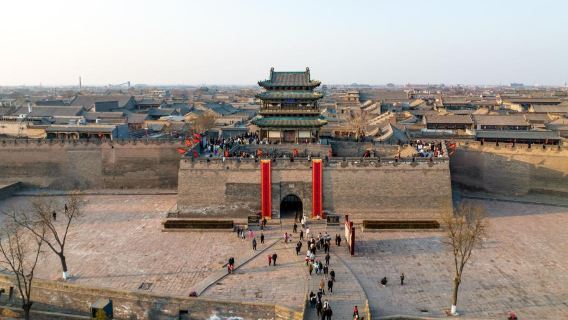
One-day tour to Pingyao Ancient City and Qiao Family Compound from Taiyuan (Jin merchant elegance · ancient city and compound tour)
󱌍
FromBRL 223.09
Half-Day Tour of Pingyao Ancient City (English Guide)
󱌍
Duration: 5.5 hrs
English
Free cancellation
Instant confirmation
Book now for today
FromBRL 743.64

One-day private charter to Pingyao Ancient Town and Qiao Family Courtyard from Taiyuan
󱌍
5.0/5
· 1 review
Duration: 10.5 hrs
English
Free cancellation
Instant confirmation
Book now for tomorrow
FromBRL 382.05
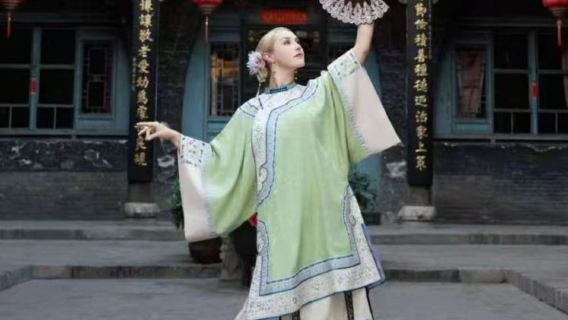
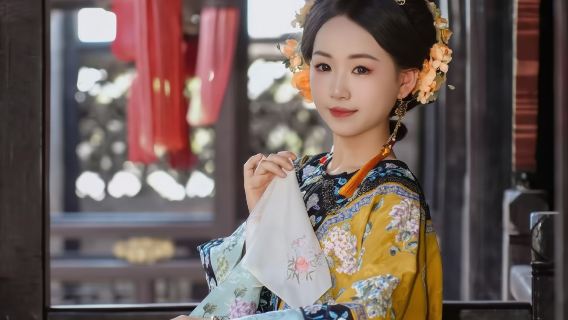
Jinzhong Jinyao ancient-style costume experience (optional photographer service + experience oriental beauty)
󱌍
FromBRL 89.98
Shuanglin Temple, Wang Family Compound & Pingyao Ancient City Pingyao Private Day Tour
󱌍
Duration: 9.5 hrs
English
Free cancellation
Instant confirmation
FromBRL 642.01

More things to do

Private Tours in Pingyao County

View More Private Tours in Pingyao County
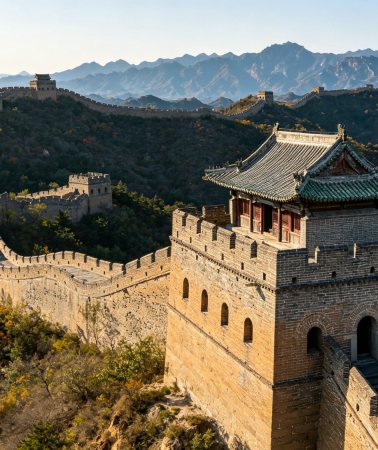
Pingyao County Today's weatherCloudy 2-17℃
Pingyao County weather for the next 2 days11/3: 4-18℃, 11/4: 4-16℃

Free things to do in Pingyao County

What travellers say about Pingyao County

user-avatar
M25***262 November 2026
5.0
Pingyao Ancient City is definitely worth a visit! A well-preserved Ming and Qing dynasty city, its cobblestone streets exude a rich atmosphere. The city walls, banks, and county government offices are all steeped in history. The night view with red lanterns is absolutely stunning, brimming with local life. ✨

Pingyao Ancient City

user-avatar
Anonymous user27 October 2026
5.0
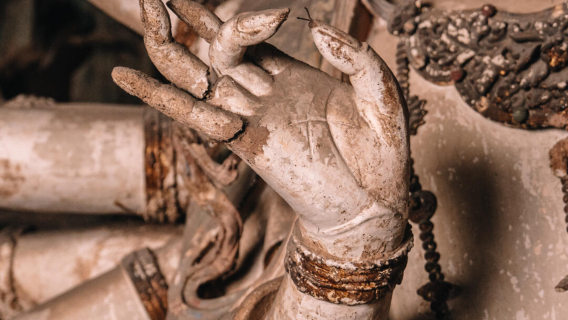
Shuanglin Temple comprises three courtyards and ten halls arranged in a staggered layout. The temple houses over two thousand painted clay sculptures from the Song, Yuan, Ming, and Qing dynasties, encompassing round sculptures, suspended sculptures, and wall sculptures, earning it the title of "Oriental Treasure House of Painted Clay Art." Each painted clay sculpture is exquisitely lifelike, especially the Four Heavenly Kings in the Hall of Heavenly Kings, and the Weituo and Guanyin statues in the Hall of a Thousand Buddhas—these are considered classic examples. The sculptures are vividly expressive and remarkably realistic. Unfortunately, the gloomy weather prevented me from fully enjoying them!

Shuanglin Temple

user-avatar
超酷的小王同学。24 October 2026
5.0
Zhenguo Temple is a hidden gem of an ancient temple in Pingyao, not widely known but rich in historical significance. The Wanfo Hall is a rare example of a Five Dynasties wooden structure, over a thousand years old. Its imposing and simple bracket sets, constructed without a single nail, have stood the test of time, making it a living fossil of wooden architecture. The painted sculptures inside retain their original Five Dynasties appearance, with a dignified and weighty style, a stark contrast to the lively Ming Dynasty sculptures of Shuanglin Temple. The temple is serene and quiet, with few tourists, perfect for slowly appreciating the beauty of its ancient architecture. If you appreciate ancient architecture, after visiting Shuanglin Temple, a stopover at Zhenguo Temple offers a unique and worthwhile experience, allowing you to understand the architecture and sculptures of different eras.

Zhenguo Temple

user-avatar
_TI***i231 October 2026
5.0
On a week day it’s a nice and calming experience. Especially if you bring cards and decide to sit at some of the metal table and chairs to play a card game, with the scenic view of the wall and the ancient city.

Pingyao Ancient City Wall

user-avatar
jingtao9877123 February 2026
5.0
The scenery is antique and full of historical charm. There are many scenic spots inside, and I especially recommend the county government office, the security escort agency, and the money exchange. There is also a light show at night, but it gets very crowded on holidays, and the scenic area is probably overwhelmed. You can have to wait for half an hour to get into the county government office.

Rishengchang Draft Bank

user-avatar
殷都老虎4 January 2026
4.0
Pingyao County Government Office (National Cultural Relic) Located in the center of the ancient city, it was first built in the sixth year of the Zhizheng era of the Yuan Dynasty (1346) and rebuilt in the third year of the Hongwu era of the Ming Dynasty (1370). It is one of the best-preserved and largest feudal county government offices in China, second only to the Neixiang County Government Office in Nanyang. Travel Guide Transportation: Accessible by high-speed rail and bus (buses run every 20 minutes; free for veterans with preferential treatment cards). Ticket Price: 125 RMB for the entire ancient city (free for those over 60 and veterans with preferential treatment cards; no ticket exchange required). Time Spent: 1 hour. Accommodation and Dining: Convenient. If not driving, it is recommended to stay near Pingyao Railway Station, which is close to the ancient city, convenient for transportation, and not far from the other two attractions. Nearby Attractions: Pingyao Ancient City, Shuanglin Temple, Zhenguo Temple.

Pingyao Ancient Government Office

user-avatar
M37***459 October 2026
4.0
Visiting ancient temples in Shanxi is the only way to truly understand the beauty of clay sculptures. A glance at a thousand years: the painted sculptures of Shuanglin Temple, with their lowered heads and silent expressions, tell the story of human joys and sorrows; the ten thousand Buddhas of Zhenguo Temple stand silently, yet have witnessed the vicissitudes of time.

Shuanglin Temple Colored Sculpture Art Museum

user-avatar
M45***142 March 2025
5.0
The Pingyao City God Temple faces south and has three courtyards. On the central axis, there are archways, mountain gates, a stage, a sacrificial hall, the City God Hall, and a sleeping palace. There are also the Six Cao Mansion, the Land God Temple, the God of Wealth Temple, the Kitchen God Temple, etc. "All the gods live in one temple and receive incense together." The Pingyao City God Temple is a Taoist building. It is a complex of buildings that integrate the ancient government office buildings with the temple architectural style. It is a physical relic for studying the layout of the ancient city of Pingyao, the development of Taoism, and folk customs!

Pingyao Ancient City City God Temple Scenic Area

user-avatar
killua_小狮王21 October 2026
4.0
The Ma Family Compound is the residence of Ma Zhongxuan, a wealthy merchant in Pingyao during the late Qing Dynasty. Known as the largest compound in Pingyao, it represents the pinnacle of Shanxi merchant mansions in the ancient city. After visiting several grand residences in the ancient city, this place best showcases the grandeur of a wealthy tycoon. The furnishings and wood carvings in each room are ingeniously designed, with exquisite details. Located slightly off the main street of the ancient city, it's less crowded, and although it requires a longer walk, it's well worth the trip.

Ma's Grand Family Compound

user-avatar
享受生活201328 November 2023
4.0
This bank was once known as the richest bank in China, but now it has been turned into a museum of Chinese banks. The museum is not very large, but it does have many legends, especially the Shenlong Baozhu in the underground money vault. It is full of legends and allegory.

Xietongqing Ancient Bank Museum

Trip Moments in Pingyao County
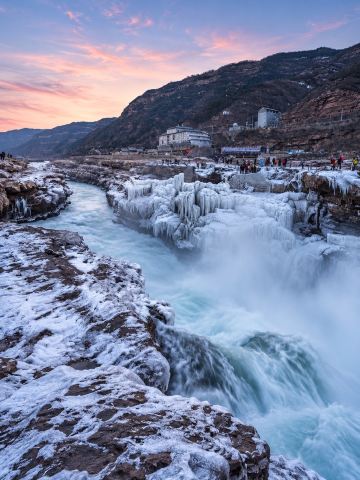
Popular cities near Pingyao County

Frequently asked questions

How can I contact Trip.com customer support?

Get help anytime, anywhere within 30 secondsContact customer support

Change and cancellation policies vary by attractions and tours. Please check the product details page for more information.

Ticket prices may vary between weekdays and weekends, as well as during peak and off-peak seasons. When booking with Trip.com, you can also use Trip Coins to get extra savings. For more tips on booking discounted tickets, please visit Trip.com for the latest information.