Shucheng

Things to do in Shucheng

Search attractions or local attractions & tours
Search

Explore top experiences

Top 10 attractions in Shucheng

View all Attractions
Wanfo Lake  Scenic Area
No. 9 of Family-friendly Attractions in Anhui

Wanfo Lake Scenic Area

6.5
4.7/5
2.9k reviews

Wanfo Lake Scenic Area is surrounded by Wanfo Lake, formerly known as Longhekou Reservoir, which is located 30 kilometers southwest of Shucheng County, about 80 kilometers from Hefei and 73 kilometers from Lu'an. The first purpose of going to Wanfo Lake is to see the lake view, the lake water is clear, and there are many small islands in the lake; the second is to see the water conservancy project. The Wanfo Lake Dam was built in 1960. It was built entirely by hand by the people during the three-year natural disaster. It is very remarkable. Wanfo Lake is not small, but the transportation is not convenient. You can drive by yourself and travel around the lake freely. Wanfo Lake Dam is on the north bank of the lake. Tourists usually pass by here first. To the west of the dam is the departure pier where you can take a Cruise. The Cruise have different types and different fees. There are some islands in the lake where you can go to play, such as Yanzi Island, Zhouyu Island, Dragon King Island, etc. Of course, you need to take a boat to go to the island. The vegetation on the island is lush, and the man-made attractions on the island are relatively ordinary. If you don't take a boat, you can also take a walk on the shore. There are some hotels with lake view rooms around Wanfo Lake, and some local restaurants on the way around the lake. It is recommended to taste the local delicacies in the hotels or restaurants - Wanfo Lake fish head, Wanfo Lake abalone, Wanfo Lake steamed fish, Wanfo Lake drunken shrimp, Wanfo Lake shrimp soup, which are known as the "five delicious flowers of Wanfo Lake". Among them, Wanfo Lake fish head is the most famous. Then order a pot of local famous tea "Shucheng Xiaolanhua Tea", don't mention how comfortable it is. Although the price of Dining in the Attraction is a bit expensive, the taste makes people feel that it is worth the money. The advantage of self-driving is that if you are interested, you can also go to Tangchi Town, Shucheng County, Lu'an City, about 10 kilometers east of Sanjiang Wharf, to soak in hot springs. Because this Tangchi Town is west of Tangchi Town, Lujiang County, Hefei City, it is called "West Tangchi". Or drive to Wanfo Mountain, 64 kilometers southwest of Wanfo Lake, where the water of Wanfo Lake comes from. Wanfo Mountain is relatively remote, and the main peak Laofoding is 1,539 meters above sea level. If you want to play, you can stay at the foot of the mountain at night and spend a whole day climbing the mountain the next day.

Shucheng · 25.5km from downtown
Sanhe Ancient Town
No. 4 of Night Attractions in Anhui

Sanhe Ancient Town

7.8
4.7/5
4.4k reviews

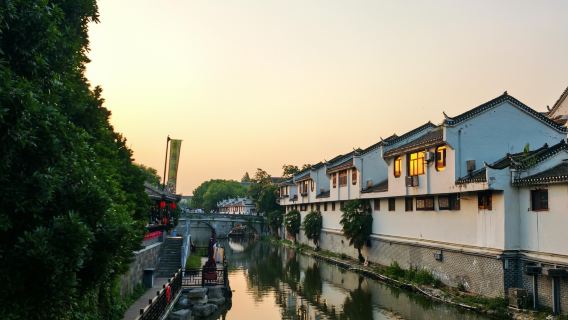
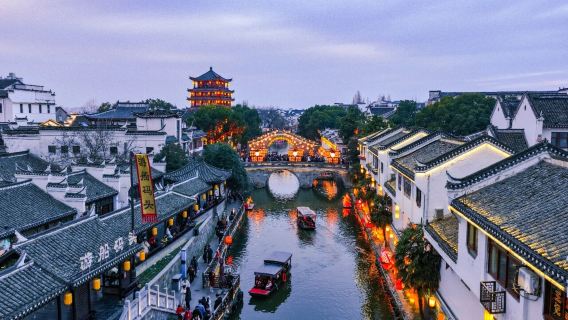
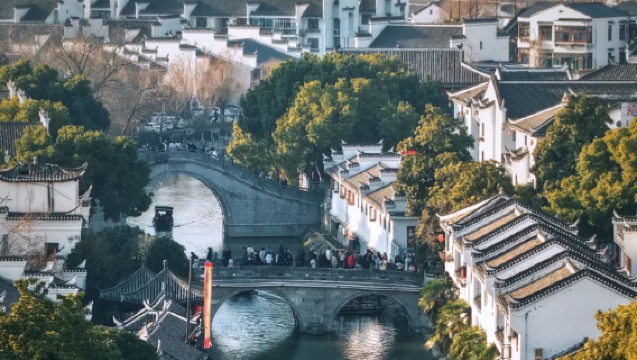
Sanhe Ancient Town is situated at the southern tip of Feixi County in Hefei, where the Fengle River, Hangbu River, and Xiaonan River converge. The town derives its name from these three waterways, with the name "Sanhe" appearing as early as the Ming Dynasty and officially becoming Sanhe Town during the Qing Dynasty. In 1858, Taiping Rebellion generals Chen Yucheng and Li Xiucheng achieved a decisive victory over the Xiang Army here, historically known as the "Great Victory of Sanhe." The triumphal arch at the town entrance, Yingwang Mansion, and ancient city walls still bear witness to this turbulent period. The old bluestone-paved streets stretch along the river, lined with contiguous Huizhou-style residences featuring gray brick walls and soaring horse-head gables, blending water-town alleys with Huizhou-style markets seamlessly. Most tours begin at Sanxian Bridge in the town center. To its northwest stands the seven-story Guocui Tower, offering panoramic views of the town and displaying Huizhou artifacts like sedan chairs, inscribed tablets, carved beds, and stone carvings. Nearby, the Dafu Mansion (Sanhe Folk Museum) recreates an official residence's hall with exquisite wood carvings, including an oversized abacus over one meter long. Northeast of the bridge, Xiangu Tower is a Huizhou-style temple funded by merchants including the owner of the time-honored pastry shop "Zhonghexiang." Heading north along the east bank of Xiaonan River leads to ancient West Street, paved with bluestones and once bustling with shops—Liutongxinglongzhuang still maintains its original commercial layout. South along the west bank brings you to Quezhu Covered Bridge, named after Sanhe's ancient moniker "Quezhu," featuring a two-tiered eaves corridor with "beauty's seat" railings perfect for resting and enjoying the waterfront. The southern area around Old South Street and Wannian Street clusters notable former residences, including those of physicist Chen-Ning Yang, general Sun Liren, and Helu. During the Anti-Japanese War, young Chen-Ning Yang sheltered here with his family. Nearby, the famous "One-Person Alley" narrows to barely accommodate a single visitor, making it a popular photo spot. Further south stand Wannian Temple, Chenghuang Temple, and the historic Wannian Stage—Sanhe being the birthplace of Lu Opera, whose authentic melodies often grace the stage during festivals. Local snacks concentrate near Sanxian Bridge: freshly fried Sanhe rice dumplings with crispy shells, shrimp paste, crispy duck, and various river delicacies represent regional cuisine, while tea-flavored dried tofu makes for perfect street-side nibbling. Rice wine and feather fans serve as portable souvenirs. In 2026, Sanhe became a key filming location for CCTV's Spring Festival Gala Hefei segment, with its night scenes of a thousand fish lanterns captivating nationwide audiences.

Feixi · 28.6km from Shucheng
Anhui Museum (New Building)
No. 3 of Family-friendly Attractions in Anhui

Anhui Museum (New Building)

7.3
4.7/5
1.7k reviews

The Anhui Provincial Museum (new building), located in Hefei, opened in 2011 and is the main museum area. The building itself is a highlight: its architectural design draws inspiration from the traditional Hui-style residences, featuring interconnected buildings with white walls and black tiles that enclose a central courtyard, covering an area of ​​over 40,000 square meters. The museum houses over 200,000 artifacts, with Shang and Zhou bronzes, Han dynasty stone carvings, Song and Yuan dynasty gold and silver wares, the Four Treasures of the Study (writing brush, ink stick, inkstone, and paper), and Hui-style carvings being its most distinctive features. The permanent exhibition, "Anhui Civilization History Exhibition," traces the history from prehistoric jade artifacts of Lingjiatan to the Ming and Qing dynasties, with its popularity concentrated on several important bronze artifacts: the Zhuke Ding (also known as the Chu Ding), unearthed from the tomb of King You of Chu in Shouxian County, is astonishing in size, with a twelve-character inscription engraved on its rim, named after the first two characters "Zhuke" (铸客). The characters "Anbang" (安邦) are also cast on its front legs and underside. The Ejun Qijin Jie (鄂君启金节), a tax-free confirmation voucher for vehicle and ship transportation issued by the King of Chu, resembles a split bamboo section. The five round pillars of the Western Zhou cloud-patterned bronze five-column vessel stand equidistantly on a square base; their purpose remains undetermined, but their resemblance to a router often brings a knowing smile to visitors' faces. The special exhibitions are also worth spending time on. The "Ancient Architecture of Huizhou" exhibition hall showcases the beauty of Huizhou architecture through water features, ancestral halls, memorial archways, and wood, stone, and brick carvings. At its heart is the Feng Renjing Residence, a Qing Dynasty house relocated from Shexian County and rebuilt exactly as it was. With a central courtyard and a "回" (hui) shaped floor plan, visitors can walk into the courtyard and look up to see how the water from the four slopes flows into it. The "Four Treasures of the Study" exhibition brings together Xuan paper, Huizhou ink, Xuan brushes, and She inkstones. The "Treasures of Jianghuai" exhibition is small yet exquisite; a Southern Song Dynasty gold-rimmed agate bowl with a warm, translucent luster, and a Yuan Dynasty lacquer box with carved cloud patterns bearing an inscription on the bottom, demonstrate the exquisite craftsmanship even to those unfamiliar with antiques. The adjacent Anhui Provincial Geological Museum is a good option to visit on the same day. It is recommended to set aside half a day: first see the bronze artifacts in the "Anhui Civilization History Exhibition", and then visit the "Ancient Architecture of Huizhou", "Anhui Stationery", and "Treasures of Jianghuai" in that order; if time is limited, prioritize the first two exhibition halls. Don't just take photos at the entrance of Feng Renjing's residence; you can only truly appreciate it by walking into the courtyard.

Hefei · 45.8km from Shucheng
Mount Huangshan Scenic Area
2026 Asia 100 - Best Things to Do

Mount Huangshan Scenic Area

9.1
4.8/5
73.6k reviews

Mount Huangshan Scenic Area is located in Tangkou Town, Huangshan District, Huangshan City. Since ancient times, Mount Huangshan has been one of China's most renowned mountains. Its peculiar pines, strange rocks, sea of clouds, and hot springs are known as the "Four Wonders" of Mount Huangshan. In addition to these, rime, snowscapes, and sunrises are also views that visitors will not miss. There is an ancient saying: "Having visited the Five Great Mountains, one need not look at any other mountains; having visited Mount Huangshan, one need not look at the Five Great Mountains." The attraction is divided into the south gate, west gate, and north gate. The vast majority of visitors enter and exit through the south gate, which has two entrances and exits—front mountain and back mountain—both close to Tangkou Town at the foot of the mountain. The town has also become a transfer hub for visiting Huangshan, and many visitors arrive here in advance to stay overnight. From Tangkou Town to the attraction entrance, you need to take the Huangshan New National Line shuttle bus, which stops at the front mountain gate (Ciguang Pavilion), the back mountain gate (Yungu Temple), and the Huangshan-Hot Spring attraction. Visiting the attraction mainly involves two routes up the mountain, the front mountain and the back mountain, both leading to one of the main peaks, Bright Summit. On the other side of Bright Summit, there is also a loop route — the West Sea Grand Canyon. Front mountain The front mountain refers to the hiking route starting from Ciguang Pavilion to Yuping Tower at the summit (accessible directly by the Yuping Cable Car), as well as the Mount Huangshan Scenic Area - Lotus Peak and Tiandu Peak areas at the summit. The scenery of the front mountain is grand and majestic, making it very suitable for enjoying panoramic views from the cable car. Both the highest peak, Mount Huangshan Scenic Area - Lotus Peak, and the other main peak, Tiandu Peak, are located here (the two peaks open alternately). There are also classic attractions such as the Guest-Greeting Pine, Jiulong Peak - Carp Back, Hundred-Step Ladder, One-Line Sky, and Tianhai. Back mountain The back mountain refers to the hiking route from Yungu Temple to Bai'e Ridge (accessible directly by the Mount Huangshan Yungu Cableway), as well as the mountaintop areas behind Bai'e Ridge such as Shixin Peak, Mount Huangshan Scenic Area - Shizi Peak, and West Sea Grand Canyon - Paiyun Pavilion. The scenery of the back mountain consists mostly of exquisite mountain views, suitable for enjoying on foot along the way. Flying Stone and Monkey Watching the Sea are both located here. West sea grand canyon West sea grand canyon officially opened in 2000. The canyon is deep and the scenery is very magnificent, and it is known as the true gathering place of Huangshan's essential scenery. West sea grand canyon can be entered from West Sea Grand Canyon - Paiyun Pavilion in the summit area of the back mountain, and after looping around inside the canyon, you return to the main peak area of Tianhai. It takes about 2 hours to walk down from West Sea Grand Canyon - Paiyun Pavilion to the bottom of the canyon, and then you can take a cable car to Tianhai. Route recommendations The standard way to visit Huangshan is a two-day tour, with routes divided into ascending via the front mountain and descending via the back mountain (front mountain - West Sea Grand Canyon - back mountain) or ascending via the back mountain and descending via the front mountain (back mountain - West Sea Grand Canyon - front mountain). Ascending via the front mountain and descending via the back mountain is suitable for taking the cable car up and walking down, which is both relaxing and allows you to enjoy the exquisite scenery of the latter half. However, since the essential route of the West Sea Grand Canyon runs from West Sea Grand Canyon - Paiyun Pavilion to Tianhai, you will have to backtrack along a section of the trail. It is possible to visit Huangshan in just one day, but the itinerary will be tight. It is recommended to ascend via the rear mountain and descend via the front mountain, taking the cable car both ways, and to either skip climbing the main peaks of the front mountain (Mount Huangshan Scenic Area - Lotus Peak / Tiandu Peak) or skip the West Sea Grand Canyon. Stay selection There are several accommodation options at the summit, mainly concentrated in areas such as Guangming Peak Tianhai, West Sea Grand Canyon-Paiyun Pavilion, Bai'e Ridge, and North Sea. Guangming Peak Tianhai is a great spot for watching the sunrise, and it is also suitable for storing luggage while exploring the West Sea Grand Canyon. Bai'e Ridge is the upper station of the Huangshan Yungu Cableway on the rear mountain; if you typically enter the attraction from the rear mountain in the afternoon, staying here is quite convenient.

China · Huangshan City
Wuyuan Huangling Scenic Area
2026 Global 50 - Spring Outings

Wuyuan Huangling Scenic Area

8.9
4.6/5
24k reviews

Wuyuan Huangling Scenic Area sits among the Shi'er Mountains of Wuyuan, with the ancient village of Huangling at its core—a Huizhou ancient village nearly six hundred years old. The village is built along steep mountain slopes, where "there is no flat ground three chi wide"; residences are arranged in a fan-shaped, terraced layout around the water outlet, with white walls and dark tiles layered one upon another on the cliffside, earning it the name "Tiyun Renjia" (Households in the Terraced Clouds). Surrounded by ancient trees and terraced fields, it is itself a three-dimensional painting of a mountain village. Huangling is the birthplace of the "shaiqiu" (autumn sun-drying) culture. Constrained by the terrain, villagers have since ancient times set up drying racks on rooftops to dry crops; every fall, red chili peppers, yellow chrysanthemums, pumpkins, and more fill the rooftop drying trays, with colors shifting as the seasons change. In spring, rapeseed flowers bloom in layers across ten thousand mu of terraced fields, dotted with pink peach blossoms and snow-white pear blossoms; the lower-elevation first-phase flower sea and the higher-elevation second-phase Gaoling flower sea bloom in succession, with the flowering period lasting into April. Riding the cable car up the mountain, visitors can overlook the entire golden flower field, and the view is especially open when passing the Leixin Bridge glass walkway, with layered terraced fields and distant mountains below. Tianjie in the village is the main sightseeing axis paved with bluestone slabs, linking classic Huizhou-style ancient buildings; shops line the street with workshops behind storefronts, and along the way visitors can taste authentic Wuyuan snacks such as steamed cakes, Qingming guo, and huizhi guo, and also take part in making folk snacks and handicrafts. Visiting in fall, besides the spectacular shaiqiu scene, the village's red maples are also a highlight, with maple forests fully tinted and echoing the harvest colors drying on the rooftops. Throughout the year, Huangling has something to offer in every season, and its core charm always lies in the unique Huizhou everyday vitality of this mountain village.

China · Wuyuan

Experiences you can't miss in Shucheng

Featured Culture & history in Shucheng

View all Culture & history
Hefei Xinqiao Airport departure|1-day tour of Sanhe Ancient Town - English / Chinese-speaking driver optional
󱌍
Duration: 6.7 hrs
English
Free cancellation
Instant confirmation
Book now for tomorrow
FromSGD 115.28
Shucheng Today's weatherCloudy 2-11℃
Shucheng weather for the next 2 days11/10: 5-14℃, 11/11: 7-18℃

Free things to do in Shucheng

What travellers say about Shucheng

user-avatar
M32***945 October 2026
5.0
Wanfo Lake is absolutely stunning! The lake and mountains complement each other beautifully, offering expansive views. Climbing to a higher vantage point to gaze at the lake is truly invigorating. The air is fresh, making a stroll along the lake incredibly pleasant, and it's also perfect for a family outing with children. The scenic area boasts excellent facilities, clear routes, and breathtaking landscapes, making it a wonderful place to relax and unwind—definitely worth a visit!

Wanfo Lake Scenic Area

user-avatar
爱旅行的溪姐7 October 2026
5.0
Sanhe Ancient Town is a free ancient town near Hefei that's well worth visiting. With its charming canals, ancient streets, and alleys, it exudes a captivating atmosphere. You can stroll along the cobblestone paths, visit historical residences, and sample local delicacies such as rice dumplings, rice wine, and dried tea. It's not overly commercialized, making for a relaxed and enjoyable experience. Overall, it offers great value for money and is perfect for a short trip to experience the charm of a Jianghuai water town.

Sanhe Ancient Town

user-avatar
心心19822 February 2026
5.0
I highly recommend visiting Wanfo Mountain when it snows in winter. The snow scenery is unrealistically beautiful, and it feels like a beauty that a mobile phone cannot capture. What you see with your own eyes far surpasses what you see in photos!

Mount Wanfo

user-avatar
Anonymous user3 November 2026
5.0
Our guide, Mr. Zhang Yu, talked about everything from Shang and Zhou bronzes to Qin, Han, Ming and Qing dynasties and Huizhou culture. His knowledge was both in-depth and easy to understand, helping us to comprehend the millennia-old cultural heritage of the Jianghuai region. His service was thoughtful, and we sincerely give him a thumbs up!

Anhui Museum (New Building)

user-avatar
M16***766 November 2026
4.0
There weren't many people when I went, because it had just rained. I chose the flatter paths; taking the more challenging paths would have been more fun. The scenic area isn't very big; you can see it all in a little over an hour.

Great Rift Valley In Wanxi

user-avatar
荷戟孤鸿1 February 2018
5.0
It can be said that all aspects here are not inferior to the famous hot spring scenic spots, but unfortunately people just go to the famous, and ignore here.

Jingtangchi Hot Spring Resort

user-avatar
Anonymous user7 November 2026
5.0
Visited on 12/09/2026. Review: Very beautiful!! It is a big attraction with a lot of different scenes to view and explore. It was a bit crowded though. Depending which hiking path you bought, you line up and wait to be transported to that exact spot through the Tangkou bus station. The bus is one way and it costs 19 RMB, not included in the scenic park's entrance ticket. Furthermore, you have to take the cablecar to go up the mountain and enjoy the hiking paths. The bus for the path I chose went directly to the Yuping cablecar where a one way ride costs 90 RMB. Then I descended from the Yungu cablecar, one way ride 80 RMB, and took the bus to Tangkou bus station, 19 RMB. The bus makes other stops through the city as well. Transport: I went there from my hotel near Huangshanbei via a shared car arranged by the hotel owner, 30 RMB. Then for my return I took the bus from Tangkou station to Huangshanbei for the price of 30 RMB.

Mount Huangshan Scenic Area

user-avatar
马运周20 July 2026
5.0
The scenery is beautiful and pleasant, perfect for children to enjoy rafting. It features a glass slide, suspension bridge, clean water, and exciting fun. Hot showers are available, and water scoops are provided free of charge. Kids will have a great time.

Wanfoshan Dalongtan Canyon Rafting

user-avatar
穷开心~匠二8 November 2026
4.0
The weather wasn't great, but it didn't affect the strolling around and taking photos. Booking tickets online was also very simple. Parking was convenient at the foot of the scenic area. However, it was extremely crowded. Especially after 9 am, the whole mountain and alleys were filled with tour guides' loudspeakers and dense crowds. The cable car opens at 8 am. Actually, if it opened an hour earlier, at 7 am, and the tour groups started going up the mountain half an hour later, at 9:30 am, allowing 2.5 hours for independent travelers and those who could arrive early would have been more considerate. Overall, it was just average.

Wuyuan Huangling Scenic Area

user-avatar
布法罗战士8 November 2026
5.0
My old friend bid farewell to the Yellow Crane Tower, heading down to Yangzhou in the misty, flowery third month. One of China's four famous towers, you can easily take the elevator up for 10 yuan. From the top, you can see the Yangtze River and the Yangtze River Bridge.

Yellow Crane Tower

Trip Moments in Shucheng

Popular cities near Shucheng

Frequently asked questions

How can I contact Trip.com customer support?

Get help anytime, anywhere within 30 secondsContact customer support

Change and cancellation policies vary by attractions and tours. Please check the product details page for more information.

Ticket prices may vary between weekdays and weekends, as well as during peak and off-peak seasons. When booking with Trip.com, you can also use Trip Coins to get extra savings. For more tips on booking discounted tickets, please visit Trip.com for the latest information.