Wangjiang

Things to do in Wangjiang

Search attractions or local attractions & tours
Search

Explore top experiences

Top 10 attractions in Wangjiang

View all Attractions
Mount Huangshan Scenic Area
2026 Asia 100 - Best Things to Do

Mount Huangshan Scenic Area

9.1
4.8/5
73.7k reviews

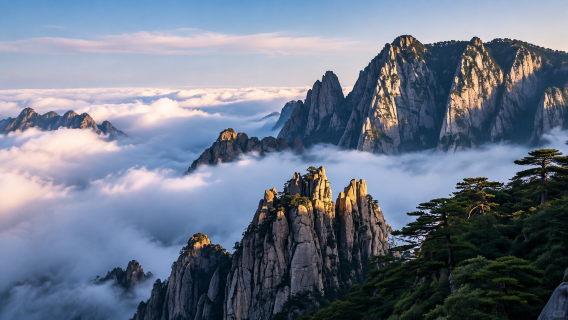
Mount Huangshan Scenic Area is located in Tangkou Town, Huangshan District, Huangshan City. Since ancient times, Mount Huangshan has been one of China's most renowned mountains. Its peculiar pines, strange rocks, sea of clouds, and hot springs are known as the "Four Wonders" of Mount Huangshan. In addition to these, rime, snowscapes, and sunrises are also views that visitors will not miss. There is an ancient saying: "Having visited the Five Great Mountains, one need not look at any other mountains; having visited Mount Huangshan, one need not look at the Five Great Mountains." The attraction is divided into the south gate, west gate, and north gate. The vast majority of visitors enter and exit through the south gate, which has two entrances and exits—front mountain and back mountain—both close to Tangkou Town at the foot of the mountain. The town has also become a transfer hub for visiting Huangshan, and many visitors arrive here in advance to stay overnight. From Tangkou Town to the attraction entrance, you need to take the Huangshan New National Line shuttle bus, which stops at the front mountain gate (Ciguang Pavilion), the back mountain gate (Yungu Temple), and the Huangshan-Hot Spring attraction. Visiting the attraction mainly involves two routes up the mountain, the front mountain and the back mountain, both leading to one of the main peaks, Bright Summit. On the other side of Bright Summit, there is also a loop route — the West Sea Grand Canyon. Front mountain The front mountain refers to the hiking route starting from Ciguang Pavilion to Yuping Tower at the summit (accessible directly by the Yuping Cable Car), as well as the Mount Huangshan Scenic Area - Lotus Peak and Tiandu Peak areas at the summit. The scenery of the front mountain is grand and majestic, making it very suitable for enjoying panoramic views from the cable car. Both the highest peak, Mount Huangshan Scenic Area - Lotus Peak, and the other main peak, Tiandu Peak, are located here (the two peaks open alternately). There are also classic attractions such as the Guest-Greeting Pine, Jiulong Peak - Carp Back, Hundred-Step Ladder, One-Line Sky, and Tianhai. Back mountain The back mountain refers to the hiking route from Yungu Temple to Bai'e Ridge (accessible directly by the Mount Huangshan Yungu Cableway), as well as the mountaintop areas behind Bai'e Ridge such as Shixin Peak, Mount Huangshan Scenic Area - Shizi Peak, and West Sea Grand Canyon - Paiyun Pavilion. The scenery of the back mountain consists mostly of exquisite mountain views, suitable for enjoying on foot along the way. Flying Stone and Monkey Watching the Sea are both located here. West sea grand canyon West sea grand canyon officially opened in 2000. The canyon is deep and the scenery is very magnificent, and it is known as the true gathering place of Huangshan's essential scenery. West sea grand canyon can be entered from West Sea Grand Canyon - Paiyun Pavilion in the summit area of the back mountain, and after looping around inside the canyon, you return to the main peak area of Tianhai. It takes about 2 hours to walk down from West Sea Grand Canyon - Paiyun Pavilion to the bottom of the canyon, and then you can take a cable car to Tianhai. Route recommendations The standard way to visit Huangshan is a two-day tour, with routes divided into ascending via the front mountain and descending via the back mountain (front mountain - West Sea Grand Canyon - back mountain) or ascending via the back mountain and descending via the front mountain (back mountain - West Sea Grand Canyon - front mountain). Ascending via the front mountain and descending via the back mountain is suitable for taking the cable car up and walking down, which is both relaxing and allows you to enjoy the exquisite scenery of the latter half. However, since the essential route of the West Sea Grand Canyon runs from West Sea Grand Canyon - Paiyun Pavilion to Tianhai, you will have to backtrack along a section of the trail. It is possible to visit Huangshan in just one day, but the itinerary will be tight. It is recommended to ascend via the rear mountain and descend via the front mountain, taking the cable car both ways, and to either skip climbing the main peaks of the front mountain (Mount Huangshan Scenic Area - Lotus Peak / Tiandu Peak) or skip the West Sea Grand Canyon. Stay selection There are several accommodation options at the summit, mainly concentrated in areas such as Guangming Peak Tianhai, West Sea Grand Canyon-Paiyun Pavilion, Bai'e Ridge, and North Sea. Guangming Peak Tianhai is a great spot for watching the sunrise, and it is also suitable for storing luggage while exploring the West Sea Grand Canyon. Bai'e Ridge is the upper station of the Huangshan Yungu Cableway on the rear mountain; if you typically enter the attraction from the rear mountain in the afternoon, staying here is quite convenient.

China · Huangshan City
Wangxian Valley
2026 Global 100 - Night Attractions

Wangxian Valley

9
4.5/5
26.8k reviews

Wangxian Valley is located at the northern foot of Lingshan Mountain, hidden among mountain streams and gorges. It was formerly an abandoned granite quarry and, after years of ecological restoration, has been built into the valley town it is today. The attraction is structured around the Jiuniu Stream Gorge, where streams flow through the valley and waterfalls cascade in layers; the Sandie Waterfall and Sankou Pot are among its most recognizable natural views. In summer, visitors can also experience gorge rafting that winds through the ancient town. The cliffside building complex on Baihe Cliff is the attraction's signature view. On the nearly 100-meter-high cliff face, cantilevered guest rooms, plank walkways, and viewing platforms climb upward in a zigzag pattern, looking up from the valley floor like pavilions in the sky. After nightfall, the cliff lights come on one after another, and the entire valley resembles a painted scroll of lights; standing on Lanyue Bridge and gazing at the full panorama of Baihe Cliff is a classic photo spot here. The Yanpu Old Street in the valley restores the appearance of traditional dwellings in northeastern Jiangxi, with rammed earth walls, bluestone slab paths, and horse-head walls interwoven throughout. Workshop Street is lined with traditional handicraft workshops for brown sugar, brewing, papermaking, cloth dyeing, and more, where you can watch ancient production methods on site; Mingchan Alley gathers intangible cultural heritage crafts such as bamboo weaving and woodwork. Bawei Street offers a dazzling array of Jiangxi-style snacks such as dengzhan guo and taro dumplings. When visiting, it is recommended to enter the attraction in the afternoon so that you can clearly see the gorge landforms in daylight without missing the spectacular lighting after nightfall. The entire route requires walking and climbing stairs, so comfortable, slip-resistant shoes are advisable.

China · Shangrao
Wuyuan Huangling Scenic Area
2026 Global 50 - Spring Outings

Wuyuan Huangling Scenic Area

9
4.6/5
24.2k reviews

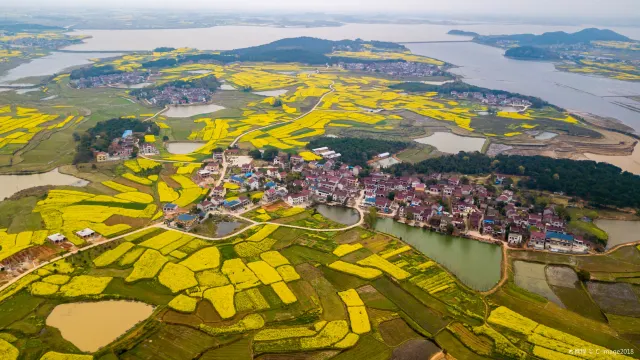
Wuyuan Huangling Scenic Area sits among the Shi'er Mountains of Wuyuan, with the ancient village of Huangling at its core—a Huizhou ancient village nearly six hundred years old. The village is built along steep mountain slopes, where "there is no flat ground three chi wide"; residences are arranged in a fan-shaped, terraced layout around the water outlet, with white walls and dark tiles layered one upon another on the cliffside, earning it the name "Tiyun Renjia" (Households in the Terraced Clouds). Surrounded by ancient trees and terraced fields, it is itself a three-dimensional painting of a mountain village. Huangling is the birthplace of the "shaiqiu" (autumn sun-drying) culture. Constrained by the terrain, villagers have since ancient times set up drying racks on rooftops to dry crops; every fall, red chili peppers, yellow chrysanthemums, pumpkins, and more fill the rooftop drying trays, with colors shifting as the seasons change. In spring, rapeseed flowers bloom in layers across ten thousand mu of terraced fields, dotted with pink peach blossoms and snow-white pear blossoms; the lower-elevation first-phase flower sea and the higher-elevation second-phase Gaoling flower sea bloom in succession, with the flowering period lasting into April. Riding the cable car up the mountain, visitors can overlook the entire golden flower field, and the view is especially open when passing the Leixin Bridge glass walkway, with layered terraced fields and distant mountains below. Tianjie in the village is the main sightseeing axis paved with bluestone slabs, linking classic Huizhou-style ancient buildings; shops line the street with workshops behind storefronts, and along the way visitors can taste authentic Wuyuan snacks such as steamed cakes, Qingming guo, and huizhi guo, and also take part in making folk snacks and handicrafts. Visiting in fall, besides the spectacular shaiqiu scene, the village's red maples are also a highlight, with maple forests fully tinted and echoing the harvest colors drying on the rooftops. Throughout the year, Huangling has something to offer in every season, and its core charm always lies in the unique Huizhou everyday vitality of this mountain village.

China · Wuyuan
Tengwang Pavilion Tourist Area
2026 Global 100 - Night Attractions

Tengwang Pavilion Tourist Area

8.7
4.5/5
30.1k reviews

Tengwang Pavilion Tourist Area is located on the east bank of the Gan River in Nanchang, with the riverside Tengwang Pavilion as its centerpiece. Originally built in the fourth year of the Yonghui era of the Tang Dynasty by Li Yuanying, Prince of Teng and son of Emperor Gaozu of Tang, it gained eternal fame through Wang Bo's "Preface to Tengwang Pavilion." Alongside the Yellow Crane Tower and Yueyang Tower, it is hailed as one of the "Three Great Towers of Jiangnan." Historically destroyed and rebuilt nearly thirty times, the current structure is a Song-style replica completed in 1989, designed based on Liang Sicheng's reconstruction sketches. With its green tiles and layered eaves, it remains a landmark of Nanchang to this day. The main pavilion follows a "three visible, seven concealed" layout: appearing as a three-story structure with encircling corridors from the outside, while actually containing seven interior floors—nine levels including the two-tiered base symbolizing ancient city walls. Turquoise-roofed galleries extend north and south from the base's flanks, connecting at their ends to auxiliary pavilions named "River-taming" and "Greenery-embracing," forming a mountain-shaped silhouette with the main tower. Below, an artificial lake and the nine-bend wind-and-rain bridge add classical garden charm to the majestic architecture. Each floor of the pavilion offers something remarkable. The white marble relief "A timely wind delivers Tengwang Pavilion" in the first-floor preface hall depicts the legend of Wang Bo riding the wind to compose his famous preface. The second-floor mezzanine features the long scroll painting "Gallery of eminent figures," gathering Jiangxi's historical luminaries like Tao Yuanming, Ouyang Xiu, Wang Anshi, and Tang Xianzu in one artwork. The third-floor mural "Linchuan dream" recreates Tang Xianzu's staging of "The peony pavilion" here. The fourth-floor "Land of wonders" painting compresses Jiangxi's iconic landscapes—Mount Lu, Sanqing Mountain, Dragon-Tiger Mountain, and Poyang Lake—into a single masterpiece. The fifth floor is the highlight for panoramic views: its central hall displays a bronze tablet inscribed with Su Dongpo's calligraphic version of "Preface to Tengwang Pavilion," while the east hall exhibits a scale model of the pavilion. Strolling the veranda offers sweeping views of the Gan River and modern skyline across the water. The top floor bears the plaque "Ninth heaven," with its west hall housing an antique-style theater flanked by replica ancient instruments like chime bells and stone chimes. Above, spiral-arranged bracket sets adorn the caisson ceiling, and between the double eaves hangs Su Dongpo's gilded "Tengwang Pavilion" plaque. After descending from the main pavilion, take time to explore the garden area: the square in front of the pavilion, the grand Song-style archway, the antique street lined with calligraphy and antique shops, and the small Suzhou-style garden Fuchang Garden with its lake reflections and bridge views—perfect for slowing your pace. To experience the poetic scene of "a solitary wild duck flying with the sunset glow, while the autumn water blends with the vast sky," an evening ascent to the pavilion is ideal. The fifth-floor corridor offers an expansive view, making it a prime spot to admire the sunset over the Gan River.

China · Nanchang
Hongcun Village
No. 1 of Night Attractions in Anhui

Hongcun Village

8.6
4.5/5
50.2k reviews

Hongcun Village is a classic Huizhou-style ancient village, renowned as a "village in a Chinese painting." A visit here offers two unmissable experiences: first, the water landscapes shaped by its irrigation system, with Nanhu Lake and Yuezhao Pond as the crown jewels; second, the exquisite "three carvings" of Huizhou architecture—brick, stone, and wood carvings—intricate enough to rival paper-cut art. Here, cultural heritage and natural beauty blend seamlessly into a harmonious whole. The ancient village was first built during the Shaoxing era of the Southern Song dynasty and gradually developed from the Yongle era of the Ming dynasty into a unique "ox-shaped village" layout. The two ancient trees at the village entrance form the "ox horns," the densely packed Ming and Qing Huizhou-style buildings in the village form the "ox body," the four bridges over the stream west of the village form the "ox feet," Yuezhao Pond is the "ox stomach," Nanhu Lake is the "ox belly," and the water channels flowing past every household are the "ox intestines." Sightseeing can begin at Nanhu Lake in the south of the village. Nanhu Lake is a bow-shaped artificial lake dug during the Wanli era of the Ming dynasty, with a broad expanse of water; the Huabridge crossing the lake is where Li Mubai led his horse in the film Crouching Tiger, Hidden Dragon. On the north bank of the lake, Nanhu Academy was formed by merging six original private schools by the lakeside, and its layout is exceptionally spacious. Heading north along the lake's north bank, visitors can also stop by ancient residences such as Jingde Hall and Wang Daxie's Former Residence (Zhenqi Hall). Continuing north leads to Yuezhao Pond at the village center, a half-moon-shaped pond dug during the Yongle era of the Ming dynasty, surrounded by Huizhou-style buildings reflected in its waters—one of the best spots for photography in the ancient village. However, visitors crowd around Yuezhao Pond year-round, so patience is needed to capture an empty shot. At the center of Yuezhao Pond's north bank stands Lexu Hall, also known as the Wang Clan Ancestral Hall, a surviving Ming dynasty building in the village with a simpler style than Qing dynasty architecture. On the western end of Yuezhao Pond's north side is Jingxiu Hall, built during the Qing dynasty. Further north, visitors can tour Chengzhi Hall, the residence of late Qing salt merchant Wang Dinggui. The residence is fully equipped with a study, kitchen, stable, bodyguard room, and servants' quarters, and even includes a "Paishan Pavilion" for playing mahjong; the house has its own pond and well, so water is available without leaving the premises. The exquisite Huizhou three carvings are worth examining closely—some wood carvings are even coated with gold powder, lavish and magnificent. Other ancient buildings in the village worth seeing include Deyi Hall, Shuren Hall, and Taoyuan Residence.

China · Yi County
Niushou Mountain Cultural Tourism Zone
No. 2 of Best Things to Do in Jiangsu

Niushou Mountain Cultural Tourism Zone

8.6
4.7/5
35.5k reviews

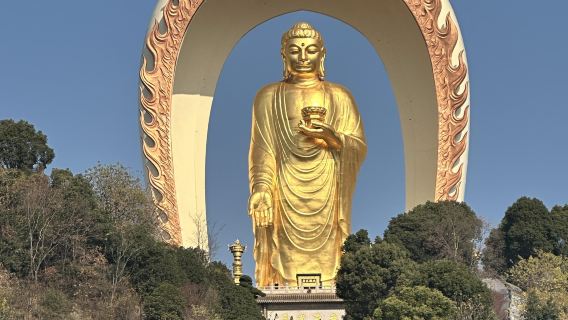
Niushou Mountain Cultural Tourism Zone, also known asNiushou Mountain Cultural Tourism Zone, it is named for its two peaks, one in the east and one in the west, which resemble the two horns of an ox's head. Niushou Mountain Cultural Tourism Zone boasts beautiful scenery and has long enjoyed the reputation of "Spring Niushou." In ancient times, it featured such Jinling scenic spots as Niushou Smoke and Mist and Zutang Temple's Resounding Tin Staff, and it also preserves many historical sites, such as the Jiangning section of the ancient fortifications where Yue Fei fought against the Jin, and the Zheng He Cultural Park. Usnisa Palace The Usnisa Palace is themed around the enshrinement of the Buddha's parietal bone relic and is divided into two parts: the large dome and the small dome, symbolizing outer offerings and inner offerings. The Usnisa Palace utilizes the original mine pit to build an underground palace, with six levels below ground and three levels above ground, appearing very solemn and magnificent. The parietal bone relic of Shakyamuni Buddha was enshrined at the Niushou Mountain Cultural Tourism Zone in October 2015. Visitors may go to the Usnisa Palace to pay homage on special Buddhist festivals. For specific times to view the relic, please call the attraction for inquiries. A thousand years of history Niushou Mountain Cultural Tourism Zone is a Buddhist sacred site. The Buddha Cave Temple, built by Sikong Xu Du in the second year of the Tianjian era of the Liang Dynasty (503 AD), was the first temple on Niushou Mountain, and Li Yu, the last ruler of the Southern Tang, renamed it Hongjue Temple. During the Tang Dynasty, Chan Master Farong, hailed as the "Bodhidharma of East China," founded the Niutou Chan School on Niushou Mountain, known in ancient times as "Jiangbiao Niutou." The founding of the Niutou Chan School served as an important bridge in the true transformation of Indian Chan into Chinese Chan! Niushou Mountain Cultural Tourism Zone - Taohua Stream Niushou Mountain Cultural Tourism Zone - Taohua Stream is located at the east entrance of Niushou Mountain Cultural Tourism Zone, with a total area of 14.87 hectares, approximately 220 mu. The peach blossoms selected are 26 varieties suitable for growing in the Nanjing area, making it a new view created by the Niushou Mountain attraction. A small stream winds down from Yinlong Lake, its water babbling, with peach trees planted on both sides. In spring, the buds gradually bloom, and a sea of flowers is intoxicating.

China · Nanjing
Taoyangli Historical and Cultural District
No. 1 of Family-friendly Attractions in Jiangxi

Taoyangli Historical and Cultural District

8.5
4.6/5
12k reviews

Taoyangli Historical and Cultural District is located in the heart of Jingdezhen's old town, a historic neighborhood that grew around the ruins of the imperial kiln from the Ming and Qing dynasties. The old saying "Taoyang thirteen li, with tens of thousands of households" refers to this area. The imperial porcelain used by the royal families of the Ming and Qing dynasties was exclusively produced by the imperial kiln here, while rejected tribute items were shattered and buried on-site. The layers of underground porcelain fragments share the same origin as the collections in the Palace Museum, making this place often referred to as the key to understanding the porcelain capital. The core attractions of the district are concentrated around the ruins of the Taoyangli Historical and Cultural District and the imperial kiln museum. The ruins of the Taoyangli Historical and Cultural District have now been transformed into an archaeological site park, preserving relics such as kilns and workshops. The Longzhu pavilion, perched atop Zhushan hill, has been the iconic structure of the imperial kiln since the Ming dynasty and later became the symbol of Jingdezhen. The Zhushan hill beneath it was formed by layers of discarded porcelain fragments from imperial kilns throughout history. Nearby, the imperial kiln museum draws inspiration from traditional egg-shaped wood-fired kilns, featuring multiple brick arches arranged in a staggered layout. Many exhibits in the museum are restored from porcelain fragments unearthed at the site, including the Ming dynasty blue-and-white dragon jar—a signature exhibit pieced together from tons of discarded dragon jar fragments. Adjacent to the museum, the Xu family kiln, an old wood-fired kiln, still operates periodic firings. During kiln openings, the gate is wide open, allowing visitors to watch artisans retrieve freshly fired porcelain from saggars. The district also features winding alleyways lined with kiln-brick residences, guild halls, porcelain shops, and remnants of modern ceramic industry. The restored South goods street and Red shop street now host old teahouses, taverns, music bars, and craft workshops where you can observe traditional processes like clay throwing and porcelain painting, with some workshops offering hands-on experiences. It's recommended to set aside half a day for the visit—start with the kiln site and museum, then meander through the streets around Zhongshan north road and Longgang lane, where many historic courtyard houses hidden in deep alleys await patient discovery.

China · Jingdezhen

Experiences you can't miss in Wangjiang

Featured Culture & history in Wangjiang

View all Culture & history
Unique to Jingdezhen! Group Day Tour to Yaoli Ancient Town+Hanxi Village+Porcelain Palace
󱌍
Duration: 9.2 hrs
English
Free cancellation
Instant confirmation
FromDKK 210.14
China International Travel Service | Yaoli Ancient Town + Porcelain Palace + Hanxi Village 1-day tour [private car]
󱌍
Duration: 8 hrs
English
Free cancellation
Instant confirmation
Book now for tomorrow
FromDKK 1,013.61
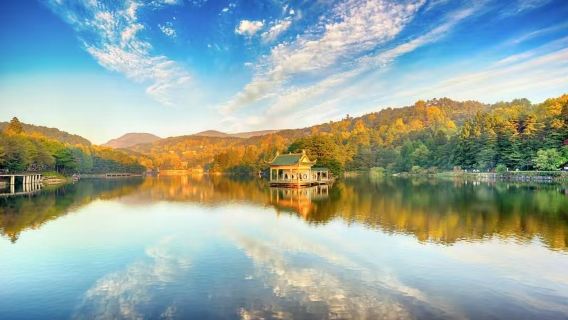
Nanchang to Lushan National Park highlights 1-day private tour (English guide and admission ticket included)
󱌍
Duration: 10.5 hrs
English
Free cancellation
Instant confirmation
Book now for tomorrow
9% off
Limited-time sale
FromDKK 585.93DKK 651.03
Wangjiang Today's weatherFoggy 13-19℃
Wangjiang weather for the next 2 days11/17: 10-16℃, 11/18: 6-14℃

Free things to do in Wangjiang

What travellers say about Wangjiang
user-avatar
sharex15 November 2026
5.0
Suffice to say, it's my favourite mountain to date. Even before I landed in my home country, I have been raving about the breathtaking sights and amazing experiences to friends. It is also easy to get around on one's own due to the signages along the safe walking trail. You can plan the level of hike difficulty according to your needs. Tickets to the scenic area (advance booking recommended) and for the shuttle bus are easy to procure on-site.

Mount Huangshan Scenic Area

user-avatar
F.May.Tau13 November 2026
5.0
This stay exceeded my expectations. The location is excellent and convenient; the room was thoroughly cleaned and odor-free; the bathroom had a separate shower and toilet, stable water pressure and temperature, and good soundproofing, making it very quiet at night. The staff were friendly and responsive. The breakfast had a good variety of options and was reasonably tasty. Overall, the facilities and service were excellent, and I recommend staying here.

Wangxian Valley

user-avatar
এ᭄艾文ꦿృ༊15 November 2026
4.0
The scenery is quite nice, but it's a bit crowded, and the cable car line down the mountain is very long. It's worth a visit, but the experience would be much better outside of holidays. Staying overnight would definitely be even better.

Wuyuan Huangling Scenic Area

user-avatar
M50***4615 November 2026
5.0
Climbing the Yellow Crane Tower, one contemplates the past while gazing at the Yangtze River. The poem moves from ancient legends to the present river scene, and finally to homesickness, creating a vast and boundless atmosphere. Written with natural grandeur, it truly deserves to be called a timeless masterpiece.

Yellow Crane Tower
user-avatar
Roylk15 November 2026
5.0
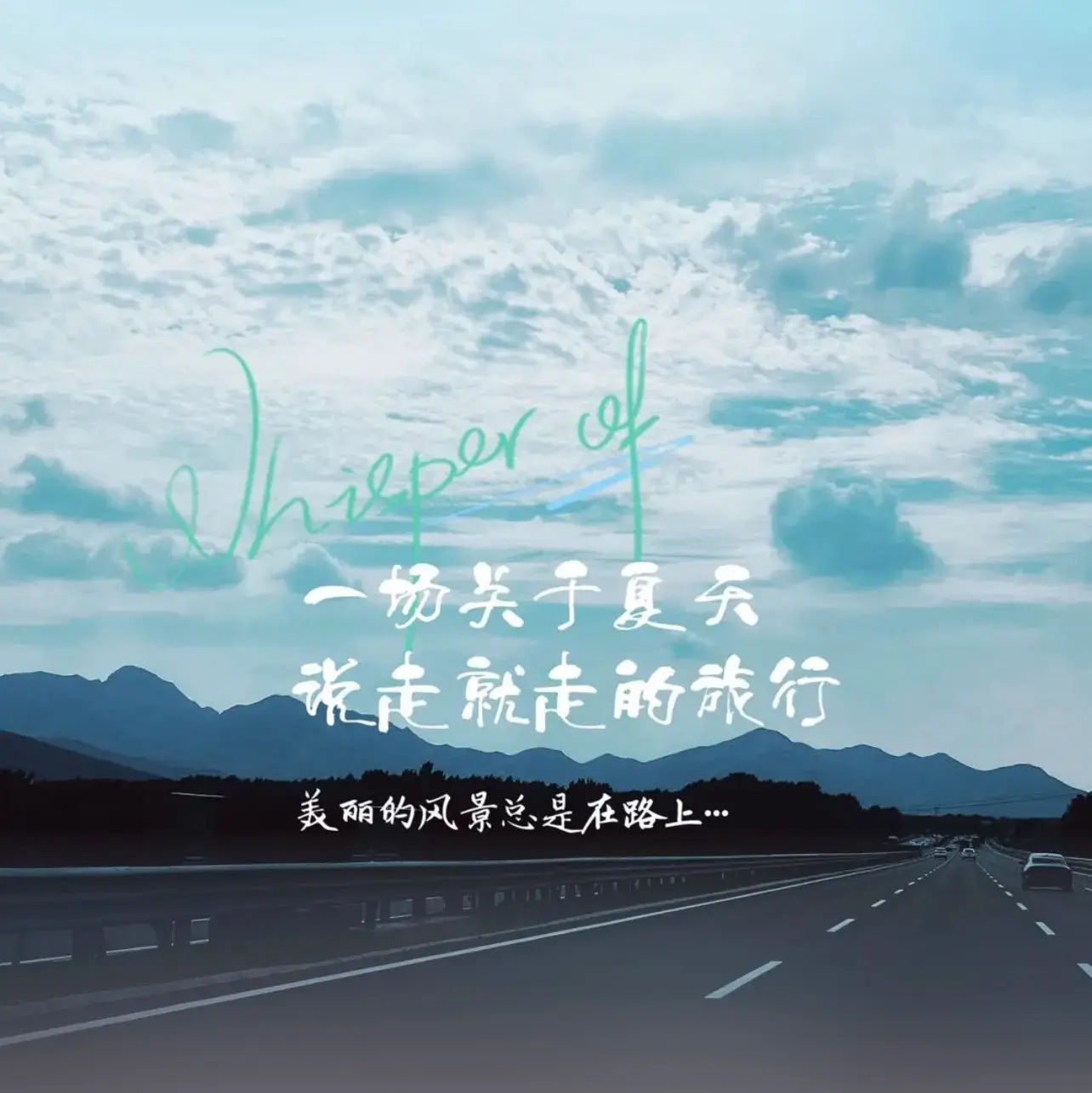
Seeking poetry, head to Xiufeng Peak to witness the Milky Way cascading over green mountains. With its elegant peaks, wondrous waterfalls, and serene ancient carvings, this is the most captivating sight on the southern slopes of Mount Lu. Peaks vie for prominence, waterfalls cascade, and springs flow. Xiufeng Peak holds the romantic promise of "a waterfall plunging three thousand feet," while the Qingyu Gorge cliff carvings stand quietly. The landscape blends seamlessly with poetry, creating a serene and tranquil scene, truly deserving of its reputation… Come again during the high-water season.

Lushan National Park

user-avatar
Heather13 November 2026
5.0
I initially wandered around the perimeter of the Tengwang Pavilion, but after buying a ticket and going inside, the most breathtaking moment was seeing the entire building directly in front of me. I marveled at the ingenuity of generations of craftsmen, which has created the evidence that the Tengwang Pavilion remains in the world today.

Tengwang Pavilion Tourist Area

user-avatar
M25***0915 November 2026
5.0
The beauty of Hongcun is truly indescribable! South Lake and Moon Pond reflect the white walls and black tiles, while wood carvings, brick carvings, and stone carvings are hidden among the ancient houses. In the afternoon, we were greeted by the golden sunrise on the mountains. We even visited the King's Mud Craftsmen's Workshop, where clay was sculpted with the artist's skill. Every scene and object was a delightful experience. 🍃

Hongcun Village

user-avatar
M60***2514 November 2026
5.0
Who wouldn't want to visit Sanqing Mountain! I was lucky enough to arrive on a cloudy day, and the picturesque scenery unfolded like a landscape painting; I'm sure you'll find it captivating and peaceful. Also, the view from Gangshou to Jinsha is truly perfect! I hope to see snow or a sea of ​​clouds next time I come! Last but not least, I'll always remember the dog-friendly areas!

Sanqingshan Mount Scenic Area

user-avatar
Anonymous user15 November 2026
5.0
The Buddha Palace is the absolute highlight, with its magnificent underground palace, the Thousand Buddha Hall, and the stupa considered a visual feast. Many people mention that "every snapshot is a masterpiece," with the pool's reflection, the European-style corridors, and the underground palace passageways being popular photo spots. As for natural scenery, the saying "Spring at Niushou" is frequently mentioned, highlighting the beautiful scenery when the peach blossoms are in full bloom.

Niushou Mountain Cultural Tourism Zone

user-avatar
凡非15 November 2026
4.0
Taoyangli Imperial Kiln Scenic Area is a core cultural landmark of Jingdezhen. The Imperial Kiln Museum is architecturally distinctive, and the ruins, ancient alleys, and Longzhu Pavilion are interconnected, offering a direct understanding of the history of imperial porcelain making. It's a great spot for taking photos, and the atmosphere is even better at night. The only drawback is the dense concentration of shops in the area, with many similar cultural and creative stores. If you want a deeper understanding of the history, it's recommended to do some research beforehand or take a guided tour. Overall, it's a great place to visit in Jingdezhen, combining historical exploration and photography, and it's conveniently located for dining.

Taoyangli Historical and Cultural District

Popular cities near Wangjiang

Frequently asked questions

How can I contact Trip.com customer support?

Get help anytime, anywhere within 30 secondsContact customer support

Change and cancellation policies vary by attractions and tours. Please check the product details page for more information.

Ticket prices may vary between weekdays and weekends, as well as during peak and off-peak seasons. When booking with Trip.com, you can also use Trip Coins to get extra savings. For more tips on booking discounted tickets, please visit Trip.com for the latest information.