Yanshan

Things to do in Yanshan

Search attractions or local attractions & tours
Search

Explore top experiences

Top 10 attractions in Yanshan

View all Attractions
Ge's Fairy Village
No. 3 of Night Attractions in Jiangxi

Ge's Fairy Village

8.5
4.8/5
12.5k reviews
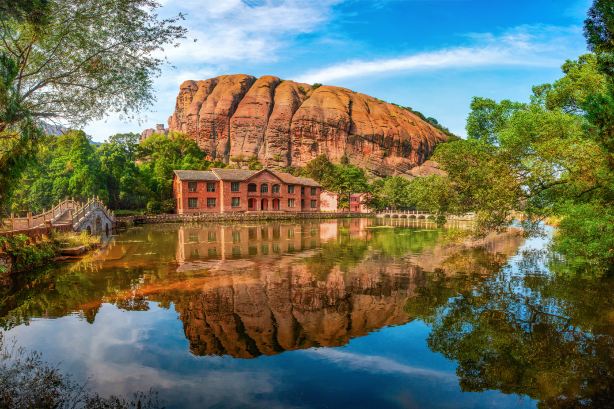
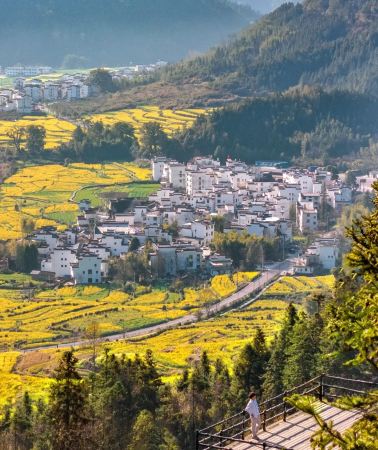
Ge's fairy village is located in Yanshan County, Shangrao City, Jiangxi Province. It was invested and constructed by Xinbang Group in June 2016, with a total investment exceeding 1.569 billion yuan. Backed by the thousand-year-old Taoist mountain Ge's Fairy Mountain, it aims to become "a new landmark of Jiangxi tourism." The project is divided into two phases, with a planned construction area of approx. 300,000 square meters. The core attraction area covers 650 mu, including three main sections: the distribution center area, Ge's Fairy Village resort, and the Tianjing Terrace attraction. Future development will continue to expand outward along the valley. Ge's fairy village is developed around the Ge's fairy mountain attraction, inspired by the cultivation stories of immortal Ge Xuan on the mountain. It integrates the cultural essence of Taoism with classical landscape painting aesthetics, recreating the mountain village scene where Ge Xuan lived and practiced during the late Han dynasty. Using water, bamboo, and village as creative elements, it aims to create a natural sanctuary and fairy village combining eco-tourism, leisure vacations, business conferences, and Taoist cultural experiences. Introduction to attractions in Ge's fairy village Yuánfāng - Heaven and earth hidden in the mountains and forests The name "Elements" is derived from the Taoist concept of "the sky is round and the earth is square." The bronze compass within Elements, meticulously crafted by renowned artists, embodies the Taoist understanding and profound mastery of the universe's principles. The overall design follows the concept of a "vanishing building," featuring a facade of glass mirrors and bamboo. From a distance, the glass mirrors reflect the natural scenery of the mountains, making the structure appear hidden within the forest. Without careful observation, one might easily overlook the building and the hidden paradise behind it. Zhongmiao pavilion - profound and mysterious, both real and illusory Zhongmiao pavilion is the highest point of the attraction, featuring an ancient architectural structure. The main building stands 26 m tall with a three-story, four-pillar pure wood design. Pavilions are typically used for storing books or enshrining deities, which adds more cultural significance to this structure. In the evening, the solemn and magnificent Zhongmiao Pavilion show takes place here, where the combination of modern technological lighting and ancient architecture creates a dreamlike and visually stunning experience. Culture has a long history The ancestral hall square mainly consists of the jiao altar at the center and the Ge Weng ancestral hall. The jiao altar is a place for capping, wedding, and sacrificial ceremonies. It served as the venue for ancient capping rites, wedding ceremonies, and rituals praying to deities. Traditional folk cultural performances are staged in the central area of the ancestral hall square. Dust-washing gate·Emerald pool - Wash away the mundane Under the moonlight, seekers perform the traditional Taoist greeting, embracing the path of Taoism. The "gate of purification," crafted with mist curtain installations, presents a mesmerizing interplay of light and shadow amidst ethereal fog, cleansing worldly dust from those who journey from afar. Water curtain film - magnificent and breathtaking The water stage at Zhongmiao Pavilion presents a grand live-action water screen movie every evening, where the fusion of water screens and light creates a dazzling visual feast. Performers dance to the rhythm of alternately intense and soothing music, bringing to life a series of dramatic legendary tales from a flourishing era. China town artifact culture museum - A long history of town artifact culture The China town artifact culture museum is located at the entrance of Lingbao Fairy Street, featuring horse-head walls that showcase the distinctive Huizhou architectural style. Inside, visitors can explore China's ancient town artifact culture through exhibition areas, retail zones, and workshop sections, gaining a deeper understanding of this cultural heritage while admiring historical artifacts.Yanshan · 25.4km from downtown
Jiangxi Lingshan
No. 7 of Family-friendly Attractions in Jiangxi

Jiangxi Lingshan

7.5
4.6/5
2.4k reviews
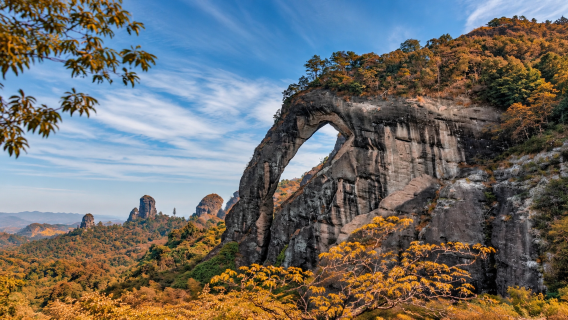
Shangrao Lingshan Mountain is a national scenic area and a AAAA-rated tourist attraction. Known as the "Sleeping Beauty" for its undulating mountain range resembling a reclining Jiangnan maiden, it's a mountainous resort integrating vacation wellness, sports leisure, sightseeing experiences, and religious pilgrimage. The area features rare circular granite peak forest formations, distinctive high-altitude spiritual stone terraces, unique rock formations, and Jiangnan's tallest granite waterfall. Since ancient times, Lingshan has been a sacred site for Taoism, Buddhism, and Confucianism, ranking as China's 33rd Taoist blessed land. The scenic zone boasts distinctive peaks, pristine waters, and secluded valleys, with 36 waterfalls, 72 peaks, 108 caves, and over 400 scenic views. Historically housing 99 temples and palaces, the 1800-year-old Shiren Hall and Shicheng Temple remain particularly well-preserved. Celebrated as "China's premier dragon ridge and blissful spiritual sanctuary," the mountain offers harmonious lake-mountain vistas. Mount Lingshan boasts a profound cultural heritage, with over 300 literary masterpieces left by distinguished Shangrao natives and historical figures who lived or sought refuge here, including Wang Anshi, Wang Zhenbai, Han Yuanji, Xin Qiji, Xu Yuanjie, Xia Yan, and Jiang Shiquan. The Southern Song Dynasty poet Xin Qiji praised Mount Lingshan as "a majestic landscape where peaks gallop westward like ten thousand horses circling back, while other mountains yearn eastward," describing it as "grand, profound, elegant, and vigorous—like reading the works of Grand Historian Sima Qian." Ming Dynasty scholar Xia Yan extolled that "the scenic beauty of Mount Lingshan surpasses even the famed Jiuhua and Wulao Mountains," while contemporary poet Feng Xuefeng hailed it as "a magical, indomitable, and enchanting mountain."Shangrao · 28.2km from Yanshan
EHu Academy

EHu Academy

3.8
4.7/5
87 reviews
An academy in the last period of Chinese history. Located in Qianshan County, Guangxin Prefecture, Jiangxi Province. Since the Eastern Jin Dynasty, many scholars have gathered here during the Tang, Song, and Ming dynasties. It was once a cultural center. In particular, the meeting between Zhu Xi and Lu Jiuyuan at Ehu Lake became a far-reaching event in the history of Chinese Confucianism. According to the "Guangxin Prefecture Chronicle", "The Four Sages' Poems are on the left of Dayi Temple." This is actually the left of the affiliated temple of Dayi Temple, that is, the left of Renshou Temple, which is the "Four Sages' Shrine". The shrine was built by Yang Ruli, the governor of Xinzhou at that time, and this was the beginning of Ehu Academy. After that, it was repeatedly repaired. During the Chenhao Rebellion in the Ming Dynasty, the school buildings of Ehu Academy were all destroyed by war. In the 22nd year of Emperor Kangxi's reign in the Qing Dynasty (1683), the local official Pan Shirui repaired it. In the 54th year of Emperor Kangxi's reign (1715), Ling Yin Shi De carried out extensive construction. At that time, Li Guangdi wrote "Records of the Reconstruction of Ehu Academy" saying: "The construction of the academy is actually a national school, which is the inside and outside of each other. Li Bo is a noble man. Zhu Zi is still tired of it. Now the ruins of the sages are renovated. There is an old place of Neo-Confucianism in Jiangnan, and there must be people who travel here and rise up to inherit the sages of the past." Ehu Academy was rebuilt without official support. The former glory has never reappeared, so it has become a historical relic. Ehu Academy is on the left side of Ehu Temple, that is, Renshou Temple, and Ehu Tower is on the left side of Ehu Academy. The gate of Ehu Academy is not in the middle, but on the left, so it faces Ehu Tower. The academy is surrounded by mountains and streams, and the environment is elegant. Ehu Academy is much larger than Ehu Temple, and the scale of the building is quite similar to Confucius Temple. Entering from the main gate, passing two rows of peach trees, there is a large round gate. Inside the round gate is a large courtyard. Opposite to the large round gate is another large round gate with three rows of palaces on top. From here, you can climb the stone steps and enter another courtyard with a half-moon pond inside and stone railings around the pond. After crossing the ancient bridge, there is the first row of palaces. After passing another courtyard, there is the second row of palaces. The row of palaces behind it is the Four Sages Temple. There is also a courtyard in front of the temple. Behind the temple is a fairly high platform with a small pond below it. Behind it is a high wall facing the high wall at the north end of the two large round gates. These three rows of palaces are the main house. On both sides of the main house, there are rows of houses in a staggered manner. In the Four Sages Ci behind the Ehu Academy, there are four tablets for Zhu, Lu, and the two Lu, and there is a plaque with the words "sudden and gradual return to the same destination". This is opposite to the imperial plaque "the ancestor of Taoism" hanging in the front row of buildings of the academy. This shows the grand occasion of the meeting between Zhu and Lu at Ehu in the Song Dynasty. During the Anti-Japanese War, Ehu Academy became the garrison camp of the Southeast Training Corps. This academy has been destroyed by war for more than 800 years from the Southern Song Dynasty to the Qing Dynasty, and has been rebuilt several times. Among them, the renovation and expansion project in the 56th year of Emperor Kangxi of the Qing Dynasty (1717 AD) was particularly large-scale: the mountain gate, memorial archway, lobby, floating pool, arch bridge, stele pavilion, and imperial library were newly built; dozens of side rooms were built on both sides as a place for scholars to study. Emperor Kangxi also wrote an inscription for the Imperial Library, with the door plaque titled "穷理居敬" and the couplet "章岩月亮中天镜,石井波分太极泉". To this day, the memorial archway, Panchi, rear hall, side rooms and other buildings are still well preserved; in the side rooms on both sides of the Panchi, there are still 13 ancient steles from the Ming and Qing dynasties, which are precious materials for studying the history of this academy.Yanshan · 12.7km from downtown
Wangxian Valley
2026 Global 100 - Night Attractions

Wangxian Valley

9
4.5/5
26.6k reviews
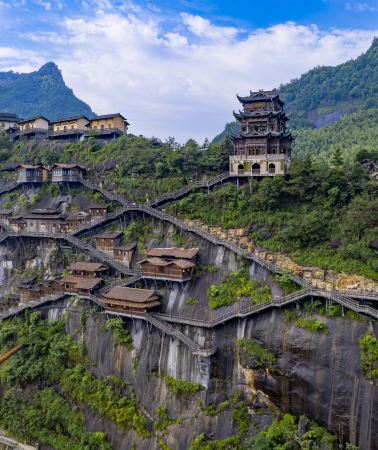
Wangxian Valley is located at the northern foot of Lingshan Mountain, hidden among mountain streams and gorges. It was formerly an abandoned granite quarry and, after years of ecological restoration, has been built into the valley town it is today. The attraction is structured around the Jiuniu Stream Gorge, where streams flow through the valley and waterfalls cascade in layers; the Sandie Waterfall and Sankou Pot are among its most recognizable natural views. In summer, visitors can also experience gorge rafting that winds through the ancient town. The cliffside building complex on Baihe Cliff is the attraction's signature view. On the nearly 100-meter-high cliff face, cantilevered guest rooms, plank walkways, and viewing platforms climb upward in a zigzag pattern, looking up from the valley floor like pavilions in the sky. After nightfall, the cliff lights come on one after another, and the entire valley resembles a painted scroll of lights; standing on Lanyue Bridge and gazing at the full panorama of Baihe Cliff is a classic photo spot here. The Yanpu Old Street in the valley restores the appearance of traditional dwellings in northeastern Jiangxi, with rammed earth walls, bluestone slab paths, and horse-head walls interwoven throughout. Workshop Street is lined with traditional handicraft workshops for brown sugar, brewing, papermaking, cloth dyeing, and more, where you can watch ancient production methods on site; Mingchan Alley gathers intangible cultural heritage crafts such as bamboo weaving and woodwork. Bawei Street offers a dazzling array of Jiangxi-style snacks such as dengzhan guo and taro dumplings. When visiting, it is recommended to enter the attraction in the afternoon so that you can clearly see the gorge landforms in daylight without missing the spectacular lighting after nightfall. The entire route requires walking and climbing stairs, so comfortable, slip-resistant shoes are advisable.Shangrao · 41.8km from Yanshan

Traveller favourites curated for you

Experiences you can't miss in Yanshan

Featured Culture & history in Yanshan

View all Culture & history
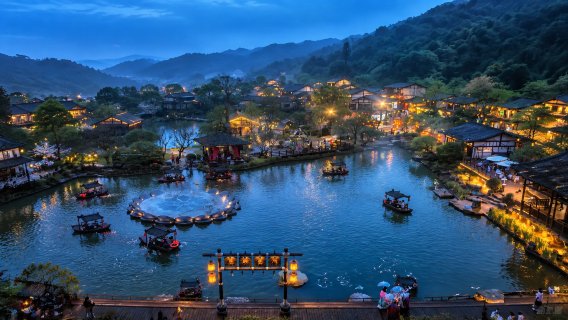
Shangrao to Gexian Village private 1-day tour (includes admission ticket)
󱌍
Duration: 9.5 hrs
English
Free cancellation
Instant confirmation
Book now for tomorrow
10% off
Limited-time sale
FromDKK 815.08DKK 905.65
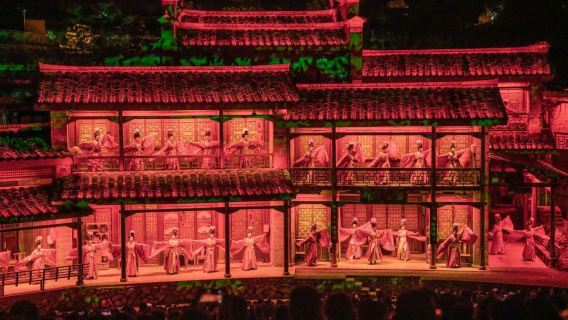
Half-day tour of Wuyishan Impression Da Hong Pao live performance: Experience millennia of tea culture and folk customs
󱌍
5.0/5
· 5 reviews· 48 booked
Duration: 1 hr
English
Instant confirmation
Book now for tomorrow
FromDKK 226.69
Longhushan 1-day private tour (depart from Nanchang)
󱌍
Duration: 10.5 hrs
English
Free cancellation
Instant confirmation
Book now for tomorrow
9% off
Limited-time sale
FromDKK 441.66DKK 490.73
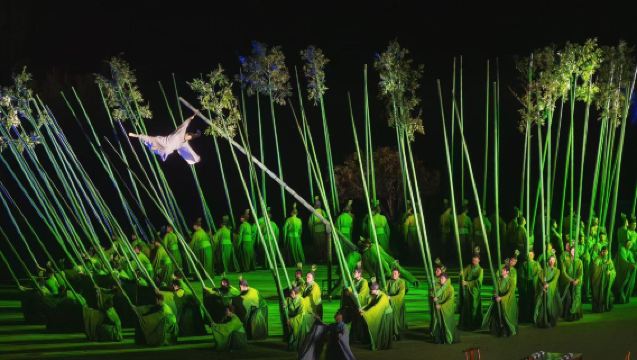
Fujian Wuyishan "Impression Da Hong Pao" (Live view performance + Wuyishan nightlife + Nine-bend danxia)
󱌍
5.0/5
· 1 review· 22 booked
Duration: 3 hrs
English
Free cancellation
Book now for tomorrow
FromDKK 237.39
More things to do

Private Tours in Yanshan

View More Private Tours in Yanshan
Yanshan Today's weatherLight rain 16-21℃
Yanshan weather for the next 2 days11/5: 16-23℃, 11/6: 16-18℃

Free things to do in Yanshan

What travellers say about Yanshan

user-avatar
137***893 November 2026
4.0
The park was incredibly crowded on the first day of the Lunar New Year, and parking was a nightmare. They even stopped letting the shuttle buses run by 8 PM, which meant I had to walk for over 40 minutes going up and down the mountain – it was exhausting! The service was a bit poor. However, the scenery was still beautiful and worth a visit.

Ge's Fairy Village

user-avatar
陌染MM5 March 2025
4.0
Traveling to Jiangxi, I came to the Gexian Mountain Scenic Area in Shangrao. Gexian Mountain is located in Qianshan County, at the northern foot of Wuyi Mountain, and belongs to the branch of Wuyi Mountain. Gexian Mountain belongs to the Yanshan period granite landform, with the main peak at an altitude of 1,096 meters. It has a strong Taoist culture and is a famous Taoist mountain. There are Da Gexian Temple, Niangniang Temple, Ciji Temple, etc. in the scenic area. In the evening, there is a musical fountain stage play in the scenic area, which tells a story of Taoist culture.

Gexianshan Scenic Area

user-avatar
真诚757723 March 2022
4.0
The ancient street is built along the Xinjiang River, with bustling shops on one side and the leisurely Xinjiang River on the other. The ancient street is east-west, 6 meters wide and 5 miles long. It consists of Yibao Street, Erbao Street, Qipan Street, Sanbao Street on the east end and Banbian Street on the west end. There are more than 500 shops preserved on both sides from Yibao to Sanbao. Today, it still retains the marks of the prosperity of the old times and the quaint style. On the 500-meter-long Ming and Qing ancient street along the river, the buildings are endless and lined up, exuding an ancient and elegant temperament; Qing

Hekou Old Street

user-avatar
M37***282 November 2026
4.0
The elevator is a highlight, and the scenery is decent, though not as beautiful as Sanqingshan. The queues are too long, and there's no fast-track service. I'm worried that elderly people might not be able to handle the long waits. I hope a fast-track service for seniors over 75 can be built.

Jiangxi Lingshan

user-avatar
M33***5325 October 2026
5.0
It's definitely worth a visit; the night view is especially beautiful, it's fun, and great for taking photos.

Gexian Mountain Scenic Area - Gexian Ancestral Temple

user-avatar
一日小林6 August 2021
5.0
Few people would come here. But it is still worth a visit. Ehu Academy is famous for the Ehu meeting between Zhu Xi and Lu Jiuyuan. Although the academy is far away in the mountains, the surrounding scenery is pleasant. Every year during the college entrance examination, many parents bring their children here to pray.

EHu Academy

user-avatar
Lilan丽兰1 November 2026
5.0
Five stars! The night view of Wangxian Valley truly lives up to its reputation; the cliffside pavilions are dazzlingly lit, resembling a fairyland. I recommend entering in the afternoon. Enjoy the canyon and streams during the day, and then experience the daytime and nighttime views at dusk when the lights come on – perfect for taking stunning photos. The park has excellent facilities, and online ticketing and ID card entry are very convenient. Definitely worth a special trip!

Wangxian Valley

user-avatar
Anonymous user20 October 2026
5.0
Guifeng Scenic Area is quite nice, but it needs more promotion. There weren't too many tourists during the National Day holiday. The scenic area offered a variety of interactive activities, which were very engaging and provided a great emotional experience. The scenery is beautiful, and climbing up and down the mountain is not difficult. A day trip there was very relaxing, and the boat ride back offered stunning views of the lake and mountains.

Guifeng Scenic Area

user-avatar
唐渊桢17 February 2026
2.0
第一次去因为是晚上到的不知道这个就没上去,第二次买了套票,结果晚上才开索道,体验寂静岭呢。本意白天上去看风景的,当天虽然下雨但景色很美,烟雨江南感觉,真是可惜。

Gexian Mountain Cableway

Trip Moments in Yanshan

Popular cities near Yanshan

Frequently asked questions

How can I contact Trip.com customer support?

Get help anytime, anywhere within 30 secondsContact customer support

Change and cancellation policies vary by attractions and tours. Please check the product details page for more information.

Ticket prices may vary between weekdays and weekends, as well as during peak and off-peak seasons. When booking with Trip.com, you can also use Trip Coins to get extra savings. For more tips on booking discounted tickets, please visit Trip.com for the latest information.