Zhenjiang

Things to do in Zhenjiang

Search attractions or local attractions & tours
Search

Explore top experiences

Top 10 attractions in Zhenjiang

View all Attractions
Sanshan Scenic Area

Sanshan Scenic Area

6.7
5.0/5
2 reviews

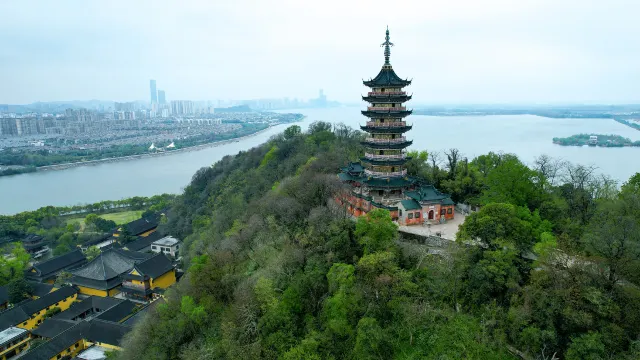
The Sanshan Scenic Area in Zhenjiang is a tourist destination that brings together natural landscapes and profound cultural heritage. Located on the south bank of the lower reaches of the Yangtze River, it consists of three major scenic areas—Jinshan Park, Jiaoshan Mountain, and Zhenjiang Beigushan Scenic Spot—each with its own unique charm. Although they are low hills, their proximity to the Yangtze River gives them a magnificent appearance, making them a representative natural and cultural landscape belt in Zhenjiang. These three mountains offer distinct views that complement each other. Among them, Jinshan Park is famous for the architectural marvel of temples wrapping the mountain, where layers of halls and pavilions envelop the mountain itself. It is also the setting for the Flooding of Jinshan story in the Legend of the White Snake, adding a rich mythological aura to the landscape. Jiaoshan Mountain is an island surrounded by water in the Yangtze River, known as the Floating Jade in the River. The mountain is covered with ancient, towering trees and hidden temples, creating a serene mountain wrapping the temple scene. It is also a famous mountain of calligraphy in the Jiangnan region, home to a precious forest of stone steles. Zhenjiang Beigushan Scenic Spot is situated among the three mountains and is renowned for its steep terrain and rich historical sites, having long been a strategic military location and a subject of literary works.

Zhenjiang · 3.1km from downtown
Maoshan Mountain Scenic Area
No. 4 of Best Things to Do in Zhenjiang

Maoshan Mountain Scenic Area

6.1
4.6/5
5.7k reviews

The Maoshan Mountain Scenic Area is located 20 km southeast of Jurong city, with the three main peaks - Damao Peak, Ermao Peak, and Sanmao Peak - arranged from south to north. The highest peak (main peak), Damao Peak, has an elevation of 372.5 m. The Maoshan Mountain Scenic Area is the birthplace of the Shangqing sect of Taoism. Originally named Juqu Mountain, it was renamed after the three Mao brothers from Shaanxi during the Western Han Dynasty - Mao Ying, Mao Gu, and Mao Zhong - who practiced Taoism here.MaoshanDuring the Eastern Jin Dynasty, Ge Hong and Tao Hongjing of the Southern Dynasties resided here.MaoshanPracticed cultivation here. The mountain is dotted with Taoist temples, which, despite their long history, have suffered repeated war damages. Most of what we see today are modern reconstructions, with the Jiuxiao Wanfu Palace and Yuanfu Wanning Palace being the most famous, collectively known as the "Maoshan Mountain Scenic Area - Maoshan Taoist Temple". The Maoshan Mountain Scenic Area is located at the border of Jurong City and Jintan City, with the Jiuxiao Wanfu Palace at the peak of Damao Mountain serving as the boundary. The western part is under the jurisdiction of Jurong, while the eastern part is managed by Jintan. In fact, the so-called Jurong Maoshan Mountain Scenic Area and Jintan Maoshan refer to the same Maoshan Mountain Scenic Area. The main attractions of the Maoshan Mountain Scenic Area, including the Jiuxiao Wanfu Palace, belong to Jurong and are concentrated at the peak and northern slope of Damao Mountain. At the main entrance of the Maoshan Mountain Scenic Area (Maoshan West Gate), there are sightseeing vehicles that transport visitors to the entrance of the Jiuxiao Wanfu Palace at the peak, with stops at other attractions. It is recommended to take the sightseeing vehicle as the attraction is quite large, and hiking to the peak of Damao Mountain may take 1-2 hours. Private vehicles are not allowed to enter the attraction. The Jintan Maoshan area is primarily for hiking, with some Taoist temples scattered around. Hiking from the Jinniuling cableway (Maoshan east gate) to the Jiuxiao Wanfu Palace at the peak takes 1-2 hours. Alternatively, you can take the cableway directly to Jiuxiao Wanfu Palace. Note that if you wish to visit the attractions on the Jurong Maoshan Mountain Scenic Area side after reaching the peak, you will need to purchase an admission ticket for the Maoshan Mountain Scenic Area separately. Tickets for the Maoshan Mountain Scenic Area are not sold at the foot of Jintan Mountain and must be purchased at the peak. The first stop can be Jiuxiao Wanfu Palace, also known as the top palace, built after the three Mao immortals ascended to heaven in the Western Han Dynasty. In the 26th year of the Wanli era of the Ming Dynasty (1598 AD), the emperor bestowed it the name "Jiuxiao Wanfu Palace". The red exterior walls of the Taoist temple are very eye-catching. Inside the temple, there is a three-gate stone archway on the ascension platform, which is the highest point of the Maoshan Mountain Scenic Area in Jurong at an altitude of 372.5 m. It is said to be the place where Mao Ying ascended to heaven. From Jiuxiao Wanfu Palace, you can overlook the Yuanfu Wanning Palace at the foot of the mountain. The second stop is Yuanfu Wanning Palace, built in the fifth year of the Chongning era of Emperor Huizong of the Song Dynasty (1106 AD). It is also known as the seal palace because the Song Dynasty emperor gifted the temple a treasure called the "jiulao xiandu seal". Remember to touch the character "fu" (meaning blessing) on the back of the stone wall at the Duxing gate inside the temple, which is said to bring good luck. The most striking feature of the entire temple is the 33 m tall bronze statue of Laozi, which shines golden under the sunlight with extraordinary grandeur. Be sure to notice the palm of Laozi's left hand, where there is a real wasp nest with a diameter of 1 m, which is quite miraculous. There is a folk saying: "Offer incense at the peak palace, stamp the seal at the seal palace," meaning one prays for blessings at the peak palace and gets a seal stamped at the seal palace. The jiulao xiandu seal is currently not at Yuanfu Wanning Palace but at Jiuxiao Wanfu Palace, making it relatively difficult for ordinary visitors to obtain. Outside the Yuanfu Wanning Palace, there are three karst caves within walking distance in the Maoshan Mountain scenic area - Huayang Cave, Yuzhu Cave, and Xianren Cave. Huayang Cave in the Maoshan Mountain scenic area was where Tao Hongjing, the prime minister of the Southern Dynasties, practiced cultivation. This cave connects with Yuzhu Cave, while Xianren Cave in the Maoshan Mountain scenic area is located approx. 80 m to the north. If taking the sightseeing bus, it's recommended to visit Huayang Cave first, then proceed to Xianren Cave in the Maoshan Mountain scenic area, as the exit of Xianren Cave is very close to the sightseeing bus stop. Then head to Xike Spring in the Maoshan Mountain scenic area, an ancient spring as old as the Maoshan Mountain Scenic Area in Jurong. When many people clap around the spring, you can see strings of bubbles rising from the water. Near Xike Spring in the Maoshan Mountain scenic area, there are a wellness bookstore and Prince Zhaoming's reading platform. Follow the direction indicated by the statue of the immortal sage behind the bookstore to take a stroll around Dezi Valley. The valley is shaded by lush trees with wooden boardwalks, making it a pleasant walk where you can also see attractions like Dezi Pavilion in the Maoshan Mountain scenic area. The last stop is the Sunan victory monument of the war of resistance against Japan at the entrance of Maoshan Mountain in Jurong. The Maoshan Mountain scenic area is not only a Taoist holy site but also a base for the war of resistance against Japan. A unique feature here is setting off firecrackers at the base of the monument, which produces a distinct echo resembling a military bugle in the sky. Vendors near the monument sell firecrackers for those who wish to hear the echo. Located 150 m west of the monument is the Maoshan new fourth army memorial hall, where decommissioned aircraft and cannons are displayed outside, and the hall showcases the history of the war of resistance against Japan in the Maoshan Mountain scenic area of Jurong. Visitors short on time can focus on Yuanfu Wanning Palace and Jiuxiao Wanfu Palace, while those with more time can explore additional attractions like Maoshan Mountain Scenic Area - Huayang Cave, Maoshan Mountain Scenic Area - Xike Spring, and the Southern Jiangsu Anti-Japanese War Victory Monument. There are restaurants outside Yuanfu Wanning Palace within the scenic area, but they are relatively expensive with average food quality, so bringing snacks is recommended for extended visits. Outside the main gate, there are many local restaurants serving delicious food. At the main entrance of Maoshan Mountain Scenic Area in Jurong, there are accommodations such as Jurong Maoshan Wanfu Building Hotel and Bubugao Hotel. However, since you can return to nearby urban areas on the same day after visiting Maoshan Mountain Scenic Area, it is recommended to stay in Jurong, Jintan, Zhenjiang or other nearby locations.

Jurong · 22.5km from downtown
Slender West Lake
2026 Global 50 - Spring Outings

Slender West Lake

8.5
4.7/5
83.7k reviews

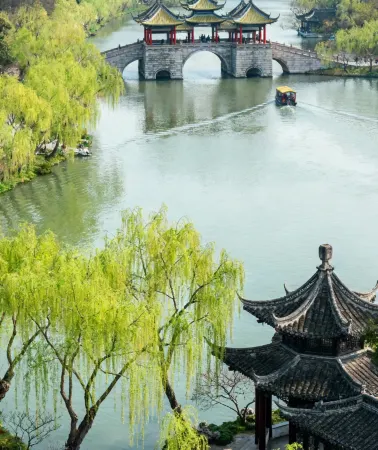
"In March when flowers bloom, head to Yangzhou." When visiting Yangzhou in spring, a trip to Slender West Lake is a must. This narrow stretch of waterway offers the perfect blend of natural beauty and cultural heritage. Stroll along the banks to admire scenic views, explore historic pavilions adorned with classical poetry and paintings, or cruise the lake by boat to experience the leisurely pleasure Emperor Qianlong once enjoyed during his royal visits. The attraction is quite expansive, stretching from the Great Rainbow Bridge in the southeast all the way north along the lake to Guanyin Mountain, passing dozens of attractions along the way. There are four main entrances (east, south, west, and north), with most visitors starting their tour at the south entrance on Great Rainbow Bridge Road. This renowned lakeside garden boasts breathtaking natural views. In spring, the area is shaded by lush willows and adorned with camellias, pomegranates, azaleas, and peach blossoms, attracting visitors from across the country to enjoy the seasonal blooms. For centuries, countless literati have lingered here, composing poetry and creating paintings that left behind numerous artistic treasures and stories. The site also features many landscape structures ingeniously designed to harmonize with its natural surroundings. The Five Pavilion Bridge in Shugang Slender West Lake Scenic Area is the iconic attraction with over 200 years of history. Featuring five wind pavilions atop, each of the bridge's fifteen arches cradles a moon during full moon nights. Another renowned attraction is the Twenty-Four Bridge, inspired by Du Mu's poetic line "Where is the jade-like beauty teaching flute-playing on the moonlit Twenty-Four Bridge?" While the original bridge no longer exists, visitors can admire its reconstructed version today. This was also a stop during Emperor Qianlong's southern tours in the Qing Dynasty. Architectural views like the Great Rainbow Bridge, Slender West Lake Scenic Area's Fishing Terrace, White Pagoda, and the Twenty-Four Bridges' Xichun Platform all bear inseparable historical anecdotes connected to Emperor Qianlong. During summer nights, the illuminated pavilions and moonlit reflections on the lake create a magical atmosphere. The nightlife experience here is entirely boat-based, offering a relaxing way to beat the summer heat while enjoying gentle lake breezes.

Yangzhou · 23.8km from Zhenjiang

Traveller favourites curated for you

Experiences you can't miss in Zhenjiang

Featured Culture & history in Zhenjiang

View all Culture & history
Nanjing Van Gogh Star Sky Art Museum (immersive 4D light show + sunflower field tour)
󱌍
4.0/5
· 7 reviews· 83 booked
Duration: 2 hrs
English
Free cancellation
Instant confirmation
Book now for tomorrow
From£5.06
Nanjing Private Guided Day Tour: Dr. Sun Yat-sen's Mausoleum, The Ming Tomb, and Meiling Palace
󱌍
Duration: 8 hrs
English
Free cancellation
Instant confirmation
Book now for tomorrow
From£66.59

Featured Food & drink in Zhenjiang

View all Food & drink

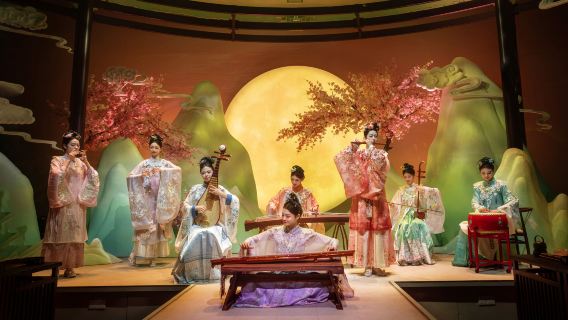
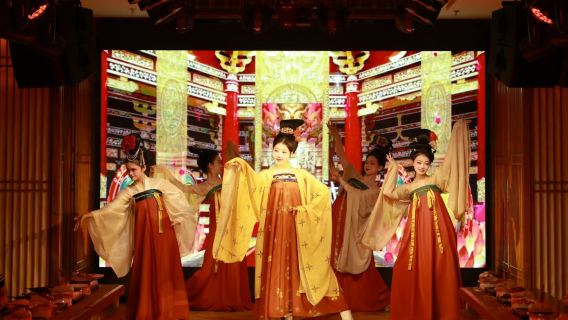
Nanjing Jinling dream of splendor palace banquet (ancient imperial-style royal feast + spectacular song and dance performance)
󱌍
5.0/5
· 1 review· 56 booked
Duration: 2 hrs
English
Free cancellation
Book now for tomorrow
From£33.47
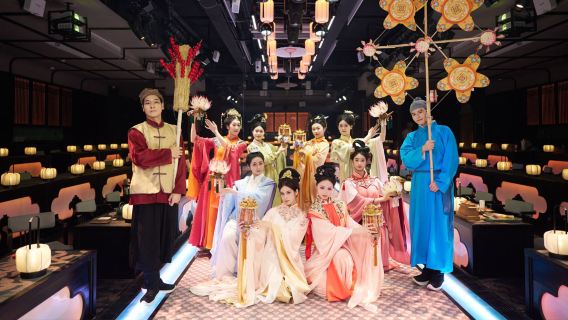
Jinling Dream Splendor: Ming Dynasty Themed Banquet +Hanfu Styling + Traditional Performances & Food
󱌍
From£78.39
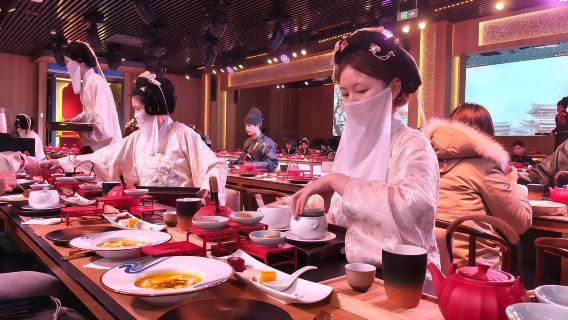
Nanjing imperial banquet feast world · immersive journey through Jinling's millennium-spanning royal feast
󱌍
Duration: 90 mins
English
Free cancellation
Instant confirmation
Book now for tomorrow
From£22.35
Nanjing Yanle Feast Under Heaven | Immersive Six Dynasties Royal Banquet Show
󱌍
Duration: 2 hrs
English
Free cancellation
Instant confirmation
Book now for tomorrow
From£60.54

More things to do

Private Tours in Zhenjiang

View More Private Tours in Zhenjiang
Zhenjiang Today's weatherFoggy 5-18℃
Zhenjiang weather for the next 2 days11/12: 9-23℃, 11/13: 12-21℃

Free things to do in Zhenjiang

What travellers say about Zhenjiang

user-avatar
火 火5 February 2026
5.0
Zhenjiang Three Mountains Scenic Area is a national 5A-level tourist attraction in Zhenjiang City, Jiangsu Province. Composed of Jinshan, Jiaoshan, and Beigushan, the three mountains are distributed along the Yangtze River, each with its own unique characteristics, and are renowned as "the best in Southeast China among the Three Mountains of Jingkou." I. Jinshan – Temples Wrapped in the Mountain, Mythical Legends "Jinshan Temple Wrapped in the Mountain"—Buildings such as Cishou Pagoda and Jiangtian Temple are built against the mountain, so from a distance, only the temple is visible, not the mountain itself. It is one of the four most famous Buddhist temples in China, along with Putuo Temple, Wenshu Temple, and Daming Temple. Main Attractions: Jiangtian Temple (Jinshan Temple): An ancient temple from the Eastern Jin Dynasty, the origin of the legend of the White Snake flooding Jinshan Temple. Cishou Pagoda: Climb the pagoda for panoramic views of the Yangtze River and Zhenjiang city. Fahai Cave: The place where the Tang Dynasty monk Fahai practiced, contrasting with the legend. The First Spring Under Heaven: Zhongling Spring, praised as "the best under heaven" by Lu Yu of the Tang Dynasty. II. Jiaoshan Mountain – A Natural Landscape, a Hidden Gem of Steles Jiaoshan Mountain, a temple nestled within the Yangtze River, is an island surrounded by water. Reaching the island requires a boat trip. It is renowned for its cliff carvings, stele forest, and ancient fort. Main Attractions: Dinghui Temple: An ancient temple dating back to the Han Dynasty, where Emperor Kangxi once stayed during his southern tour. Jiaoshan Stele Forest (the largest stele forest south of the Yangtze River): Contains a fragment of the *Yizheming* stele (considered the "ancestor of large-character calligraphy"). Cliff Carvings: Inscriptions by literati throughout history, including authentic works by Lu You and Mi Fu. Ancient Fort: Relics of the Opium War resistance against the British. III. Beigushan Mountain – Scenic Beauty, an Epic of the Three Kingdoms Centered on the culture of the Three Kingdoms, it is known as "the most beautiful landscape under heaven," and has been the subject of countless poems and inscriptions throughout history. Main Attractions: Ganlu Temple: The site of the story of Liu Bei's marriage proposal, originally built during the Eastern Wu period of the Three Kingdoms. Beigu Tower: The place referred to in Xin Qiji's poem, "Where can one gaze upon the Central Plains? The scenery of Beigu Tower fills the eyes." Sword Testing Stone: Legend has it that Liu Bei and Sun Quan tested their swords on this stone. Iron Pagoda: A remnant from the Song Dynasty, witnessing the vicissitudes of history.

Sanshan Scenic Area

user-avatar
Anonymous user6 November 2026
5.0
Jinshan Temple in Zhenjiang, also known as Jiangtian Temple, was first built during the reign of Emperor Ming of the Eastern Jin Dynasty (around 320 AD), boasting a history of over 1600 years. It is the origin of the legend of "Lady White Snake flooding Jinshan Temple" and the ancestral temple of the Chinese Buddhist Water and Land Dharma Assembly. The temple is nestled within the mountain, so one sees the temple but not the mountain itself. Jiangtian Temple: The plaque bearing the inscription "Jiangtian Temple" was personally inscribed by Emperor Kangxi during his southern tour. The magnificent Mahavira Hall is the core of Jinshan Temple. Cishou Pagoda: A landmark of Jinshan, this seven-story, octagonal brick and wood pagoda stands approximately 30 meters tall. Climbing the pagoda offers a panoramic view of the confluence of Jinshan Lake and the Yangtze River, making it a prime location for taking panoramic photos. Fahai Cave and Bailong Cave: Core photo spots related to the Legend of the White Snake. Fahai Cave is where the founding patriarch, Fahai, practiced asceticism; Bailong Cave is said to connect directly to West Lake in Hangzhou. Legend has it that after Lady White Snake flooded Jinshan Temple, Xu Xian escaped from Bailong Cave and reunited with Lady White Snake at the Broken Bridge. Miaogao Terrace: Also known as "Sun-drying Terrace," it is a place where Su Shi once admired the moon and composed poems, and where Liang Hongyu once beat the drum to fight against the Jin army. It is full of historical anecdotes. Zhongling Spring: Located on the west side of the scenic area, it was already famous in the Tang Dynasty and was known as "the No. 1 Spring under Heaven". The spring water is clear and sweet.

Jinshan Park

user-avatar
Anonymous user7 November 2026
5.0
Beigu Mountain truly lives up to its reputation as "the most beautiful landscape under heaven." The mountain isn't high, making it easy to climb. At the summit lies Ganlu Temple, which tells the story of Liu Bei's marriage proposal during the Three Kingdoms period. Climbing Beigu Tower offers panoramic views of the Yangtze River. Recalling Xin Qiji's poem, one feels the river breeze on one's face; the landscape blends seamlessly with history, boasting abundant historical sites and a captivating atmosphere—definitely worth a visit.

Zhenjiang Beigushan Scenic Spot

user-avatar
江左盟梅长酥26 October 2026
5.0
Jinshan Temple is worth a visit. It has a strong Buddhist atmosphere, and you can overlook Zhenjiang from the top of the mountain. The buildings inside are also very beautiful and suitable for taking photos. It is also one of the filming locations for The Legend of the White Snake.

Jinshan Temple

user-avatar
YoYo_D1l9r9b12 May 2026
5.0
Xijindu's ancient street starts uphill from Changjiang Road, with tire tracks in the middle of the stone-paved road. The brick and stone houses are old and worn, and the steps are quite steep. The Zhaoguan Stone Pagoda stands in the middle of the road, and you can pass underneath it. From the hilltop, you can see the dock and the Yangtze River; at night, the river reflects the lights. There are some old shops on both sides selling pot-lid noodles and braised pork; you can sit down and have a bowl when you're tired from walking. It's less crowded than Shantang Street, but still lively on weekends.

Xijin Ferry Historical and Cultural District

user-avatar
Anonymous user4 October 2026
5.0
Choosing the right route is crucial when hiking in Maoshan with elderly people and children. Seeing the "Eighth Grotto-Heaven" stele marks the start of the core scenic area. The steps here aren't particularly steep, so a leisurely walk is perfectly fine. The roadside signs are clear, and Yuanfu Wanning Palace is only a few hundred meters away. You can experience Taoist culture without climbing too high. The mountaintop offers expansive views and fresh air, making it a pleasant place for the whole family to stroll and relax. It's truly a perfect leisure destination for a family trip! 👍✨

Maoshan Mountain Scenic Area

user-avatar
老钱贝勒31 October 2026
4.0
Visit Jiaoshan to see the "Epitaph for the Buried Crane," considered the ancestor of large-character calligraphy. The Jiaoshan Stele Forest (Baomoxuan) is located on Jiaoshan Mountain in the heart of the Yangtze River in Zhenjiang. It is the premier stele forest south of the Yangtze River, and is considered on par with the Xi'an Stele Forest. Western Slope Cliff Inscriptions: Stretching over 200 meters along the riverside cliff, there are more than 80 inscriptions from the Six Dynasties to the Song and Qing Dynasties, including Tang Dynasty verses from the Diamond Sutra, an inscription by Mi Fu, and Lu You's inscription on viewing the "Epitaph for the Buried Crane" in the snow. Courtyard and Corridor Display of Steles: Over 400 steles spanning the Six Dynasties, Tang, Song, Yuan, Ming, Qing, and Republican periods, encompassing regular, cursive, clerical, and seal scripts. Treasure of the Museum: The "Epitaph for the Buried Crane" The "Epitaph for the Buried Crane" is a cliff inscription commemorating the burial of a crane, praised by Huang Tingjian as the ancestor of large-character calligraphy. Origin of the Original Stone: Originally carved on the cliff face of Leihongyan at the western foot of Jiaoshan Mountain, it is said to have been carved in the thirteenth year of the Tianjian era of the Southern Liang Dynasty (514 AD). At some unknown time, the cliff collapsed and fell into the Yangtze River, where it remained submerged for over seven hundred years. In the fifty-first year of the Kangxi reign of the Qing Dynasty (1712 AD), Chen Pengnian raised funds to salvage the stone, retrieving five fragments containing 93 characters (11 of which are missing). These fragments were moved to Dinghui Temple and protected with a pavilion. Later, they were moved to a special room in the Stele Forest for preservation and exhibition, which is the original stone we see today. The original text contained approximately 178 characters, but only fragments remain today. Rubbings are divided into two categories: the precious Song Dynasty "pre-drowning rubbing" (rubbings before it fell into the water) and Qing Dynasty rubbings after it was recovered from the water. The mystery of the author (unresolved). The inscription uses only the pseudonym: "Written by Huayang Zhenyi, written by Shanghuangshan Qiao," without a real name. Several schools of thought have emerged regarding its authorship: Mainstream: Tao Hongjing of the Southern Dynasties (a recluse in Huayang, the most widely accepted). Others: Wang Xizhi, Gu Kuang of the Tang Dynasty, Wang Zan, etc., with ongoing academic debate. The calligraphic style is a landmark cliff inscription marking the transition from seal script and clerical script to regular script, blending the two styles with elements of running script: Brushwork: Primarily rounded strokes with concealed tips, occasionally using angular turns, with a strong seal script influence, seemingly soft yet powerful; Character structure: Broad and spacious, adapting to the shape of the stone, characters vary in size and posture, without deliberate uniformity; Composition: Rarely seen in ancient times, read vertically from left to right, elegant and unrestrained, with a lofty and ancient feel, reminiscent of a crane soaring into the distance; The "Shimen Ming" in the north and the "Yizhe Ming" in the south are considered twin peaks of cliff inscriptions, influencing countless calligraphers such as Huang Tingjian and Gong Zizhen. Huang Tingjian famously said: "No large characters surpass the 'Yizhe Ming.'"

Jiaoshan Mountain

user-avatar
吴哥℡¹⁸⁶⁷⁸⁹⁶8 November 2026
4.0
The scenery in riverside parks across the country is pretty much the same, as that's the feeling after a short stroll around the entrance. It's only near the Twenty-Four Bridges that the core scenery of Slender West Lake truly comes into view (unfortunately, the weather was overcast and rainy). If you're short on time, I recommend entering from the South Gate, strolling to the Twenty-Four Bridges, taking a boat back to the South Gate (1 hour 30 minutes stroll, 10 minutes boat ride back to the entrance) (except for those planning to exit from the North Gate). It's effortless to walk with kids! 👍 I won't go into the scenery photos, but the ducks and geese in the lake are quite content. 👀

Slender West Lake

user-avatar
M10***516 November 2026
5.0
A must-see attraction in Yangzhou, and it's free! It will change your perception of museums. It's highly cost-effective in terms of knowledge and fun, making it a great place for all ages. There are many restaurants nearby, so it's highly recommended!

China Grand Canal Museum

user-avatar
linglizi5 November 2025
5.0
The Yangzhou Grand Canal Three Bends Scenic Area, situated on the banks of the ancient Grand Canal, is an extension of the Grand Canal near the Slender West Lake. Originally a series of sharp bends in the canal, it has been cleverly transformed, turning the engineering marvel of "three bends equaling one dam" into an ecological and cultural landscape. From its vantage point, one can view the iconic China Grand Canal Museum, with the Lingbo Bridge and Silhouette Bridge arching across the water like rainbows. Together with the wetland boardwalk and birdwatching huts, they form a beautiful picture of urban-canal coexistence, blending the ancient and modern, making it a model for showcasing the ecological civilization of the Grand Canal and the charm of Yangzhou's cultural tourism. Admission is free.

Canal Sanwan Scenic Area

Trip Moments in Zhenjiang

Popular cities near Zhenjiang

Frequently asked questions

Get help anytime, anywhere within 30 secondsContact customer support

Change and cancellation policies vary by attractions and tours. Please check the product details page for more information.

Ticket prices may vary between weekdays and weekends, as well as during peak and off-peak seasons. When booking with Trip.com, you can also use Trip Coins to get extra savings. For more tips on booking discounted tickets, please visit Trip.com for the latest information.