Is China Safe to Travel in 2026? What You Need to Know


It’s a question that comes up frequently whenever China is mentioned: is travelling in China dangerous? While it might have been a valid concern a few years ago, the situation is completely different today!
This article summarises everything you need to consider before your trip to China, from essential precautions to personalised tips, whether you’re travelling as a solo female traveller, with friends, or with the family!
Is China a dangerous country for tourists? 🌏
The short answer is no! In fact, China is widely considered a very safe destination for travellers. With low crime rates and a visible police presence, the actual risks are far fewer than popular misconceptions might suggest. Even at night, the streets remain full of life, bustling with night markets, restaurants, and a vibrant urban energy.
In practice, the most common things to watch out for are tourist scams and certain health or environmental risks. To help you travel with confidence, here’s a quick summary of the risks and issues you might encounter while you're there:
- Tea house scams, unlicensed taxis, and overcharging in certain shops;
- Seasonal air pollution in several major cities in the north;
- The traffic can be a bit chaotic at times for pedestrians and cyclists;
- The language barrier away from the tourist hotspots;
- Potential digestive risks from tap water or certain street foods.
📌 Trip.com Tip: With a little preparation and common sense, these risks remain easy to manage for the vast majority of travellers. These are things you’ll find in most major cities, even in Europe!
Safety in public places: markets, stations and tourist attractions 🏙️

Pickpocketing and petty crime
In major cities and busy areas, pickpocketing can happen, but it remains relatively rare in China. It might occur:
- On the metro during rush hour;
- At the tourist markets;
- In the concourses of major train stations or airports.
To stay safe, just use your common sense:
- Keep your bag in front of you when in a crowd;
- Avoid taking out large amounts of cash in public;
- Keep a firm grip on your phone or keep it tucked away in a zipped pocket.
The most common tourist scams
Some scams are well-known to travellers in China:
- Teahouse/bar scams: "Students" or friendly locals may approach you (especially near tourist sites) and invite you for a casual drink. The venue often turns out to be a private teahouse or bar with hidden, exorbitant prices, resulting in an unexpectedly huge bill;
- Fake taxis: unofficial cars that charge extortionate rates or deliberately take a longer route;
- Overcharging in certain restaurants or shops where prices aren't clearly displayed.
📌 Trip.com's top tips: politely decline any pushy invitations, always check the price before you order, and stick to official taxis or ride-hailing apps.
Is China safe at night? 🌙
The question "is it dangerous to travel in China at night?" is another one that crops up quite often. In major cities, the main streets stay lively late into the evening, especially around the night markets, shopping centres and pedestrian streets.
Many travellers note that they generally feel safe in the evening, as long as they follow a few simple rules:
- Stick to well-lit main roads;
- Opt for a taxi or a ride-hailing service to get back after a late night out, as public transport finishes early;
- Keep an eye on your belongings while you're out enjoying the bars, clubs, and karaoke venues.
Incidents are rare, but as with anywhere, excessive drinking, tiredness, or being on your own can make you more vulnerable.
Here’s a quick summary of the perceived safety levels across different types of areas:
Area type | Perceived safety level | Top tips |
Grand shopping avenues | High | Stay right in the heart of the action! |
Night markets and food courts | High | Watch out for scams |
Quiet backstreets / secluded areas | Good overall | Avoid walking alone very late at night in poorly lit streets. |
Road safety and transport: metro, taxis and trains 🚇
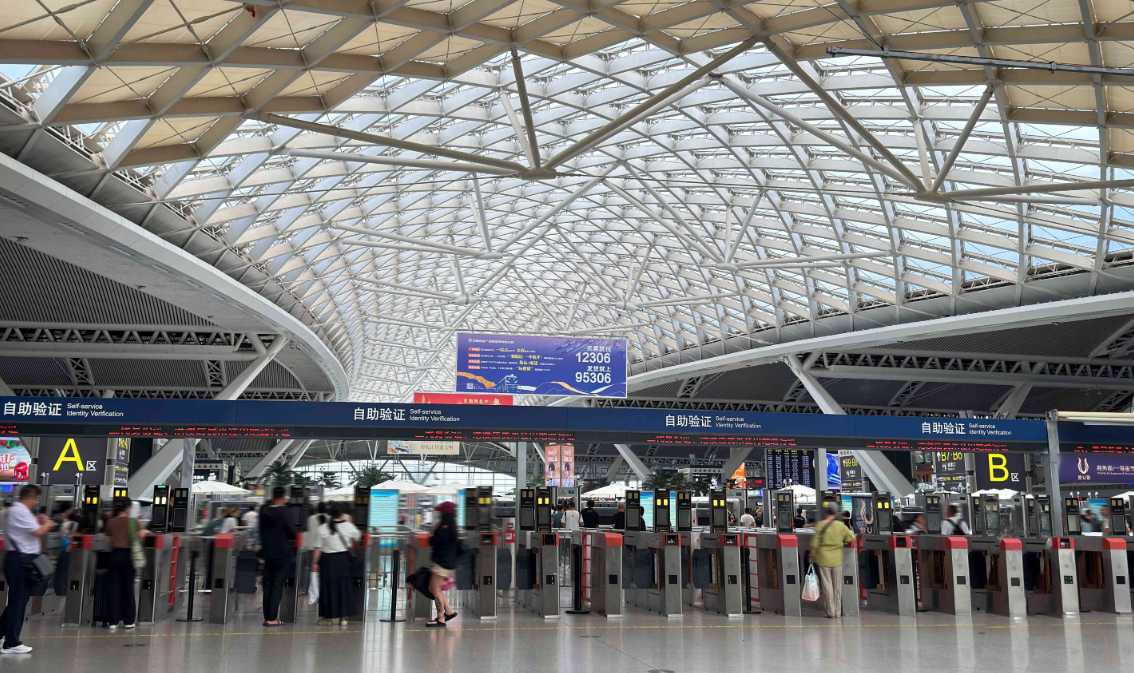
Public transport
Public transport in China is incredibly safe and efficient:
- The metro systems are modern, clean and well-monitored, with mandatory security scanners for bags;
- High-speed trains are among the most reliable in the world, with mandatory security scanners for passengers and bags.
The only potential snag you might encounter is navigating the bustling crowds and keeping a watchful eye out for the occasional (and thankfully rare!) pickpocket, particularly in the busiest stations.
Taxis and Ride-hailing
For your city travels, you've got plenty of options:
- Official taxis (metered, standard colours depending on the city);
- Ride-hailing via the Didi app (the Chinese version of Uber);
- Book your hotel shuttles and private transfers online.
To help you steer clear of any unexpected overcharges or tricky scams:
- Avoid getting into unofficial cars that approach you outside train stations or airports;
- Make sure you have your hotel address written in Chinese to show the driver;
- Make sure the meter is switched on, or use Didi to see your fare upfront.
Pedestrian safety
While China is incredibly safe in terms of crime, the traffic can be a real hazard for pedestrians:
- Electric scooters are silent and sometimes travel on the pavements;
- Cars don't always give way to pedestrians;
- Keep an eye out, as some drivers might ignore traffic lights.
Food and water safety: is it safe to eat? 🍜

As with any destination in Asia, it’s one of the biggest risks you might face, but it’s one that can be easily minimised by keeping a few simple tips in mind before your trip.
Tap water and drinks 🚰
In China, tap water isn't considered safe for travellers to drink. To avoid any digestive issues:
- Stick to bottled, boiled or filtered water;
- Ask for hot water (开水, kāishuǐ) if you're in any doubt;
- Try to avoid ice cubes unless you're at a high-end hotel or restaurant.
Street food and restaurants 🍤
China is a street food paradise... as long as you pick the right stalls:
- Stick to the busiest stalls, a sure sign of high turnover and fresh produce;
- Opt for dishes that are thoroughly cooked and served piping hot;
- It's best to avoid raw products in markets where hygiene might be a concern, such as raw meats and pre-cut fruit left out on display.
In restaurants:
- Opt for clean spots that are buzzing with locals;
- Avoid spots that are completely empty at meal times;
- Ease into the spicier dishes gradually to give your digestive system plenty of time to adjust.
Dangerous animals in China: should you be worried? 🐍
The question of dangerous animals in China is a common concern for many travellers, especially those planning hikes or stays in rural areas.
Great news! In the cities, risks are virtually non-existent, and even in the countryside, most incidents can be avoided.
Animals to look out for in China (even if some are a rare sight)
- Venomous snakes: found in certain southern regions (Yunnan, Guangxi, Fujian). Encounters remain rare, as snakes generally tend to avoid humans.
- Mosquitoes: more of a pesky nuisance than a serious danger, though they can carry certain diseases in specific areas. There is a real risk of Japanese encephalitis, so it’s worth arranging a vaccination if you’re planning a stay in rural areas.
- Stray dogs: in some rural areas or villages, there is a risk of bites and rabies. Be sure to keep your distance if you spot any.
- Monkeys: at some mountain tourist sites, they might swipe your food or scratch if provoked.
Trip.com’s top tips for exploring China’s great outdoors
To minimise the risks associated with dangerous animals in China:
- Stick to the marked trails while hiking;
- Wear closed-toe shoes and long trousers in rural areas;
- Never touch stray animals, even if they look "cute";
- Please do not feed the monkeys or wild animals;
- Seek medical advice promptly if you notice any suspicious bites or stings.
Solo travel in China: is it risky? 🎒
Solo travel in China: an accessible experience
Heading off on a solo trip to China might seem a little daunting at first, but the destination is surprisingly well-suited to it. Major cities are well-organised, transport is efficient, and there's an ever-growing number of hostels to choose from.
Key things for solo travellers to keep in mind:
- The language barrier away from the tourist hotspots;
- Reading signs in rural areas if you haven't mastered Chinese characters;
- The long distances between regions (China is a vast country).
Trip.com's tips for solo travellers
To ensure travelling solo in China remains a safe and enjoyable experience:
- Get ready for your adventure! Make sure to download a VPN (like Let's VPN) and some super handy apps (think Alipay, WeChat, translation tools, Didi...) before you set off!
- Stay in top-rated hostels or hotels, ideally located close to the metro;
- Share your itinerary with a loved one and keep them updated on your journey;
- Join group guided tours for certain excursions (the Great Wall, national parks, etc.).
Travelling in China as a woman: safety and peace of mind
Is China safe for solo female travellers?
Here too, the answer is a resounding yes! Street harassment and attacks targeting female travellers are rare.
As always, it's a good idea to keep a few specific precautions in mind:
- Avoid walking back alone late at night in unfamiliar neighbourhoods;
- Stay mindful of your alcohol intake and be cautious with impromptu encounters in bars.
Top tips for solo female travellers
For extra peace of mind on your solo trip to China:
- Prioritise accommodation with great reviews from fellow female travellers (such as hostels, guesthouses, and chain hotels);
- Use Didi instead of hailing taxis on the street whenever possible;
- Let the hotel reception know if you're heading off on a remote excursion;
- Trust your instincts: if a situation feels a bit off, simply walk away.
Environmental and weather risks: pollution, typhoons, and altitude 🌦️
China is vast, and risks vary from region to region:
- North (Beijing, Tianjin, Xi’an): air pollution is higher in winter.
- South-eastern coast (Shanghai, Guangzhou): typhoon season in summer.
- High-altitude plateaus (Tibet, Qinghai): please be aware of the risk of altitude sickness at elevations above 3,000 m.
Adapting to your adventure:
- Check the Air Quality Index (AQI) via a dedicated app;
- Pack some face masks in case of any pollution peaks;
- Keep an eye on local weather alerts during typhoon season;
- Take it slow as you head to higher altitudes and try to take it easy for the first few days.
Region | Key risks | Precautions |
Northern China | Air pollution and cold winters | Wear a mask if it's smoggy and remember to wrap up warm! |
South-east coast | Typhoons and high humidity | Check the weather alerts |
High Altitude (Tibet) | Altitude sickness | Take your time to acclimatise and stay well-hydrated. |
Our final tips for staying safe in China
Learn basic Mandarin phrases
While you'll find English speakers in the major cities, knowing a few key phrases can be a real lifesaver in an emergency. Start with the basics, like 'help' (救命, jiùmìng) and 'I need a doctor' (我需要医生, wǒ xūyào yīshēng). Even just knowing your numbers and simple directions will make navigating much easier. Locals always appreciate the effort, and it’s a great way to avoid any mix-ups when you're exploring off the beaten track.
Use a reliable VPN service and an eSIM
Many Western websites and apps (such as Google, WhatsApp, and Instagram) are blocked in China. To stay connected during your travels, be sure to install a reliable VPN before you arrive to access blocked sites. You might also want to consider picking up a local eSIM from providers like Airalo for instant mobile data, making it easy to use maps and messaging apps throughout your trip!
Register with your embassy
If you're planning a longer stay, remember to register with your national embassy or consulate. They can provide vital information in an emergency, such as a natural disaster or civil unrest. Many offer convenient online registration systems to make the process quick and easy.
Keep emergency numbers close at hand
Save these essential numbers to your phone: Police (110), Fire Brigade (119) and Ambulance (120). It’s also worth keeping your embassy’s contact details handy. While major cities often have English-speaking operators, in smaller towns, you might need a Mandarin speaker to help you make the call.
FAQ – Tourist Safety in China
-
Is China safe to visit right now?<br>
-
What are the main risks for travellers in China?
-
Is China safe for women travelling alone?
-
Are there dangerous animals in China?
-
Can I travel solo in China safely?
More China Travel Guides
Trending Searches
-
Travel guides