
Things to do in Handan
Explore top experiences
Top 10 attractions in Handan


Experiences you can't miss in Handan
Featured Culture & history in Handan
View all Culture & history
Free cancellation
Instant confirmation
From€104.65


Free cancellation
Instant confirmation
From€88.69
From€107.50
Handan Today's weatherFoggy 10-16℃
Handan weather for the next 2 days11/1: 7-19℃, 11/2: 5-23℃
Free things to do in Handan


What travellers say about Handan

火 火28 October 2026
5.0
Guangfu Ancient City is a 5A scenic area in Handan, a rare combination of a water town, an ancient city, and a Tai Chi city in northern China. Entry is free, but separate tickets are required to climb the city walls, visit the government offices, and see the former residences.
Key attractions:
1. Ming Dynasty City Wall: Well-preserved, offering panoramic views of the surrounding depressions and waterways, perfect for photos; the South Gate, Yanghe Gate, is a landmark photo spot.
2. Tai Chi Cultural Sites: The former residences of Yang Luchan and Wu Yuxiang, the birthplace of Yang and Wu styles of Tai Chi, where you can see late Qing Dynasty residences and inscriptions on Tai Chi theory.
3. Guangping Government Office: A Ming and Qing Dynasty government office complex, recreating the layout of an ancient government office; often featuring light shows and folk performances at night.
4. Night Cruise on the Moat: Enjoy a boat ride with a strong nighttime atmosphere; iron flower performances are also held on holidays.
Guangfu Ancient City

Anonymous user25 October 2026
5.0
The Nuwa Palace is magnificent, and the stone-carved scriptures are truly awe-inspiring. It's entirely walkable and not difficult; there's no need to take the shuttle bus or cable car. The activities in the park are quite entertaining, but the prizes are rather lackluster.
Wahuang Palace

mahoningli28 October 2026
5.0
Having witnessed the grandeur of the Yungang Grottoes, the magnificence of the Longmen Grottoes, and the desolate beauty of Dunhuang, one might be unaware that hidden deep within Gushan Mountain in Handan lies the remnant of the Northern Qi royal grottoes. Lacking the scale of top-tier grottoes and the clamor of throngs of tourists, these cliffside ruins of Buddha statues once served as a sacred Buddhist site for the Northern Qi imperial family. They represent a precious transitional chapter in Chinese grotto art, connecting the elegant and refined styles of the late Northern Wei Dynasty to the plump and graceful styles of the Sui and Tang Dynasties. The "Cao Yi Chu Shui" style of the Northern Qi is a crucial link between these two major grotto art styles. Among them, the Great Buddha Cave, Sakyamuni Cave, and Sutra Carving Cave are the core essence of the entire grotto complex, each cave showcasing the ultimate craftsmanship of the Northern Qi artisans.
The Great Buddha Cave—the largest and most prestigious cave—is said to contain the tomb of Gao Huan, the founder of the Northern Qi Dynasty. The over three-meter-tall seated statue of Sakyamuni sits upright, eyes half-closed, corners slightly upturned, a slight smile playing on its lips. The halo behind the Buddha features flame patterns and seven intertwined fire dragons, the blue still vibrant under spotlights. The renowned historian Fan Wenlan once said this cave "can rival the Longmen and Yungang Grottoes," highlighting its high artistic value.
Sakyamuni Cave—Compared to the grandeur of the Great Buddha Cave, the Buddha statues here have softer lines and a more serene expression. Two highlights: 1. The imitation wood-structure carvings at the cave entrance are densely covered with flame patterns, intertwined vine patterns, honeysuckle patterns, etc., almost overwhelmingly ornate. This extreme layering of architecture, sculpture, and decorative patterns is considered by scholars to be a typical example of the "Xiangtang style." 2. The robes of the attendant bodhisattvas on both sides cling tightly to their bodies, thin and flowing, exhibiting the typical "Cao Yi Chu Shui" (詠衣出水) texture.
Scripture Cave—A unique treasure of the North Xiangtangshan Grottoes. Tang Yong, the Duke of Jinchang of the Northern Qi Dynasty, spent four years carving each character of four Buddhist scriptures, including the Vimalakirti Sutra, into stone. Standing outside the cave, I imagined someone 1,500 years ago using a chisel to transfer the characters from paper to stone. Stone outlives paper, but despite a thousand years of wind and rain erosion, some characters remain clearly legible, while others have become one with the stone.
I suddenly remembered someone saying: A dynasty that only lasted twenty-eight years carved a mountain, leaving people 1,500 years later to climb hundreds of steps to the top, standing speechless before the stone. No matter how you look at it, this is a fair trade.
Xiangtangshan Grottoes: North Xiangtangshan Caves

糖糖happy多鱼28 October 2026
5.0
I bought a package ticket for 210 yuan for the painless mountain climb. A special shout-out to the toboggan ride downhill – the experience was amazing! The park provides special pants with rubber dots on the buttocks for added grip, and the gloves are also safety gloves with rubber dots. If you feel it's going too fast while sliding, sit up straight and brace yourself with your hands to slow down; if you really can't stop, just push off with your feet against the glass on either side – it slows you down instantly, giving you a great sense of security.
East Taihang Scenic Area

kuwk20 October 2026
5.0
Highly recommended for a visit!
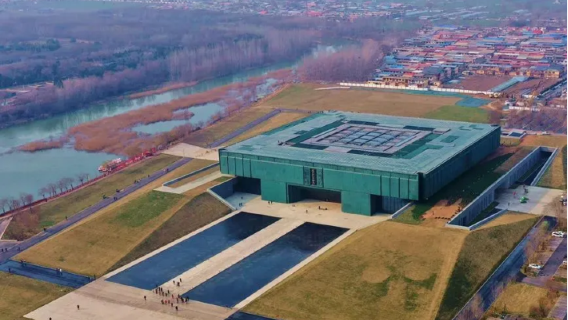
The building's exterior is very eye-catching, and the evening lighting makes for stunning photos.
The Handan Museum is one of the most interesting museums I've ever been to. It's a comprehensive museum that integrates sightseeing, entertainment, and more.
Each floor has a souvenir shop with a wide variety of goods. There are also exploration areas for children and students. A coffee shop is also available.
Conveniently located; both driving and public transportation are available.
Handan Museum

ASHES灰烬11 October 2026
4.0
Here are some fun attractions near Handan, nestled against the Southern Taihang Mountains. With mountains and water, you can enjoy boat trips on the lake and hike for panoramic views – perfect for family outings. The area boasts excellent facilities, and local cuisine is available nearby.
Jingniang Lake

Shin泡泡4 February 2026
5.0
On a spring morning, I stepped into Congtai Park in Handan. Climbing the stone steps to Wuling Congtai, the green bricks and gray tiles gleamed softly in the warm sun, and the statue of King Wuling of Zhao, dressed in nomadic attire and riding an cavalry, seemed to still be fluttering in the wind. Turning around and looking down, the lake was like a mirror, and the hexagonal eaves of Wangzhu Pavilion peeked out from the water like an ancient green seal. I passed through the Temple of the Seven Sages, where, nestled among pines and cypresses, the statues of Lian Po and Lin Xiangru stood silently facing each other, evoking the noble sentiment of "bearing thorns to apologize." Willow branches swayed gently by the lake, and the fragrance of lotus blossoms wafted through the air. Elderly people practiced Tai Chi, and children fed koi fish; history and daily life clasped hands here. Climbing to the ruins of the ancient city wall, the buildings of Handan and the distant mountains came into view, and time and space seemed to overlap. Before leaving the park, the setting sun gilded Congtai with a layer of gold. I looked back, and the sound of war drums seemed to echo in my ears, my heart filled with a thousand-year-old heroic spirit.
Congtai Park

M51***3617 November 2025
5.0
Aside from the crowds, there's nothing else wrong with it. It has a classic, old-fashioned feel, and the shops inside are bustling with activity – you can find everything you need for food, drinks, and entertainment. Some local specialties are worth buying. The overall planning of the scenic area is also good, blending traditional historical charm with modern flair. It's definitely worth a visit. My childhood dream of feeding the Monkey King came true! Hahahaha 😂
Taihang Wuzhi Mountain in Shexian County

Janet3 October 2025
5.0
I enjoyed a fantastic trip on the first day of National Day, off-peak, during the holiday season! It was my first time at a Fantawild theme park, and I expected it to be just like any other domestic park. I was surprised by how captivating and engaging the show was, showcasing the Chinese culture to its fullest! Nuwa mends the sky, The Cowherd and the Weaver Girl, The Charm of the Nine Provinces, The Yellow Millet Dream, Meng Jiangnu, and Crazy Idioms—all excellent shows! Highly recommended! Fantawild National Colors Spring and Autumn was a truly worthwhile experience!
Handan Fantawild Oriental Legend

浪漫主义接班人14 September 2025
5.0
Qibugou Scenic Area is a hidden gem in the Taihang Mountains. Its 95% forest coverage makes it a natural oxygen bar. Tianjing Lake reflects the mountains, Baipu Gorge gurgles, and the suspended plank road leads to a breathtaking panoramic view. Buddhist ruins and revolutionary sites add to the cultural experience. With skiing in winter and amusement parks in summer, it's a destination for all types of travelers. While some facilities require occasional maintenance, the overall experience is excellent and highly recommended.
The Scenic Resort of Qibugou


