Dingzhou

Things to do in Dingzhou

Search attractions or local attractions & tours
Search

Explore top experiences

Top 10 attractions in Dingzhou

View all Attractions
Dingzhou Confucian Temple

Dingzhou Confucian Temple

4.2
4.6/5
118 reviews

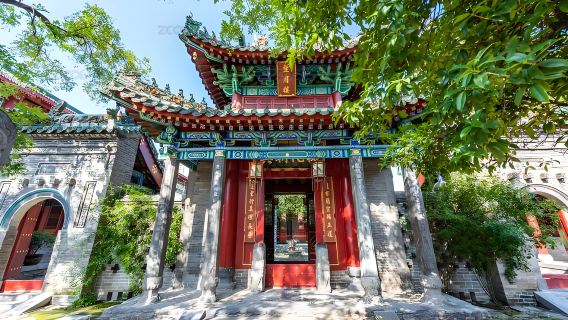
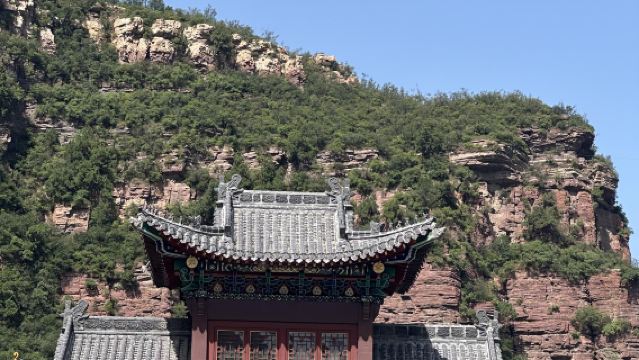
Dingzhou Confucian Temple, also known as the "Temple of Confucius," is a site dedicated to honoring Confucius. Originally built in the late Tang Dynasty around 859 AD, it has hosted ceremonial activities for over a thousand years. Historically referred to as the "Prefectural School," "State School," or "Academy," it earned the reputation of "Zhongshan's temple school surpassing all under heaven." The temple underwent multiple expansions and renovations during the Tang, Song, Yuan, and Ming dynasties, achieving grand scale before being reduced to ashes during late Ming military conflicts. Restored in the Qing Dynasty, it largely retained its pre-Ming architectural layout. Covering an area of 15,685 square meters, the temple complex now consists of three adjacent northern courtyards and a southern courtyard. The southern courtyard features a quadrangle-style Jiexiao Shrine, while the eastern courtyard houses the Chong Sheng Shrine and Kuixing Pavilion. The western courtyard includes the Minglun Hall, ceremonial gate, and main gate, while the central courtyard boasts the Dacheng Hall, east and west side halls, halberd gate, east and west official halls, as well as shrines for distinguished officials and local sages, along with the Lingxing Gate. The majestic ancient architecture, lush and ancient cypress trees, the vibrant "Scholar Tree Embracing the Toon," and the celestial "Falling Star Stone" create an elegant environment, making it a leisure-friendly tourist attraction. With its long history and well-preserved layout, Dingzhou Confucian Temple stands as one of Hebei Province's most intact Confucian temple complexes and was designated a National Key Cultural Relic Protection Unit in 2013.

Dingzhou · 978m from downtown
Zhongshan Han Tomb

Zhongshan Han Tomb

3.8
4.0/5
43 reviews

The Zhongshan Han Tomb Stone Carving Museum is an attraction that integrates three cultural heritage sites: the Zhongshan Han Tomb, the Beizhuangzi Han Tomb Stone Carvings, and the Dingzhou Stele Group. The Zhongshan Han Tomb is one of the few large brick-chambered tombs open to the public in our province, with a history of over 2,000 years. It was designated as a National Key Cultural Relics Protection Unit in 2001. The museum's corridor is adorned with 488 inscribed stone slabs excavated from the tomb of Liu Yan, the Jian King of Zhongshan, recording quarry locations and the origins of craftsmen, covering 6 provinces and 18 commanderies of the Han Dynasty. These artifacts provide precious material for studying the evolution of Chinese script from seal to clerical script and reflect the Han Dynasty's "craftsmen's names inscribed on objects" system, holding immense historical, calligraphic, and artistic value. They were listed as a Hebei Provincial Cultural Relics Protection Unit in 1982. Additionally, the museum houses over 100 steles from various dynasties, including inscriptions, epitaphs, sutra pillars, and statues. Notable examples include the Northern Qi Pengcheng Temple Stele, Emperor Qianlong's calligraphy, the Guan Yu Bamboo Poem Stele, and Wang Wei's Ink Bamboo Stele, all of significant historical, calligraphic, artistic, and painting value. These were designated as Hebei Provincial Key Cultural Relics Protection Units in 1982.

Dingzhou · 329m from downtown
Jade Emperor Palace, Dadao Temple

Jade Emperor Palace, Dadao Temple

3.8
4.5/5
34 reviews

Dadao Temple is a Taoist temple from the Yuan Dynasty. According to the "Ding County Annals," it was built during the Zhizheng era of the Yuan Dynasty. Originally, it featured a central-axis complex layout, with structures arranged from south to north: a screen wall, Guan Di Hall, Er Shen Hall, Yun Shen Hall, Jade Emperor Hall, and Lao Jun Hall, covering an area of 18 mu. Currently, the Jade Emperor Hall remains, serving as a place for Taoist worship of the Jade Emperor. The hall measures seven bays wide and four bays deep, with dimensions of 16.55 meters in length, 15.3 meters in width, and 9.53 meters in height, covering a floor area of 253.98 square meters. The architectural style features a hip-and-gable roof with glazed tile edges, a front porch, and arched rafters. The glazed tiles are primarily yellow and green, adorned with carvings of dragons, phoenixes, peonies, and other motifs. Typically, hip-and-gable roofs and overhanging gable roofs do not include gable-end walls (chitou), which are more common in flush gable roofs. However, this hall uniquely combines a hip-and-gable roof with gable-end walls, breaking conventional norms while achieving a harmonious and complementary effect. This distinctive design is one of the hall's most remarkable features. The hall's four walls preserve the magnificent gold-painted Ming Dynasty mural "Assembly of the Divine Beings" from the Wanli era (1573–1620). Measuring 37.82m in length, 2.78m in width, and covering 105.14m², this masterpiece depicts over 200 celestial figures with remarkable vitality. The north wall features the Supreme Emperor and Holy Mother flanked by four jade maidens on each side, while deities on the eastern and western walls all face northward in reverent postures. The entire composition swirls with ethereal clouds, creating a resplendent golden panorama of majestic scale. Artistically comparable to the renowned murals of Shanxi's Yongle Palace and Quyang's Beiyue Temple, this work demonstrates the Taoist painters' extraordinary compositional skills. Inscriptions on the north and south walls date the murals to "the 7th year of Wanli (1579)" and "the 8th day of the 12th month in the 55th year of Qianlong (1790)" respectively. Designated as a National Key Cultural Relic Protection Unit in 2006, the mural holds immense historical, scientific, and artistic significance.

Dingzhou · 872m from downtown
The Palace Museum
2026 Global 100 - Best Things to Do

The Palace Museum

10
4.9/5
204.9k reviews

The Forbidden City, also known as the Imperial Palace, was the imperial palace of the Ming and Qing dynasties, and is also the symbol of ancient China. When you are in the majestic and orderly high walls and deep courtyards, you can truly feel its former glory. ▲The long history has left behind large-scale precious buildings and countless cultural relics, which have also become the main attraction of visiting the Forbidden City today. ▲Classic attractions: The Forbidden City Corner Tower is a polygonal building with a convex plane on all four sides. It is located in Dongcheng District, Beijing. The roof has three layers. The upper layer is a hip roof with vertical and horizontal intersections. It is composed of a gable roof with flowing water on two slopes and a hip roof with four slopes. Because there are nine main ridges on this roof, it is called the Nine-ridge Hall. ▲Sundials are divided into two types according to their installation principle: equatorial and horizontal. The sundial installed using the equatorial principle is called an equatorial sundial. The key points of its production are that it must have a time plate, a latitude arc and a gnomon. When operating, the time plate must be parallel to the equatorial plane of the earth, the gnomon must be in the same direction as the earth's axis, and the shadow cast by the gnomon on the gnomon is the desired time. ▲The Treasure House is located in the Ningshou Palace area. It has a rich collection of treasures, including Buddhist supplies, ornaments, daily utensils, and treasures for appreciation. Among them, the red coral lion about 14 cm high, the Dongzhu court beads about 130 cm long, and the gold "Fengtianzhibao" seal are all rare treasures. ▲The Clock and Watch Museum is located in the Fengxian Hall in the palace. Most of the clocks on display are British products, but there are also clocks from other countries such as France and Switzerland. In addition to the timing function, these clocks are decorated with figures, birds, beasts, flowers, etc., which can also make various different movements. They are very delicately made. Among them, the copper-plated gilded writing clock, the copper-plated gilded enamel gourd-top fishing and woodcutting farming clock, and the copper-plated gilded rotating flower running man rhinoceros carrying clock are very rare.

China · Beijing
Universal Beijing Resort
2026 Global 100 - Best Things to Do

Universal Beijing Resort

10
4.6/5
81.8k reviews

Beijing Universal Studios is a highly anticipated theme park destination, including Universal Theme Park, Beijing Universal CityWalk, and two resort hotels. It features brand new selected Attraction and includes popular entertainment facilities and attractions from Universal Theme Parks around the world. ▲Universal Studios Beijing: Blending Chinese cultural elements to create a unique experience, it has seven theme Attraction, 37 rides and entertainment facilities and landmark attractions, 24 performances, 80 Dining and 30 retail stores.  ▲Minion Land: It is a colorful world full of joy! At this moment, these naughty Minions are walking around the streets, ports and city centers, having fun all over the world without restraint! At the same time, Gru is also recruiting soldiers for the Minions Army, so hurry up and sign up at Gru's house! ▲The Wizarding World of Harry Potter™: Here you can leave the ordinary world behind and experience the wonderful rides and endless magical adventures, which will lead you step by step into a thrilling and interesting magical world! ▲Transformers Metrobase: This is a Cybertron-style base, which is transformed by Transformers the size of a city. If you are ready to become an agent, then accept Optimus Prime's recruitment, join the Beijing Nest Force, fight side by side with the Autobots, and fight against the Decepticons to protect the earth! ▲Kung Fu Panda Land of Awesomeness: This is an ancient place like a paradise, and also a legendary place that combines the beauty of nature and craftsmanship. Come here to explore your own Kung Fu! There's also Jurassic World Isla Nublar, Hollywood, and Waterworld waiting for you to explore! ▲The Universal Studios Grand Hotel The Universal Studios Grand Hotel is located at the entrance of Universal Studios Beijing and offers Hollywood-themed accommodation and the privilege of Early Park Admission via the Universal Studios Beijing VIP Experience entrance; NUO Resort Hotel is a 5-minute walk from the entrance. Guests can enjoy a well-equipped fitness center, indoor swimming pool, and spa center (NUO SPA). Guests can also enjoy Early Park Admission via the Universal Studios Beijing VIP Experience entrance. Both hotels combine themed features with high-end facilities to create an immersive vacation experience.

China · Beijing
Badaling Great Wall
2026 Global 100 - Best Things to Do

Badaling Great Wall

10
4.7/5
63.6k reviews

The Badaling Great Wall is a highly representative section of the Ming Great Wall, located in Yanqing, Beijing, north of Juyong Pass. Since ancient times, it has been a strategic military location guarding the northwestern passage to the capital. The pass city is trapezoidal in shape, narrow in the east and wide in the west, with two gates, east and west. The east gate bears the inscription "Juyong Outer Town," and the west gate bears the inscription "Key to the North Gate." Both inscriptions remain clearly legible to this day. Extending north from the pass is the North Wall, along which more than ten watchtowers are distributed; to the south is the South Wall, which has fewer watchtowers. North Tower 8 is the highest point of the entire section, at over 1,000 meters above sea level, and from its top you can overlook the magnificent sweep of the wall winding along the mountain ridges. The North Wall has higher terrain and steeper slopes with open views, and is the main route for most visitors; the South Wall is relatively gentle and less crowded, making it suitable for visitors who want to take photos at a relaxed pace and avoid the crowds. If time permits, walking the South Wall first and then the North Wall is a more leisurely arrangement. Badaling Great Wall is also one of the earlier sections of the wall opened to the public. The top surface of the wall is paved with square bricks, and the widest parts can accommodate five horses walking side by side. Defensive structures such as battlements and arrow holes are well preserved, and walking along it gives a direct sense of the construction standards of Ming Dynasty border defense works. In fall, layers of red leaves on the mountains contrast beautifully with the gray brick wall, making it a season that many photography enthusiasts travel specifically to capture. ▲Travel through 600 years of gilded splendor and encounter the visual shock of crimson red leaves blanketing the mountains ▲nightAs night falls, it winds through the mountains like a brilliant golden dragon, and the ancient city wall illuminated by lights tells of the glory and mystery of a thousand years of history ▲ In winter, the Badaling Great Wall, covered in pristine white snow, winds through the mountains like a silver dragon. The golden light of dawn spills across the wall, painting a tranquil and magnificent picture.

China · Beijing

Experiences you can't miss in Dingzhou

Featured Culture & history in Dingzhou

View all Culture & history
[Premium private tour] Shijiazhuang day trip to Zhengding Ancient City + Zhaozhou Bridge + Berlin Zen Temple
󱌍
Duration: 3.5 hrs
English
Free cancellation
Instant confirmation
Book now for tomorrow
FromINR 10,945.37
[Premium private tour] Shijiazhuang day trip to Zhaozhou Bridge + Xibaipo - Experience two cultural landscapes
󱌍
Duration: 4 hrs
English
Free cancellation
Instant confirmation
Book now for tomorrow
FromINR 14,072.62
Admission ticket to Baoding Van Gogh starry sky art museum (technology-empowered Van Gogh classics + 4D light show feast)
󱌍
FromINR 562.91
One-day tour of Zhengding Ancient City + Longxing Temple + Rongguo Mansion + Zhaozhou Bridge in Shijiazhuang, Hebei: Chartered car + admission
󱌍
FromINR 3,625.23
One-day private tour of Zhengding Ancient City + Longxing Temple + Rongguo Mansion + Zhaozhou Bridge in Shijiazhuang, Hebei
󱌍
Duration: 3.8 hrs
English
Free cancellation
Instant confirmation
Book now for tomorrow
FromINR 6,699.79
Dingzhou Today's weatherClear -2-13℃
Dingzhou weather for the next 2 days11/10: -1-15℃, 11/11: 0-14℃

Free things to do in Dingzhou

What travellers say about Dingzhou

user-avatar
_We***0811 October 2026
5.0
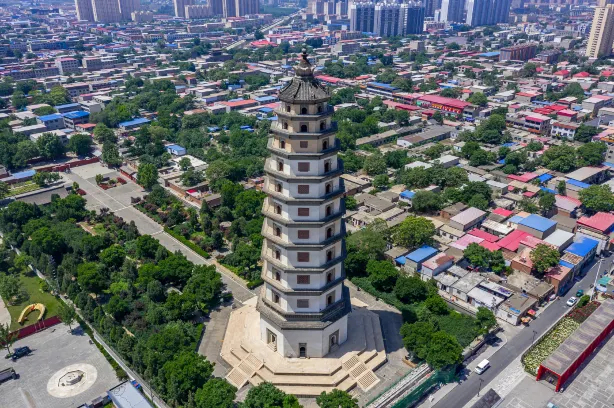
When visiting Dingzhou Ancient City, Kaiyuan Temple Pagoda is an absolute must-see! It is the famous "First Pagoda of China" mentioned in the old saying "Cangzhou Lion, Dingzhou Pagoda, and the Great Bodhisattva of Zhen Ding Prefecture". It took 55 years to complete in the Northern Song Dynasty and is 83.7 meters high. Standing at the foot of the pagoda and looking up, the visual impact is really strong.

The Kaiyuan Temple Pagoda

user-avatar
燕知归处16 April 2026
5.0
The Dingzhou Examination Hall, actually the Dingzhou Examination Hall, was where the Qing Dynasty's preliminary examinations were held. The Lansheng Tower, also known as the Rear Tower, served as the offices and lodgings for the examiners. The statue of Kui Xing, the god of literature, is enshrined in the Kui Pavilion. Kui Xing is depicted with one leg raised backward, holding a dipper in one hand and a writing brush in the other, pointing to the successful candidate. This is the legendary "Kui Xing Pointing at the Dipper." The Qianlong Twin Locust Trees are located between the two main gates. Legend has it that Emperor Qianlong planted these two locust trees himself during his six trips to the south and five visits to Dingzhou.

Dingzhou Examination Hall

user-avatar
M18***014 May 2025
5.0
This museum is very good. Although it does not have the usual historical exhibits of the area, the classification of each theme also describes important historical events and figures experienced in the area. There are also many fine works, and the texts, pictures and tables are also very clear. The museum's exhibition environment is also good. I personally think it is worth a visit.

Dingzhou Museum
user-avatar
龙行天下之飞龙在天5 December 2025
5.0
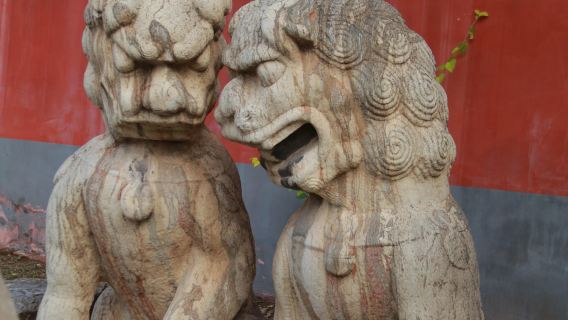
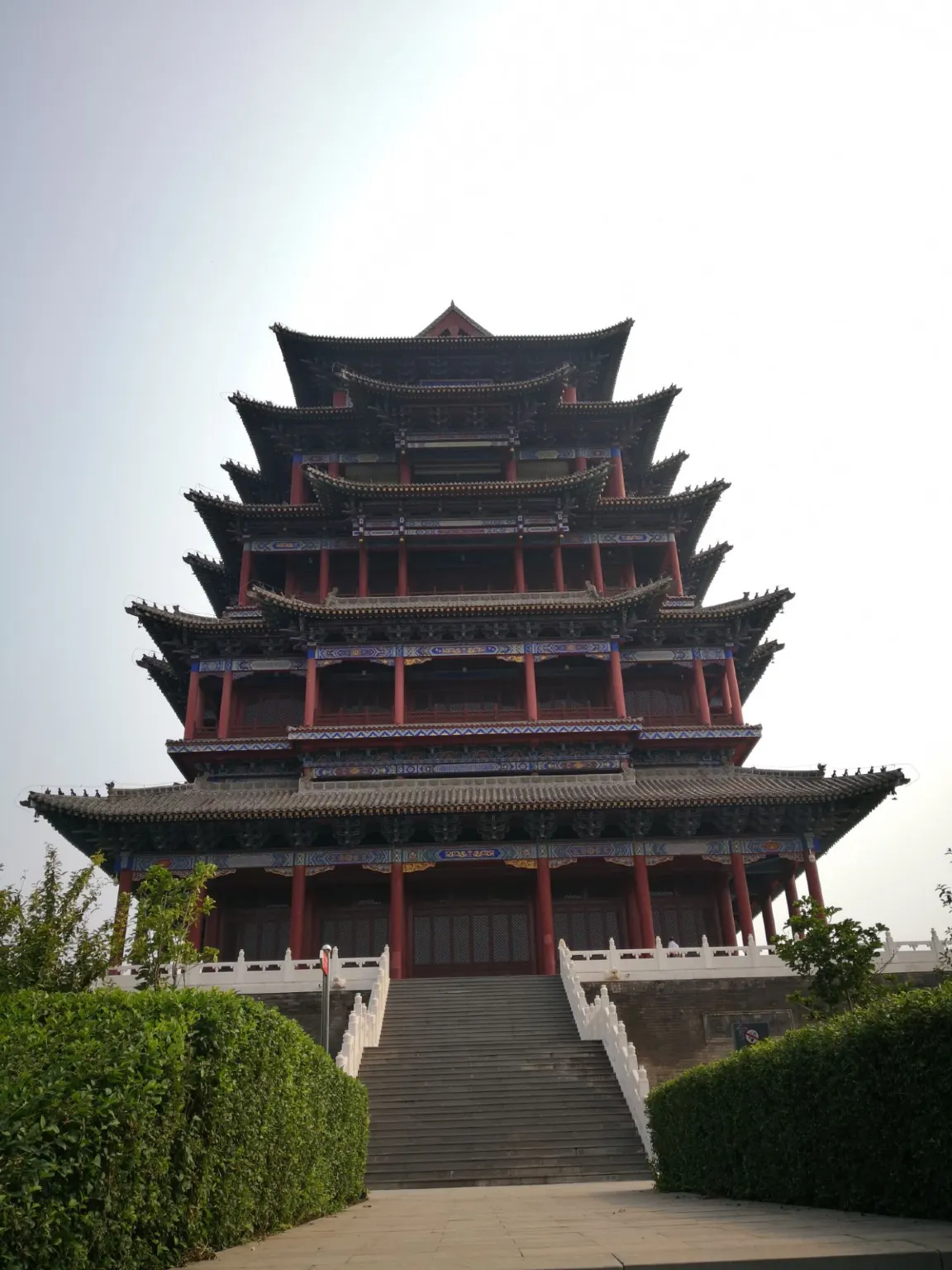
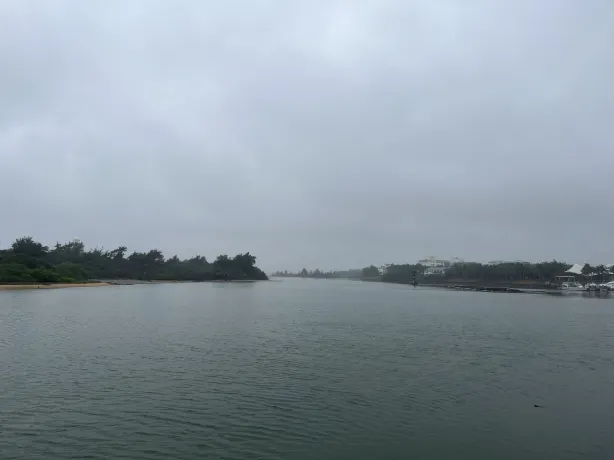
Dingzhou Confucian Temple (also known as Dingzhou Confucius Temple) is one of the oldest and largest existing Confucian temple complexes in northern China. Its specific information is as follows: I. Construction Date: Dingzhou Confucian Temple was first built in the second year of the Dazhong era of the Tang Dynasty (848 AD). It has been rebuilt and expanded many times throughout history. The existing buildings are mainly from the Ming and Qing dynasties, preserving the typical layout of an ancient Confucian temple. II. Architectural Style: The temple is built in the official architectural style of northern China, following the symmetrical layout of traditional Chinese ritual architecture. The architectural form is solemn and rigorous, reflecting the sense of order in Confucian culture and the solemnity of sacrificial architecture. Its architectural details (such as brackets, beams, and roof forms) have the characteristics of northern architecture in the Ming and Qing dynasties, while also incorporating local craftsmanship. III. Building Area and Layout: * Area: The temple covers an area of ​​approximately 12,600 square meters, with a building area of ​​approximately 3,000 square meters. It is a large-scale complex with progressively tiered courtyards. • Layout: Adopting a typical Confucian temple layout, the main structures along the north-south central axis are as follows: • Front Section: The towering palace wall (screen wall), the Lingxing Gate, the Pan Pool, and the Ji Gate. • Core Section: The Dacheng Hall (main hall, enshrining Confucius), and the east and west wings (for secondary shrines to sages and scholars). • Rear Section: The Minglun Hall (lecture hall), and the Chongsheng Shrine (for worshipping Confucius and his ancestors). IV. Main Features 1. Outstanding Historical Value: As a Confucian temple originally built in the Tang Dynasty and rebuilt in the Ming and Qing Dynasties, it is a physical testament to the development history of Confucian temples in North China and was listed as a National Key Cultural Relics Protection Unit in 2006. 2. Well-Preserved Architecture: The axis is clear, and the main buildings, such as the Dacheng Hall and the Lingxing Gate, are well-preserved, showcasing the craftsmanship and form of official Ming and Qing architecture. 3. Unique Cultural Fusion: The Dingzhou Confucian Temple houses the Dingzhou Museum (originally the Minglun Hall and its rear courtyard), combining ancient architecture with local cultural relics displays, serving multiple functions including worship, education, and exhibition. 4. Ancient Tree Remains: Several ancient cypress trees remain within the temple grounds, the most famous being the "Dongpo Twin Locust Trees" (two locust trees in the north courtyard), said to have been planted by Su Shi himself. Although not originally planted during the Tang Dynasty, they add to the cultural significance. 5. Regional Representativeness: It is an important site for studying ancient ritual architecture, imperial examination education, and the dissemination of Confucian culture in Hebei Province and even northern China. At one point, the Confucian Temple also served as a museum, exhibiting and preserving cultural relics unearthed in Dingzhou over the years: jade burial suits with gold and silver threads, as well as porcelain from the Ding kiln. Historically, the Dingzhou Confucian Temple was adjacent to the Dingzhou Examination Hall (ancient examination hall), together forming a local cultural and educational center. Today, as an important part of the Dingzhou Ancient City cultural district, it is open to the public, serving both cultural relic protection and cultural education functions.

Dingzhou Confucian Temple
user-avatar
中山阳明2 January 2026
4.0
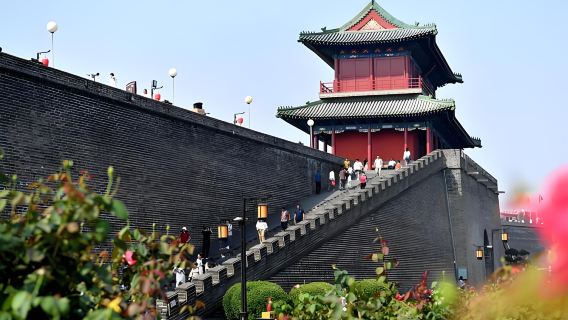
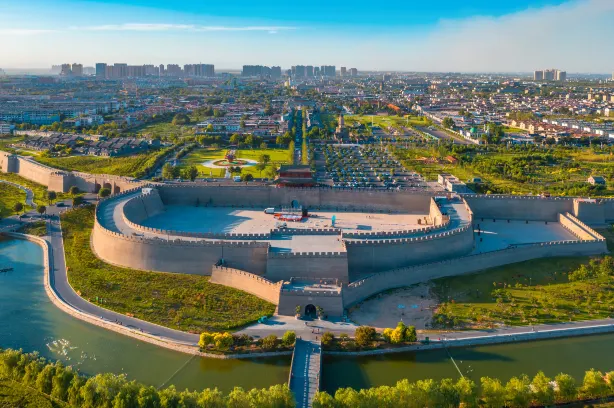
Dingzhou is a county-level city under Baoding. Although small, it boasts a treasure museum and a famous ancient pagoda. The ancient city of Dingzhou is situated around the pagoda, with a grand city gate and quiet alleyways surrounding it. The antique-style street is relatively quiet during the day, with few shops, but it might become more lively at night.

Dingzhou Ancient City

user-avatar
肆面锺郎4 November 2026
4.0
The scenic area was deserted early in the morning. Walking down on my own was quite thrilling. The tomb chamber wasn't large, but its layout was classic, and the burial was rather shallow. The last time I had a similar experience was at the Wang Jianling Mausoleum in Chengdu. The stone tablets in the courtyard were quite nice, and there were many treasures. It's worth a visit to gather some positive energy.

Zhongshan Han Tomb

user-avatar
M15***2826 March 2026
5.0
What a pleasant surprise! The original Yuan Dynasty structure is truly remarkable; the brackets and beams are unlike anything from other contemporary or later dynasties. I almost didn't go after reading online reviews, but I'm so glad I did! The information about the Jade Emperor Hall and the immortals in the underground area was also quite good.

Jade Emperor Palace, Dadao Temple

user-avatar
M85***728 November 2026
5.0
The Forbidden City truly lives up to its reputation as a palace steeped in history—everywhere you look, you see historical culture and the ingenuity of craftsmen. A cursory glance on your own would only reveal a vast palace complex. I was fortunate enough to have a detailed tour guided by Li Yan, whom I described as a "scholar," for three hours, and even then, it was only a small part of the palace. Next time I go, I'll definitely book another tour; I've noticed that each tour guide's explanation is different! Haha, it was definitely worth the trip. Thanks to the tour guide! I initially booked a tour because I couldn't get tickets, but it turned out to be a great option!

The Palace Museum

user-avatar
Anonymous user8 November 2026
5.0
The experience is great. The queue times a bit bummer, but expected. Overall solid experience for whole day

Universal Beijing Resort

user-avatar
M60***395 November 2026
5.0
Since I was in Beijing, I had to visit the Great Wall. The scenery there is irreplaceable. Taking the cable car up felt short, but it saved me a lot of energy, allowing me to use it for climbing the Great Wall. 😀 The Great Wall winds its way up and stretches far into the distance, it's truly magnificent. I heard that some sections of the northern route are currently under renovation.

Badaling Great Wall

Trip Moments in Dingzhou

Popular cities near Dingzhou

Frequently asked questions

How can I contact Trip.com customer support?

Get help anytime, anywhere within 30 secondsContact customer support

Change and cancellation policies vary by attractions and tours. Please check the product details page for more information.

Ticket prices may vary between weekdays and weekends, as well as during peak and off-peak seasons. When booking with Trip.com, you can also use Trip Coins to get extra savings. For more tips on booking discounted tickets, please visit Trip.com for the latest information.