Things to do in Huimin
Explore top experiences
Top 10 attractions in Huimin


Wei Family Manor
Wei Family Manor is located in Weiji Town, Huimin County, Shandong Province. As a nationally significant cultural heritage site and a AAA-rated tourist attraction, it is renowned as one of "China's Three Great Manors" alongside Mou Family Manor in Yantai and Liu Wencai Manor in Sichuan. It stands as the only surviving castle-style manor in China. The Wei family was a prominent noble clan in northern Shandong, with over 20 members across six generations serving as imperial officials, some reaching the high rank of second-grade official. They owned over 3,000 acres of fertile land around Weiji Village and operated numerous banks and pawnshops across northern China under the business names "Xiehe" and "Xiezeng." The Weis represented a powerful trinity of bureaucrats, landlords, and merchants. Wei Family Manor consists of three architectural complexes: Shude Hall, Xiyi Hall, and Fushou Hall. Built during the Qing Dynasty, this grand estate features exquisite craftsmanship and spans 32,543 square meters with nearly 100 preserved rooms, boasting over a century of history. The Shude Hall stands out as a distinctive feature—originally the private residence of Wei Zhaoqing, a Qing Dynasty Tongzhi (sub-prefect) of Wuding Prefecture. Constructed between 1890 and 1893 during Emperor Guangxu's reign, it was designed by master architects from the imperial construction bureau and meticulously built by skilled artisans. The estate faces east, boasting an imposing layout that integrates residential quarters, a plaza, ponds, gardens, and an ancestral hall. Its unique architectural style blends military-defensive fortress walls with the traditional Beijing courtyard-house design, creating a remarkable fusion. The castle-style residence is the main structure of the manor complex, featuring rectangular fortification walls that follow the architectural patterns and characteristics of ancient Chinese city walls. It includes city gates, gate towers, horse-face bastions, and innovatively added protruding watchtowers. The walls stand 10 meters high with a 1.5-meter-wide top, equipped with battlements and parapets. Thirteen niches for armed personnel to conduct outward shooting are embedded along the inner walls. The northern parapet is designed with sawtooth crenellations, some sections so narrow they allow only single-file movement—embodying the military defense philosophy of "one warrior holding the pass against ten thousand." With its strong defensive features and adaptation of fortress architecture into traditional dwellings, it serves as a prime example of Sun Tzu's *The Art of War* applied to residential design. The inner residence forms the core of the manor complex, designed and constructed according to the Qing Dynasty's "Ministry of Works Engineering Standards." Each individual building is arranged along a central axis, creating independent units. These structures are interconnected by ceremonial gates, service passages, and secret tunnels, skillfully blending the architectural artistry of northern courtyard houses with southern loft buildings. The design inherits the symmetry, precision, and grandeur of northern architecture while showcasing the flexible spatial arrangements characteristic of southern styles. The manor features a mill courtyard with substantial underground coal reserves and large stockpiles of grain and oil. In times of war or prolonged famine, the estate could sustain itself for three years with closed gates—fully self-sufficient in food, clothing, and supplies—reflecting the feudal society's self-reliant economy. The Xiyi Hall and Fushou Hall exhibit exquisite craftsmanship, each with distinct stylistic features and strong regional influences. Wei Family Manor boasts profound cultural heritage, showcasing exquisite architectural artistry and the vast depth of Chinese national culture. With recent extensive restoration and development efforts, along with enriched interior displays, the manor strives to regain its former glory, becoming an ideal destination for visitors to experience the vibrant folk culture of northern Shandong.Huimin · 30.9km from downtown

Weiji Ancient Village
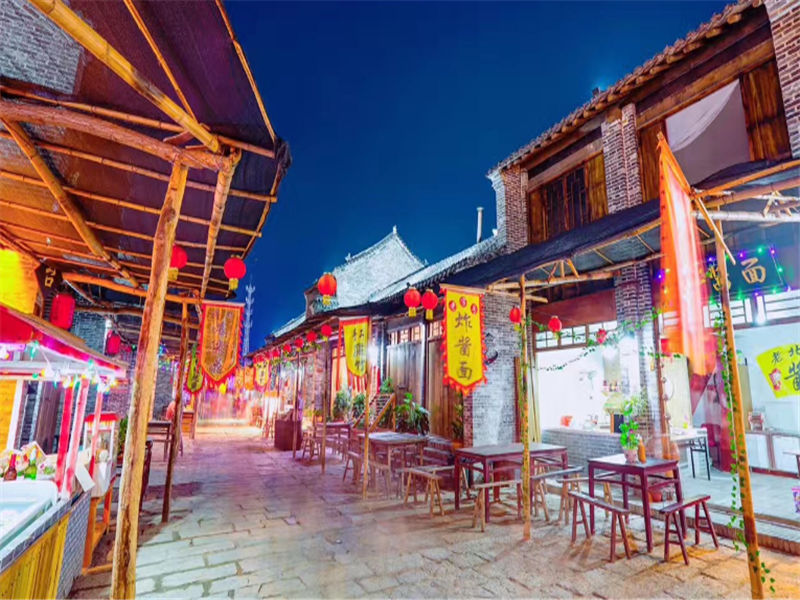
Located on Tonghan Road, Weiji Town, Huimin County, Binzhou City, Shandong Province, Weiji Ancient Village is a scenic spot imitating the ancient architectural style of the Ming and Qing Dynasties. It is divided into five streets: Flavor Snack Street, Handicraft Workshop Street, Folk Theme Street, Bar Culture Street and Yuanding Street. There is special food, handicrafts and local folk activities, such as the dragon and lion dance, shadow play and acrobatics.Huimin · 30.5km from downtown

Universal Beijing Resort
Beijing Universal Studios is a highly anticipated theme park destination, including Universal Theme Park, Beijing Universal CityWalk, and two resort hotels. It features brand new selected Attraction and includes popular entertainment facilities and attractions from Universal Theme Parks around the world. ▲Universal Studios Beijing: Blending Chinese cultural elements to create a unique experience, it has seven theme Attraction, 37 rides and entertainment facilities and landmark attractions, 24 performances, 80 Dining and 30 retail stores. ▲Minion Land: It is a colorful world full of joy! At this moment, these naughty Minions are walking around the streets, ports and city centers, having fun all over the world without restraint! At the same time, Gru is also recruiting soldiers for the Minions Army, so hurry up and sign up at Gru's house! ▲The Wizarding World of Harry Potter™: Here you can leave the ordinary world behind and experience the wonderful rides and endless magical adventures, which will lead you step by step into a thrilling and interesting magical world! ▲Transformers Metrobase: This is a Cybertron-style base, which is transformed by Transformers the size of a city. If you are ready to become an agent, then accept Optimus Prime's recruitment, join the Beijing Nest Force, fight side by side with the Autobots, and fight against the Decepticons to protect the earth! ▲Kung Fu Panda Land of Awesomeness: This is an ancient place like a paradise, and also a legendary place that combines the beauty of nature and craftsmanship. Come here to explore your own Kung Fu! There's also Jurassic World Isla Nublar, Hollywood, and Waterworld waiting for you to explore! ▲The Universal Studios Grand Hotel The Universal Studios Grand Hotel is located at the entrance of Universal Studios Beijing and offers Hollywood-themed accommodation and the privilege of Early Park Admission via the Universal Studios Beijing VIP Experience entrance; NUO Resort Hotel is a 5-minute walk from the entrance. Guests can enjoy a well-equipped fitness center, indoor swimming pool, and spa center (NUO SPA). Guests can also enjoy Early Park Admission via the Universal Studios Beijing VIP Experience entrance. Both hotels combine themed features with high-end facilities to create an immersive vacation experience.China · Beijing

The Palace Museum
The Forbidden City, also known as the Imperial Palace, was the imperial palace of the Ming and Qing dynasties, and is also the symbol of ancient China. When you are in the majestic and orderly high walls and deep courtyards, you can truly feel its former glory. ▲The long history has left behind large-scale precious buildings and countless cultural relics, which have also become the main attraction of visiting the Forbidden City today. ▲Classic attractions: The Forbidden City Corner Tower is a polygonal building with a convex plane on all four sides. It is located in Dongcheng District, Beijing. The roof has three layers. The upper layer is a hip roof with vertical and horizontal intersections. It is composed of a gable roof with flowing water on two slopes and a hip roof with four slopes. Because there are nine main ridges on this roof, it is called the Nine-ridge Hall. ▲Sundials are divided into two types according to their installation principle: equatorial and horizontal. The sundial installed using the equatorial principle is called an equatorial sundial. The key points of its production are that it must have a time plate, a latitude arc and a gnomon. When operating, the time plate must be parallel to the equatorial plane of the earth, the gnomon must be in the same direction as the earth's axis, and the shadow cast by the gnomon on the gnomon is the desired time. ▲The Treasure House is located in the Ningshou Palace area. It has a rich collection of treasures, including Buddhist supplies, ornaments, daily utensils, and treasures for appreciation. Among them, the red coral lion about 14 cm high, the Dongzhu court beads about 130 cm long, and the gold "Fengtianzhibao" seal are all rare treasures. ▲The Clock and Watch Museum is located in the Fengxian Hall in the palace. Most of the clocks on display are British products, but there are also clocks from other countries such as France and Switzerland. In addition to the timing function, these clocks are decorated with figures, birds, beasts, flowers, etc., which can also make various different movements. They are very delicately made. Among them, the copper-plated gilded writing clock, the copper-plated gilded enamel gourd-top fishing and woodcutting farming clock, and the copper-plated gilded rotating flower running man rhinoceros carrying clock are very rare.China · Beijing

Xincheng Rural Eco-tourism Area
Xincheng Rural Ecological Tourism AreaLocated at No. 888, Binhui Avenue, Madian Town, Huimin County, Binzhou City, Shandong Province, it is a leisure and tourism resort integrating modern high-efficiency agriculture, circular agriculture, leisure tourism, medical and health care combined with ecological elderly care, hot spring health care, parent-child vacation, popular science education, smart entertainment, and outlets. It has a dreamy greenhouse for viewing flowers and trees, a cute pet park for intimate interaction, and a water park for dynamic and refreshing fun. Whatever you want to play, it is here!Huimin · 13.6km from downtown

Mount Taishan
Crowned as "The King of the Five Sacred Mountains", Mount Tai has been one of China's most famous mountain peaks since ancient times. A large and impressive rock mass covering 25,000 ha and rising to 1,545 m above the surrounding plateau, Mount Taishan is considered one of the most beautiful scenic spots in China and was an important cradle of oriental East Asian culture since the earliest times. The mountain was an important object of the cult worship of mountains even before 219 BCE, when the Qin Emperor paid tribute to the mountain to inform the gods of his success in unifying all of China. Watching the sunrise and catching the spectacular sea of clouds are common activities that visitors engage in. You are also encouraged to explore the ancient sites, engravings, and religious temples to understand the role of Mount Tai in China's long history.China · Tai'an

Tsingtao Beer Museum
The Tsingtao Beer Museum is located at No. 56 Dengzhou Road, the birthplace of Tsingtao beer. This century-old factory, housed in a 1903 German-style industrial complex, witnesses China's beer industry journey from its infancy to prominence. As China's first beer-themed model for industrial heritage revitalization, the museum transforms weathered red-brick workshops into immersive spaces using precious early equipment like old motors, mash kettles, and boiling kettles. Visitors walking through the century-old memory corridor can touch over 30,000 artifacts from the German occupation era while overlooking the smart production lines of the "lighthouse factory" through glass walls. Through the dialogue between traditional wooden fermentation tanks and fully automated filling equipment, they decode the evolution of Chinese manufacturing from artisanal heritage to digital transformation. With the innovative concept of "living heritage + technological empowerment," the museum breaks free from the static display constraints of industrial sites. The VR brewing lab allows visitors to become brewers adjusting malt ratios, while the hop recognition system decodes the scientific secrets behind beer flavors. Personalized beer label printing customizes brews, turning taste into portable urban memories. This cultural landmark, bearing Qingdao's industrial DNA, not only showcases its benchmark value in cultural-tourism integration through honors like "national first-class museum" and "China's top 10 cultural heritage tourism cases," but also injects more sustainable vitality into the century-old factory by being selected as a "national cultural industry demonstration base." It continues to brew the city's cultural richness from industrial heritage amid the tides of time.China · Qingdao

Baotu Spring
Baotu Spring is located in the bustling downtown area of Jinan, bordered by Qianfo Mountain to the south, Daming Lake attraction to the north, and connected to Quancheng Square to the east. This spring-themed garden is renowned as the "No. 1 spring under heaven" and ranks first among Jinan's "72 famous springs," with a history spanning over 2,000 years. It has also frequently appeared in literary works, most notably in Lao She's "Baotu Spring." Visitors come here to witness the spectacular sight of the three gushing springs. The main spring serves as the park's centerpiece, with its crystal-clear water gushing in three separate jets day and night, reaching several feet high during peak flow. The spring is surrounded by large stone masonry and guardrails, allowing visitors to overlook the spectacular sight of the three jets from the railings. A dark green stone tablet inscribed with "No. 1 spring" stands nearby, bearing the calligraphy of Licheng's Wang Zhonglin from the Tongzhi era of the Qing Dynasty. In the vicinity, over thirty other famous springs are scattered, including Jinxian Spring, Shuyu Spring, Xibo Spring, Liuxu Spring, Huanghua Spring, Dukang Spring, and Bailong Spring. July and August, when local rainfall is abundant, make for the best season to observe these springs. In the height of summer, visitors can get up close with the springs in the park. Some springs have no railings around them, with stone paths in the pools where water flows over. Visitors can step into the pools to interact with the water, walking on the stone paths where their feet will get wet from the cool spring water. Besides water interaction, there are free drinking springs available for visitors by the pools. On the east side of the springs stands the Wangheting teahouse, specially catering to visitors.This springFragrant tea brewed with water at a moderate price. In addition to the springs, another highlight of the park is its magnificent south gate, adorned with grandeur and elegance. The horizontal plaque above the gate, inscribed with "Baotu Spring" in golden characters on a blue background, bears the imperial handwriting of Emperor Qianlong from the Qing Dynasty. It is acclaimed as the "first gate" of Chinese classical gardens. In previous years, seasonal water stoppages frequently occurred here, but through recent conservation efforts, normal water levels have been largely restored. Additionally, the attraction regularly hosts various cultural events. Every year on the first day of the lunar new year, a lantern festival is held for 20 days. In late September, there's a spring water culture festival lasting about 10 days, featuring folk activities, calligraphy and painting exhibitions, and traditional opera performances for visitors to enjoy. From late October to late November, a chrysanthemum exhibition takes place where the golden fall scenery of gushing springs and blooming chrysanthemums creates a spectacular sight well worth seeing. In addition, the attraction has launched a cruise route. After visiting the attraction, interested visitors can board the cruise at the dock, passing through the west gate bridge in Jinan's old town, the east gate of Wulongtan Park, and entering Wulongtan Lock, Jinan's first passenger ship lock in history, where they can experience a drop of over 2 m. Sitting on the east side of the boat, visitors can also see the relief of "Jinan's eight scenic views". The riverbanks along the route are lined with aquatic plants, and the water is crystal clear. The cruise finally passes through Yanbo Bridge and enters the Daming Lake attraction.China · Jinan

Prince Kung's Palace Museum
Prince Kung's Palace Museum is located by the Shichahai lakeside and stands as one of the best-preserved princely mansions from the Qing dynasty in Beijing. It originally served as the residence of Heshen, a powerful official during Emperor Qianlong's reign. After Heshen's downfall, the property was granted to Prince Qing Yonglin, and later to Prince Gong Yixin during the Xianfeng era, hence the name "Prince Kung's Palace." This mansion witnessed the entire decline of the Qing dynasty, earning the saying "One Prince Kung's Palace, half the history of the Qing dynasty." The complex features a mansion in the front and a garden at the rear, both laid out along central, eastern, and western axes with meticulous order and grandeur. The mansion consists of multiple siheyuan courtyards connected along a central axis: The central Yinan Hall, roofed with green glazed tiles, follows the specifications of a prince's main hall. On the eastern route, the two-courtyard complex of Ledao Hall and Duofu Pavilion once served as the residence of Heshen's son Fengshen Yinde and Princess Hexiao of the Gulun rank, with Ledao Hall later becoming Prince Gong's living quarters. The western route features delicate refinement, with Xijin Study standing out particularly – its partitions are entirely made of exquisitely carved nanmu wood, modeled after the Ning Shou Palace in the Forbidden City. This extravagant construction later became one of Heshen's listed crimes. At the mansion's end stands a two-story elongated building commonly called "Ninety-nine and a half rooms," its rear wall punctuated by a row of variously shaped decorative windows. Legend claims this was the treasure vault and marks the boundary between mansion and garden. The garden, named Cuijin Garden, was reconstructed by Prince Gong's commissioned artisans, blending the charm of Jiangnan landscapes with northern architectural layouts. Its three marvels are the Western-style gate carved from white marble, the stele inscribed with the character "Fu" (blessing) by Emperor Kangxi, and the grand all-wood theater. Hidden in the Secret Cloud Cave within rockeries, the "Fu" stele conceals wishes for numerous descendants, abundant harvests, talent, longevity, and blessings in its strokes—easily missed if one isn't attentive. The theater, an enclosed wooden structure, reportedly projects vocals throughout without amplification. Bat motifs dominate the garden's "blessing" theme: the Bat Pool, Bat Hall, and painted beams interplay harmoniously. From the Moon-Inviting Platform, visitors overlook the entire garden, while the Winding Stream Pavilion preserves the refined legacy of ancient floating wine cup poetry. When touring, you may first follow the central axis to see the mansion, then pass through the western gate to enter and appreciate the garden in detail. There are usually more travelers visiting during holidays, so it's advisable to start early and allow enough time to slowly savor the history and details of this princely mansion.China · Beijing

Temple of Heaven
The Temple of Heaven is a unique altar for emperors of the Ming and Qing dynasties. Here, people worship the heavens, ask for rain, and pray for a better harvest. It is a famous ancient building in China. The Temple of Heaven is divided into two parts: the Inner Altar and the Outer Altar. Well-known structures such as the Hall of Prayer for Good Harvest and the Echo Wall are located in the Inner Altar. While visiting the Temple of Heaven, tourists get to experience the grand praying ceremony of ancient emperors and observe the ingenious designs such as the Echo Wall and the Triple Sound Stones. The wisdom of the ancient craftsmen will not fail to impress you.China · Beijing
Experiences you can't miss in Huimin
Featured Cultural experiences in Huimin
View all Cultural experiences
FromSAR 637.98

FromSAR 486.57
FromSAR 971.26
Featured Food & drink in Huimin
View all Food & drink

5.0/5
· 3 reviews· 30 bookedFree cancellation
Instant confirmation
Book now for tomorrow
FromSAR 78.60
Free cancellation
Instant confirmation
Book now for tomorrow
FromSAR 111.73
Free cancellation
Instant confirmation
Book now for tomorrow
FromSAR 94.32
Free cancellation
Instant confirmation
Book now for tomorrow
FromSAR 536.72
Free things to do in Huimin
Wei Family Manor
Huimin · 30.9km from downtownImmediate access, Book now for today, Cancel anytimeWeiji Ancient Village
Huimin · 30.5km from downtownUniversal Beijing Resort
China · BeijingImmediate access, Book now for todayThe Palace Museum
China · BeijingXincheng Rural Eco-tourism Area
Huimin · 13.6km from downtownMount Taishan
China · Tai'anImmediate access, Book now for today, Cancel anytimeTsingtao Beer Museum
China · QingdaoImmediate access, Book now for today, Cancel anytimeBaotu Spring
China · JinanImmediate access, Book now for today, Cancel anytimePrince Kung's Palace Museum
China · BeijingImmediate access, Book now for todayTemple of Heaven
China · BeijingImmediate access, Book now for today
What travellers say about Huimin

136***3718 June 2026
5.0
The escape routes within the traditional courtyard house are incredibly ingenious and well worth exploring. It's best to do some research beforehand, or hire a guide on-site; it will definitely be worth the trip. Security is as tight as the escape routes on a city wall; rules are as strict as the well water used by the women; the guards are as mysterious as the cabinets where bodyguards hide; and the escape routes are as ingenious as the design of hidden doors and drawbridges. While not as grand as the Wang Family Compound, nor as famous as the Qiao Family Compound, the Wei Family Manor is a system in itself, full of mysteries and intricate calculations—it's truly fascinating.
Wei Family Manor

M12***114 October 2024
5.0
I came here mainly to see the Wei's Manor, and the ancient village is a few minutes away from the manor. Although I came during the National Day, there were not many people because the weather was cool and the temperature was suitable. I strolled around for more than 2 hours. There were different performances in different places. I strolled around while watching the performances, and it was good overall.
Weiji Ancient Village

Narmin199820 October 2026
4.0
The attractions were not wow. I was in Warner in Spain and Disneylands, it is not that good. Too crowded too short activities. Only Harry Potter part was just amazing. Jurassic park was 4/5 others just 3/5. Kung fu panda was great but the attraction was closed.
Universal Beijing Resort

300***2319 October 2026
5.0
Guide Su is a fantastic tour guide who takes good care of every visitor. Although the weather was uncooperative and it was raining, we were still able to follow Guide Su's explanations and complete all the procedures, thus successfully concluding our three-hour tour of the Palace Museum.
The Palace Museum

月冷风轻7 April 2023
5.0
The environment is very good, the air is fresh, and all the children's rides are free. My son likes it very much and will come back next time. The restaurant has a poor price-performance ratio and the stir-fried dishes taste very average.
Xincheng Rural Eco-tourism Area

Anonymous user19 October 2026
4.0
Suggest to reach in in early afternoon for a short trek around the area and catch the sunset. stay for a night to see the sunrise next day. Very beautifu & memorablel views. Great food condidered considered its so high up..
Mount Taishan
Anonymous user19 October 2026
5.0
A fantastic museum with a fantastic experience. The beer we drank in the brewery was really good, and it was also quite accessible for people with disabilities. It was even free for seniors, which was really interesting!
Tsingtao Beer Museum

_We***9020 October 2026
5.0
I visited last year and was lucky enough to admire the chrysanthemums in the garden; this was my second time there. I'll probably go again next time I'm in Jinan. I especially love this kind of ancient architecture; it makes me feel incredibly comfortable.
Baotu Spring
156***7018 October 2026
5.0
When visiting historical sites in Beijing, the subway is the must-use mode of transportation. Hiring a guided tour is highly recommended. The vast Prince Gong's Mansion came alive under the guidance of Liu, the guide from Xiucai Shuo. After this guided tour, I can easily stroll around the mansion on my own next time. The crowds are larger in the afternoon; the guide said it's better in the morning.
Prince Kung's Palace Museum
Ratnatrip19 October 2026
5.0
Risa was an amazing guide for our tour of the Temple of Heaven! She was on time and shared so much deep, interesting knowledge that really brought the history to life. We truly enjoyed walking through the grounds with her. The tour was excellent, though upgrading the earpieces would make it even better. Thank you, Risa, for a great day!
Temple of Heaven


