Jian'ou

Things to do in Jian'ou

Search attractions or local attractions & tours
Search

Explore top experiences

Top 10 attractions in Jian'ou
View all Attractions
Xiandu Scenic Area
No. 14 of Best Things to Do in Zhejiang

Xiandu Scenic Area

7.9
4.6/5
6.5k reviews

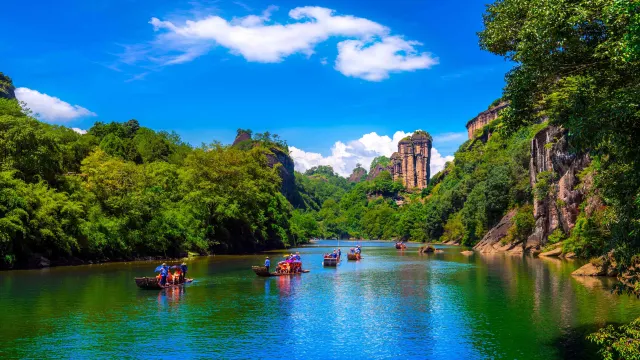
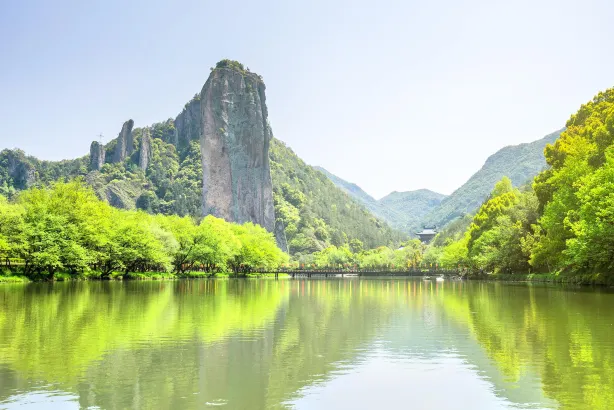
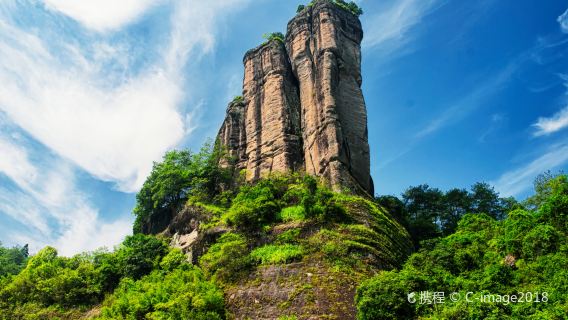
Xiandu Scenic Area is located in Jinyun, Lishui, Zhejiang, where the Hao River meanders through mountain valleys with nine winding turns. This landscape has long been praised as "possessing the elegance of Guilin, the wonder of Huangshan, and the precipitousness of Huashan." The attraction's name has an interesting origin: legend says during the Tang Tianbao era, colorful clouds enveloped Jinyun Mountain with faint celestial music, prompting Emperor Xuanzong to bestow the name "Xiandu" (immortal capital), which remains in use today. The centerpiece is the 100-meter-high Dinghu peak, a giant stone pillar resembling a bamboo shoot. Flanked by Buxu Mountain to the east and the Hao River to the west, this sheer column features a small lake and ancient pines atop its summit. Folklore claims the Yellow Emperor once refined elixirs here, and when he ascended to heaven on a dragon, his cauldron fell to form the lake—hence the name "Dinghu" (cauldron lake). From nearby Buxu Mountain's peak, visitors can closely observe this sky-piercing pillar. Across the river at Zhutan Mountain, morning mist often blankets the water, framing the stone peak, bridge, and reflections like a flowing ink painting—the setting for that widely circulated photo of an old farmer leading an ox across the stream. Along the Hao River lie attractions like Little Red Cliff, Niweng Cave, and Dufeng Academy: the former features reddish cliffs stretching along the river; Niweng Cave preserves cliff carvings across dynasties, notably the precious Tang-dynasty seal script inscription by calligrapher Li Yangbing; Dufeng Academy commemorates Zhu Xi's lectures during the Southern Song. Below Dinghu peak stands the Yellow Emperor Temple, hosting solemn sacrificial ceremonies annually during Qingming and Chongyang festivals. This natural scenery has long been a favored filming location, featured in hundreds of productions from "Demi-Gods and Semi-Devils" and "The Smiling, Proud Wanderer" to "Swords of Legends" and "The Journey of Flower"—many ethereal wuxia scenes were shot on location rather than in studios. While exploring, visitors might recognize familiar scenes from these dramas.

China · Jinyun
From €12.36
Yunshuiyao Ancient Town
No. 4 of Night Attractions in Fujian

Yunshuiyao Ancient Town

7.8
4.4/5
4.7k reviews

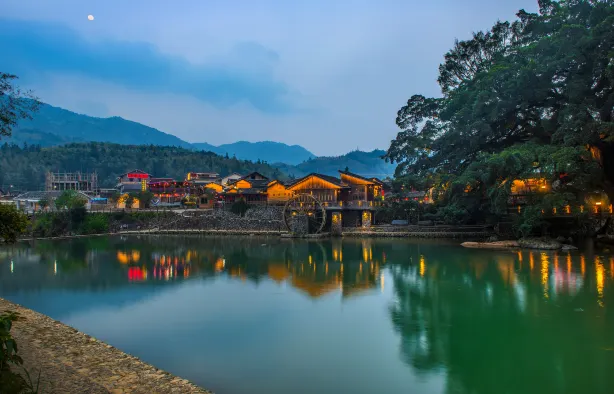
Yunshuiyao Ancient Town was originally named Changjiao, but gained fame after the film "The Knot" was filmed here. The ancient village subsequently adopted the movie's name and has now become a highly popular stop in the Fujian Tulou area. The attraction consists of three parts—Yunshuiyao Ancient Town, Hegui Building, and Huaiyuan Building—stretching along the Changjiao River. The ancient village sits in the middle, with the two tulou buildings at either end of the river, all connected by a walkable route. The five-story Hegui Building stands out with its striking square structure, a rare tall rectangular tulou. What's more remarkable is that it was built entirely on marshland, supported by pinewood piles that have held firm for over 200 years, earning it the nickname "Noah's Ark on land." In its central courtyard lies a small sunken pebble area that remains perpetually damp - stepping on it and gently stomping reveals subtle vibrations beneath your feet. The compound also features two ancient wells positioned close together: one with clear water and the other with turbid water, locally called the "yin-yang wells." In contrast, the Huaiyuan Building embodies a different character. This concentric circular tulou features an ancestral hall named "This Is the Room" at its inner ring's center, which once served as the Jian family's private school. Its intricately carved beams and rafters showcase exquisite craftsmanship, inviting close examination of the tulou's interior artistry. Nestled between buildings, this ancient town invites leisurely exploration: A dozen century-old banyan trees line the stream with aerial roots dipping into the water. Cobblestone paths wind along the bank beside creaking waterwheels, while stone bridges span murmuring streams where white ducks waddle—painting a pastoral scene.

China · Nanjing County
From €12.37
Quanzhou Kaiyuan Temple
No. 1 of Global Traveller-Picked Attractions in Quanzhou

Quanzhou Kaiyuan Temple

7.7
4.7/5
2.4k reviews

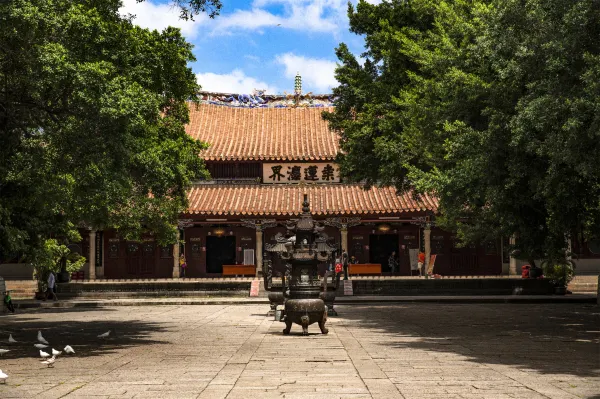
Kaiyuan Temple is located in QuanzhouWest Street, Licheng DistrictBuilt in the second year of the Chuigong era during the reign of Empress Wu Zetian of the Tang Dynasty, it has a history of over 1,300 years. It is an important cultural relic along the southeastern coast of China and one of the larger-scale Buddhist temples in Fujian Province. The attractions of the monastery are arranged along the central axisWorship pavilion, the Baiting, the main hall of Kaiyuan Temple, the Sangpeng historic site, the Kaiyuan Temple's Sweet Dew Ordination Platform, the scripture depository, etc.Also,, as well as the stone pagodas on the east and west sides and the east and west corridors. Quanzhou Kaiyuan Temple - The heavenly king hall, also the mountain gate of the temple, was built in 1925. The stone pillars are slightly thinner at the top and bottom, thicker in the middle, shaped like a shuttle, reflecting the Tang dynasty stone pillar style. A wooden couplet hangs on the stone pillars, reading "This place is called the land of Buddha, where every street is filled with saints." It was composed by Zhu Xi, a great Neo-Confucian scholar of the Southern Song dynasty, and written by the modern eminent monk Hongyi. Crossing the mountain gate brings you toWorship pavilionStanding here, you can see the east and west pagodas rising from the ground and the spacious, bright east and west corridors symmetrically arranged on both sides. The east and west pagodas are among the more famous attractions in the area. The east pagoda is called "Zhenguo Pagoda (East Pagoda)," while the west pagoda is named "Renshou Pagoda." Standing over 40 m tall, they are one of the tallest pairs of stone pagodas in China and serve as landmarks and symbols of the ancient city of Quanzhou. Worship pavilionIn front, there is a large stone courtyard where officials and commoners from ancient and modern times gather for activities, becoming particularly lively during events. On both sides of the stone courtyard stand eight large banyan trees, beneath which are arranged 11 ancient sutra pillars and small stupas from the Tang, Song, and Ming dynasties in various styles, as well as two stone tortoises. Then there is the main structure, the Mahavira Hall of Kaiyuan Temple. The Mahavira Hall of Kaiyuan Temple also has an elegant name, "Hundred-Pillar Hall." Originally, the hall was planned to have one hundred pillars, but later, to accommodate the placement of Buddha statues and create space for Buddhist activities, the beams were extended, and the number of pillars was reduced, resulting in the "Hundred-Pillar Hall" with 86 pillars.

China · Quanzhou
Free attraction
Meizhou Island
2027 Global 50 - Cool Escape Attractions

Meizhou Island

7.7
4.5/5
2.3k reviews

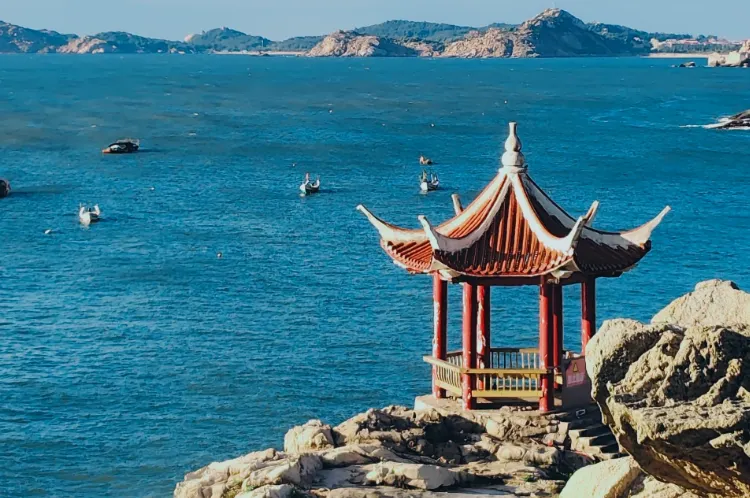
Meizhou Island is located in the south of Putian. It is a long, narrow island stretching north to south and is also the birthplace of Mazu culture. The Mazu Ancestral Temple sits on the island and has been a blessed place for coastal believers since ancient times, earning it the reputation of the "Mecca of the East." The island features peculiar boulder geological views and broad, fine, soft beaches, where natural scenery and cultural heritage blend together. The Mazu Ancestral Temple is the core attraction on the island and the ancestral temple of Mazu temples throughout the world. The ancestral temple complex is built along the mountain and mainly includes the Tianhou Palace, Chaotian Pavilion, Bell and Drum Tower, and other buildings. Every day, many devotees come here to offer incense and pray, so the incense offerings are abundant. In the Mazu Culture Park adjacent to the ancestral temple, a stone statue of Mazu about 14 m tall stands at the summit, serving as a landmark of the island. The park also contains stone carvings and a temple complex built along the mountain. Viewed from the sea, the buildings are layered one upon another, quite resembling the "Potala Palace on the sea." Ewei Divine Stone Park is located at the southern end of the island. Here you can walk along the seaside ridges to climb high and gaze at the sea, or wander among the various grotesque rock formations. Most of the park consists of mountain paths and stone steps, so it is recommended to bring water and take sun protection measures while visiting. The island also has several beaches, including Niutouwei Beach in the north, Lianchiao Beach in the middle, and Ewei Mountain Beach in the south. Among them, the better known is Golden Beach at the southwest tip, which has a gentle slope and fine, soft sand. When you come here at dawn or dusk, the sea surface shimmers with golden light in the sunlight. The island is not large, so you can also rent a bicycle for cycling around the island and slowly take in the local customs and sea views.

China · Putian
From €18.97
South Shaolin Temple
No. 5 of Family-friendly Attractions in Fujian

South Shaolin Temple

7.6
4.7/5
685 reviews

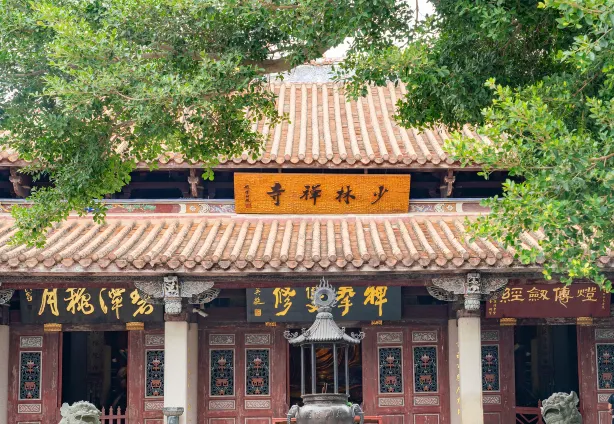
First built during the Longshuo era and abandoned in the Tianyou era. According to Cai Yongjian's "Xishan magazine" from the Qing Dynasty, which cited the Tang Dynasty's "Minzhong records," before the first year of Longshuo in the Tang Dynasty (661 AD), "Zhikong entered Minzhong and built the Shaolin Temple at the foot of Qingyuan Mountain, consisting of thirteen courtyards." "The Shaolin Temple had thirteen sections, surrounded by walls three zhang high, with vast fields and lush forests." "Beside the celestial altar stood the Shaolin Temple, where Zen master Zhikong met with Governor Wang at the celestial altar." Zhikong (styled Daoguang) was one of the thirteen staff-wielding monks from the Songshan Shaolin Temple renowned for saving the Tang emperor. His arrival in Min marked the beginning of martial monks in Fujian, and he trained twelve disciples—some capable of capturing tigers or lifting massive cauldrons, others skilled in wielding heavy crossbows, mastering chain hammers, or moving with extraordinary speed... The "Minzhong records" also states: In the first year of the Tang Tianyou era (907), "the Shaolin Temple rebelled against Wang Shenzhi's allegiance to the Liang Dynasty and was destroyed." Shi Mengshuo of the Southern Song Dynasty wrote in his "Donglu poetry collection": "The Shaolin Temple was built in Qingyuan, with ten grand gates and towering walls; a hundred acres of fields across three ridges, where a thousand monks practiced martial arts to rebel against the Wang regime." The "Wang regime" refers to the Min King Wang Shenzhi. Wang Shenzhi's destruction of the South Shaolin Temple in Quanzhou marks its first destruction. Prospered during the Taiping Xingguo era and declined during the Zhiyuan era The "Xishan magazine" records that in the sixth year of the Taiping Xingguo era of the Northern Song Dynasty (981 AD), an imperial decree was issued to rebuild the South Shaolin Temple in Quanzhou. This marked the second revival of the South Shaolin Temple in Quanzhou. Liu Changyan of the Northern Song Dynasty wrote in his poem: "The legacy of Qingyuan was built during the Xingguo era, the Shaolin spirit pervades throughout southern Quanzhou." "Xingguo" refers to the reign era of Emperor Taizong of Song, Taiping Xingguo (976–983). A copy of the Zhang family genealogy preserved in Donghu village, Dongqiao town, Hui'an county, states: "Shizhi, styled Fayi, renowned for stone carving, his craftsmanship was unparalleled, such as the stone lions in front of the Shaolin Temple in Quanzhou..." Zhang Shizhi was the younger brother of Zhang Shixun, a figure from the Song Dynasty, indicating his involvement in carving the stone lions at the entrance of the Shaolin Temple in Quanzhou during the Song Dynasty. Northern Song Dynasty records document that the South Shaolin Temple originally comprised a mountain gate, Mahavira Hall, dharma hall, Bodhidharma ancestral hall, thirteen halls, arhat hall, xuannü hall, scripture repository, heavenly king hall, Guanyin hall, Ksitigarbha hall and other supporting facilities, covering 400 mu of land. During the 2002 reconstruction of the heavenly king hall, over 40 stone temple components were excavated underground, including 1 pagoda base, 1 pagoda cover, 7 finials resembling those of Yinggeng Pagoda at Chengtian Temple, 4 stone caps, 4 column bases, 6 stone pillars, and notably 20 intact mortise stones measuring 1 m in diameter - all testifying to the temple's grand architectural scale. Numerous roof tiles and covers were also unearthed. Experts speculate these components likely belonged to the Quanzhou South Shaolin Temple's structures during the Tang and Song dynasties. During the peak periods of the Tang and Song dynasties, the temple housed thousands of martial monks. The "Xishan magazine · general records" also records: "In the first year of the Song Jingyan era (Yuan Dynasty's Zhiyuan 13th year, 1276), a thousand monks from the Qingyuan Shaolin Temple rebelled against Pu Shougeng's surrender to the Yuan Dynasty. The abbot of the Shaolin Temple, Yuan Miao... commonly known as Zhao Mengliang... (Yuan troops) pursued them to the Shaolin Temple... The vanguard, Qi Wotunsi, known for his cruelty, ordered an assault on the Shaolin Temple, provoking the fury of the thousand monks. Amidst the clash of swords, each monk fought like ten, leaving Yuan soldiers' corpses strewn across the east of Qingyuan city, with bones littering the fields. When Suodu arrived, he ordered arrows to be shot, killing most of the thousand monks, with only a hundred surviving... The survivors fled to Dehua (Daiyun Temple)." This marks the second destruction of the South Shaolin Temple in Quanzhou. In the mid-Ming dynasty, Li Sen (born in 1398), a wealthy philanthropist from Anxi, funded the purchase of large tracts of wasteland on Dongyue Mountain to establish charitable burial grounds for the free interment of remains by Quanzhou residents. These burial sites appear to have been the same wastelands where the Shaolin Temple was destroyed after its thousand monks resisted the Yuan dynasty in the late Southern Song period. Prospered during the Hongwu era and declined during the Qianlong era The "Xishan magazine" records: In the tenth year of the Hongwu era of the Ming Dynasty (1377 AD), Faben of the Xuanmiao Temple (a Shaolin monk who fled to Dehua after the resistance of a thousand monks against the Yuan Dynasty in the late Song period, aged 135) persuaded the local official Huang Zhongli to "petition the court for imperial approval to rebuild the Shaolin Temple." The monks then spread martial arts throughout southern Quanzhou. This marked the third revival of the South Shaolin Temple in Quanzhou. The Annals of Jinjiang County, Volume 69, from the Daoguang era of the Qing Dynasty records: "The South Shaolin Temple is located by the East Lake outside Renfeng... It was rebuilt in the 10th year of the Xuande era (1435) during the Ming Dynasty, but later fell into disrepair. Monks restored one-tenth of its original site and also enshrined County Magistrate Peng Guoguang, as Peng had helped monks reclaim temple lands." In the book "Records of Shaolin warrior monks" by master Deqian of the Shaolin Temple on Mount Song (published by Beijing Sports University Press, 1988), it is stated: "According to the 'Internal Chronicles of Shaolin Temple,' monk Yuanran possessed extraordinary martial arts skills and was commended by Emperor Jiajing of the Ming Dynasty (reigned 1522-1566). His eminent disciple, master Yuekong, was ordered to lead over 30 warrior monks who had proven their skills to Quanzhou, Fujian, to suppress Japanese pirates and establish merits. There, they built the South Shaolin Temple, where he became the abbot." This confirms that the "Internal Chronicles of Shaolin Temple" from the northern Shaolin Temple clearly records the existence of a South Shaolin Temple in Quanzhou during the Ming Dynasty, while the claim of it being newly built is a misconception. To this day, southern Fujian still circulates stories of northern Shaolin warrior monks suppressing Japanese pirates. During the Qianlong era of the Qing Dynasty, Emperor Qianlong toured southern China and feared that the warrior monks of the South Shaolin Temple might collude with the remnants of Zheng Chenggong (see "Quanzhou biographical records: Zheng Chenggong"). "In the fall of the 28th year of Qianlong's reign (1763), an imperial decree ordered the burning of the Shaolin Temple... From then on, no one dared to rebuild it." Some temple monks took refuge at Yipian Temple in Nan'an. This marks the third destruction of the South Shaolin Temple in Quanzhou. After the burning of Shaolin Temple, the monk Zhishan sought refuge among the people, continuing to recruit Shaolin disciples to oppose the Qing dynasty and restore the Ming. Zhishan, Hong Xiguan, and their disciples spread to Guangdong, further developing Southern Shaolin boxing, which produced the Southern Shaolin boxing champion Wong Fei-hung. Later, Wong Fei-hung's disciples brought the art to Hong Kong and spread it as far as the United States.

China · Quanzhou
Free attraction

Experiences you can't miss in Jian'ou

Featured Culture & history in Jian'ou

View all Culture & history
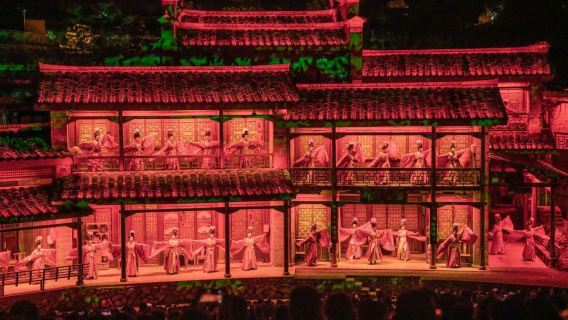
Half-day tour of Wuyishan Impression Da Hong Pao live performance: Experience millennia of tea culture and folk customs
󱌍
5.0/5
· 5 reviews· 48 booked
Duration: 1 hr
English
Instant confirmation
Book now for tomorrow
From€31.23
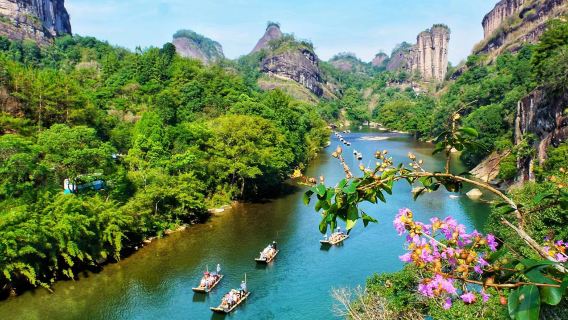
World dual heritage Wuyishan | Jiuquxi Bamboo Rafting · sightseeing bus shuttle · intangible cultural heritage tea culture experience
󱌍
From€32.71
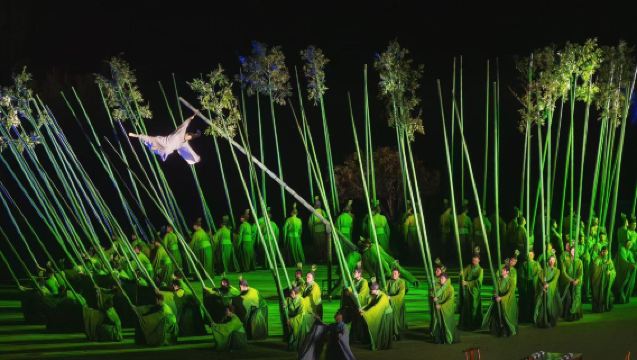
Fujian Wuyishan "Impression Da Hong Pao" (Live view performance + Wuyishan nightlife + Nine-bend danxia)
󱌍
5.0/5
· 1 review· 22 booked
Duration: 3 hrs
English
Free cancellation
Book now for tomorrow
From€32.71
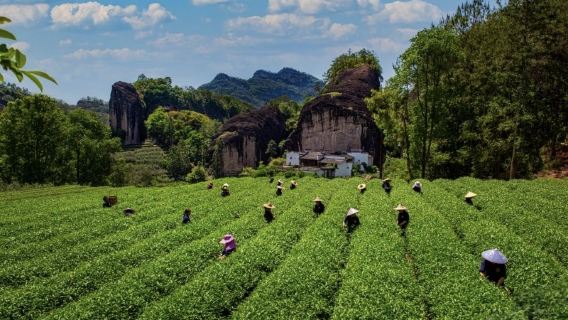
[Fujian] "Moon Over Wuyi" Performance (270° panoramic spectacle + Zhu Xi's ritual music ceremony)
󱌍
From€25.84
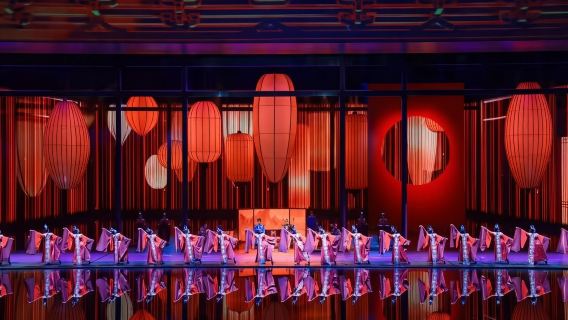
[Fujian] "Moon Over Wuyi" Performance show/concert ticket (immersive water stage + Song Dynasty painting elements)
󱌍
4.0/5
· 1 review
Duration: 1.1 hrs
English
Free cancellation
Instant confirmation
From€25.84
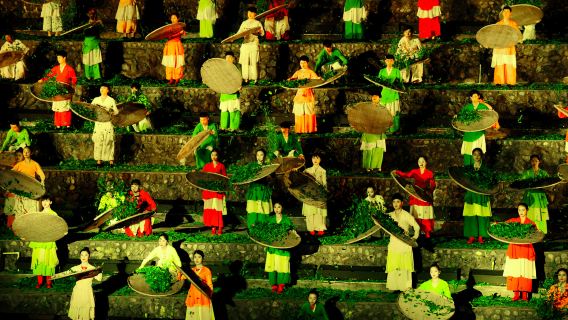
Impression Da Hong Pao Ticket Booking :Experience Millennium Tea Culture and Folk Customs
󱌍
24 booked
Duration: 1 hr
English
Instant confirmation
Book now for tomorrow
From€31.23
Wuyishan Chinese and English guide service | Private tour customize | Well-reputed service with no shopping | Attraction of your choice
󱌍
From€192.11
Jian'ou Today's weatherFoggy 7-20℃
Jian'ou weather for the next 2 days11/30: 8-20℃, 12/1: 11-23℃

Free things to do in Jian'ou
What travellers say about Jian'ou

user-avatar
夜番谷冬狮郎26 November 2026
5.0
Overall, it was very good. Meifeng Island isn't very big; two viewpoints are enough for taking photos. You can actually stay on the boat at Yule Island... If you skip Longshan Island, the magic carpet ride from top to bottom is quick, but some smaller attractions require backtracking after descending the mountain. Moonlight Island seems better visited after dark? It's also a continuous walk.

Qiandao Lake
user-avatar
hayalj16 November 2026
5.0
The scenic area is absolutely gorgeous, with beautiful mountains and waters, and the air quality is incredibly good – it's so therapeutic! The overall layout of the scenic area is very well organized. I have a question I'd like the staff to answer: I bought a rafting + three-day park shuttle ticket. On the first day, I only did rafting and visited Wanchun Garden near Wuyi Palace. For Shuiguangshi (Water Light Stone), I took a taxi from Wuyi Palace to Sangu Resort Area, without taking the park shuttle. Does this day count as part of the first day's ticket? I must especially commend the boatman; he was truly amazing! He recited so many ancient poems along the way, from Su Dongpo to Zhu Xi, Xin Qiji to Lu You, Xu Xiake to Li Qingzhao, elevating the beauty of the scenery. We were deeply impressed!

Jiuquxi Bamboo Rafting

user-avatar
Rose&Li28 November 2026
5.0
The attractions within Xiandu Scenic Area are all relatively close together, making it very convenient to visit. Even without a car, there are shuttle buses within the scenic area. Driving would make it even more convenient. The scenery is beautiful and diverse, definitely worth a visit.

Xiandu Scenic Area

user-avatar
Renee88828 November 2026
5.0
Yunshuiyao is actually very beautiful, especially the centuries-old banyan trees. This kind of place isn't suitable for visiting when there are too many people; too many people actually diminish the tranquility. It's best to come when there are fewer people, casually stroll along the lake, listen to the stream, and have tea under the centuries-old banyan trees – that's already very comfortable and beautiful. What's more, there are the earthen buildings built on the marshland. You can participate in a bonfire party inside one of the earthen buildings, complete with fireworks, and then take a walk along the river in the early morning to learn about the architectural structure of the earthen buildings. I think this is quite interesting, but you shouldn't stay too long. However, I strongly recommend staying overnight.

Yunshuiyao Ancient Town

user-avatar
好鹏友工作室11 June 2023
5.0
It is a cultural heritage site that is worth visiting. It has a history of more than 700 years. It is difficult to find such an ancient attraction in Fujian. It is a cultural attraction in Fujian! Jianou Dongyue Temple, only when you are there in person will you be shocked by the charm of the ancient architecture.

Dongyue Temple

user-avatar
juliayang61361315 November 2026
5.0
My visit to Kaiyuan Temple in Quanzhou was incredibly fortunate, and I was fortunate to receive a meticulous tour guide's explanation. The guide was extremely thorough, covering the temple's origins as an ancient temple dating back to the Xiao and Liang dynasties, detailing every single aspect with care. The guide's enthusiasm and engaging style brought the ancient buildings and artifacts to life. Their patience and composure throughout allowed me to deeply appreciate the profound heritage of this thousand-year-old temple. I am very grateful for this invaluable guided tour! It was definitely the best decision I made during my trip to Quanzhou.

Quanzhou Kaiyuan Temple

user-avatar
_gf***8210 November 2026
5.0
I took a two-day road trip to Lishui with friends. On the second afternoon, we went to Yunhe Terraces. We drove there ourselves, so we didn't have to take the scenic area shuttle bus. First stop: Jiuqu Yunhuan (Nine-Bend Cloud Ring). Vast terraced fields, golden yellow in autumn, absolutely stunning! Second stop: Kenggen Stone Village (Kenggen Stone Village). A centuries-old stone-walled village. And Baiyin Valley. We didn't have enough time, so we skipped Qixingdun.

YunHe Rice Terraces Scenic Area

user-avatar
M51***337 October 2026
5.0
Because of the typhoon, our trip to Meizhou Island was a last-minute decision. We hadn't planned on going, and in the morning we went to Xianyou, but then we realized we needed to, so we rushed back from Xianyou around noon, making our time there quite rushed. Many places on the island close around 5 pm, such as the Mazu Temple. The public buses also stop running around 6 pm. Unless you take a private car, you can't walk that far. The beach at the very top of the island is very nice, and many people were playing in the water there. We went close to dusk and saw the sunset. Walking around the island and taking buses, two hours passed quickly. To avoid the crowds and difficulty getting a taxi back to the city at night, we didn't see the Impression Mazu performance. Overall, the island is worth visiting because all the attractions and transportation are free; it just depends on what you want to do. If you just like the sea, a day trip is definitely worthwhile.

Meizhou Island
user-avatar
沐浴阳光哈哈哈25 November 2026
5.0
Great, very satisfied. The environment is excellent and impressive. If I listened to your classmate's opinion, it would probably be even better. Overall, it's very good, quite nice, and I have a good feeling about it.

Xianrenjing

user-avatar
五行缺土269 November 2026
5.0
1. This place is an important carrier of Southern Shaolin culture. It offers a systematic understanding of the origins and development of Southern Shaolin, the story of martial arts exchanges between Yu Dayou and Southern Shaolin, and the unique culture of the transmission of boxing manuals and the dual cultivation of Zen and martial arts. It also allows one to appreciate the spirit of generations of martial arts practitioners who protected their homeland and defended national dignity. 2. The martial arts performance at the Martial Arts Hall is very engaging. Lasting approximately 20-30 minutes, it features a rich array of content, including demonstrations of the eighteen weapons, basic Shaolin skills, and distinctive hard kung fu. The program is tightly structured, the moves are crisp and clean, and the live experience is breathtaking. It is definitely worth stopping to watch.

South Shaolin Temple

Trip Moments in Jian'ou
Popular cities near Jian'ou

Frequently asked questions

How can I contact Trip.com customer support?

Get help anytime, anywhere within 30 secondsContact customer support

Change and cancellation policies vary by attractions and tours. Please check the product details page for more information.

Ticket prices may vary between weekdays and weekends, as well as during peak and off-peak seasons. When booking with Trip.com, you can also use Trip Coins to get extra savings. For more tips on booking discounted tickets, please visit Trip.com for the latest information.