
Things to do in Yushe
Explore top experiences
Top 10 attractions in Yushe


Experiences you can't miss in Yushe
Featured Culture & history in Yushe
View all Culture & history
Free cancellation
Instant confirmation
Book now for tomorrow
From€14.99
Free cancellation
Instant confirmation
Book now for today
From€108.39

From€14.99

5.0/5
· 1 reviewFree cancellation
Instant confirmation
Book now for tomorrow
From€63.64
Free cancellation
Instant confirmation
Book now for tomorrow
From€61.94

5.0/5
· 1 reviewFree cancellation
Book now for tomorrow
From€5.46

Free cancellation
Book now for today
From€36.66
Free cancellation
Instant confirmation
Book now for tomorrow
From€105.98
Yushe Today's weatherFoggy 0-8℃
Yushe weather for the next 2 days11/17: -5-9℃, 11/18: -9-4℃
Free things to do in Yushe


What travellers say about Yushe

水总社区22 July 2025
5.0
这里是古化石恐龙的故乡,有恐龙博物馆,还有有名的榆社阿胶。云竹湖地处太行山脉,空气宜人冬暖夏凉!当地美食更是美不胜数比如枣糕凉粉发面饼各种水果等。想您去了一定不会后悔!
Yunzhu Lake

_cm***4316 November 2026
5.0
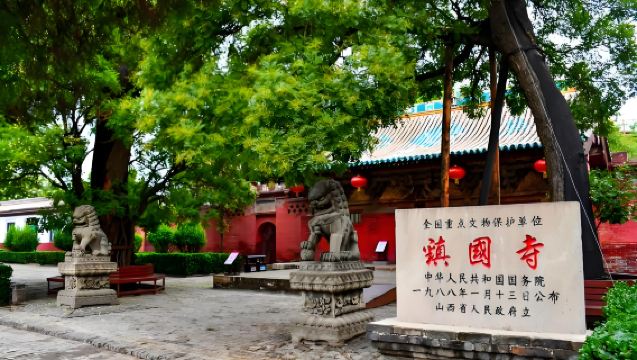
I spent a long time exploring Zhenguo Temple. Although it's not a particularly large place, I felt very comfortable there. Perhaps because there weren't many tourists at the time, I could take my time exploring, and it was also under renovation. But I really loved this place.
Pingyao Ancient City

verazhe13 November 2026
5.0
Entering early in the morning, there weren't many people, and the front row of the Holy Mother Hall offered a clear view.
We caught the last of the ginkgo leaves in bloom, and the lighting was perfect for taking photos.
Jinci Temple is highly recommended.
Jinci Temple Museum

M34***8615 November 2026
5.0
The Longmen Grottoes are truly worth a visit. Walking slowly along the Yi River, rows of Buddha statues of varying sizes are carved into the mountainside, standing silently on the cliffs. The mottled stone carvings, weathered by a thousand years of wind and rain, bear the marks of time within their lines. Standing before the Buddha statues, gazing at their solemn and ancient forms, one is filled with awe, deeply feeling the weight of history and the exquisite carving skills of the ancients.
Longmen Grottoes

Wendy瑾♈15 November 2026
5.0
Finally, I visited the Qiao Family Compound, known as "the Imperial Palace for royalty, the Qiao Family Compound for commoners." The entire compound is a typical northern castle-style residence, laid out in a double-happiness shape, with interconnected courtyards. Walking on the bluestone paths, surrounded by high walls, gray tiles, and scattered red lanterns, a profound sense of history washes over you. The most stunning feature is the "three carvings" art: wood carvings, brick carvings, and stone carvings adorn the doors, windows, and screen walls, with exquisite patterns and auspicious meanings. The "Hundred Longevity Characters" screen wall, in particular, is worth admiring in every detail.
This is not just ancient architecture, but a living history book of Shanxi merchants. Plaques, couplets, family rules, and precepts are everywhere, telling the story of the Qiao family's honest business practices and thrifty traditions. Taking children on a tour, listening to explanations, and learning about the Shanxi merchants' spirit of "prioritizing righteousness over profit" made for a wonderful on-site learning experience. Only after completing the tour did I understand that the Shanxi merchants' success across the country relied not only on courage but also on the integrity ingrained in their family traditions. The scenic area is quite large, so it's recommended to bring comfortable shoes and have a guided tour to make the experience much more rewarding.
The Qiao's Family Compound

M28***2816 November 2026
5.0
Excellent! There are shows all day long; you simply can't see everything in one day. For the highlights like "The Battle of Tokyo," "The Heroines of the Yang Family," and "Yue Fei Defeates Little Liang Wang," you need to arrive early to secure a good spot. There's also a "Fairy Scattering Flowers" performance, iron flower displays, and the night view is beautiful. It's definitely worth a visit.
Millennium City Park

Anonymous user15 November 2026
5.0
It's incredibly fun and highly recommended! The park has a beautiful environment, and visitors can interact with NPCs; the games and activities are also very enjoyable. Silver tickets are easy to obtain. These tickets, earned by completing tasks, can be exchanged for commemorative gifts. The park offers a variety of performances, though some popular attractions can be a bit crowded. In the evening, the Magic Plaza offers Kongming lantern distribution, and the scene of everyone releasing lanterns together is particularly spectacular. Children linger here, completely immersed in the experience. On your birthday, you can visit the visitor center to receive a personalized birthday standee and ask all the NPCs for silver tickets as a special birthday reward. Wansui Mountain seems tailor-made for the most daring; the bolder you are, the more silver tickets you'll get. Taking photos at the Fairy Plaza at night is also a great idea. The female NPCs are especially beautiful, and the male NPCs are incredibly handsome. There are also tumbler dolls where you can use your phone to film transition videos—they're really cool!
Wansuishan Martial Arts City

M55***2018 August 2026
5.0
It's very worthwhile, but it's also very crowded, which might slightly detract from the overall experience. However, the people are incredibly welcoming, and there are many beautiful spots for taking photos. The food is also affordable and inexpensive, which kids enjoy. I'll definitely go back when it's less crowded.
Song Du Huangcheng Cultural Tourism Resort

M50***0014 November 2026
5.0
It's worth visiting. The Didi ride from Datong takes a little over an hour, but you can also take the high-speed train directly to Yingxian West Station and then a taxi for about half an hour. After all, it's the only wooden mortise and tenon structure tower dating back to the Liao Dynasty – a testament to the craftsmanship! You can join a guided tour at the entrance, but a guided tour is definitely recommended!
Yingxian Wooden Pagoda
Trip Moments in Yushe

Popular cities near Yushe


Frequently asked questions
How can I contact Trip.com customer support?
Get help anytime, anywhere within 30 secondsContact customer support
Can I change or cancel my booking?
Change and cancellation policies vary by attractions and tours. Please check the product details page for more information.
How can I get discounted prices?
Ticket prices may vary between weekdays and weekends, as well as during peak and off-peak seasons. When booking with Trip.com, you can also use Trip Coins to get extra savings. For more tips on booking discounted tickets, please visit Trip.com for the latest information.