
LNER: London-Edinburgh from £41.40
Book early for cheaper fares to York, Leeds & Newcastle
🇬🇧 Save 23% on a 1-year Railcard
or 10% off a 3-year Railcard
What luggage can you take on the Eurostar?

Lauren Ryan

When you’re deciding between flying to your destination or taking the Eurostar, you may assume your luggage allowance will be similar in either case – luggage might not even factor into your decision. However, when you choose to travel with Eurostar, your luggage limits are significantly more generous.
Baggage restrictions with Eurostar are far more flexible and essentially allow you to leave the stress of weight limits and bag sizes behind. That being said, Eurostar does implement some practical limits in its policies for space and safety reasons.
In this guide, we’ll break down Eurostar’s luggage allowances and restrictions in plain terms so you know exactly what you can and can’t bring on board. We’ll also give you some tips for navigating your bags on board on the day, as well as what to do if you need to travel with special luggage.
Eurostar luggage allowance explained
One massive advantage of travelling with the Eurostar is its luggage policies: Eurostar does not enforce strict weight limits for the baggage you bring on board. As long as you can carry your bags yourself, you can travel as heavy or as light as you like. There is no point throughout check-in where your bags are weighed or squeezed into a cage like at an airport. Eurostar’s luggage allowance focuses more on the number of bags rather than on how much baggage weight you are allowed to travel with.
Eurostar’s luggage size restrictions are also extremely flexible – no more sweating at check-in, stressed that your bag is too big or overweight – you can confidently sail through check-in and straight onto your train without trying to keep your bag out of sight of any staff.
How many bags can you take on Eurostar?
The number of bags you can bring on the Eurostar is the main limiting factor in terms of Eurostar’s luggage policy. Every passenger is entitled to travel with at least two large suitcases and one piece of hand luggage. Hand luggage here generally refers to items like handbags, laptop bags or rucksacks – a small, personal bag that will fit under your seat or overhead that you keep with you on the train.
Premier passengers are entitled to one extra suitcase – so three large suitcases and one piece of hand luggage in total. This makes Premier tickets a great choice if you’re planning on travelling with a lot of gear.
These baggage limitations ensure that there is enough space for all passengers’ luggage onboard – weight is less of a concern when travelling by train, whereas, in terms of space, bags need to fit in the dedicated storage areas for safety reasons. But we think two large suitcases and a backpack cover most luggage needs when taking a trip to Europe – and the lack of strict restrictions certainly takes a lot of the stress out of packing.
Where do you store luggage on Eurostar?
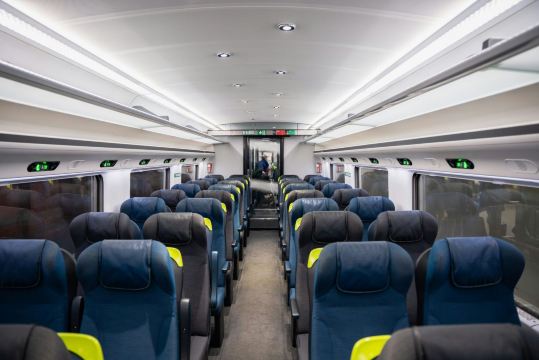
Once you've climbed aboard your carriage on the Eurostar, you’ll want to deposit your large suitcases before finding your seat. Large luggage areas can be found at the ends of each carriage, and these are where you should aim to place your larger suitcases. These are open racks and can fill up quickly, so arriving early will give you a better chance of finding space for your bag(s) near your seat. If there is no space left at either end in your carriage, you’ll need to head to another to find a space.
As for your hand luggage, you’ll find overhead racks above your head as well as stowing space under and between seats. These are the perfect spaces for storing medium-sized cabin bags, handbags or laptop bags.
Top tip: As the luggage areas at the ends of the carriage are open racks, keeping your valuables on your person or in your small personal bags can offer extra peace of mind, especially if your suitcases are out of sight. For added security, we recommend labelling your bag and optionally securing it with a luggage tag or padlock on busier routes to ensure no one mistakes your bag for theirs.
Are there size or weight restrictions?
Eurostar operates under extremely flexible luggage policies – especially compared to airlines – but for health and safety reasons, there are still some upper limits in place.
For luggage you bring onboard, there are no weight limits: the only requirement is that you can carry and lift the luggage onto the security conveyor belt and on board yourself. However, for pre-booked oversized or extra luggage, weight restrictions of 30 kg per piece of luggage apply.
As for Eurostar luggage size restrictions, trains to or from London must have maximum dimensions of 85 cm x 85 cm x 36 cm. For journeys starting outside of London – for example, Paris to Brussels – the maximum length is 75 cm.
In reality, it is not feasible for operators to do away entirely with upper limits on baggage, as they need to ensure passenger safety, especially with up to 894 passengers onboard at once. These limits ensure that you, as a passenger, will have space for your own bags and can enjoy a safe and comfortable journey.
Eurostar luggage rules vs airlines
When it comes to luggage allowances between Eurostar and airlines, Eurostar’s policies are considerably more favourable than airlines' – especially when comparing to budget airlines.
While many airlines might only include a small personal bag as part of your ticket – such as a handbag or backpack – Eurostar includes at least two large suitcases and a piece of hand luggage at no extra charge. The dreaded baggage weighing at the airport is also not a concern with Eurostar: while airlines will charge you for exceeding a weight limit on your bags, Eurostar does away with weight limits and lets you pack to your heart's content, as long as you can carry the bag yourself. Families and group travellers really feel the benefit here – no need to distribute weight across bags to meet a 23 kg limit; just pack however suits your group best.
There are also far fewer rules on what you can bring with Eurostar compared to airlines – no more worrying about liquids is a real game-changer. And as your bags stay with you the whole time, you can skip the lengthy bag carousel rigmarole and head straight out the station exit. Bonus points for not having to worry about an airline losing your luggage!
When you don’t have to cram everything to fit into the smallest bag size included on your ticket, you can pack at your leisure and even leave yourself space to do a bit of shopping and bring back souvenirs, clothes or even a bottle or two of Champagne – after all, there’s no 100 ml limit, so why not?
Special luggage (bikes, prams, sports equipment)
Eurostar has some specific rules around special luggage and equipment, with certain items incurring an additional charge to bring on board.
You’re allowed to bring a folding bike in a bike bag under the same dimensions as standard luggage, and prams are allowed on board free of charge in addition to your baggage allowance. Just fold it up and pop it in a luggage area near your seat for the journey.
For regular non-folding bikes, however, additional charges apply. Fully assembled road bikes and disassembled bikes in a box or bag can be added to your booking in advance; you’ll just need to drop it off at the luggage area before heading to departures and then collect it at your destination.
Musical instruments and sports equipment can also be pre-booked at an extra charge, as long as they fall under the standard luggage dimensions, although if your instrument is larger than this, you may need to contact customer service to arrange a companion seat.
Tips for travelling with luggage on Eurostar
We all want our travel to be as seamless as possible. Luckily, there are a few things you can do to ensure your Eurostar experience is plain sailing.
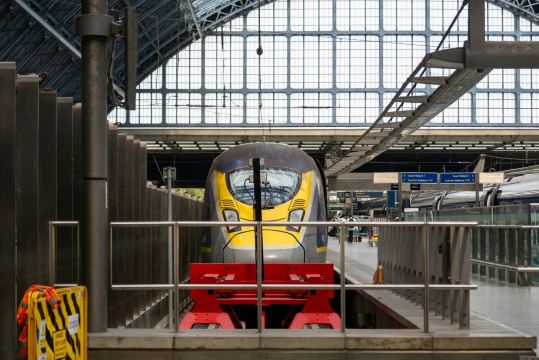
Our main tip is to arrive earlier if your schedule allows it: with up to 894 passengers boarding, this can help you beat the queues and find the most convenient storage space for your luggage. Speaking of luggage, try not to overpack for your trip. This will make navigating the stations, check-in and boarding a whole lot easier, especially if you are travelling in a group.
Choose wisely when booking your Eurostar carriage, too. Front carriages (Coaches 1 to 4) on trains towards the Continent will let you out ahead of the crowds at your destination so you can quickly make it to the exit, while rear carriages (Coaches 15 to 18) will do the same on the return to London. It’s also worth noting that Coaches 7 and 10 are directly adjacent to the Café carriage, which can be quite a bit louder thanks to heavier foot traffic, chatting and doors opening and closing. Choose a Coach two or three carriages away if you’d like a quieter experience.
Keep your valuables on your person or in your small hand luggage by your seat, as opposed to in your large suitcases. Eurostar trains can get busy, and you might not be able to maintain a line of sight on your bag, especially if you have to store it away from your carriage. Keeping things like your phone, purse, wallet and passport by your seat will offer you peace of mind. You may also consider a luggage strap or padlock if you want to be extra sure your bag isn’t mistakenly taken.
Common mistakes passengers make with Eurostar luggage
Most of the mistakes passengers make when it comes to luggage on the Eurostar come down to treating the experience the same as flying. As we’ve seen, there are many differences between Eurostar and airline luggage policies, and this means your approach should be different.
When passengers see how much luggage they can bring without any weight limit, it’s easy to go overboard and pack half the house up for their trip. However, what passengers forget is that they don’t just cart these bags to the check-in desk and cast them to the back of their minds until arriving at their destination. You need to be able to carry all your bags yourself, from the station entrance at your departure to the exit at your arrival. This includes lifting them onto the security belt, bringing them up the steps to board the train, lifting them into luggage racks and bringing them off the train again.
Luggage trolleys aren’t always available – you’ll find them at St Pancras for £1, but you cannot bring them through the Eurostar check-in desk. Bringing overly heavy bags makes the experience needlessly taxing – so bring what you need and, more importantly, what you can carry.
Another faux pas first-time Eurostar passengers often make is obstructing aisles onboard with their luggage. Luggage needs to be stored in the designated areas – such as in the racks at the ends of the carriage, overhead, under your seat or between seats. This way, passenger safety and comfort are maintained, and you will avoid contributing to any injuries.
Eurostar’s generous luggage policies may also cause some passengers to forget that storage space onboard is not limitless. Space in the large luggage racks operates on a first-come, first-served basis, meaning they fill up quickly. If you don’t board early, there is a good chance the racks closest to your seat will be full, and you’ll have to manoeuvre your bags to the next carriage in search of space. This compounds with the mistake of bringing overly heavy bags, as it makes this experience even more stressful. So to make things as smooth as possible, board early, pack only what you can manage and store your bags in the dedicated areas.
Top Guides

How to get from London to Bicester: Train, bus or drive?


LNER Season Tickets - unlock cheaper, unlimited travel

Do trains run on Bank Holidays (UK)?

Food and drink on UK trains - your FAQs answered

How to get from London to Liverpool: Train, coach or drive?
LNER seating plan: Where am I sitting?
Off-Peak train times: The full guide
Split save train tickets - Explained
Table of Contents
- Eurostar luggage allowance explained
- How many bags can you take on Eurostar?
- Where do you store luggage on Eurostar?
- Are there size or weight restrictions?
- Eurostar luggage rules vs airlines
- Special luggage (bikes, prams, sports equipment)
- Tips for travelling with luggage on Eurostar
- Common mistakes passengers make with Eurostar luggage
Ready to plan your trip?
Tue, Oct 20
16:00
Add return
Open return
Search
1 adult 0 children, 0 Railcards
Explore hotels
Related travel guides
 Updated: October 16, 2026
Trains to Cologne from London: Eurostar guide
 Updated: October 16, 2026
Our 5 best food cities to visit by Eurostar
 Updated: October 16, 2026
Eurostar Promo: Fares from £35 on Eurostar Standard
 Updated: October 16, 2026
Can you use a Railcard on the Eurostar?
 Updated: October 16, 2026
Best time to book Eurostar tickets: Cheapest times revealed
 Updated: October 16, 2026
What is the Eurostar Snow Train (formerly Eurostar Ski)?
 Updated: October 16, 2026
When are the last Eurostar trains to London?
 Updated: October 16, 2026
Eurostar check-in, security & passport control: New rules explained
 Updated: October 19, 2026
What is the quiet coach on UK trains? Rules and carriage explained
 Updated: October 19, 2026
GroupSave tickets: How to earn discounts on group travel?
 Updated: October 16, 2026
LNER menu: What food and drink is available onboard?
 Updated: October 16, 2026
Are train seat reservations necessary in the UK?
 Updated: October 16, 2026
Are dogs allowed on trains? UK rules and guidance
 Updated: October 16, 2026
Train travel in the UK: Trip.com's comprehensive guide
 Updated: October 16, 2026
What can you bring onboard UK trains? UK train travel rules & guidelines
 Updated: October 16, 2026
A guide to wheelchair access for UK trains and stations
 Updated: October 19, 2026
Can I break up my train journey to make a stop-off?
 Updated: October 16, 2026
UK rail network guide
 Updated: October 16, 2026
How to change your Railcard photo: Rules, steps and tips
 Updated: October 16, 2026
Railcard photo requirements: What you need to know?
 Updated: October 16, 2026
How to use Live Train Departures and Arrivals on Trip.com
 Updated: October 20, 2026
Do trains run on Bank Holidays (UK)?
 Updated: October 20, 2026
Food and drink on UK trains - your FAQs answered
 Updated: October 19, 2026
Do trains have WiFi? UK guide to getting online for free
 Updated: October 19, 2026
Are e-scooters allowed on trains? UK rail policies explained
- Updated: October 19, 2026
What is Rail & Sail? Train and ferry travel made easy
 Updated: October 19, 2026
A guide to child train tickets in the UK: What parents need to know?
 Updated: October 19, 2026
What to do if you’ve just missed your train: A step-by-step guide
 Updated: October 16, 2026
Train luggage - policies & allowance explained
Latest Travel Guides
How to get from London to Bicester: Train, bus or drive?
Published: October 20, 2026

LNER Season Tickets - unlock cheaper, unlimited travel
Published: October 20, 2026
Do trains run on Bank Holidays (UK)?
Published: October 20, 2026
Food and drink on UK trains - your FAQs answered
Published: October 20, 2026
Getting to UK airports by train: Stansted, Luton, Manchester, and more
Updated: October 20, 2026

How to get from London to Liverpool: Train, coach or drive?
Published: October 19, 2026

How to get from London to Windsor Castle: Train, bus or drive?
Published: October 19, 2026
Do trains have WiFi? UK guide to getting online for free
Published: October 19, 2026
What is a Season Ticket? Guide to unlimited travel in the UK
Published: October 19, 2026
Are e-scooters allowed on trains? UK rail policies explained
Published: October 19, 2026

Getting the train to Windsor Castle | Stations, Routes & FAQs
Published: October 19, 2026

Getting the train to Warwick Castle | Stations, Routes & FAQs
Updated: October 16, 2026
Latest Travel Guides
- How to get from London to Bicester: Train, bus or drive?Published: October 20, 2026
- LNER Season Tickets - unlock cheaper, unlimited travelPublished: October 20, 2026
- Do trains run on Bank Holidays (UK)?Published: October 20, 2026
- Food and drink on UK trains - your FAQs answeredPublished: October 20, 2026
- Getting to UK airports by train: Stansted, Luton, Manchester, and moreUpdated: October 20, 2026
- How to get from London to Liverpool: Train, coach or drive?Published: October 19, 2026
- How to get from London to Windsor Castle: Train, bus or drive?Published: October 19, 2026
- Do trains have WiFi? UK guide to getting online for freePublished: October 19, 2026
- What is a Season Ticket? Guide to unlimited travel in the UKPublished: October 19, 2026
- Are e-scooters allowed on trains? UK rail policies explainedPublished: October 19, 2026
- Getting the train to Windsor Castle | Stations, Routes & FAQsPublished: October 19, 2026
- Getting the train to Warwick Castle | Stations, Routes & FAQsUpdated: October 16, 2026