
Things to Do in Chengdu: New Events & Hot Spots (Updated 2026)

Discover Dujiangyan: Explore China's Ancient Water WisdomHot
Hot


Discover the path of water and the legacy of the weir. From November 27–December 5, 2026, the Way of Water, Bridge of Nations Chinese water management wisdom tour kicks off at Dujiangyan Scenic Area. Step into a millennia-old civilization of water management and experience a living World Heritage site.
🌿 Featured route
Start at Gate 1 of Lidui Park and pass by the start of Yangong Avenue, Qingxi Garden, Zhangsong Ginkgo, and Huaigu Pavilion at Fulong Temple, before arriving at Fulong Temple Square. Along the way, enjoy the seamless blend of natural and cultural beauty, and discover the wisdom of ancient water management through interactive experiences.
🏞 Start of Yangong Avenue
The buried iron bars serve as an impressive marker for dredging depth. Officials throughout history relied on them for annual maintenance, showcasing the ancient wisdom of adapting to local conditions.
🌳 Qingxi Garden
The bonsai garden vividly illustrates Li Bing's philosophy of working in harmony with nature. A potted tree and a flowing river share the same natural laws.
⛩ Zhangsong Ginkgo
The ancient tree and the wisdom of water management beautifully complement each other. Experience the philosophy of harmony between humanity and nature, and discover how the weir keepers aligned their work with the changing seasons.
🎭 Fulong Temple Square
At the Tiangong Kaiyan immersive cultural experience hall, a dynamic sand table brings the story of Li Bing's water management to life. Uncover the secrets of engineering marvels like the Yuzui water divider and the Feishayan spillway.
📍 Location: Dujiangyan Scenic Area
⏰ Dates: November 27–December 5, 2026
💡 Travel tip: We recommend wearing comfortable walking shoes to easily visit spots along the route.
Visit Dujiangyan and embark on a profound journey into a millennia-old civilization of water management!
Dujiangyan

Round-trip flights between Chengdu and Auckland, New Zealand now availableHot
Hot


On December 3, 2026, the Chengdu–Auckland route launches. The route is operated by Sichuan Airlines every Thu and Sun.
🛫 Outbound: 3U3811
Departure: 1:40 AM, Chengdu Tianfu International Airport
Arrival: 7:00 PM, Auckland International Airport
🛫 Return: 3U3812
Departure: 10:00 PM, Auckland International Airport
Arrival: 5:35 AM⁺1, Chengdu Tianfu International Airport
(All times are local.)

Iconic hike on Mount Qingcheng's Front Mountain, explore Taoist cultureHot
Hot


The front mountain of Mount Qingcheng is renowned for its tranquil natural scenery and Taoist culture, making it a popular hiking destination near Chengdu. The classic route starts at the main gate, passes Tianshi Cave, Chaoyang Cave, and Laojun Pavilion (summit), then continues to Shangqing Palace. Take the cable car down to return. The route is picturesque and ideal for hikers.
🌄 Classic hiking route
Walking up from the main gate takes about 2 hours, with attractions such as Tianshi Cave, Chaoyang Cave, and Laojun Pavilion along the way. Trails can be slippery, so wear non-slip shoes and bring trekking poles to save energy and improve safety.
🚡 Downhill cable car
One-way and round-trip tickets are available, and you can scan near the cable car to buy tickets. Riding down saves time and energy, and offers bird’s-eye views of Mount Qingcheng’s beautiful scenery.
🚗 Transportation: Take Chengdu subway line 2 to Xipu station, then transfer to the intercity railway directly to Mount Qingcheng. For the return, head back to Chengdu from the high-speed rail station the same way, or from your bus drop-off point take a bus to Dujiangyan Lidui Park.
💡 Travel tips: During holidays, tickets must be purchased in advance via the official mini program. Start before 9:00 AM to avoid crowds. Luggage storage is available opposite the high-speed rail station. Sightseeing shuttle tickets can be purchased next to the high-speed rail station exit.
Come experience the perfect blend of Taoist culture and natural beauty on the front mountain of Mount Qingcheng!
Dujiangyan

Heartwarming fall moments at the panda baseHot
Hot


A crisp fall breeze drifts through swaying bamboo, and the Panda Base takes on a serene, seasonal calm. Black-and-white pandas lounge contentedly where greenery meets fallen leaves, sometimes quietly chewing on the fresh, sweet treats of fall, sometimes lazing on wooden platforms as they bask in a cool fall breeze and warm sunshine, and sometimes, like curious little explorers, peeking out from the bushes with irresistible charm.
Fall days at the Panda Base seem to come with a soothing magic. Watching the pandas’ endearing antics makes worries melt away. Whether they’re fully focused on their meal, dozing in the sunlight, or gazing around with those round, curious eyes, it’s hard not to pause and take in this special warmth of fall.
Before you go, check the weather. Fall brings frequent rain, so bring rain gear and warm clothing to help prevent colds. While viewing the pandas, keep noise to a minimum. Don’t shout or tap the glass so you don’t disturb their routine. Turn off your camera’s flash to avoid startling these gentle creatures. Please also help protect the park: no smoking, take your trash with you, and don’t pick flowers or break branches. Let’s work together to safeguard the pandas’ beautiful home.
Visit the Panda Base and enjoy the soothing moments of fall with the pandas!
Chengdu



Tourists photograph viral mossy eaves at Du Fu Thatched CottageHot
Hot


The Chengdu Du Fu Thatched Cottage Museum recently went viral on the Internet for the moss on its eaves. Playfully dubbed "Swiss rolls" by netizens, it has drawn countless visitors eager to snap photos.
🌿 Mossy eaves
The moss on the eaves of the Du Fu Thatched Cottage grows in thick, fluffy layers, resembling delicate "Swiss rolls." Contrasting beautifully with the rustic gray tiles, it has become a popular view that visitors flock to photograph.
🏠 Maowu Former Residence
As a landmark view of the Du Fu Thatched Cottage, the Maowu Former Residence was reconstructed based on the architectural style of traditional western Sichuan dwellings, showcasing the living environment of the Tang dynasty poet Du Fu. This is also where he wrote over 100 poems, earning it a reputation as a sacred site in the history of Chinese literature.
🎨 Bonsai Garden and Daya Hall
The Du Shi Wood Carving Gallery inside the Bonsai Garden displays over 100 wood-carved calligraphy works of Du Fu's poetry. It showcases the artistic charm of his masterful poems, exquisite calligraphy, premium nanmu wood, and exceptional carving techniques. Meanwhile, Daya Hall vividly recreates Du Fu's life and the development of classical Chinese poetry through its large color-glazed lacquer murals and 12 statues of famous historical poets.
🌺 Floral pathway and thatched cottage screen wall
The floral pathway is a small path lined with red walls that connects the Du Fu Thatched Cottage memorial complex to the original Thatched Cottage Temple. Flanked by flowers and trees, it leads to a screen wall from the late Qing dynasty inlaid with the words "Thatched Cottage," exuding a poetic and historical charm.
💡 Travel tips: We recommend bringing a camera to photograph the moss and ancient architecture, and visiting during off-peak hours to avoid crowds.
Come to the Chengdu Du Fu Thatched Cottage Museum and experience the unique charm of poetry intertwined with nature!
Chengdu

Free Admission at Bipenggou in November: Fall Fairy Tale HikeHot
Hot


Fall in Bipenggou unfolds like a vibrant, moving canvas with richly colored forests. As a national eco-tourism demonstration area, it is the perfect destination for a fall hike.
🍁 "Moving fairytale" hiking event
The scenic area has launched a newly upgraded "Moving fairytale" hiking event. Visitors can check in at 6 locations to win a beautiful winter medal. Along the trail, you can take in the stunning fall scenery, feeling as if you've stepped into a fairytale world.
🚗 Shanghaizi to Yanziyan electric cart service
The optimized electric cart service makes getting around even easier. We recommend purchasing a full round-trip ticket. Along the way, you can enjoy core attractions like Panyang Lake and Moon Bay, effortlessly taking in the beautiful fall scenery.
❄ Winter tour experience
As the scenic area enters its winter season, snow-covered paths add a unique charm to your visit. Stroll through the snow-clad mountains and experience the tranquility and purity of a winter wonderland.
📍 Location: Bipenggou Scenic Area, Li County, Aba Prefecture, Sichuan Province
🎫 Attraction ticket: Free for primary and secondary school students and teachers in Nov
Come to Bipenggou and experience the dual charm of a fall fairytale and a winter wonderland!
Li County


Dujiangyan Winter Getaway: Snowy Mountains Meet the Ancient WeirHot
Hot


In winter, Dujiangyan attracts visitors with its unique scenery, framing snow-capped mountains, ancient weirs, and the historic town against the snowline. December to March is the best time to visit and experience the crisp winter days of this small mountain city.
🏔️ Snow mountains and ancient weir: a warm winter journey
⏳ Recommended time to visit: December to March.
• Ride the MTR Panda Tram to chase the snow-capped mountains. Liyutuo East Station offers the best angle to photograph the train and mountains together.
• From Yulei Pavilion and South Bridge in the Dujiangyan Scenic Area, you can overlook Baopingkou framed by snow-capped mountains and take in the magnificent winter scenery.
• The blue tears night view at South Bridge in the Ancient Town of Guan County, along with hot pots and cured meats, adds a lively winter atmosphere.
• Giant pandas are highly active in winter at Panda Valley. You can see red pandas strolling through the forest, and the newly arrived golden pheasants add an auspicious touch.
• The areas around Laojun Pavilion and Shangqing Palace on Mount Qingcheng are great spots for enjoying the snow and distant mountain views.
• Hot spring hotels and private hot spring homestays in the Mount Qingcheng area provide a warm end to your winter trip.
🌲 Linpan walk: a relaxing nature journey
⏳ Recommended time to visit: winter.
• The dawn redwoods in Zhujiawan Linpan put on their fiery winter coats, and a light mist covers the banks of the Heishi River, creating a winter forest wonderland.
• Boil tea over a stove at Linyinxiaodu. The cold fades away by the stream and in the woods, letting you feel the warmth of winter.
• The Chuanxiong fields in Qingshan Medicine Valley, Shiyang Town, are covered in frost during winter. Experience the medicinal fields by smelling the herbs, learning about Chuanxiong, and making sachets.
• Try incense making at Qingcheng Shixiang. Blend your own winter scent and take home the unique fragrance of the mountains.
• At the Dujiangyan Intangible Cultural Heritage Experience Center, you can listen to ancient Dongjing music or make warm winter crafts to experience the charm of intangible cultural heritage.
❄️ Snow and mountain fun: a winter adventure
⏳ Recommended time to visit: winter.
• Chengdu Sunac Snow Park maintains a constant temperature of -6°C, making it perfect for all ages to enjoy the snow.
• The azure body of Qingcheng Bridge blends with the distant mountains, offering a visual transition from indoor snow to the outdoor winter landscape.
• Take a slow walk along the Jinjiang Greenway in the Ancient Town of Guan County. Enjoy a quiet moment with the clear water, ancient town, and snowline all in one frame.
• Boil tea over a stove and enjoy a small hot pot at Tea Stream Valley to warm up from the inside out.
• At the rime-covered ridges of Puhong Road, the Kaziya Pass viewing platform lets you look back at the panoramic view of Dujiangyan and feel the majesty of the winter mountains.
💡 Travel tips: We recommend wearing comfortable hiking shoes and bringing a light jacket, as temperatures vary greatly in the mountains. The snow-capped mountains are highly visible in winter, making it perfect for photography.
Come to Dujiangyan and unlock 3 warm winter travel experiences!
Dujiangyan

Winter's snow-covered pandas are breaking the internet againHot
Hot


Giant pandas aren't afraid of the cold. With thick, oily fur, they never hibernate. In fact, the colder it gets, the more active they become.
So if you visit them in winter, you won't see huddled furballs. Instead, you'll find them rolling in the snow, climbing trees, and happily munching away ⬇️
🐼 Dujiangyan Panda Valley: Enclosures nestled in a valley
📍 408 Huanshan Tourism Road, Yutang Subdistrict, Dujiangyan City, Chengdu
🚶 Take Chengdu Subway Line 2 to Xipu Station, transfer to the intercity train to Lidui Park Station without leaving the station, and then take a taxi. For self-drive tours, navigate to Panda Valley.
Different from the downtown panda base
Its full name is the Dujiangyan Field Release and Breeding Research Center of the Chengdu Research Base of Giant Panda Breeding. It focuses on wild training, release, and breeding, rather than just exhibition.
The giant panda enclosures are scattered throughout the valley and shaded by trees, offering a viewing experience closer to a semi-wild state.
Red pandas have an ecological free-range area where they roam freely along mountain trails and might even brush past you.
The park connects the Chengdu Plain to the front and the Longmen Mountains to the back. It sits at the junction of the Qionglai and Minshan mountain ranges, adjacent to the Dujiangyan Irrigation System and Mount Qingcheng.
What to see in winter
The official description of the four seasons here is: Spring flowers and summer fireflies weave the scenery of Sichuan, while fall forests and winter snow paint the landscape.
It's easier to see pandas active on cold days. They don't mind the cold and damp, and the chill actually boosts their desire to move.
The park has undergone forest transformation, planting native tree species of giant panda habitats, restoring bamboo forests, replanting colorful foliage, and introducing alpine rhododendrons. Today, you might spot hog badgers, yellow weasels, muntjacs, and rock squirrels in the valley.
Pandas are most active in the morning, so arriving early is more rewarding than visiting in the afternoon.
🐼 Ya'an Bifengxia: The pandas' hometown in the canyon
📍 Inside Bifengxia Scenic Area, Yucheng District, Ya'an
🚶 The panda base and the ecological canyon can be arranged into a one-way route without backtracking, taking approx. half a day.
Why Ya'an
Ya'an is the site of the scientific discovery, naming, and type specimen origin of the world's first giant panda, earning it the title of panda hometown.
The full name of the base here is the Ya'an Base of the China Conservation and Research Center for the Giant Panda. It integrates breeding, wild training, animal rescue, and science education.
Sihai and Jingjing, who went to Qatar, and Xiang Xiang, who returned from Japan, all came from here.
The base is also a training ground for wild release. Giant pandas learn to forage and avoid danger here, and after being filtered through various stages, they are released into the wild to rejuvenate small wild populations.
What to see
Baixiongping, the Giant Panda Kindergarten, and the Returnee Giant Panda Living Area are the main spots for panda activities.
The Returnee Giant Panda Living Area features deep forests and enclosures that simulate a mountain environment. Surrounded by lush bamboo, trees, and streams, it blends seamlessly with the outer wilderness.
The Giant Panda Science Education Center covers the evolutionary history of giant pandas, the century-long path of conservation, as well as habitat restoration and ecological corridors in the Giant Panda National Park.
Bifengxia offers more than just pandas, it also features an ecological canyon and a wild animal world. The canyon is filled with waterfalls and boasts extremely high forest coverage, earning it the nickname the lungs of Sichuan.
The scenic area has enclosed sightseeing elevators, so you don't have to rely entirely on walking between the canyon and the panda base.
❄️ Snow depends on the weather
Both bases are located in the mountains on the western edge of the Sichuan Basin. It does snow in winter, but not every year.
With snow-covered branches and a silvery landscape, the most common scene is white snow mixed with green bamboo. The pandas remain focused on eating, while the visitors are the ones getting excited.
On snowy days, the park will remind you that the roads are slippery and ask you not to have snowball fights, throw snowballs, or shake the bamboo.
In previous years, Bifengxia hosted an Ice and Snow World theme, combining snow play, animal feeding, and panda viewing.
To increase your chances of seeing snow, keep an eye on cold fronts from December to February of the following year, and check the forecast before finalizing your itinerary. The scenic area may temporarily close entirely or partially on snowy days.
⚠️ The opening hours, reservation rules, ticketing, and temporary closure arrangements for both bases are subject to change. Please confirm again before your trip.
Visiting pandas in winter is a gamble on the snow. Even if you don't win the bet, you still get bamboo forests, valleys, and far fewer crowds than in summer. If you do win, you'll be treated to that magical scene of white snow mixed with green bamboo.
Dujiangyan

Dujiangyan's Mount Qingcheng ginkgo trees hit peak fall colorHot
Hot


The late fall ginkgo trees at Mount Qingcheng in Dujiangyan are now at their peak. Golden leaves blanket the dark roof tiles, casting a seasonal golden glow over the mountains and highlighting the unique charm of late fall.
🍂 Mount Qingcheng ginkgo season
The front of Mount Qingcheng centers on Taoist culture and historical relics. Attractions like Laojun Pavilion, Yuecheng Lake, Tianshi Cave, Guanyin Pavilion, and Shangqing Palace beautifully complement each other, exuding ancient charm. The back of the mountain is known for its natural scenery, dotted with attractions like Jinbi Tiancang, Tai'an Ancient Town, Crystal Cave, and Santan Wuquan Waterfall. Waterfalls, pools, and lush greenery create a picturesque landscape that will make you want to linger.
💡 Travel tips: Half a day is usually enough to explore Mount Qingcheng, so an overnight stay isn't necessary. If you have more time, consider a stay at a mountain Taoist temple so you can wake up early to catch the sunrise.
Come to Mount Qingcheng in Dujiangyan and experience the captivating charm of the late fall ginkgo trees!
Dujiangyan
Panda Base: Best Fall ColorWalk Photo SpotsHot
Hot


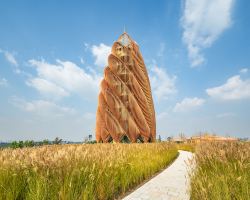
The Chengdu Research Base of Giant Panda Breeding has launched its fall ColorWalk event. Ginkgo trees, bamboo forests, Swan Lake, and the Panda Tower weave together a colorful fall landscape, making it the perfect spot for family and friends to explore and take photos.
🍂 Golden stroll
The ginkgo leaves have put on their golden fall attire. As the sun shines down, the fan-shaped leaves radiate a warm glow. When a gentle breeze blows, the leaves flutter to the ground, creating a mesmerizing blend of golden hues and dappled light. Every snapshot you take here is a masterpiece.
🎋 Bamboo wander
Step deep into the bamboo forest, where overlapping leaves stretch out and sunlight filters through the branches, casting scattered shadows. As you stroll along the path, you'll hear the rustling of the wind through the leaves and be surrounded by refreshing greenery. It's a truly rejuvenating experience.
🌊 Blue lake reflections
By Swan Lake, the clear water ripples as the blue sky and lush banks blend into a vivid landscape. A gentle breeze stirs the surface, making the light and shadows dance. The reflections of the boardwalk and trees showcase the crisp beauty of fall.
🐼 Colorful encounters
Beyond the scenery, the park features the unique colors of our animal friends. The black-and-white giant pandas are irresistibly adorable, the reddish-brown red pandas are lively and playful, while the Sichuan golden hair monkeys and peacocks add even more surprises with their vibrant colors.
📸 Photo spots: Ginkgo forest, bamboo path, Swan Lake, and the purple flower sea under the Panda Tower.
💡 Travel tips: We recommend wearing comfortable shoes and bringing a camera to capture the beautiful fall scenery.
Come to the Chengdu Research Base of Giant Panda Breeding and start your fall ColorWalk journey today!
Chengdu

Free! Curated, diverse educational hotspots in ChengduHot
Hot


Nov 2–Nov 30, 2026, Chengdu is offering 15,000 cultural and tourism experience packages, including free spots for themed educational programs across performances, exhibitions, and more.
Eligible participants: out-of-town visitors to Chengdu (non-Chengdu residents)
🏯 Chengdu Wuhou Shrine Museum
🎫 Tickets: free educational program spots, advance reservation required
• Learn about Three Kingdoms history and experience the legacy of Shu Han.
📚 Chengdu Du Fu Thatched Cottage Museum
🎫 Tickets: free educational program spots, advance reservation required
• Explore Du Fu’s poetry and immerse yourself in Tang dynasty culture.
🦖 Chengdu Natural History Museum
🎫 Tickets: free educational program spots, advance reservation required
• Discover the wonders of natural science. Ideal for family-friendly experiences.
🏛 Jianchuan Museum Cluster
🎫 Tickets: free educational program spots, advance reservation required
• Extensive historical exhibits covering War of Resistance culture and folk traditions.
🌾 Guantang Village, Tianfu New Area, Sichuan
🎫 Tickets: free educational program spots, advance reservation required
• Experience traditional agrarian culture and join hands-on farming activities.
🏠 Chengduhelin Former Residence Memorial Hall
🎫 Tickets: free educational program spots, advance reservation required
• Learn about the life and ideas of philosopher He Lin.
💡 Travel tips: This promotion is only open to non-Chengdu residents. Some museums have already filled their educational program spots, so we recommend booking as early as possible.
Come to Chengdu and unlock these free educational highlights to experience the charm of its culture and history!
Chengdu

Free admission for minors at Chengdu Wuhou Shrine MuseumHot
Hot


The Chengdu Wuhou Shrine Museum is a temple complex that commemorates Liu Bei, Zhuge Liang, and other heroes of Shu Han. Its main building is the Wuhou Shrine. The grounds enshrine 50 statues of Shu Han heroes and preserve numerous steles and plaques related to Zhuge Liang and Three Kingdoms culture. Starting January 1, 2027, the Wuhou Shrine will offer free admission for minors.
🏛 Main buildings of the Wuhou Shrine
The complex includes the main gate, second gate, Liu Bei Hall, passage hall, Zhuge Liang Hall, and the Three Oaths Temple, among others. The buildings align along a south-to-north central axis, showcasing the distinctive style of the Shu Han period. Inside the shrine, 50 statues of Shu Han heroes such as Liu Bei and Zhuge Liang are enshrined, giving visitors a profound sense of Three Kingdoms heritage.
🎋 Red walls and bamboo shadows
The red walls and bamboo shadows in the scenic area are one of Chengdu’s most popular photo spots. The interplay of red walls and bamboo silhouettes exudes a classical charm, perfect for memorable photos.
🌳 Garden area
On the west side of the Wuhou Shrine, the garden area features a stone archway gate, a triple-arch gate, a four-sided pavilion, Jianxin Hall, and a burial chamber, among other structures. It is the only northern-style cemetery architecture complex in Southwest China, showcasing a unique architectural artistry.
Come to the Chengdu Wuhou Shrine Museum and experience the unique charm of Three Kingdoms culture!
Chengdu

Dujiangyan by Night: Blue Tears and 3 Engineering WondersHot
Hot


Just outside Chengdu, Dujiangyan is a 2,000-year-old irrigation marvel that showcases the unique landscape and ingenuity of ancient Shu.
🌊 Three core hydraulic works
The Fish Mouth Levee automatically splits the flow 40/60, the Feisha Dam diverts floods and silt, and Baopingkou meters the intake. Harnessing the natural terrain, the system handles flood control and irrigation with no mechanical gates—an elegant design in tune with nature. Seeing this waterworks operate up close is awe-inspiring.
🏮 Blue Tears at South Bridge
At dusk, South Bridge becomes the top photo spot. As night falls, lights shimmer on the river and the flowing water takes on a clear blue hue. The evening breeze carries the sound of the current, setting a rich mood—perfect for stunning shots.
🪨 Stone carvings and ancient steles along the way
You’ll find many carvings and old steles along the route that record Li Bing’s water-management legacy. Stroll and read as you go to learn the roots of the region’s long-lasting prosperity and feel the culture and wisdom of this land.
💡 Travel tips: There’s plenty of walking, so wear comfortable walking shoes. Enter in the afternoon to avoid the midday sun and catch the Blue Tears at night. Purchases in the scenic area are entirely optional—no need to follow the crowd for souvenirs.
Come to Dujiangyan and experience millennia of landscape wisdom and grandeur.
Dujiangyan
Chengdu Museum: Weekend Nature and Culture Exploration for KidsHot
Hot


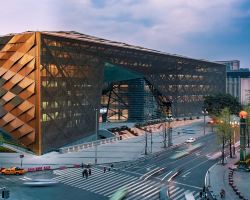
The December event calendar for the Weekend Children's Museum at Chengdu Museum is out. With a focus on both nature and culture, children can explore the roots of civilization through exhibits and hands-on crafts.
⏰ Time: December 2026
🌍 Earth home and North American forest exploration
• Discover natural environments and animal habits.
• Learn about the ecological diversity of our planet.
⏳ Recommended time to visit: December 2026.
🎨 Sichuan brocade bookmark crafting event
• Learn about Chengdu's iconic brocade weaving techniques and the cultural history behind the naming of the Jinjiang River.
• Make your own Sichuan brocade bookmark and experience this traditional craft.
⏳ Recommended time to visit: December 2026.
🏠 Ancient Shu architecture experience
• Try setting up pillars and plastering mud to experience the architectural wisdom of wattle and daub walls.
• Learn about the architectural features of ancient Shu dwellings.
⏳ Recommended time to visit: December 2026.
🔥 Special exhibition on kiln art and craftsmanship
• See Chinese and British ceramics come together to spark a cultural dialogue.
• Experience the craftsmanship and historical heritage of ceramic art.
⏳ Recommended time to visit: December 2026.
💡 Travel tip: We recommend booking your spot in advance, as weekends can be crowded.
Come to Chengdu Museum and embark on a fun and educational cultural journey with your children!
Chengdu

Mount Qingcheng's twin trails of Taoism and natureHot
Hot


Mount Qingcheng has long been known as "Tranquil Paradise." It is divided into the front and back mountains. The front mountain highlights Taoist culture and cultural attractions, while the back mountain is famed for its natural scenery. As one of the cradles of Taoist culture, it also captivates countless visitors with its beautiful landscapes.
⛰ Front mountain of Mount Qingcheng
✨ Highlights:
• Centered on Changguan and Shangqing Palace, with temples facing each other to create a rich Taoist atmosphere.
• Brimming with cultural attractions, including Jian Zushi Hall and Chaoyang Cave.
• Distinctive natural scenery, with attractions such as Jinbian Rock, Shisun Peak, and Zhangren Mountain complementing one another and leaving visitors wanting more.
⛰ Back mountain of Mount Qingcheng
✨ Highlights:
• Adjacent to Wolong National Nature Reserve, featuring pools and waterfalls, and lush green vistas.
• Home to many attractions, including Jinbi Tiancang, Tai'an Ancient Town, Crystal Karst Cave, Santan Wuquan Waterfall, Longyinxia Plank Road, Shuangquan Water Curtain, Baizhang Bridge, Baiyun Wanfo Cave, and the Tianqiao natural bridge, making it ideal for a relaxing getaway.
💡 Travel tips: You can usually see Mount Qingcheng in half a day, so a stay is not necessary. If you have time, consider staying overnight at a mountainside Taoist temple to catch the sunrise the next morning.
Come to Mount Qingcheng and experience the perfect blend of Taoist culture and natural beauty!
Dujiangyan

Beyond Chengdu: your guide to adorable pandasHot
Hot


Want to see giant pandas? Beyond Chengdu, many cities across China offer great viewing, with pandas of all personalities waiting to meet you. Here’s our roundup 👇
Sichuan
🐼 Hehua (Huahua)
📍 Chengdu Research Base of Giant Panda Breeding
Born in 2020, a short, chubby, and super-fluffy sweetheart at the Chengdu base. She stays calm even when her bamboo gets snatched. In 2023, her “triangle rice ball” look dominated trending searches, sending the base’s ticket sales soaring 9x, with 800,000+ Super Topic followers. Widely regarded as today’s top female star among pandas.
🐼 Fu Bao
📍 Wolong Shenshuping Base of the China Conservation and Research Center for the Giant Panda
Born in 2020 at Everland in South Korea. Keepers made her a guitar, flower crowns, and little glasses. Before she came home, a petition on Korean sites drew tens of thousands of signatures. She returned to Sichuan in April 2024, with Chinese and Korean media coverage rivaling a celebrity’s airport arrival.
🐼 Xiang Xiang
📍 Bifengxia Base, Ya’an
Born in 2017 at Ueno Zoo in Tokyo. A nationwide naming vote drew 320,000 entries. She generated billions of yen in economic impact each year for Japan. When she returned to China in February 2023, Japanese media aired a 12-hour live farewell.
Beijing
🐼 Meng Lan
📍 Beijing Zoo
Born in 2015, Beijing Zoo’s serial escape artist. He’s climbed walls by stepping on a red ball, twisted door handles, and cheekily teased visitors from afar. A single Douyin video topped 300 million views. Netizens jokingly call him Beijing’s “985” genius on the loose.
Jiangsu
🐼 Mengxun & Aobao
📍 Suzhou Taihu National Wetland Park
A brother-sister duo born in 2022 and total foodies. You can also watch them play-fight—super lively and adorable.
🐼 Jiujiu
📍 Nanjing Hongshan Forest Zoo
Known as the most beautiful panda in East China. More than just a pretty face, Jiujiu is quite the performer—you might even catch this panda dancing.
Chongqing
🐼 Shuangshuang, Zhongzhong, Xixi, and Qingqing (the “Four Joy Meatballs”)
📍 Chongqing Zoo
There are 23 pandas here—one of them is sure to steal your heart. The viral foursome “Four Joy Meatballs” is from this zoo, and if you’re lucky, you might even see them “playing mahjong.”
Liaoning
🐼 Feiyun
📍 Dalian Forest Zoo
The zoo’s first-gen internet-famous female: round head, snow-white coat. Fans lovingly call her “Feiyun piggy.” Together with Jinhu and Miaoyin, she’s one of “Dalian’s three treasures.” Livestreams often draw 100,000+ viewers year-round.
Shaanxi
🐼 Qizai
📍 Qinling Four Treasures Science Park
The world’s only captive brown giant panda, discovered in Foping, Shaanxi, in 2009. With chocolate-colored fur, he’s jokingly nicknamed the Labrador of the panda world.
Shandong
🐼 Yaji
📍 Jinan Zoo
A little hidden gem who really knows how to work a crowd. When standing on all fours, Yaji looks like a small bench—hence the cute nickname “Little Bench.”
Which panda has stolen your heart?
Beyond the stars above, many other provinces across China have adorable giant pandas waiting to meet you. Start planning your panda trip and witness the charm of this national treasure up close
Chengdu

Fall break free attractions, free boat rides for Qingdao children/teachersHot
Hot


During the fall break in 2026, Shandong and many destinations nationwide are offering free admission at scenic spots for a wide range of groups, including youth and teachers.
⛴️ Qingdao fall break free ferry rides
⏰ Time: November 1–30, 2026
📍 Location: Qingdao Olympic Sailing Center, Qingdao Ferry Terminal, and more
🎫 Admission: Children aged 15 and under, and teachers ride free if eligible
• Multiple routes are included, such as those from Qingdao Olympic Sailing Center and Qingdao Ferry Terminal.
• Children must board with at least one fare-paying adult.
• Teachers ride free with their own ID and a valid teaching certificate.
⛰️ Weifang–Linqu Yishan Scenic Area
⏰ Time: October 10–December 13, 2026
🎫 Admission: Free admission for all visitors nationwide
🌸 Tai'an–Feicheng Taoyuan Wonderland Tourist Area
⏰ Time: October 31–November 30, 2026
🎫 Admission: Primary and secondary school students aged 15 and under, and holders of a valid national teaching certificate, enter free
• Free activities include sightseeing shuttles, the scenic sky ladder, and Peach Blossom Water rafting.
• Enjoy free photo spots at the cloudside Monet garden and the colorful fall harvest display.
• Free parking lot available.
🌊 Jining–Weishan Lake Tourist Scenic Area
⏰ Time: November 5–30, 2026
🎫 Admission: Nationwide primary and secondary school students aged under 15, college students, and teachers enjoy free admission; accompanying relatives get 50% off
• Free admission to Weishan Island Scenic Area and Weishan Lake National Wetland Park (transportation tickets not included).
• Each student with free admission may bring up to 2 accompanying relatives at half price for the main admission ticket.
🎬 Dezhou–Laoling Film Studio
⏰ Time: November 5–9, 2026
🎫 Admission: Visitors aged 18 and under enter free
• Primary and secondary school students must be accompanied by a guardian who purchases an adult ticket.
• Single-entry, same-day ticket. Redeem a paper ticket with your original ID.
⛴️ Fuzhou inner‑river cruises
⏰ Time: November 18–25, 2026
🎫 Admission: Kindergarten, primary, and middle school students get a free one-way ferry ticket with a valid ID
• Applicable routes include West Lake–Baima River and the West Lake loop, among others.
• Children must be accompanied by a guardian. Each guardian may bring up to 2 free children.
⛰️ Quanzhou Shiniu Mountain Scenic Area
⏰ Time: November 1–30, 2026
🎫 Admission: Students aged 17 and under enter free if eligible
• Adults with a full-value pass may bring 1 student aged 17 or under for free.
• Students entering for free must present a valid ID and enter with the accompanying adult’s ticket during verification.
🏞️ Longyan Guanzhai Mountain National Scenic Spot and Peitian Ancient Village
⏰ Time: November 1–December 2, 2026
🎫 Admission: Students in compulsory education aged 16 and under enter free; accompanying parents get 50% off
• Discount applies to any one of Guanzhai Mountain routes A, B, or C, or to Peitian Ancient Village.
• Tickets must be purchased at the Guanzhai Mountain Visitor Center ticket office. Limit 1 purchase per person.
⛰️ Ningde Taimu Mountain Scenic Area
⏰ Time: November 1–30, 2026
🎫 Admission: Nationwide primary and secondary school students enjoy free admission; a round-trip scenic shuttle ticket is required
⛰️ 15 paid attractions rated 4A and above in Huangshan City
⏰ Time: November 1–30, 2026
🎫 Admission: Nationwide visitors aged under 18 enter free
• Includes Mount Huangshan Scenic Area, Xidi, Hongcun, Tangmo Village, and the Archway Complex and Bao Family Garden.
⛰️ Lu'an Tiantangzhai Scenic Area
⏰ Time: November 1–30, 2026
🎫 Admission: Nationwide youth aged 16 and under enter free
• Free admission excludes secondary spending items such as the scenic area shuttle and cableway tickets.
🐾 Hefei Hefei Wildlife Park
⏰ Time: November 14–18, 2026
🎫 Admission: Children aged 16 and under enter free
🏔️ Aba Prefecture Bipenggou Scenic Area
⏰ Time: November 1–30, 2026
🎫 Admission: Primary and secondary school students and teachers enter free; a separate scenic area bus ticket is required
🏞️ Ya'an Erlang Mountain Labahe Scenic Area
⏰ Time: November 1–30, 2026
🎫 Admission: Visitors under 18, and teachers nationwide, enter free
🏔️ Ya'an Niubeishan Scenic Area
⏰ Time: November 1–30, 2026
🎫 Admission: Nationwide primary and secondary school students and teachers enter free
🏞️ Ya'an Dongla Mountain Grand Canyon Scenic Area and Dengchigou Scenic Area
⏰ Time: November 1–30, 2026
🎫 Admission: All nationwide primary and secondary school students and teachers enter free
⛰️ Ya'an Mengding Mountain Scenic Area
⏰ Time: November 1–30, 2026
🎫 Admission: Nationwide visitors aged under 18, and in-service teachers, enter free
• Free admission excludes secondary spending items such as scenic shuttles, cableways, and rides.
🏞️ Ya'an Longcanggou Diecuixi Scenic Spot
⏰ Time: November 1–30, 2026
🎫 Admission: Nationwide primary and secondary school students and school staff (teachers and employees) enter free
🏔️ Chengdu Xiling Snow Mountain Scenic Area
⏰ Time: November 11–30, 2026
🎫 Admission: Visitors under 18 enter free
• Free items include admission to the back-mountain ski area, round-trip to Yuanyang Pond, and round-trip on the Riyueping cableway.
💡 Travel tip: Before your trip, check the scenic spot’s opening hours and discount policies to avoid a wasted visit. Some free-admission policies apply only to specific groups, so bring relevant ID for verification.
Unlock a colorful lineup of free-admission scenic spots this fall break in 2026!
Qingdao

Unmissable places to visit in ChengduHot
Hot


Chengdu blends deep history with modern energy. From the red walls and bamboo at the Chengdu Wuhou Shrine Museum and the lingering poetry at the Chengdu Du Fu Thatched Cottage Museum to the light show at the Tianfu Twin Towers, every stop reveals the city's unique charm.
🏯 Chengdu Wuhou Shrine Museum
✨ Highlights:
• Red walls and bamboo shadows: echoes of the Three Kingdoms and a millennium of history, where culture runs deep.
🏡 Chengdu Du Fu Thatched Cottage Museum
✨ Highlights:
• Thatched eaves and a murmuring stream: timeless poetry that recalls the Chengdu scenes in Du Fu's verse.
🌆 Tianfu Twin Towers
✨ Highlights:
• Light show: a beacon of the city's youth and passion, symbolizing modern architecture and urban energy.
🏘 Kuixinglou Street
✨ Highlights:
• Lively old-street vibes: feel the down-to-earth charm of everyday life.
• Genshin Impact-themed building: a popular photo spot where old-town charm meets modern pop culture.
Come to Chengdu and unlock the city's many charms!
Chengdu
1
2
3