
Things to do in Gaoping
Explore top experiences
Top 10 attractions in Gaoping


Experiences you can't miss in Gaoping
Featured Culture & history in Gaoping
View all Culture & history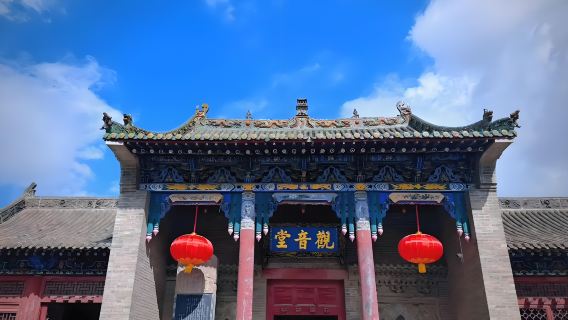
Free cancellation
Instant confirmation
FromKRW 178,851


Gaoping Today's weatherClear -2-13℃
Gaoping weather for the next 2 days11/11: -1-15℃, 11/12: 1-17℃
Free things to do in Gaoping


What travellers say about Gaoping

山在穷游13 June 2026
4.0
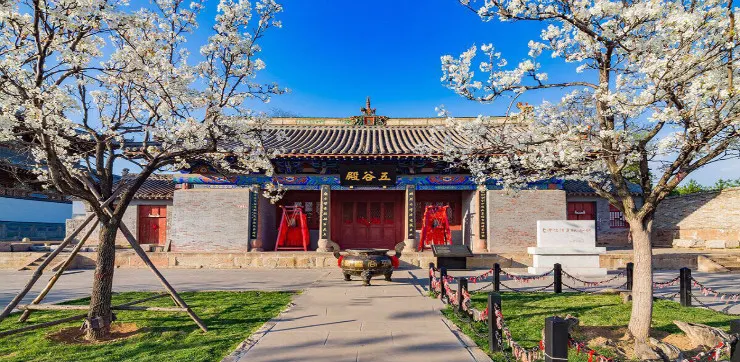
This was my second visit to Tiefo Temple, and this time I felt much better than before. This time, some time had passed since its peak popularity, and there weren't many people, so I could spend more time there and properly explore the place. The lighting was better in the morning, but when I arrived in the afternoon near closing time, the lighting inside the large store was noticeably dim.
Gaoping Tiefo Temple

Danielwwh31 October 2025
5.0
The temple is located on a very quiet mountainside, requiring a long climb up a flight of stairs 😴. The main hall containing the murals is inaccessible; you can get a general view from the entrance, and for more details, see the replicas in the side halls.
It closes at 12 noon and may reopen at 2 pm, so please be aware of the time.
Kaihua Monastery

117***3027 September 2026
4.0
Dinglin Temple is the largest of the many national key cultural relics protection units in Gaoping City, Jincheng, and can be considered the pinnacle of ancient architecture in Jincheng.
The exact date of Dinglin Temple's initial construction is unknown, but according to a Jin Dynasty stone tablet still existing in the temple, it existed at least as early as the Later Tang Dynasty. Dinglin Temple underwent reconstruction during the Jin and Yuan Dynasties and several renovations during the Ming and Qing Dynasties. Except for the Leiyin Hall, which is a Yuan Dynasty structure, most of the buildings are from the Ming and Qing Dynasties, making Dinglin Temple a complex of ancient buildings showcasing diverse styles from the Jin, Yuan, Ming, and Qing periods.
The five-tiered eaves gate, lotus-shaped caisson ceiling, Leiyin Hall, Song Dynasty painted decorations, a nearly thousand-year-old pine tree on the west side of the gate, and centuries-old peonies, papaya trees, and small-leaved paulownia trees within the temple grounds are all must-see highlights.
Dinglin Temple seems to lack a proper parking lot; when driving, you can only park wherever you can find space under the trees along the roadside.
Dinglin Temple

M49***3013 February 2025
5.0
There is a parking lot with poles at the Yan Emperor's Mausoleum in Gaoping, Jincheng. Fortunately, parking lots in Shanxi usually charge by the time rather than by the hour. It's 2502. I didn't see any tickets for sale. There is also a Spring Festival temple fair, a flat road with many huge pillars, and then steps up to a huge hall. When I went there, I saw people coming back from burning incense and offering sacrifices.
Mausoleum of Emperor Yan

210***1012 February 2025
5.0
Chongming Temple was called Langgu Temple during the Song and Liao dynasties. It is the earliest existing Northern Song Dynasty building in China. The Central Buddha Hall was built during the Kaibao period of the Northern Song Dynasty (968-975). Among the existing buildings, except for the Central Buddha Hall, which is an early Song Dynasty structure, the rest are Ming and Qing Dynasty buildings. The architectural style of the Central Buddha Hall follows the Tang Dynasty. The column capitals are not paved, the brackets are seven-layered, the rise and fall are gentle, the eaves are deep, and the proportions are a bit uncoordinated, but it exceeds the Ten Thousand Buddha Hall of Zhenguo Temple in Pingyao County during the Five Dynasties.
Chongming Temple
寶寶Cindy9 October 2026
5.0
September 18, 2026
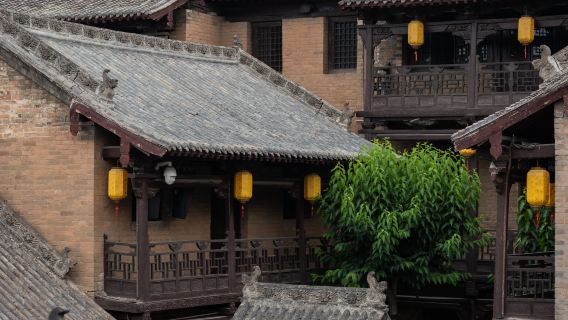
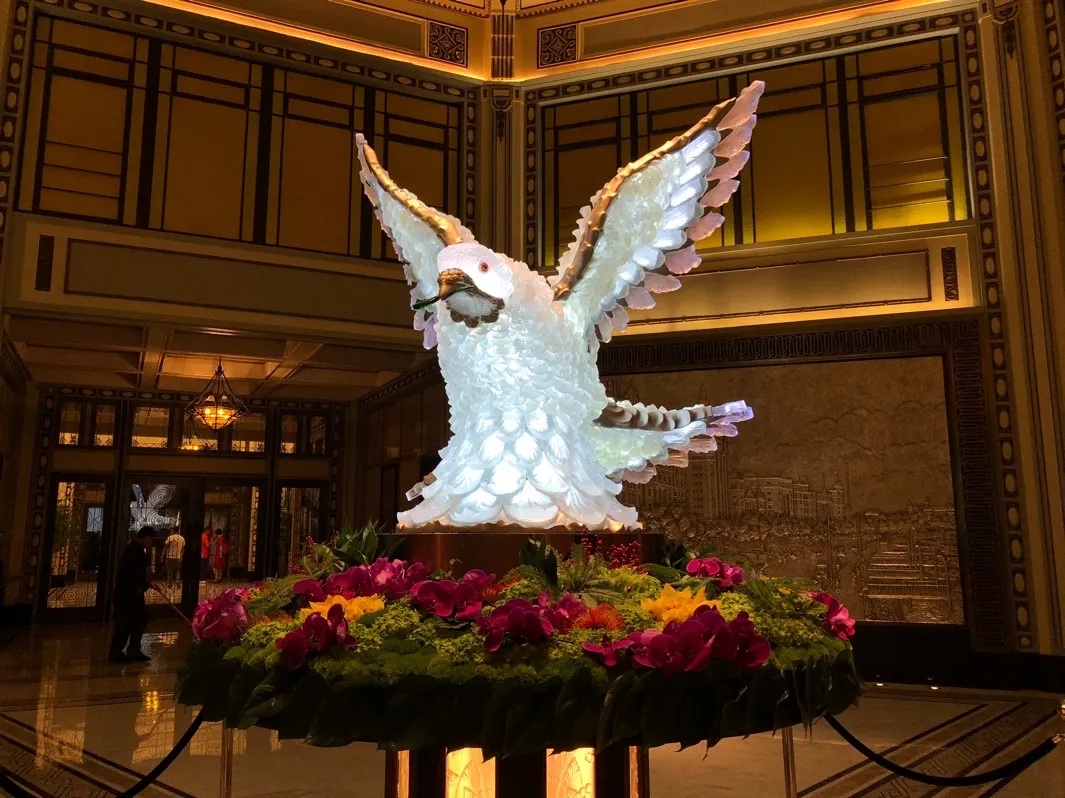
Lianghu Ancient Village in Shanxi Province is a national historical and cultural village and a traditional Chinese village, founded in the Tang Dynasty and featuring Ming and Qing Dynasty architectural complexes. It is also a national AAAA-level scenic spot. The village preserves a large number of well-preserved Ming and Qing Dynasty courtyards and temples, earning it the reputation of "a living ancient village of the Taihang Mountains." Legend has it that the Guo and Tian families established the village here in the mid-Tang Dynasty, initially called "Lianghu." Later, with the migration of families with other surnames such as Wang, Li, Qin, and Zhao, the village expanded and was renamed "Lianghu."
It was designated as one of the third batch of national historical and cultural villages in 2007, one of the first batch of traditional Chinese villages in 2012, and the Lianghu ancient architectural complex was designated a provincial-level cultural relic protection unit of Shanxi Province in 2016.
Unique Layout: The village is laid out in the shape of a phoenix spreading its wings, with religious buildings such as Yuxu Temple and Jade Emperor Temple serving as high points. A network of streets and alleys paved with sand and gravel connects public spaces such as academies, theaters, and shops.
Yuxu Temple: The most precious relic in the village, the Sanqing Hall was originally built in the Yuan Dynasty and retains a rare arched gate (flame gate). One of the central gates is an original Jin Dynasty artifact, and the platform is inscribed with the date "18th year of Dading".
Panlong Village: A Qing Dynasty defensive fortress, covering an area of 3,800 square meters. Its five courtyards are equipped with arrow towers and a system of secret passages, forming a three-tiered defense system. It was praised by a Tsinghua University professor as a "Qingming Scroll depicting the lives of farmers and merchants".
The Vice Minister's Residence: The private residence of Tian Fengji, a Qing Dynasty vice minister, and the core building of Panlong Village. It contains the East Residence, West Residence, and Tian Family Ancestral Hall. The brick-carved screen wall is decorated with auspicious patterns such as unicorns, phoenixes, and longevity mountains.
This architectural complex, facing south, served both residential and defensive functions and is hailed as a representative work of "living ancient villages in the Taihang Mountains."
Tian Fengji's birthplace: Lianghu Village, Gaoping County, Zezhou Prefecture, Shanxi Province (now part of Jincheng City). Birth and death: Born in the second year of the Chongzhen reign of the Ming Dynasty (1629), died in the thirty-eighth year of the Kangxi reign of the Qing Dynasty (1699), at the age of seventy-one. His courtesy name was Ningzhi (also written as Ningzhi), and his pen name was Peicang.
In the imperial examinations: He passed the second-class Jinshi examination in the twelfth year of the Shunzhi reign of the Qing Dynasty (1655) and was selected as a Shujishi in the Hanlin Academy.
His official positions: He successively served as a compiler in the Hanlin Academy, a lecturer to the Shunzhi Emperor, a lecturer to the emperor, the Right Vice Minister of the Ministry of Revenue, a lecturer to the Kangxi Emperor, and the Left Vice Minister of the Ministry of Revenue. Fengjiang: In the eleventh year of the Kangxi Emperor's reign (1672), he was transferred to the position of Governor of Zhejiang Province, concurrently serving as Vice Minister of War. He was an important regional official at the time and a teacher of the Kangxi Emperor. In the tenth year of Kangxi's reign (1671), he was appointed as a lecturer at the Imperial Academy, primarily responsible for lecturing to the Kangxi Emperor. A second-rank official in the early Qing Dynasty, he served as Governor of Zhejiang Province and Vice Minister of War. In his later years, he resigned and returned to his hometown to reside here. The Tian family is one of the main surnames in Lianghu Village. Many members of the family passed the imperial examinations during the late Ming and early Qing dynasties, and the Vice Minister's residence witnessed the family's heyday.
Lianghu Ancient Village
旅游可放松心情28 August 2023
5.0
The site of the Battle of Changping is now a key cultural relic protection unit in Shanxi Province. The site covers a wide area, starting from Skull Mountain and Ma'anhe in the west, and ending at Hongjiagou and Xingcun in the east, with a width of about 10 kilometers; starting from Danzhuling in the north and ending at Mishan Town in the south, it is about 30 kilometers long. The river valleys between the east and west mountains and on both sides of the Dan River are all key protection areas. Although it has a history of more than 2,200 years, many beautiful stories and legends are still widely circulated. The origins of many place names and village names are related to this war, such as Kangying, Gukou, Weicheng, Arrowhead, Qijiayuan, Sanjia, Zhaozhuang, and Paiwang. Many sites and relics such as the Hundred Miles Great Wall (also known as Qinlei), Yingfangling, Kongcangling, Baiqitai, Skull Mountain, Jiangjunling, and Lianpotun still exist. The Great Wall built by the Qin army to cut off the food supply and reinforcements of the Zhao army started from Danzhuling in the west, passed Guanheling, Yangtoushan, and ended at Ma'anshan in Lingchuan, winding for more than 100 miles, and the site can still be seen today. Weicheng Village is said to be the place where the Zhao army was besieged by the Qin army, and Zhao Kuo died here. Zhaozhuang Village, according to legend, became a ruin after the Battle of Changping. After Zhao Kuo died, the local people stole Zhao Kuo's body back and buried it on Erxianling in the north of the village. In order to make the descendants not forget Zhao State, the place was renamed Zhaozhuang. The idiom "talking about war on paper" refers to Zhao Kuo's dogmatism in using troops. Gukou Village, according to legend, is the place where Bai Qi killed the Zhao army. Therefore, Gukou Village is also known as Shagu, Kutou, and Shengyuangu. It is located 5 kilometers west of Gaoping City. There are Baiqi Terrace, Skull Mountain, Skull King Temple and other historical sites in the village.
Site of the Battle of Changping

Devil May Smile24 November 2024
5.0
The interior of the scenic spot is very quiet and you can take photos at will. People who like ancient buildings will be very interested. A trip like this, away from the hustle and bustle of the city and back to nature, can cleanse the increasingly impetuous mind.
Dayang Ancient Town

এ᭄哈佛ꦿృ༊1 November 2026
4.0
Old Zhou from the park treated us to three meals and snacks, but you have to queue to get them, and the queues can be quite long when it's crowded. I suggest buying a ticket for one of the major shows; since you're there, you should see as many as possible. The iron flower display is spectacular and a must-see.
Situ Town
Trip Moments in Gaoping


Popular cities near Gaoping


Frequently asked questions
How can I contact Trip.com customer support?
Get help anytime, anywhere within 30 secondsContact customer support
Can I change or cancel my booking?
Change and cancellation policies vary by attractions and tours. Please check the product details page for more information.
How can I get discounted prices?
Ticket prices may vary between weekdays and weekends, as well as during peak and off-peak seasons. When booking with Trip.com, you can also use Trip Coins to get extra savings. For more tips on booking discounted tickets, please visit Trip.com for the latest information.