Jiaocheng

Things to do in Jiaocheng

Search attractions or local attractions & tours
Search

Explore top experiences

Top 10 attractions in Jiaocheng

View all Attractions
Jinci Temple Museum
2026 Asia 100 - Family-friendly Attractions

Jinci Temple Museum

8.7
4.8/5
20.9k reviews
Jinci Temple is located on the banks of the Jinshui River at the foot of Xuanweng Mountain, 25 km southwest of Taiyuan. It is a shrine built by later generations to commemorate Tang Shuyu, the founding feudal lord of the State of Jin, and serves as the ancestral temple of Jin. It is known for the saying, "If you have not visitedJinci Temple, it would be a wasted trip to Taiyuan," as the saying goes. After getting off at Jinci, the first place you arrive at isJinci Temple Museum, this is a free park with a nice environment that you can look around at will. Walk for about 10 minutes, and you can reach the main area of Jinci through the park. Inside the Jinci Temple Museum,Jinci Temple"Three treasures" (Jinci Temple Museum - Xian Hall, Flying Bridge Across Fish Pond, Jinci Temple Museum - Shengmu Hall) and "three wonders" (Jinci Temple Museum - Zhou Cypress, Nanlao Spring, painted clay sculptures) are what every visitor toJinci TempleA view that no one should miss. Jinci TempleThe "Three Treasures" are linked together and located atJinci TempleOn the central axis, they can be visited together. Jinci Temple Museum - Xian Hall is a place for enshrining sacrificial offerings, with fence-like walls on all four sides that provide ventilation and coolness. What is particularly notable is that no iron nails were used on the beams and pillars throughout the hall. The Fish Pond Flying Bridge is located west of Xian Hall, that is, between Xian Hall and the Hall of the Holy Mother, and was built during the Song Dynasty. The overall view resembles a modern overpass and is the only surviving example of its kind among ancient bridges in China. One end of the "Flying Bridge" connects to Jinci Temple Museum - Hall of the Holy Mother, which is one of the earlier main buildings extant in Jinci Temple Museum. The interior of the hall is very spacious, and having beams without pillars is a major highlight. On the 8 corridor pillars in front of the hall are carved 8 wooden coiled dragons poised to fly, which, together with the "Fish Pond Flying Bridge," appear quite imposing. Centered around Jinci Temple Museum-Holy Mother Hall, the "Three Wonders" are easy to find. The painted clay sculptures are located in Jinci Temple Museum-Holy Mother Hall. The main statue of the Holy Mother sits upright in a wooden shrine, dignified and gorgeous, with the other 42 attendants arranged on both sides. These sculptures are brightly dressed and have different expressions. Among them is a maid dressed as a huadan, half joyful and half sorrowful, which inevitably leaves viewers with mixed feelings. Master Mei Lanfang once stood for a long time in front of this maid, carefully savoring her movements and inner thoughts, and praised her greatly. Jinci Temple Museum-Zhou Cypress is located on the north side of Jinci Temple Museum-Holy Mother Hall. It was planted in the Western Zhou Dynasty and has a history of more than 3,000 years. Nanlao Spring is located on the south side of Jinci Temple Museum-Holy Mother Hall, and the source of the Jin water flows out from here. In addition,Jinci TempleInside, there is also the "Inscription on the Jinci Temple" stele, personally composed and handwritten by Emperor Taizong of Tang, Li Shimin, which is extremely precious. In the southernmost part, there is also the Shifang Fengsheng Zen Temple, said to have originally been the villa of Yuchi Gong, a founding general of the Tang Dynasty. South of the shrine, within the Futu Monastery, stands a Sarira Stupa; climbing the stupa and gazing into the distance,Jinci TempleThe panoramic views are vividly etched in my mind.Taiyuan · 30.6km from Jiaocheng
The Qiao's  Family Compound
No. 16 of Best Things to Do in Shanxi

The Qiao's Family Compound

7.8
4.7/5
15k reviews
The Qiao's Family Compound is located in the center of Qiaojiapu village, Qi county, also known as "The Qiao Family CourtyardIt was the residence of Qiao Zhiyong, a renowned commercial and financial capitalist in the Qing Dynasty, and has served as a filming location for over 30 movies and TV series, including "The Qiao Family Courtyard" and "Raise the Red Lantern." If you've seen these films, you'll surely recognize the scenes here: rows of red lanterns hanging high, towering brick walls, exquisite carvings, beautiful bracket sets and upturned eaves, and deep alleys. This is the famous The Qiao Family Courtyard. This is a residential complex from the Ming and Qing dynasties, its architecture resembling a castle, imposing and grand, typical of the living style of a large northern family during the Ming and Qing periods. Viewed from above, the entire courtyard layout resembles the Chinese character "囍" (double happiness), symbolizing good fortune. The complex is meticulously laid out yet also varied; even the more than 140 chimneys on the rooftops are unique. It is said to have been built by the imperial family.The Forbidden CityThere's a saying that "for residential architecture, visit the Qiao family courtyard". Upon entering the Qiao family courtyard, a straight stone-paved path approx. 80 m long divides the six courtyards into two rows, north and south. According to traditional naming, the three courtyards on the north side of the Qiao family courtyard are called the old courtyard, northwest courtyard, and study courtyard from east to west. The three courtyards on the south side are called the southeast courtyard, southwest courtyard, and new courtyard, reflecting the construction sequence of each courtyard. The brick carvings, painted decorations, and inscribed plaques in each courtyard are exquisitely crafted. The standout is the "hundred longevity characters" screen wall at the main entrance, featuring 100 uniquely styled seal-script "longevity" characters, where art and culture blend seamlessly. The brick carvings at the land god shrine are also noteworthy. Under the eaves of every room in the Qiao family courtyard, you'll find genuine gold-painted decorations, notably created using the raised paste technique with meticulous layering and final gold application. Among the many inscribed plaques at the Qiao family courtyard, the one personally calligraphed by Fu Shan in the fourth courtyard is particularly remarkable.Danfeng pavilion“Plaque”, when visiting here, be sure to learn about the story behind this plaque. Additionally, there are three treasures in the Qiao Family Courtyard: the ten-thousand-people ball, the rhinoceros gazing at the moon mirror, and the nine-dragon lantern. The rhinoceros gazing at the moon mirror was the treasure that brought wealth to the Qiao family, while the nine-dragon lantern was a gift from Empress Dowager Cixi, located in the courtyard at the southern center. Today, the Qiao family courtyard also serves as a folk museum, with its six courtyards respectively displaying agricultural life through the seasons, life rituals, inner gardens, commercial customs, luxurious furnishings, and the history of the Qiao family. Visitors can explore while learning about the Qiao family's philosophy of life, household management, and business.Qi County · 30km from Jiaocheng
Pangquangou Canyon Rafting

Pangquangou Canyon Rafting

3.9
4.3/5
101 reviews
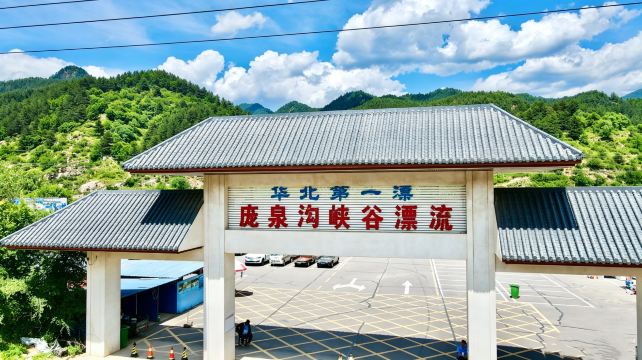
Pangquangou Canyon Rafting is located in Shizhuang Village, Pangquangou Town, Jiaocheng County, Shanxi Province. It was built by Jiaocheng County Jinyu Ecological Tourism Development Co., Ltd. at an investment of 80 million yuan. The rafting area is adjacent to the S320 Provincial Road of Shanxi Province, and the upper and lower docks are connected smoothly. The area is only 120 kilometers away from Taiyuan, the capital of Shanxi Province, and the Souvenir cities of Luliang, Xinzhou, Jinzhong, Jiexiu, etc. are all within 200 kilometers. The peripheral transportation G307 National Highway is connected to Qingyin Expressway, Taijia Expressway, and Dayun Expressway, with a superior location and convenient transportation. At the same time, Pangquangou Canyon Rafting is adjacent to the protected area - Pangquangou National Nature Reserve, which is rich in species and plants and animals. It is the habitat of the protected animal Brown Eared Pheasant and a well-preserved green treasure house on the vast Loess Plateau. There are towering mountains and lush forests on both sides of the river; on both sides of the river, there are green grass and red willows. The river is sometimes wide and sometimes narrow, and the water flow is sometimes fast and sometimes slow. There are rapids and dangerous shoals as well as slow-flowing lakes along the way, making it a high-quality rafting site in North China. In the early stage of planning and development, after a tourism planning expert inspection team inspected it, they gave it great affirmation on the spot, and the title of "North China's No. 1 Rafting" is well deserved. Pangquangou Canyon Rafting is divided into the upper dock service area and the lower dock service area, which are 8 kilometers apart, with a rafting length of 10 kilometers and a vertical drop of 130 meters. Both the upper and lower dock service areas are equipped with large parking lots, consulting service centers, ticket centers, Dining centers, shopping centers, Changing room, star-rated toilets and other service facilities. Pangquangou is a new highlight of tourism in Shanxi Province, providing a good choice for the wiring of Souvenir scenic spots in Shanxi Province, allowing tourists to truly experience "the benevolent enjoy the mountains, the wise enjoy the water".Jiaocheng · 55.4km from downtown
Xuanzhong Temple

Xuanzhong Temple

3.7
4.2/5
53 reviews
Xuanzhong Temple is located about 10 kilometers northwest of Jiaocheng County, and you can see a winding but flat mountain road that leads directly to the distant mountains. Following the mountain road through layers of mountains, you can enjoy the beautiful scenery along the way. When we reached a certain place, we saw a tall stone tablet standing by the roadside, with six characters written on it: Namo Amitabha. At this moment, it was as if a strong scent of sandalwood was blowing in our faces. Even if you had never been to this place, you would still guess that there must be an ancient temple in the mountains not far ahead. That's right, Xuanzhong Temple is at the end of the mountain road. Xuanzhong Temple is hidden in the green bushes of Shibi Mountain. If you are lucky, you will happen to see one or several brown pheasants taking a leisurely walk. Don't be surprised that brown pheasants don't hide when they see people, because for many years, they often come to the temple to find food and have long lived in harmony with the monks. This is also a unique scenery of Xuanzhong Temple. The mountain gate of Xuanzhong Temple is just under the cliff. Both ends of the gate are inscribed with "World Pure Land Ancestor Temple, Shenzhou Mahayana Holy Land". Going up a slope, you will see the temple's archway, which reads: Pure Land Ancient Temple. From this, the antiquity and important status of Xuanzhong Temple are clear at a glance. Who built this temple on the mountain? How did Xuanzhong Temple become the ancestral temple of the Pure Land Sect? In fact, the answer is not complicated. Xuanzhong Temple, also known as Shibi Xuanzhong Temple and Yongning Temple, was founded in the second year of Yanxing in the Northern Wei Dynasty (472 AD). The founder was Master Tanluan, the first ancestor of the Pure Land Sect who chanted the name of Buddha. Regarding Tanluan's founding of Xuanzhong Temple, some people have raised questions, believing that Tanluan's birth time does not match the founding time of Xuanzhong Temple. In the existing records, most people believe that Tanluan was born in the first year of Chengming of Emperor Xiaowen of the Northern Wei Dynasty, that is, in 476 AD, while Xuanzhong Temple was founded in 472 AD. Judging from this time, it is indeed contradictory to say that Tanluan founded Xuanzhong Temple. So the question is, was Xuanzhong Temple founded by Tanluan? The Northern Wei Dynasty is more than a thousand years away from today, and the history is long and ancient. All historical materials and historical records have survived endless ups and downs in the vastness of the smoke and waves to this day. Various inaccuracies, mistakes or losses are inevitable. For example, there are historical materials that Tanluan once wrote two volumes of "Anle Collection" and passed them on to the world. In fact, "Anle Collection" was written by his later disciple Daochuo, and Tanluan wrote "Notes on the Theory of Rebirth". Therefore, what we, the descendants, have to do is to find more detailed, more reasonable, and more rigorous evidence among the many complicated clues to restore the historical truth as much as possible. The "Maitreya Statue Ode Stele" currently preserved in Xuanzhong Temple was carved in the 26th year of the Kaiyuan Period of the Tang Dynasty (738 AD). The inscription on the stele records in detail that the founder of Xuanzhong Temple was Tanluan. Other historical records say that in the second year of the Yanxing Period of the Northern Wei Dynasty, that is, in 472 AD, Tanluan was already in charge of the initial construction of Xuanzhong Temple, which coincides with the inscription on the "Maitreya Statue Ode Stele". Therefore, it can be seen that Tanluan's birth year could not have been during the Chengming period, and should have been at least before the second year of the Yanxing Period of the Northern Wei Dynasty. There is also a more direct evidence, which is the "Record of the Four Boundaries of the Specially Granted Temple Farm, Mountains, Forests and Land" currently preserved in Xuanzhong Temple. The inscription reads: "In the second year of Yanxing of the sixth emperor Xiaowen of the Wei Dynasty, the founder Tanluan of Shibiyu first built the temple, and it was not completed until the first year of Chengming". The "Record of the Four Boundaries of the Specially Granted Temple Farm, Mountains, Forests and Land" was established by the monks Hui Miao and Hui Zhi of the temple and engraved on May 23, the third year of Changqing in the Tang Dynasty (823 AD). It records the whole process of the construction of Xuanzhong Temple by Tang Muzong's special grant of land and land. In summary, although Tanluan's exact birth year needs further verification, there is no need to doubt that Tanluan is the founder of Xuanzhong Temple. We already know that Master Tanluan met the Northern Indian Tripitaka Master Bodhiruci at the age of 51, and received from him the true Buddhist method of liberation from life and death, namely the fundamental doctrine of the Pure Land Sect, the "Amitābha Sutra", and decided to be a devout believer in the Pure Land and specialize in promoting the Pure Land. In fact, at that time, Tanluan was already a high monk. He called himself Wei Xuanjian Dazhu and was respected by the emperors of the Southern and Northern Dynasties and monks and laymen. Emperor Wu of Liang called him "Bodhisattva in the Flesh", and Emperor Xiaojing of Wei called him "Shenluan" and ordered him to live in the Bingzhou Grand Temple. Tanluan did not go to Shibi Mountain after leaving Bodhiruci. Instead, he left Bingzhou Temple after conducting in-depth research on Pure Land doctrines and ideas. His purpose was to promote Pure Land Buddhism and persuade sentient beings to believe in Pure Land Buddhism. At this time, it was natural for Master Tanluan to build a temple to realize his ambition. Therefore, Xuanzhong Temple, as a fundamental temple dedicated to promoting Pure Land Buddhism, came into being. Bingzhou is relatively close to Shibi Mountain in Jiaocheng, which is probably one of the main reasons why Tanluan chose Shibi Mountain to build the temple. In ancient times, Shibi Mountain was densely forested, with springs flowing all year round, deep valleys and steep cliffs, and towering mountains. A deep ditch of Emperor Wen was about 10 miles long, running from northwest to southeast. Master Tanluan chose to build the temple in the middle of the ditch, with the mountain behind and the ravine in front. The environment was very quiet and pleasant, which was very consistent with the artistic conception of "Pure Land".Jiaocheng · 6.4km from downtown
Pingyao Ancient City
2026 Asia 100 - Night Attractions

Pingyao Ancient City

8.4
4.6/5
27.2k reviews
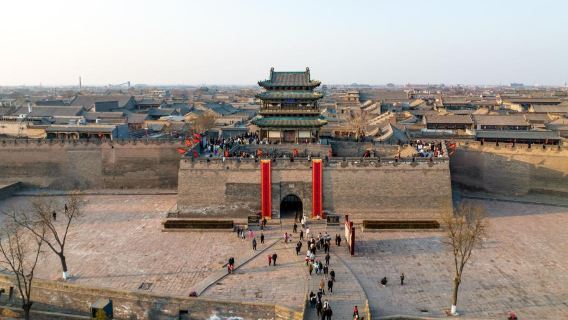
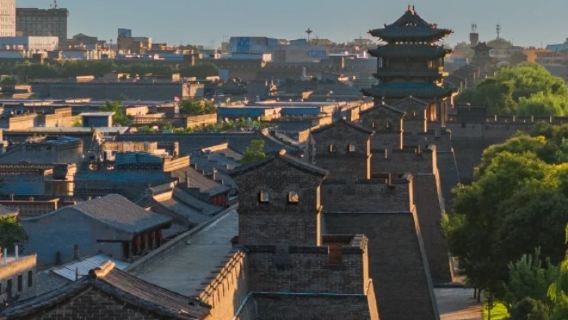
Pingyao Ancient City is approx. 85 km from Taiyuan. The streets, shops, and residences within the ancient city still maintain their traditional layout and appearance, making it one of the best-preserved ancient cities in China. It is also the only ancient county town in China that has successfully been listed as a UNESCO World Heritage Site as an entire city. Pingyao was once the financial center of China during the late Qing Dynasty. Walking through this once-prosperous ancient city, you can feel the essence of Shanxi merchant culture everywhere. The ancient city has six gates in total, with the north gate near Pingyao bus station and the west gate nearPingyao train stationThe south gate and west gate are places with many travelers. Entering the ancient town does not require an admission ticket, but if you want to climb the city wall or visit attractions like the ticket number, you need to purchase a pass for the ancient town. The ancient town is not very large, and walking is enough to explore it all. If you prefer not to walk, you can also take electric bikes. The streets of the entire ancient city are laid out in the shape of the Chinese character "土" (earth). When visiting, you usually enter the city from the West Gate and walk along West Street to Rishengchang Draft Bank, known as the "ancestor of modern Chinese banking". Here you can not only learn about the development history of ancient banking, but also have the old manager in a long robe and mandarin jacket write a draft for you using the early draft method, which is particularly historical. Moving forward is the north-south spanningSouth street, it is the central axis of the ancient city. During the Ming and Qing dynasties,South streetControlling over half of the nation's financial institutions, it was hailed as the "Wall Street of China" in its heyday. Today, it remains a bustling area of the ancient city, known as the Ming-Qing Ancient Street. Most attractions in Pingyao Ancient City are concentrated here, centered around the landmark structure, the Ancient City Tower. Surrounding it are attractions like Xie Tong Qing ticket number (China Banking Museum) and Wei Tai Hou (Ticket number museumAttractions such as Baichuantong, China Escort Museum, Tongxinggong Escort, Weishengchang, China Rare Newspaper Exhibition Hall, and Tianjixiang are available, along with restaurants, musical instrument stores, cafes, and bars. After strolling along the street, you can dine here, buy some souvenirs, and then continue south for more sightseeing. At the Pingyao Ancient City's county government office on the south side of the ancient city, you can see a large number of ancient documents and torture instruments, with daily performances of court sessions; near the Shangdong Gate are the Pingyao Ancient City's Chenghuang Temple andConfucian templeIt is quite grand and meticulously built, with thriving incense offerings where you can burn joss sticks. The Pingyao Ancient City wall is also one of the highlights of the ancient city, being not only majestic but also remarkably well-preserved. Climbing the wall offers a panoramic view of the entire ancient city. Among the gates, the tower of the south gate (Yingxun Gate of Pingyao Ancient City wall) is exquisitely crafted, and this area is close to residential buildings, allowing visitors to observe the daily life of the locals. If time permits, you can walk around the ancient city along the wall to fully appreciate its charm, which takes about an hour. Watching the sunset from the wall in the evening presents a beautiful scene. Besides the ancient town itself, Pingyao has two other major attractions: Zhenguo Temple and Shuanglin Temple. Zhenguo Temple was built without a single nail, with all structures joined by interlocking wooden components. Shuanglin Temple houses over 10 halls containing exquisitely crafted painted sculptures dating from the Yuan to Ming dynasties. It is highly recommended to stay overnight in the ancient town to enjoy its night view. You can also rent a bicycle to explore the small alleys and experience the authentic Pingyao, where the local culture and customs or photography make excellent subjects. Especially during the Chinese New Year, Pingyao is full of festive atmosphere. The town features old courtyards converted into inns, which are usually affordable, with clean and tidy accommodations available for just a few dozen yuan. Additionally, Pingyao is renowned for its beef. In the late Qing Dynasty, Empress Dowager Cixi passed through Pingyao and was so fond of the local beef after tasting it that she designated it as a royal tribute. Shops bearing the name "Guanyun beef" can be seen everywhere in the ancient town, making it hard to distinguish authenticity, and prices are generally high. You may consider buying some outside the town to try or give as gifts to friends and relatives.Pingyao County · 38.7km from Jiaocheng

Experiences you can't miss in Jiaocheng

Featured Culture & history in Jiaocheng

View all Culture & history

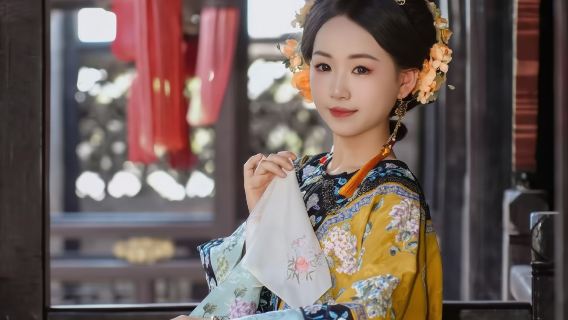
Jinzhong Jinyaoji ancient-style costume experience (multi-dynasty costume rental + ancient-style makeup and styling experience)
󱌍
FromIDR 297,298
Taiyuan Van Gogh starry sky art museum (technology-empowered Van Gogh classics + mirror maze + flower field tour)
󱌍
5.0/5
· 1 review
Duration: 1 hr
English
Free cancellation
Book now for tomorrow
FromIDR 108,109
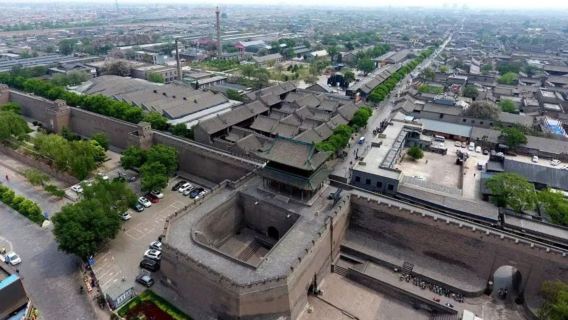
Half-Day Tour of Pingyao Ancient City (English Guide)
󱌍
Duration: 5.5 hrs
English
Free cancellation
Instant confirmation
Book now for tomorrow
FromIDR 2,457,003
One-day private charter to Pingyao Ancient Town and Qiao Family Courtyard from Taiyuan
󱌍
5.0/5
· 1 review
Duration: 10.5 hrs
English
Free cancellation
Instant confirmation
FromIDR 1,262,286

One-day tour to Pingyao Ancient City and Qiao Family Compound from Taiyuan (Jin merchant elegance · ancient city and compound tour)
󱌍
FromIDR 737,101
One-day private chartered car tour to Pingyao Shuanglin Temple, Zhenguo Temple and Wang Family Compound in Shanxi | Preferred for group tours!
󱌍
FromIDR 2,252,253
Jiaocheng Today's weatherHazy -1-16℃
Jiaocheng weather for the next 2 days11/2: -1-18℃, 11/3: 4-18℃

Free things to do in Jiaocheng

What travellers say about Jiaocheng

user-avatar
Anonymous user1 November 2026
5.0
Jinci Temple is located within a park. The scenery along the road from the park to Jinci Temple is beautiful, especially the golden leaves of the ginkgo trees swaying in the breeze. The ancient buildings and trees within Jinci Temple bear the weight of history and are well worth appreciating.

Jinci Temple Museum

user-avatar
Anonymous user28 October 2026
5.0
The blue-brick courtyard houses the stories of Shanxi merchants, each brick and tile a testament to their family traditions. Exquisite carvings and inscribed plaques reveal the family mottoes, allowing one to understand the Shanxi business spirit within these deep courtyards. Red lanterns illuminate the ancient courtyard, each step a testament to craftsmanship—truly a gem of northern folk architecture.

The Qiao's Family Compound

user-avatar
_We***8918 June 2022
5.0
Beautiful scenery, high play experience, thrilling

Pangquangou Canyon Rafting

user-avatar
Sanjin62080118 December 2022
5.0
Guashan is located at the eastern foot of Jiaocheng Mountain in Luliang, Shanxi Province, 3 kilometers north of Jiaocheng County. Guashan is named after the surrounding peaks that resemble a hexagram. The pine and cypress trees on the mountain are in various shapes and are evergreen all year round. There are many mysterious folk legends. It is regarded as a natural Taoist temple by Taoists and has a profound cultural heritage. There are scenic spots such as Tianning Temple, Cast Iron Stele, Pilu Pavilion, and Tang Huai Mountain, which were founded in the first year of Zhenguan in the Tang Dynasty (627). It is a tourist attraction in Shanxi that integrates natural scenery and ancient temples. Mi Fu, a calligrapher and painter in the Song Dynasty, ranked it among the three mountains and five peaks and praised it as the "first mountain".

Hexagrams Mountain

user-avatar
首席监理28 December 2021
4.0
Shanxi Pangquangou National Nature Reserve is located at the junction of the northwest of Jiaocheng County and the northeast of Fangshan County in Shanxi Province, in the middle section of the Luliang Mountains. It is a wild animal and plant nature reserve, and its main protected objects are the rare brown pheasant unique to China and its habitat. The reserve includes natural landscapes such as "Sunrise on the Cloud Top", "Longquan Waterfall", "Brush Holder Shining", "Wenyuan Late Green", "Ancient Tree Pagoda", "Tianmen Auspicious Air", "Lion Sunset", "Phoenix Viewing Tower", "Stone Pig Suffering", "Wind-Moving Stone", and "Immortal Cave".

Pangquangou National Nature Reserve

user-avatar
哈哈岛张易之8 March 2020
5.0
From the Northern Wei Dynasty to the Sui and Tang Dynasties, Xuanzhong Temple was successively inhabited by the three great patriarchs of the Pure Land Sect of Chinese Buddhism. The belief in the Pure Land of Amitabha spread rapidly from the scholar class to the Chinese people, and then established a sect and spread to Korea and Japan. Xuanzhong Ancient Temple became another ancestral temple of the Pure Land Sect of Chinese Buddhism after the Donglin Temple of Mount Lu. You can reach Jiaocheng by car from Taiyuan to the southwest. Xuanzhong Temple is more than ten kilometers west of Jiaocheng County.

Xuanzhong Temple

user-avatar
Anonymous user29 October 2026
4.0
Worthy of being a Ming and Qing dynasty ancient county town and a World Cultural Heritage site, its biggest highlight is its complete ancient city layout, with four main streets, eight alleys, and seventy-two winding lanes forming a "土" (earth) shaped framework. The streets and alleys resemble the patterns on a tortoise shell. It also features the history of Shanxi merchants' banks and ancient architectural relics.

Pingyao Ancient City

user-avatar
Anonymous user30 October 2026
5.0
Taiyuan Botanical Garden is definitely worth a visit. It's not just a simple park; it's a large ecological space that integrates nature exploration, photo opportunities, and relaxation. Whether you want to bring your kids to get close to nature or take beautiful landscape photos, this place has you covered. Photo enthusiasts should head to the starry sky elevator and the three greenhouses—wearing light-colored clothing will result in better photos. Families with children can visit the petting zoo, feed the swans, and enjoy a leisurely sightseeing bus tour. The best strategy is to enter the park at 3 PM to experience both the daytime and nighttime views in one go.

Taiyuan Botanical Garden

user-avatar
楚云霁月21 August 2026
4.0
The old town was rather deserted. The art exhibition was quite nice, though a bit over the top. But the park at the exit was absolutely gorgeous. Winding paths led to secluded spots, and unexpected beauty unfolded.

Taiyuan Ancient County

user-avatar
超酷的小王同学。24 October 2026
5.0
Zhenguo Temple is a hidden gem of an ancient temple in Pingyao, not widely known but rich in historical significance. The Wanfo Hall is a rare example of a Five Dynasties wooden structure, over a thousand years old. Its imposing and simple bracket sets, constructed without a single nail, have stood the test of time, making it a living fossil of wooden architecture. The painted sculptures inside retain their original Five Dynasties appearance, with a dignified and weighty style, a stark contrast to the lively Ming Dynasty sculptures of Shuanglin Temple. The temple is serene and quiet, with few tourists, perfect for slowly appreciating the beauty of its ancient architecture. If you appreciate ancient architecture, after visiting Shuanglin Temple, a stopover at Zhenguo Temple offers a unique and worthwhile experience, allowing you to understand the architecture and sculptures of different eras.

Zhenguo Temple

Trip Moments in Jiaocheng

Popular cities near Jiaocheng

Frequently asked questions

How can I contact Trip.com customer support?

Get help anytime, anywhere within 30 secondsContact customer support

Change and cancellation policies vary by attractions and tours. Please check the product details page for more information.

Ticket prices may vary between weekdays and weekends, as well as during peak and off-peak seasons. When booking with Trip.com, you can also use Trip Coins to get extra savings. For more tips on booking discounted tickets, please visit Trip.com for the latest information.