
Things to do in Taizhou
Explore top experiences
Top 10 attractions in Taizhou


Guoqing Scenic Area
The Guoqing scenic area is located at the southern foot of Tiantai Mountain, surrounded by five peaks and flanked by two winding streams. It is the birthplace of the Tiantai school, a major Buddhist sect in China, and serves as the ancestral temple for Tiantai Buddhism in Korea, Japan, and around the world. The Guoqing scenic area was constructed in 598 AD during the Sui Dynasty under the supervision of Sima Wang Hong, based on the blueprint personally drawn by Master Zhiyi. The initial temple complex, named "Tiantai Temple," was completed in 601 AD. In 605 AD, Emperor Yang of Sui renamed it "Guoqing Temple" after a prophecy came true, personally inscribing the temple's name in seal script. During the Tang Dynasty, it was renowned as one of the "Four Great Temples of China," alongside Lingyan Temple in Qizhou, Qixia Temple in Runzhou, and Yuquan Temple in Jingzhou. Rebuilt in 851 AD, calligrapher Liu Gongquan wrote the plaque "Great China Guoqing Temple." In 1005 AD, Emperor Zhenzong of the Northern Song Dynasty funded major renovations and renamed it "Jingde Guoqing Temple." In 1130 AD, it was converted to a Chan (Zen) Buddhist temple and became one of the "Five Mountains and Ten Temples" of Chan Buddhism. The current main structures date back to the 1734 renovation during the Qing Dynasty. During the Cultural Revolution, the temple's statues and ritual objects suffered severe damage. In 1973, the State Council allocated significant funds for comprehensive restoration, reopening it to the public. Covering 72,000 square meters with a built-up area of 28,000 square meters, the temple complex features five main axes, comprising over 800 halls and rooms in a grand architectural layout. It is now listed as a National Key Cultural Relics Protection Unit.Tiantai County · 4.8km from downtown

Xiaoruo Village
Xiaoruo Village was originally a small island in the East China Sea. After a dam was built to connect it to the mainland, it gradually evolved into the small fishing village surrounded by the blue sea that you see today. The stone houses in the village are built in layers along the hillside. The walls, constructed from stacked stones, were originally an architectural technique used by fishermen to withstand coastal humidity and typhoons. Later, the exterior walls were painted, with colors like pink, yellow, orange, and blue spreading across the slopes to create the village's distinctive, colorful appearance. The village's alleys are narrow and steep, with colorful steps and wall graffiti serving as popular photo spots. Follow the stone steps to the viewing platform for an overlook of the colorful houses and the fishing boats in the harbor. In the evening, the soft light and the gradually illuminating colorful houses make it perfect for photography and strolling. You can also climb the nearby Qilin Mountain viewing platform to enjoy a panoramic view of the village. The village's preserved Tianhou Temple also reflects its fishing village character, while seafood noodles and small seafood dishes showcase local flavors. Overall, the village retains a landscape where stone houses, the fishing port, and traditional fishing village life are intertwined.Wenling · 23.7km from downtown

Dachen Island Tourist Resort
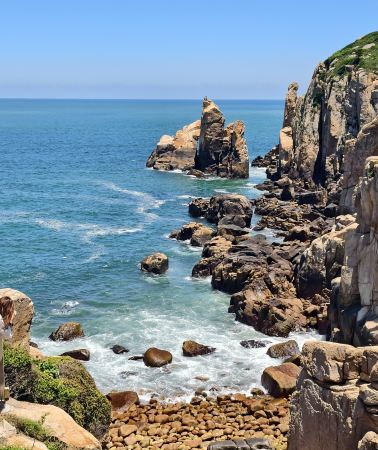
Dachen Island is located outside the mouth of Taizhou Bay. It consists of 20 islands and reefs including Upper and Lower Dachen Islands, Yangqi Island, Sheshan Island, and Bird Island, with an area of 14.6 square kilometers. Dachen Island, a sea-and-mountain blend, is shaded by verdant trees. Millions of years of geological changes and the impact of ocean currents and tides have resulted in unique rock formations and reefs surrounding the island. Known for its unique scenery of towering reefs, towering mountains, and vast seas, it is a provincial-level island forest park. Shang Dachen Island is characterized by its beautiful harbor scenery, pictorial sea erosion, rich and diverse forests, legendary historical sites, and excellent bathing beaches. Wushatou Beach is particularly famous, nestled between the mountains and the sea, boasting expansive, black sand and clear water, a truly relaxing and relaxing experience. Xia Dachen Island is characterized by its charming fishing port, dramatic and rugged sea-eroded landforms, mysterious sea-god temples, and island flora. It boasts the Dachen Island Youth Palace, a land reclamation and entrepreneurship exhibition hall, and a cluster of wind turbines. Jiawu Rock, known as the "Bonsai of the East China Sea," is a truly remarkable sight. Two massive reefs, over 30 meters high, resemble sails in the ocean, reaching for the sky. Just a few feet apart, they stand majestically and precariously. Beneath the rocks, surging waves surge, white foam billowing into the sky.Taizhou · 50km from downtown

Guoqing Temple
Taizhou Guoqing Temple, located in Chengguan Town, Tiantai County, Taizhou City, Zhejiang Province, was built in the 18th year of Kaihuang in the Sui Dynasty (598 AD) and is the birthplace of Tiantai Sect of Chinese Buddhism. The temple covers an area of 73,000 square meters, with simple and elegant architecture and a quiet environment. The temple houses a large number of Buddhist cultural relics and has produced many eminent monks. It is a tourist destination that perfectly integrates religious culture and natural landscape. It was listed as a national key cultural relic protection unit in 2006, attracting countless believers and tourists to visit.Tiantai County · 4.9km from downtown

Wenling Shitang Peninsula Tourist Resort
Shitang Peninsula Tourist Resort is located in Wenling City, on the coast of the East China Sea. With endless sea, fine golden sand beach and busy bay of fishing boats, you can feel the tranquility of nature and stay away from the hustle and bustle of the city when you step on the peninsula. The resort is famous for its unique natural landscape.Endless sea, delicateGolden Beachand busyFishing boats bayVisitors can feel the tranquility of nature, away from the hustle and bustle of the city. In addition, there areMillennium Dawn GardenThis is the place where the first ray of sunlight hit mainland China in the 21st century, attracting a large number of tourists every year.Wenling · 25.6km from downtown

East Lake (Walled City of Taizhou Fu)
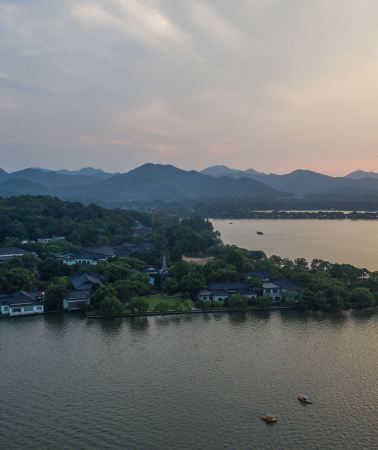
East Lake is located on the east side of the ancient city of Linhai. It was built in the Northern Song Dynasty and was originally a place where the navy patrolled troops. In the four years of Xining (1071) in the Northern Song Dynasty, Taizhou County guarded the Qianshuyan Shutantan and built it into a lake. The entrance to the southeast is Yishui Villa, which is named after Du Fu's poem "Famous Garden by Green Water". There are buildings that commemorate the money and the Qian family, commonly known as "the money garden." Since the Song Dynasty, East Lake has been maintained for generations. In recent years, the Linhai Municipal Government has also carried out a large-scale refurbishment of East Lake with reference to historical features, making the ancient park of the past millennium more glorious.Linhai · 2.4km from downtown

Shepan Island
Shepan Island, named after the numerous snake-shaped caves left behind by ancient mining activity, is located in Sanmen Bay, Sanmen County. The island offers three main attractions, including Pirate Village, Savage Cave and Slippery Cave. There are also several high-quality resort hotels that are great for vacations. Snake Island was a historic spot for pirates. It has numerous artistic stone carvings and was a location for the filming of the movie "Yuguang District".Sanmen · 18.9km from downtown

Duijie Viewing platform
The Duijie Scenic Spot not only has a 360-degree circular trail, but also offers a panoramic view of the mountains. It is also a good place to take photos and check in.Wenling · 25.8km from downtown

Luqiao Ten-Mile Long Street
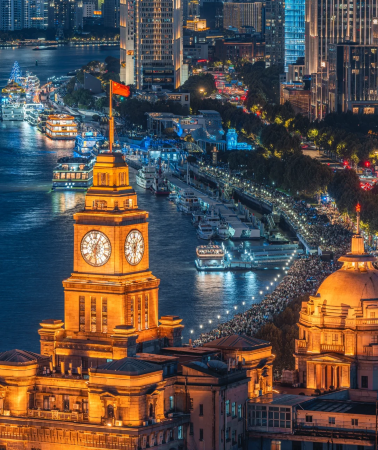
"Shili Long Street" is the current Taizhou Luqiao Old Street, which originated in the Southern Song Dynasty and is a testimony to the historical development of Luqiao commerce. It includes seven historical blocks with relatively concentrated water towns and cultural relics.Taizhou · 9.4km from downtown

Jiazhi Old Street
Jiazhi Old Street is located in Taizhou. There are antique buildings here, most of which are brick-wood courtyards. The overall style is traditional northern Fujian architecture, with blue bricks and gray tiles, layers of eaves, like a phoenix spreading its wings, quite smart. Among them, Wenchang Pavilion on the old street is very famous. The base of the building is a square platform brick wall, the top is a cross-shaped spire, there are four layers of eaves and corners, carved with various patterns, very beautiful.Taizhou · 2.5km from downtown
Experiences you can't miss in Taizhou
Featured Cultural experiences in Taizhou
View all Cultural experiences
5.0/5
· 1 reviewFree cancellation
Instant confirmation
Book now for tomorrow
From€13.43

![[Linhai in Detail] Linhai City Guide - Urgent Requests Welcome, In-depth Live Guide for Taizhou City Wall, Ziyang Street, Taozhu Ancient City, and Kuocang Mountain Surroundings](https://ak-d.tripcdn.com/images/0354912000lokle7bC010_C_568_320.jpg?_fr=wc)
![[Current Ou Details] Wenzhou city guide available for urgent requests. In-depth guide services for Yandang Mountain, Jiangxin Islet, Baizhangji Waterfall, and Nanxi River surrounding areas.](https://ak-d.tripcdn.com/images/0351l12000lncgqs24F9A_C_568_320.jpg?_fr=wc)
From€225.51
Featured Food & drink in Taizhou
View all Food & drink![China railway tour: Shanghai/Hangzhou departure South Great Wall 1-day tour [high-speed rail + city wall + Donghu Park]](https://ak-d.tripcdn.com/images/0354812000tha7seg5327_C_568_320.jpg?_fr=wc)
Free cancellation
Instant confirmation
From€225.51
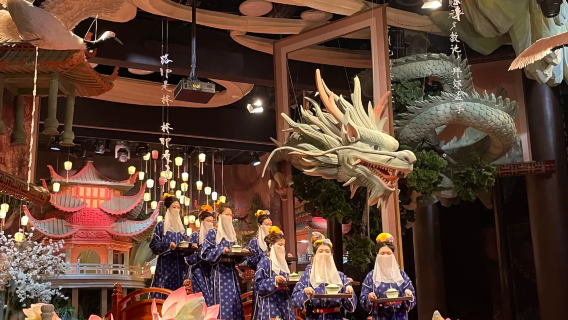
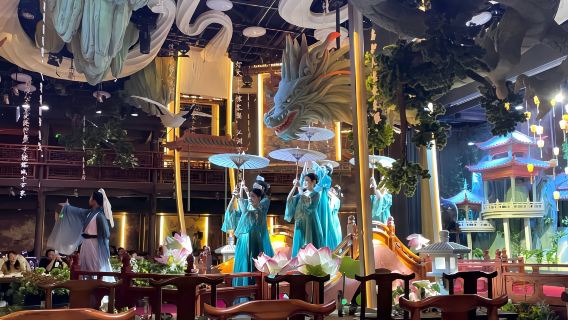
![[Taizhou Xuyan Xin'an Ode] Song dynasty palace banquet - 12 exquisite dishes accompanied by a century-old musical feast](https://ak-d.tripcdn.com/images/0353w12000tstn162DA74_C_568_320.jpg?_fr=wc)
Free cancellation
Instant confirmation
From€16.20
5.0/5
· 2 reviews· 31 bookedFree cancellation
Book now for today
From€13.43
Free cancellation
Instant confirmation
Book now for tomorrow
From€19.87
From€19.87
Featured Outdoor experiences in Taizhou
View all Outdoor experiences![Wenling fishing boat charter for trawling and sea fishing in Taizhou, Zhejiang [professional captain + family-friendly group outings]](https://ak-d.tripcdn.com/images//0586k12000n0d6yhf1A7B_C_568_320.jpg?_fr=wc)
5.0/5
· 1 reviewBook now for today
63 travellers saved
From€212.09
![Xiangshan Trip Moments[Xiangshan Temple/Longxi Canyon Rafting/Wedding Photography with Photographer/Candid Documentary Shots]](https://ak-d.tripcdn.com/images/0356512000rab7dxh1A22_C_568_320.jpg?_fr=wc)
Instant confirmation
Book now for today
From€298.29
5% off
Limited-time sale
From€207.59€218.52
![From Wenzhou: 1-day tour to Yandang Mountain [Private Charter | Bilingual Guide]](https://ak-d.tripcdn.com/images/0351812000rx5mpb110CD_C_568_320.jpg?_fr=wc)
From€366.80
Free things to do in Taizhou
Guoqing Scenic Area
Tiantai County · 4.8km from downtownXiaoruo Village
Wenling · 23.7km from downtownDachen Island Tourist Resort
Taizhou · 50km from downtownGuoqing Temple
Tiantai County · 4.9km from downtownWenling Shitang Peninsula Tourist Resort
Wenling · 25.6km from downtownEast Lake (Walled City of Taizhou Fu)
Linhai · 2.4km from downtownShepan Island
Sanmen · 18.9km from downtownImmediate access, Book now for today, Cancel anytimeDuijie Viewing platform
Wenling · 25.8km from downtownLuqiao Ten-Mile Long Street
Taizhou · 9.4km from downtownJiazhi Old Street
Taizhou · 2.5km from downtown
More ways to travel from Taizhou
Private Tours in Taizhou
View More Private Tours in Taizhou




What travellers say about Taizhou

99bubu4 July 2026
5.0
A specially booked 2-hour in-depth guided tour was well worth the wait. The guide, deeply knowledgeable about the thousand-year-old cultural heritage of Guoqing Temple, eloquently recounted the temple's founding by Master Zhiyi and the aesthetic beauty of its ancient architecture, brick by brick. The two-hour tour allowed for a leisurely walk through the entire temple grounds, away from the crowds, offering a tranquil and immersive experience. Shedding the superficiality of a rushed tour, the guide helped participants understand the profound meaning of "If the temple is established, the country will be at peace." The gentle and unhurried explanation provided a healing and Zen-like journey, highly recommended.
Guoqing Scenic Area

旅行者摄影师27 March 2025
5.0
Xiaoruo Village is located in Shitang Town, Wenling City, Taizhou City, Zhejiang Province. It is a small fishing village on the sea full of romance and is known as China's "Five Fishing Villages".
🏷️• Transportation: It is recommended to drive there. There is a parking lot on the island, but there are not many parking spaces. Try to avoid it during holidays. It takes about 15 minutes to climb to the top of the mountain. It is recommended to reach the top of the mountain before sunset!
🏷️• Tickets: Free to visit, no need to buy tickets.
• Tour time: May-October every year.
• Tour route: Colorful Xiaoruo Village-Duijie Viewing Platform-Coastal Greenway-Pearl Beach.
• Surrounding attractions: Duijie Viewing Platform, Golden Beach, Coastal Greenway, Jiuquchengtou, Dongxia Beach.
The colorful houses in Xiaoruo Village are real. It is recommended to go there on a sunny day‼ ️. If the weather is good, you can take pictures easily.
Xiaoruo Village

云遮雾绕6664 June 2026
5.0
This attraction will definitely not disappoint you. It's incredibly photogenic, and the service is excellent. To fully appreciate it, you'll need a whole day. The only downside is the limited food options, and what you find is quite unappetizing.
Dachen Island Tourist Resort

Julia J. Dezotti20 July 2026
5.0
Guoqing Temple is a must-visit in Zhejiang Province! If you are into Buddhist culture, you should consider visiting. This temple has a tremendous peace and deep history of over 1400 years. The temple area requires not more than an hour to explore.
Guoqing Temple

温岭市石塘镇海港村21 July 2025
5.0
Come to Shitang Beach to swim, fish, fish and visit many attractions, such as the Millennium Dawn Monument, Sansuan Island, the Colorful Island Observation Deck, the Greenway, Shitang Old Street, the Fishing Port Dam, etc. I hope everyone has fun.
Wenling Shitang Peninsula Tourist Resort

光耀晨星路西菲尔21 April 2026
5.0
It's free, and the scenery inside is beautiful. The carved railings and jade-like steps offer ever-changing views. Even though I grew up in Jiangnan, I was still amazed, especially at sunset when the pavilions, trees, and lake are bathed in a golden-red glow—it's incredibly beautiful. Many young women in Hanfu (traditional Han clothing) are taking photos here, which is very fitting for the occasion.
East Lake (Walled City of Taizhou Fu)

难 得糊 涂29 November 2025
5.0
Shepan Island, located in Sanmen Bay, Sanmen County, Taizhou, Zhejiang Province, is known as "Thousand Cave Island" because of its "thousand caves left behind by a thousand years of quarrying." The island comprises over 1300 ancient quarry caves of varying shapes and sizes, making it the largest island cave scenic area in China and a national 4A-level tourist attraction. There are no snakes on the island; the name "Shepan" (meaning "snake-coiled") comes from the reddish-brown, winding rocks resembling snakes.
I. Three Core Attractions
1. Pirate Village
The only island cave scenic area in China themed around "pirate culture." A castle-like gate hangs a giant anchor, and the plaza features a group sculpture of five representative figures in Chinese pirate history: Sun En, Lu Xun, Fang Guozhen, Wang Zhi, and Zheng Zhilong. Inside the caves, using the remains of a thousand-year-old quarry, scenes such as a treasure cave, a wine cellar, and a 2000㎡ performance hall have been recreated, allowing visitors to immerse themselves in the "code of honor" of the maritime world. 2. Wild Man Cave
It's not actually inhabited by wild men, but rather the remains of cave dwellings used by quarry workers, islanders, and even pirates from the Song, Yuan, and Qing dynasties. The cave is interconnected with other caves within it, preserving millennia-old stone windows, mortars, stone steps, and a giant waterfall, presenting a double spectacle of "cave labyrinth + stone culture museum," hailed as a "miracle of the remnant mountains."
3. Mudflat Park (Tidal Flat Park)
A rare "health and wellness mud culture" themed park in East China, divided into an entrance service area, a health and wellness leisure area, and a mudflat sports area. Visitors can dig for clams, catch mudskippers, and experience "mudflat horseback riding" in the soft mud after the tide recedes, making it suitable for families and team building activities.
Shepan Island

大王不在家12 December 2024
4.0
There is no charge for the wedding platform. You can drive down the mountain and climb the stairs for a while. You can see the sea and sky as one, and enjoy the breeze by the sea. It was drizzling when we went there, but if it is a sunny day, the sunrise and sunset should be beautiful.
Duijie Viewing platform

旅游达人0000015 January 2022
5.0
There are two old streets in Taizhou, one in the north and one in the south, one in Haimen and the other in Luqiao. However, the scale of Luqiao Old Street is much larger than that of Haimen, but it is far away from the city. It is in Luqiao District, and it takes about an hour by bus from the city. The night view is still good, and there are many shops in the old street, so the viewing value is still relatively high.
Luqiao Ten-Mile Long Street

火 火7 June 2025
5.0
Jiazhi Old Street is located in Jiaojiang District, Taizhou City, Zhejiang Province. It is a place with a long history and profound cultural heritage. Jiazhi Old Street began in the Tang Dynasty, was built in the Song Dynasty, and flourished in the middle of the Qing Dynasty. It has a history of more than 800 years. It is the birthplace of the national intangible cultural heritage "Sending the Great Summer Boat". It has a history of hundreds of years and was once one of the most culturally prosperous streets in Taizhou.
Jiazhi has always attached great importance to literature and education. At the beginning of the last century, it was the leader of local modern education. It built Dongou Academy, Jiaojiang Academy, and Zhejiang Provincial Class A Fisheries School.
Jiazhi Old Street was formed in the late Qing Dynasty and the early Republic of China, and belongs to the northern Fujian architectural style. The old street connects the black-tiled wooden buildings with a blend of Fujian and Zhejiang styles with bluestone slabs. The newly built Wenchang Pavilion is a symbol of the Jiazhi area's respect for literature and learning. It has three floors, three floors with flat seats, and the top is a cross-shaped spire, like a phoenix spreading its wings, and there are wind chimes in the corners of the house.
During the construction process, all the ancient buildings that can be restored were protected and restored as much as possible, and nearly 18,800 square meters of ancient buildings were preserved. The details such as the flying eaves, sea carvings, wave-patterned roofs, fish-patterned doors, and dragon-patterned doors and windows show the historical charm of the old street.
Jiazhi Old Street is open to the public free of charge all day.
Jiazhi Old Street


