Yuanqu

Things to do in Yuanqu

Search attractions or local attractions & tours
Search

Explore top experiences

Top 10 attractions in Yuanqu

View all Attractions
Wangxian Grand Canyon

Wangxian Grand Canyon

4.4
4.6/5
67 reviews

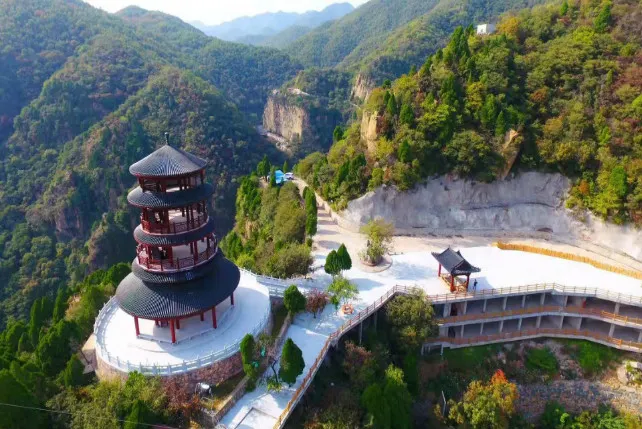
Wangxian Grand Canyon Attraction is located in Wangxian Village, Lishan Town, Yuanqu County, Shanxi Province, 28 kilometers away from the Yuanqu West Exit of S88 Wenyuan Expressway. There is a specially built tourist road to reach it, and the transportation is very convenient. The Attraction has the famous Santan Waterfall, the vast Houhe Reservoir, the deep and steep natural stone gorge, and the ancient legend of King Yao visiting the wise. It can be said that it has beautiful natural scenery and rich cultural resources. The overall positioning of Wangxian Attraction is characterized by natural landscapes, Yao and Shun culture as the theme, and leisure and vacation as the main function. The Taojin River upstream of the Attraction has formed a two-kilometer-long natural stone gorge after tens of millions of years of erosion, with more than ten waterfalls and pools of different sizes, depths and shapes. There is a pool every three steps and a waterfall every five steps. There are waterfalls connected to pools, pools connected to waterfalls, pools within pools, and waterfalls under waterfalls. In particular, the scenery of the Santan Waterfall Group is unique. The Black Dragon Pool Waterfall in the Attraction has a drop of 90 meters. Standing on the viewing platform at the bottom of the valley, the waterfall is accompanied by thunderous water sounds, like a dragon entering the sea and plunging into a deep pool, which is shocking. The Houhe Reservoir Scenic Area is closely connected with the Santan Waterfall. The Houhe Reservoir is a compensation project for the Xiaolangdi Reservoir of the Yellow River. The 70-meter-long dam has formed a lake of more than 600 acres between the mountains. Climbing to the top of the dam, looking north at the rippling reservoir, it is like going to the water town in the south of the Yangtze River; looking south at the Wangxian Mountains, it seems like being in a fairyland. Wangxian Attraction Area has rich animal and plant resources. According to statistics, there are more than 2,000 species of plants in the forests of Wangxian. The state has determined that Shanxi Province should protect 11 rare plants, and 9 of them are here. There are not only numerous wild plants, such as wild oil plants, wild starch plants, wild rubber plants, etc., but also large areas of lianxiang trees that have been extinct in most parts of North China and Central Plains; there are not only tree species such as red toon, red bean fir, bald mountain white, cow skin acid, and celtis sinensis, but also more than 200 rare plants that experts have not yet systematically studied. There are nearly 400 species of animals in the territory, and more than 200 species of birds such as Zhonggu and Hanhao, as well as a large number of important national protected animals such as Zhongmao. Wangxian Scenic Attraction also has rich cultural resources. The ancient legend of King Yao visiting the wise took place here. It is said that King Yao, one of the Three Sovereigns and Five Emperors, was of high moral character, diligent in government and loved the people. When he was 70 years old, he felt that he was old, so he asked around for wise and capable people with both moral integrity and talent. The immortals told him: "If you want to visit the wise, go to Lishan. If you want to cure your illness, find Shunjing." King Yao and his entourage entered Genfang (Yuanqu) from Shimen, walked along the rugged mountain road, and arrived at Wangxian Village. When they heard that King Yao was looking for Yu Shun, the locals pointed to the mountains in the northeast and said: "The higher mountaintop Daping, Shun is farming there." King Yao stood on a big stone and looked at the wise man at Lishan Daping. Therefore, the people here later revered the wise man as an immortal. Therefore, this big stone is called Wangxian Stone, and this village is called Wangxian. A Dexiao Cultural Square has been built in the Attraction to promote the Dexiao culture of Emperor Shun and publicize the stories of Yao and Shun, providing rare cultural relics and historical and geographical environment for the study of Yao and Shun culture.

Yuanqu · 17.7km from downtown
Lishan Mountain Wangping Scenic Area

Lishan Mountain Wangping Scenic Area

3.1
4.2/5
51 reviews

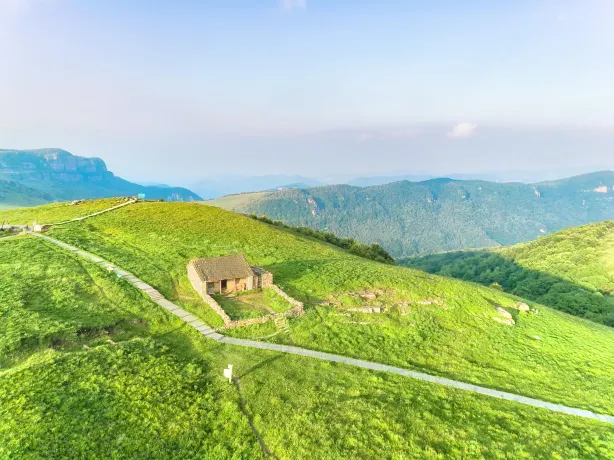
It is said that the Lishan Shunwangping Attraction was the place where Emperor Shun cultivated in ancient times. It is the highest subalpine meadow in North China. The lawn is surrounded by mountains and lush trees. It is the only well-preserved primitive forest in North China and the middle and lower reaches of the Yellow River. Springs flow in the mountains, waterfalls splash mist, and tourists look up at the mountains from the bottom of the mountain, only to see the mountains are thousands of feet high and straight into the sky. There are more than 5,400 acres of grassland in the Lishan Shunwangping Attraction, and the grass is green. According to local villagers, more than a dozen kinds of Chinese herbal medicines grow in the Lishan Shunwangping Attraction. After eating, cattle can prevent diseases and gain weight. On the grass slope to the north of the Lishan Shunwangping Attraction, there is a row of stone walls formed by natural stones, which are uneven in height. Among them, there is a monkey-shaped stone that is very conspicuous. The locals call this scene "Monkeys Looking at the Moon". Among the people in the counties around the Lishan Shunwangping Attraction, there are still many ancient stories about Emperor Shun planting millet, as well as Wangxian Village where King Yao visited the wise. The creation of nature is amazing. The Shunwangping Attraction in Lishan can be said to be full of scenery. The mountains have their own peculiarities, the waters have their own interestingness, the stones have their own stories, the flowers and trees have their own legends. The Dragon-Slaying Platform in Shunwangping is fascinating, and the deep red bloodstains on the stones are still faintly visible after thousands of years. There is also the Shunwang Bed Stone, the Shunwang Statue Stone, the zebra stone under the Liuwang Canal, the Eight Weird Stones in Xiahexi, the Monkey Laughing at the Sky Stone in Eshigou, the Stone Turtle Coming Out of the Mountain Stone, the Eight Immortals Running to the Moon Stone, the Water-Red Stone, etc. The beautiful pearl curtain water is like a rainbow, the water on the curtain, the water of the Black and White Dragon Pond in Xiahexi, the water of the dressing tables of Ehuang and Ying concubines in Liujiaqu, the water of the Drinking Horse Pond, the mountain streams in the North and South Shenyu, and the year-round water in the river.

Yuanqu · 30.9km from downtown
Emperor Qinshihuang's Mausoleum Site Museum
2026 Global 100 - Best Things to Do

Emperor Qinshihuang's Mausoleum Site Museum

10
4.7/5
150.7k reviews

Emperor Qinshihuang's Mausoleum Site Museum is a large site museum built on the site of the Terracotta Army pits, which are located approx. 1.5 km east of the mound of Emperor Qinshihuang's Mausoleum. In March 1974, farmers from Xiyang Village accidentally unearthed fragments of terracotta figures while digging a well, and archaeological exploration confirmed Pit 1; in 1976, Pits 2 and 3 were successively discovered to the north of Pit 1. This army, which had slumbered for over 2,000 years, was thus brought back to light, and the discovery of the Terracotta Army has been hailed as "one of the great discoveries in the history of 20th-century archaeology." Pit 1 is the main military formation among the three pits, stretching over 200 m from east to west, with an estimated 6,000 pottery figurines and horses buried inside. Standing at the edge and looking down, armored warrior figurines, war chariots, and pottery horses are arrayed eastward in battle formation. A closer look at each figure reveals different facial shapes, hairstyles, beards, and even hand gestures. The figurines were originally painted all over, but most of the paint has peeled off and discolored due to fire and long burial. Pit 2 is L-shaped, with crossbowmen, cavalry, and charioteers arranged in a mixed formation; the vividly expressive kneeling archer was unearthed here. Pit 3 is small in scale, and scholars believe the ceremonial guard figurines and war chariots unearthed there indicate it served as the command center—known in ancient times as a "military tent"—directing the formations in Pits 1 and 2. The bronze swords, pi halberds, spears, crossbow triggers, and large quantities of arrowheads unearthed from the pits—many still sharp after more than 2,000 years—demonstrate the sophistication of Qin dynasty metallurgy. The Emperor Qinshihuang's Mausoleum Site Museum and the Qin Shi Huang Mausoleum at the foot of Mount Li were originally one integrated whole. After Qin Shi Huang ascended the throne at the age of 13, he began constructing the mausoleum, conscripting hundreds of thousands of laborers over a period spanning more than 30 years; the terracotta army, which replaced human sacrifice with figurines, served as the underground guard for this imperial mausoleum. To avoid the crowds during your visit, you might want to see Pit 3 and Pit 2 first, and then take your time to experience the awe-inspiring scene of Pit 1 last. After viewing the terracotta pits, you can also take the attraction's shuttle bus to Lishan Garden, where Emperor Qinshihuang's mausoleum is located; the Acrobats Pit, the Civil Officials Pit, and the Bronze Chariots and Horses Museum are all within the garden. The two painted bronze chariots and horses, cast at half the scale of real chariots, are exquisitely crafted with brilliantly gleaming gold and silver fittings, and are well worth a special trip to see.

China · Xi'an
Shaanxi History Museum
2026 Asia 100 - Family-friendly Attractions

Shaanxi History Museum

9.5
4.8/5
35.3k reviews

Shaanxi History Museum is a large modern museum built after China's reform and opening up and officially opened in 1991. The building was designed by architect Zhang Jinqiu and adopts a Tang-style architectural layout of "central hall and four corner towers," with a symmetrical central axis and a clear hierarchy of primary and secondary structures; in 2016 it was included in the first batch of the "Chinese Architectural Heritage of the 20th Century" list. Shaanxi was once the political center of dynasties such as the Zhou, Qin, Han, and Tang, and the museum's collection spans a million years of history, covering categories such as Shang and Zhou bronzes, pottery figurines of successive dynasties, Han and Tang gold and silver wares, and Tang tomb murals, with a total of over one million items. The permanent exhibition "Ancient Civilization of Shaanxi" follows a chronological main line and presents the historical process from prehistoric Lantian Man to the eve of the Opium War across three galleries, with the Zhou, Qin, Han, and Tang periods as the focus. The east and west sides of the central hall each host a thematic exhibition: on the west side, "Treasures of the Great Tang: Hejiacun Hoard Unearthed Artifacts Exhibition" concentrates on fine gold and silver wares of the High Tang, while on the east side, the "Tang Dynasty Mural Treasures Gallery" displays authentic murals removed from Tang tombs, with subjects covering figures, architecture, ceremonial guards, and more, making it a uniquely distinctive category of the museum's collection. Among the many artifacts in the museum, several are particularly notable. The agate cup with gold-inlaid beast head, from the Hejiacun hoard, is carved from a single piece of banded agate into the form of a curved-horn beast head, resembling Central Asian rhyton cups, and is one of the first batch of cultural relics prohibited from being exhibited abroad. The tri-color glazed camel carrying musicians figurine vividly recreates the lively scene of musicians playing and singers performing on a camel's back, with bright glaze colors and figures with distinct expressions. The Empress's Seal is made of Western Han Hetian mutton-fat jade and carved with a chi-tiger knob, and is the only known actual jade seal of a Han dynasty empress discovered to date. In addition, the gilt silver flask with a dancing horse holding a cup design, the celadon ewer with an overhead handle and bottom-filling design, and the black-glazed oil-spot bowl each have their own distinctive features. The gold and silver wares unearthed from the Hejiacun hoard are concentrated in the thematic gallery and are a highlight of any visit; visitors are advised to allow time to examine them closely.

China · Xi'an
Longmen Grottoes
2026 Asia 100 - Best Things to Do

Longmen Grottoes

8.9
4.7/5
62.4k reviews

Longmen Grottoes are located in the southern suburbs of Luoyang, Henan Province, on the cliffs along both banks of the Yi River. As one of China's three major grotto art treasures, they were inscribed on the World Cultural Heritage list in 2000. The grottoes were first carved when Emperor Xiaowen of Northern Wei moved the capital to Luoyang, and construction continued through the Eastern Wei, Western Wei, Northern Qi, Sui, and Tang dynasties, with the vast majority of niches and statues left from the Northern Wei and Tang periods. Today, more than 2,000 niches and over 100,000 statues remain, along with a large number of inscriptions and steles, making the site an important representative of Chinese stone carving art. The attraction is divided by the Yi River into two parts: West Hill and East Hill. The West Hill Grottoes are the essence of the site, carved from the Northern Dynasties through the Sui and Tang periods. Famous caves include Guyang Cave, Binyang Cave, Lotus Cave, Wanfo Cave, and Fengxian Temple. The Lushena Buddha at Fengxian Temple stands about 17 m tall, making it one of the larger Buddha statues at Longmen Grottoes. Its face is dignified and serene, with a faint smile, and legend holds that it was modeled on the appearance of Wu Zetian, earning it the name "Oriental Mona Lisa." The inner walls of Wanfo Cave are densely covered with about 15,000 small Buddha statues, each only a few cm tall, neatly arranged and finely crafted. Guyang Cave is the earliest cave carved at Longmen, and its inscription calligraphy is exquisite; the selected "Twenty Masterpieces of Longmen" are representative works of Wei stele calligraphy. Binyang Cave consists of the South, Middle, and North caves and took more than twenty years to complete. Its original reliefs depicting emperors and empresses worshipping the Buddha were looted and lost overseas in the 1930s. In Binyang North Cave, a Buddha statue has a distinctive hand gesture, with the right index and middle fingers raised in a shape resembling the modern "scissors hand," though it is actually a Buddhist mudra, and it once sparked heated discussion online. The East Hill Grottoes are mostly Tang dynasty works and are smaller in scale than those on West Hill, but from the opposite bank visitors can enjoy panoramic views of West Hill from different angles, especially distant views of the Lushena Buddha. The attraction also includes Xiangshan Temple and Bai Juyi Memorial Park (Bai Garden). The Tang dynasty poet Bai Juyi lived in Luoyang in his later years and once praised it, saying, "Of the scenic splendors of Luoyang's surrounding mountains and waters, Longmen ranks first." When visiting, simply follow the route West Hill—East Hill—Xiangshan Temple—Bai Garden, proceeding in one direction without backtracking. The West Hill Grottoes are densely packed with content, so it is advisable to set aside ample time for a closer look; East Hill is quieter and more secluded, suitable for a brief visit and gazing across the river when energy is limited.

China · Luoyang
Millennium City Park
2026 Asia 100 - Night Attractions

Millennium City Park

8.8
4.6/5
29k reviews

Millennium City Park is located by the shores of Longting Lake in Kaifeng. It is a large-scale historical and cultural theme park of the Song Dynasty, recreated one-to-one based on the famous painting Along the River During the Qingming Festival by Song Dynasty painter Zhang Zeduan. The park is divided into two sections by the Shuangting Bridge: the South Garden recreates the bustling street life of the Bianjing city, with taverns, eateries, teahouses, and pharmacies lined up along the streets; the North Garden is an imperial garden, with waterside halls, the Sifang Courtyard, and other palace buildings standing by the lake. Performers and street vendors in the park mostly wear Song Dynasty costumes, with ancient music lingering and bells and drums sounding, so that after a few steps visitors can easily fall under the illusion of "stepping into a painting in one morning, dreaming back a thousand years in one day." Architecture is the intuitive and tangible highlight here: the Rainbow Bridge spanning the Bian River is a replica of the famous bridge in the painting, shaped like a long rainbow, and standing on the bridge watching the grain boats pass by feels much like being inside the painting; the Fuyun Pavilion towers above all the other pavilions in the garden, with its tiered red towers and golden tiles on all four eaves, inviting one to climb from afar; the Shangshan Gate is rebuilt after the Northern Song dynasty Dongjing city gate, tall and majestic with brilliant painted decorations, making it the most imposing gate tower in the garden; and the Shuixin Xie, Shuangting Bridge, Jiulong Bridge, and other pavilions and waterside structures are scattered among the blue waves. The main attraction of the day is the immersive performances staged throughout the park: "Bao Zheng Inspects the Bian River Grain Transport" unfolds on the water on both sides of the Rainbow Bridge; "Squire Wang Seeks a Son-in-Law" features a decorated tower erected in front of Squire Wang's house where a silk ball is tossed to choose a groom; "Yue Fei Challenges Prince Xiao Liang" raises dust on the Song dynasty parade ground as horses gallop; and folk performances such as cockfighting, stilt walking, and pan drumming are interspersed throughout. To step into the action yourself, head to the Four Directions Courtyard to don traditional costumes and enter the examination cells for a hands-on Song dynasty imperial exam experience; families with children can enjoy carousel rides, roller coasters, and other amusement facilities wrapped in Song dynasty storytelling at the Song Dynasty·Royal Pleasure Ground; and in the entertainment quarters, face-changing, qigong fire-breathing, ancient magic, and other Song dynasty variety acts take turns on stage, with intangible cultural heritage feats ready to break out at any moment right beside you. After nightfall, the park takes on a different face: red lanterns light up one after another, the market streets are brightly illuminated, and it feels like a completely different park from the daytime. The large-scale water-based live performance "The Great Song Dynasty's Eastern Capital: A Dream of Splendor" is staged on the surface of Jinglong Lake. The entire show is woven together from eight classic Song ci poems and the painting Along the River During the Qingming Festival, drawing the audience back to the Northern Song dynasty's Eastern Capital a thousand years ago. The performance runs about 70 minutes, and many visitors deliberately plan their itinerary to stay until the evening to catch this show. Dining in the park is also convenient: the snack street at Dongjing Food Court brings together Kaifeng snacks such as fried liangfen, tongzi chicken, and almond tea, perfect for eating while strolling; if you want to sit down for a proper meal, you can visit the reconstructed Sun Yang Zheng Dian in the park, which was originally one of the seventy-two official restaurants of Bianjing in the Northern Song Dynasty, where you can taste traditional Henan dishes such as soup dumplings and carp with baked noodles.

China · Kaifeng
Xi'an City Wall
2026 Global 100 - Night Attractions

Xi'an City Wall

8.8
4.6/5
63k reviews

Xi'an City Wall, also known as the Xi'an Ming City Wall, is an ancient city wall defense system encircling the old city of Xi'an from the Ming and Qing dynasties. The main body of the existing wall was built during the Hongwu period of the Ming Dynasty, expanded on the foundation of the imperial city of Chang'an from the Sui and Tang dynasties, and has undergone multiple renovations since then, remaining well preserved to this day. The wall is roughly rectangular in plan, with a perimeter of about 14 km, and the area it encloses is the old city of Xi'an. The wall is about 12 m high, about 15 to 18 m wide at the base, and about 12 to 14 m wide at the top. The top of the wall is broad and flat, allowing visitors to cycle or stroll along it while overlooking the scenery inside and outside the city. The defensive system of the wall consists of the wall body, city gates, barbicans, bastions, corner towers, and the moat. Nearly a hundred bastions were built along the outer face of the wall, spaced about 120 m apart, precisely within bow-and-arrow range, reflecting the defensive wisdom of the cold weapon era. There is a corner platform at each of the four corners, among which the southwest corner platform is circular, forming a striking contrast with the other three square corner platforms—a unique form rarely seen among surviving ancient city walls. The moat outside the wall encircles the entire city, together with the wall forming a complete defensive layout. The wall currently has 18 city gates, among which Yongning Gate (South Gate), Anding Gate (West Gate), Anyuan Gate (North Gate), and Changle Gate (East Gate) are the four main gates originally built in the Ming Dynasty. Each main gate features three tiers of gate towers—the gate control tower, arrow tower, and main tower—forming a layered barbican defense. Yongning Gate is the one that has been in use the longest, with a history dating back to the Sui Dynasty, and is also the one whose form is relatively well preserved. The section of the wall at Hanguang Gate encloses the remains of the Sui and Tang imperial city, with a site exhibition that offers an intuitive sense of the wall's layered history spanning over a thousand years. Cycling a full loop around the city on the wall is a popular experience, taking about one and a half to two hours in total. Ascending the wall in the evening allows you to take in both the traditional architecture inside the city and the modern urban skyline outside, with the wall and moat set off beautifully against the glow of the setting sun.

China · Xi'an
Jinci Temple Museum
2026 Asia 100 - Family-friendly Attractions

Jinci Temple Museum

8.7
4.8/5
21k reviews

Jinci Temple Museum is located at the foot of Xuanweng Mountain by the banks of the Jin River. It is an ancestral temple built to commemorate Tang Shuyu, the founding feudal lord of the State of Jin, and is also one of the earlier surviving royal sacrificial gardens in China. There is a saying that "you have not truly visited Taiyuan until you have visited Jinci." The ancient buildings in the museum are arranged in sequence along the central axis, among which the Xian Hall, the Flying Bridge over the Fish Pond, and the Hall of the Holy Mother are known as the "three treasures," while the Zhou Cypress, the Never-Aging Spring, and the Song dynasty attendant statues are known as the "three wonders"—these are the core highlights of any visit. The "Three Treasures" are located on the central axis and can be visited together. Xian Hall is the place where sacrificial offerings are placed. The hall is surrounded by railings instead of walls, making it well-ventilated and bright, and its beam structure is simple and lightweight. The Flying Bridge Across Fish Pond is on the west side of Xian Hall. It is a cross-shaped ancient bridge built over a square pond, resembling a modern overpass in form, and this type of bridge structure is extremely rare among surviving ancient buildings. The west end of the bridge connects to Shengmu Hall, the oldest surviving building in the museum. Wooden carved dragons coil around the porch columns in front of the hall, making them relatively early surviving examples of wooden coiled dragons. The hall interior was built using the reduced-column method, creating a rather spacious interior. It houses dozens of Song Dynasty colored sculptures, with the main statue of Shengmu seated in the shrine and the remaining attendants arranged on both sides with varied expressions. One attendant statue is half joyful and half sorrowful, vividly lifelike and moving. With Shengmu Hall as the center, you can also seek out the "Three Wonders." The Zhou Cypress is located on the north side of Shengmu Hall. It is said to have been planted in the Western Zhou Dynasty, and its trunk leans south like a reclining dragon, full of ancient majesty. The Never-Aging Spring is located on the south side of Shengmu Hall and is the main source of the Jin River. The museum also houses the Stele of the Inscription and Preface to Jinci, composed and handwritten by Emperor Taizong of Tang, Li Shimin, whose running-script calligraphy is vigorous and forceful. In the southern part is the Shifang Fengsheng Zen Temple, said to have originally been the villa of the Tang Dynasty general Yuchi Gong. In the Futu Courtyard, the Sarira ShengSheng Pagoda can be climbed for a distant view. The Jinci temple fair has been passed down to the present day and has been included in the national-level intangible cultural heritage list. The Water Mirror Stage, an ancient theater stage in the museum, is an important venue for activities during the temple fair.

China · Taiyuan
Huaqing Palace
No. 5 of Global Traveller-Picked Attractions in Xi'an

Huaqing Palace

8.7
4.6/5
33.8k reviews

Huaqing Palace attraction is located 30 km east of Xi'an, adjacent to the Terracotta Warriors. Renowned for its timeless hot spring resources and numerous historical events, it has become an iconic cultural tourism attraction of Tang Dynasty palaces in China. Palace scenic spots Huaqing Palace boasts a long history, serving as an imperial retreat for emperors from the Zhou, Qin, Han, Sui, and Tang dynasties. The palace features cultural zones like the Tang Imperial Hot Spring Relics Museum, the Xi'an Incident site—Five-Room Hall, Nine Dragon Lake and Lotus Lake scenic areas, and the Tang Pear Garden Museum. Notable architectural complexes include Feishuang Hall, Wanshou Hall, Changsheng Hall, Huanyuan Garden, and Yuwang Hall. The stele of "hot spring ode" Mount Li hot springs, developed early and favored by emperors throughout history, enjoy the reputation of being "the imperial hot springs under heaven." As far back as the Yangshao culture period 6,000 years ago, the ancient Jiangzhai people began utilizing these springs. With their profound cultural heritage spanning millennia, Mount Li hot springs represent an indispensable part of Chinese historical culture. The stele of hot spring ode in the attraction stands 154 cm tall, 72 cm wide, and 19 cm thick, featuring a coiled dragon design and a trapezoidal base. Engraved by Yuan Chang, the governor of Yongzhou during the Northern Wei Dynasty, the inscription reads, "The hot spring is nature's prescription and the primordial healer of the universe. People from all nations and those suffering from ailments come with provisions to seek relief in its waters." This stele is the earliest surviving written artifact at Huaqing Palace. Tang Imperial Hot Spring Relics Museum This is the site of the bathing pool described in the "Song of Everlasting Sorrow" where Yang Guifei emerged from her bath. After the An Lushan Rebellion, little remained of the original structure. In 1982, while constructing the "Guifei Pavilion," the Lintong County Government accidentally discovered the ruins of a Tang Dynasty bathing pool. After excavation and restoration, the Huaqing Palace imperial hot spring ruins museum was established. This small yet exquisitely designed pool measures 3.6 meters east-west and 2.9 meters north-south, with an oval-like shape. The pool walls are entirely built with bluestone slabs, featuring a two-tiered terrace structure composed of 18 arched stone sections. Inside the pool lies a dedicated bathing stone for Yang Guifei, engraved with the character "Yang." At the center of the pool bottom is a 10 cm diameter water inlet. A white marble lotus pedestal was unearthed here, connecting to both a showerhead above and ceramic water pipes below that linked to the main water source. Due to natural pressure, hot spring water would spray outward through the lotus showerhead, creating a mist effect remarkably similar to modern showers. Adjacent to the Guifei Pool to the east lies Emperor Xuanzong's exclusive imperial hot spring. During the Tang Dynasty, the Nine Dragon Hall stood above this pool, featuring nine white jade-carved dragons spouting water outside. This pool's surface resembles a realistic lotus shape, hence its alternate name "Lotus Pool." Xi'an incident site The five-room hall at the Xi'an incident site in Huaqing Palace is where the Xi'an incident took place. To this day, the glass windows and walls of the five-room hall still bear bullet marks from the fierce battle during the military remonstrance. The desks, chairs, beds, sofas, tea sets, stoves, carpets, telephones, and other office items in each room are replicated and arranged according to their original appearance. Historical events: Beacon fire to deceive the feudal lords In 779 BC, King You of Zhou obtained the beautiful Bao Si, yet she never smiled. To solve this, the king conspired with the treacherous minister Guo Shifu and lit the beacon fires at the Huaqing Palace attraction. The feudal lords across the land saw the signals.Beacon fireHe quickly led his troops to rescue the king, but King You told the feudal lords, "I lit the beacon fires just to make my queen laugh," upon which Bao Si burst into laughter. The feudal lords arrived valiantly but left resentfully. Seeing King You's incompetence and the people's discontent, the Quanrong tribe seized the opportunity to launch an attack. As the enemy troops approached the mountain, King You urgently raised the beacon fires.Beacon fireHe mobilized troops, but none of the feudal lords came to his rescue. King You fled with Bao Si toMount LiHe was later killed by the Quanrong tribe, leaving behind historical anecdotes such as "a smile worth a thousand gold," "losing the kingdom for a smile," and "playing with beacon fires to deceive the feudal lords." And this beacon tower at Huaqing Palace attraction towers at an altitude of 913.6 m.Mount LiThe beacon tower at Huaqing Palace attraction on the first peak of Xixiu Ridge. Su Dongpo composing poetry at Mount Li During the Jiayou era of the Northern Song Dynasty, the Lishan hot springs, meticulously restored by Liu Ziyong and others, became breathtakingly beautiful, attracting crowds of visitors who composed poems and essays to express their nostalgia. Among the countless poetic works, the emerging literary giant Su Shi stood out with his masterpieces like "Lady of Guo's night outing" and "Lishan" during his visit to the hot springs. Xi'an incident The Xi'an incident, also known as the "double-twelfth incident". Zhang Xueliang and Yang Hucheng launched a mutiny at Huaqing Palace, detaining the then chairman of the Military Commission of the National Government. Performance items You can watch a large-scale dance drama at the attraction. ▲ The Song of Everlasting Sorrow is China's first large-scale live historical dance drama created by Shaanxi Tourism Group. Based on Bai Juyi's timeless poem of the same name, it fully utilizes the attraction's resources and employs high-tech stage lighting to combine historical storytelling with live performances, recreating the love story of Emperor Li Longji and Yang Guifei at Huaqing Palace over 1,300 years ago. ▲There is also the historical adaptation "12-12 Xi'an Incident," which vividly and authentically recreates the lesser-known details of the "Xi'an Incident."

China · Xi'an

Experiences you can't miss in Yuanqu

Featured Culture & history in Yuanqu

View all Culture & history
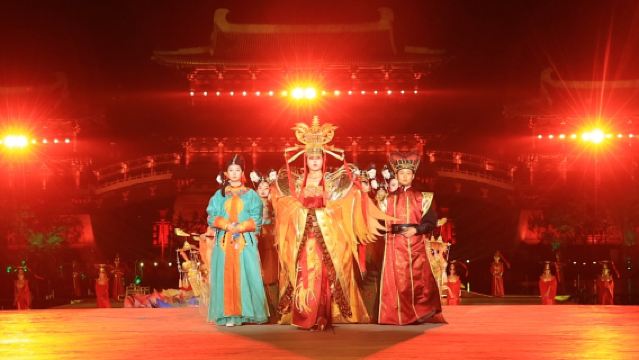
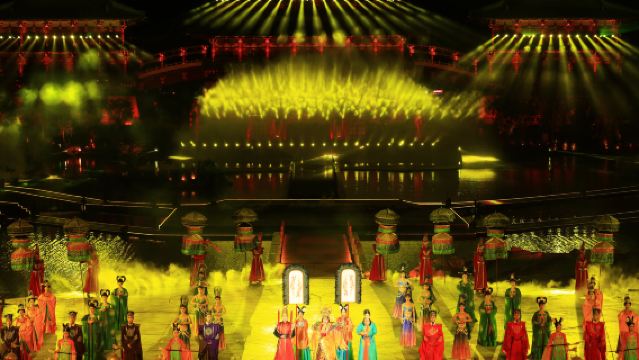
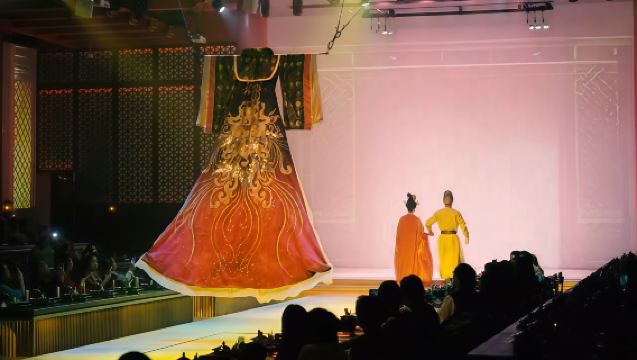
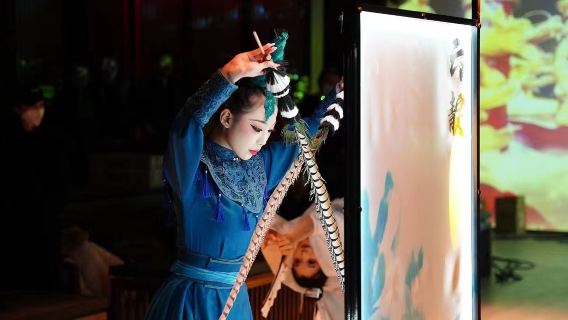
Luoyang Unmissable Feng Wu Shen Du Performance: A Timeless Spectacle of Glorious Dynasty
󱌍
5.0/5
· 2 reviews
Duration: 1 hr
English
Instant confirmation
FromPLN 104.27
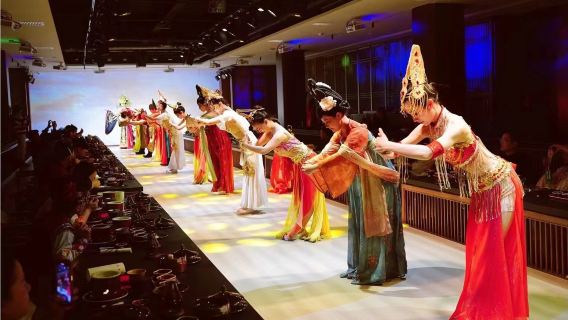
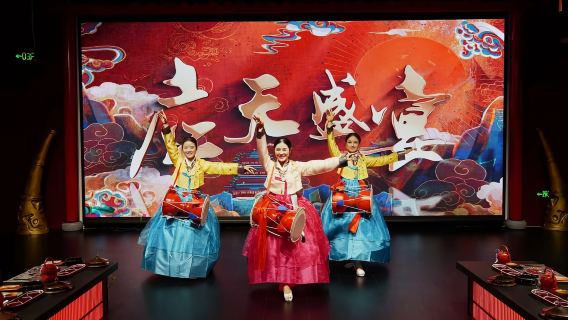
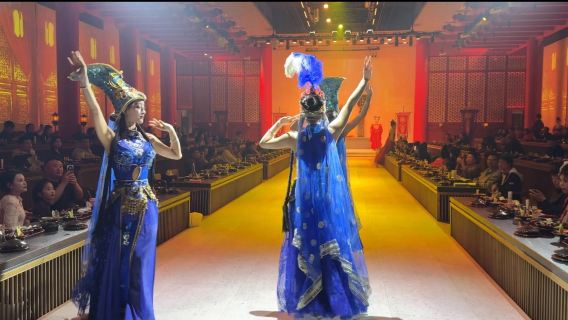
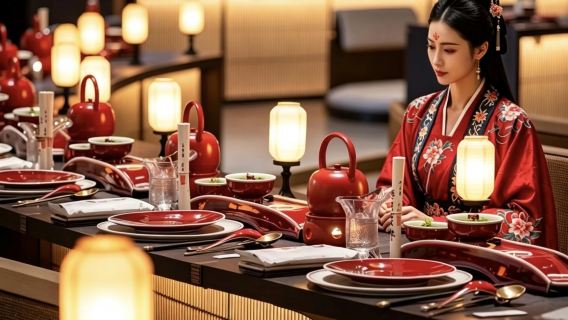
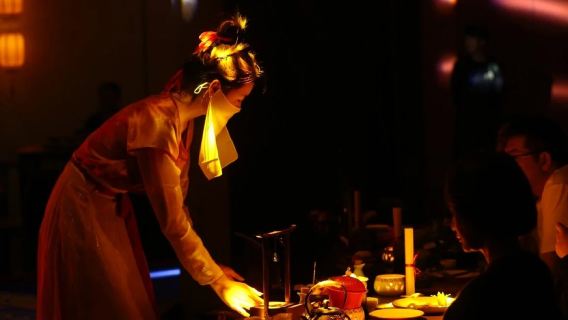
Luoyang Empress Wu Feast: Wu‑Zhou Hanfu Styling, Palace Dinner Show & Water Banquet
󱌍
5.0/5
· 1 review
Duration: 1.5 hrs
English
Free cancellation
Instant confirmation
Book now for tomorrow
FromPLN 221.71
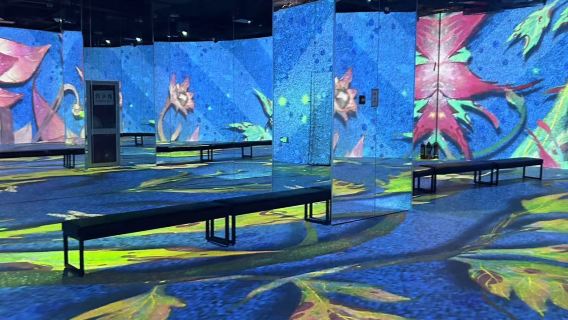
Luoyang Van Gogh starry sky art museum (immersive 4D light show tour)
󱌍
FromPLN 23.47
Luoyang Wu Feast (Xigong): Wu‑Zhou Hanfu Styling, Original Palace Show & Water Banquet
󱌍
Duration: 1.5 hrs
English
Free cancellation
Instant confirmation
Book now for tomorrow
FromPLN 274.49
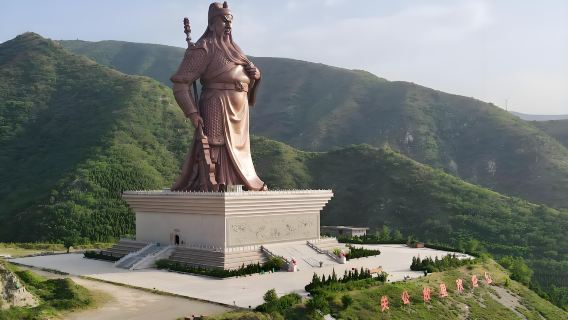
One-day private chartered car tour to Guan Gong's hometown, Yongle Palace and Guanque Tower in Yuncheng, Shanxi [Easy travel]
󱌍
FromPLN 488.77
Yuanqu Today's weatherClear -2-15℃
Yuanqu weather for the next 2 days11/11: 1-18℃, 11/12: 3-18℃

Free things to do in Yuanqu

What travellers say about Yuanqu

user-avatar
Anonymous user27 July 2026
5.0
The room was clean and tidy, and I could smell the fragrance of wood as soon as I entered. The hotel is not far from the main street, so it was quiet at night. The owners were very welcoming and attentive! The hotel offers excellent value for money during Shiwei's peak tourist season. A heartfelt five-star review! 👍

Wangxian Grand Canyon

user-avatar
旅游可放松心情10 September 2023
5.0
You don't have to go to Nalati, Xinjiang to see the beautiful alpine grassland. Shunwangping belongs to the Lishan Scenic Area in Qinshui, Shanxi Province. It is a national 4A-level scenic area with an altitude of 2,358 meters. There are bursts of fog on the grassland, which makes tourists want to scream and sing loudly. Shanxi has rich tourism resources but lacks publicity. Such beautiful scenery has never been seen even in the Nalati Sky Grassland. Maybe it is related to the weather. Because it is going to rain in the afternoon, the fog is particularly large, like fairy air, which makes people want to get some joy.

Lishan Mountain Wangping Scenic Area

user-avatar
PdsStarfish16 August 2022
4.0
There are not many highland meadows in the north, so it is suitable to go there in summer. Although the altitude is not very high, snowflakes have already fallen on the top of the mountain during the National Day holiday. Those who like to climb mountains can go there, and it is not tiring overall. The scenery is infinitely good and the cost performance is very high. Moreover, the road at the foot of the mountain has been well repaired, which is suitable for self-driving tours, and one day is relatively ample.

Lishan Scenic Area

user-avatar
Jools089 November 2026
4.0
We went in the morning and the place was rammed. I didn’t stay in Pit 1 long as I was sick of getting shoved around. The rest was better. I think possibly later in the day might have been the best time to visit. Make sure you go inside the museum

Emperor Qinshihuang's Mausoleum Site Museum
user-avatar
嗨-卡卡8 November 2026
5.0
Thanks to Xiao Guo for his earnest and humorous explanation. His logic was clear, and he took an unconventional route, which helped us avoid overcrowding. After the trip, we gained a deeper understanding of the history behind the cultural relics.

Shaanxi History Museum

user-avatar
M53***809 November 2026
5.0
It's not very entertaining and doesn't seem suitable for children, but it's great for adults. It's very moving and thought-provoking; the stolen Buddha head and the historical events surrounding the Buddhist reforms serve as evidence of the entire East Asian Buddhist statue civilization. It was truly heartbreaking to see.

Longmen Grottoes

user-avatar
SunGoat32010 November 2026
4.0
The decoration and whole environment really duplicated the famous Chinese drawing of 清明上河图. If you want to experience the Song dynasty, this is the place. However, performance and NPC interaction is lacking compared to 万岁山武侠城.

Millennium City Park

user-avatar
_We***318 November 2026
5.0
For those interested in historical culture and ancient architecture, I highly recommend visiting the ancient city wall. Very few cities in China have preserved their ancient city walls. This one is well-preserved and largely retains its original appearance. Standing on the wall, imagining the glorious Tang Dynasty, one can't help but feel a sense of awe… Our guide's explanation was excellent; one hour was packed with valuable information.

Xi'an City Wall

user-avatar
Anonymous user10 November 2026
5.0
November 9, 2026: The ginkgo leaves at Jinci Temple are still yellow. If you want to see them, you'd better hurry in the next couple of days, because the temperature has dropped and the wind has picked up, causing the leaves to fall very quickly. Right now, both the trees and the ground are a vibrant yellow. A leisurely visit to Jinci Park and Jinci Museum will take two to three hours. If you have enough time, you can hire a guide.

Jinci Temple Museum

user-avatar
怪阿姨小卖部4 November 2026
5.0
We arrived at Huaqing Palace in the afternoon. Instead of taking the cable car to the top, we went to see the Five-Room Hall and the site where Chiang Kai-shek was arrested. We decided to take the electric cart; it's too much for middle-aged and elderly people like us to climb. It was surprisingly high! We climbed for ten minutes to the Five-Room Hall, then climbed a little further to take the electric cart. Don't underestimate the five-minute cart ride; it's quite long. After the cart ride, it's another ten minutes of climbing. We were exhausted after reaching the Bingjian Pavilion! The pajama night run champion is truly amazing. Then we went down to the Imperial Concubine's Bathing Pool, but after wandering around, we discovered the foot bath! It cost 51 yuan per person, which was perfect for someone who had just walked so far – super comfortable! There was also a KFC at the entrance, so we could grab some fried chicken. We waited until it cleared out before queuing for security to go see the "Song of Everlasting Regret" – perfect!

Huaqing Palace

Trip Moments in Yuanqu

Popular cities near Yuanqu

Frequently asked questions

You can give Luoyang grand harmony • Yingtian feast (immersive experience of an emperor + palace delicacies) and Luoyang palace banquet show | Immerse in the legendary life of empress Wu Zetian while tasting thirteen imperial dishes from the Tang Dynasty - Emperor Wu feast (Xigong branch) a try. Before you go, please check their opening hours and menus online. Reservations are recommended, especially during peak hours.

Get help anytime, anywhere within 30 secondsContact customer support

Change and cancellation policies vary by attractions and tours. Please check the product details page for more information.

Ticket prices may vary between weekdays and weekends, as well as during peak and off-peak seasons. When booking with Trip.com, you can also use Trip Coins to get extra savings. For more tips on booking discounted tickets, please visit Trip.com for the latest information.