





 4.7/5
4.7/5 Anonymous user
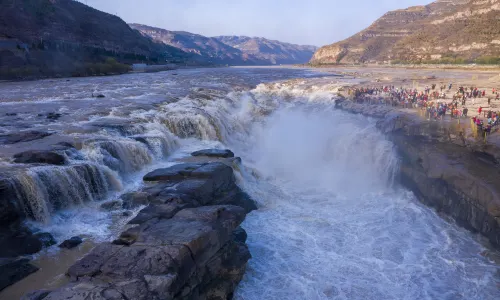
Hukou Waterfall, the second largest waterfall in China and the world's largest yellow waterfall, is renowned for its magnificent spectacle, described as "the Yellow River flowing for a thousand miles, all contained in a single pot." A visit here is definitely worthwhile!
 4.6/5
4.6/5 silly-hui
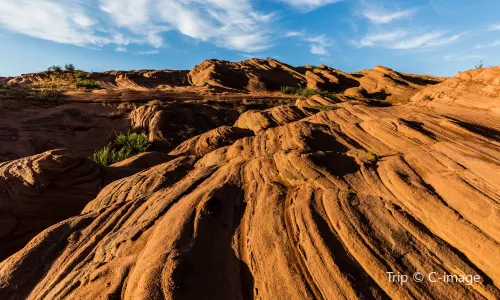
This is a similar landform that has become very popular in China in recent years, known as China's Wave Valley. Formed during the Cretaceous period, 96 million years ago, it is also composed of red sandstone eroded by wind and water. Its lines and textures are strikingly similar to the Wave Valley in the United States, but its overall color is predominantly ochre-red. The scenic area is divided into several zones, such as Flame Danxia, Red Cliff Danxia, and Earth Core Danxia. Wave Valley can be combined with Red Stone Gorge and Zhenbeitai in Yulin, as well as Xiangshawan in Ordos, to create a scenic and historical tour of northern Shaanxi and southern Inner Mongolia. Tour duration: 4 hours or more
 4.8/5
4.8/5 洪虹
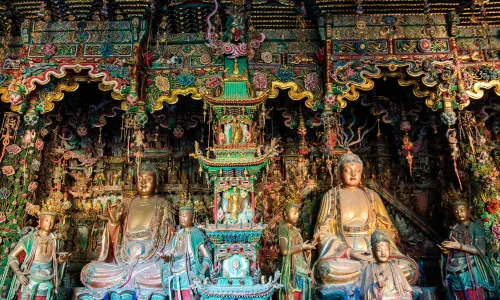
洪虹We left Guangsheng Temple and drove to Xiaoxitian. What should have been a smooth two-hour drive turned into a road construction trip less than 20 minutes from our destination. After much detours, it took us nearly three hours to finally arrive at Xiaoxitian in Xi County. Xiaoxitian is like a magical treasure box, containing a vast world within a small room. In this mere 169.6 square meters, our eyes couldn't take it all in; we were completely immersed, reluctant to leave. We also followed wave after wave of tourists, listening to their explanations intermittently. From the very beginning, the hall was packed with people, and we stayed until evening when the crowds gradually dispersed before finally leaving. This wondrous journey to Xiaoxitian was truly unforgettable.
 4.5/5
4.5/5 M30***69
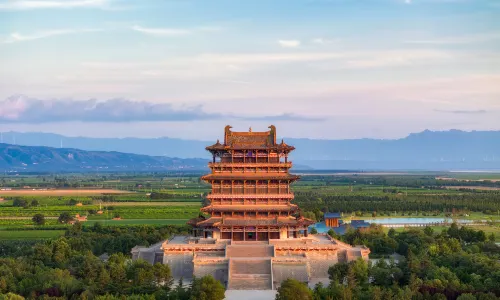
The Big Locust Tree is a place where one can forget their troubles and purify their soul. Its sacredness and tranquility soothe everyone who comes to worship their ancestors. If you also yearn for inner peace, then come to the Big Locust Tree; I believe you will find it rewarding. The景区 service is excellent! 👍💕
 4.5/5
4.5/5 张小敏
张小敏🤝💓I could never leave you again, you got what you wanted🌊🍃There was no hiding, we were having a secret rendezvous🐺✊Everyone can lose, why can't it be you🌙💋A moment of passion is worth a thousand pieces of gold🍬🔪Knowing it's sugar wrapped in a knife, I still willingly sink deeper and deeper into your trap💕💞Because of you, we will definitely be of one heart
 4.7/5洪虹
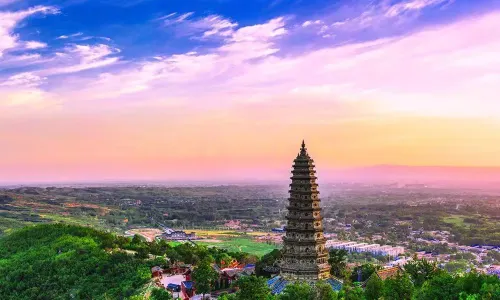
We started our visit from the Lower Temple, heading straight to the Water God Temple to admire the Yuan Dynasty murals. The Mingyingwang Hall of the Water God Temple was built in the sixth year of the Yuan Dynasty's Yanyou era (1319). The nearly 200 square meters of Yuan Dynasty murals on the four walls of the hall are a unique example in ancient China of murals that do not depict Buddhist or Taoist themes. These paintings, created over 700 years ago, are meticulously arranged, vividly depicted, and richly colored, truly exquisite. Among them, the theatrical mural on the east side of the south wall is one of the "Three Wonders of Guangsheng," and it, along with the polo scene on the upper north side of the west wall, was included in the "Chinese History" textbook in 1998.
 4.7/5Anonymous user
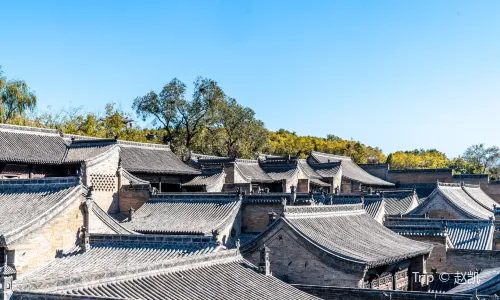
The Wang Family Compound is an outstanding example of Qing Dynasty residential architecture in China. Located in Jingsheng Town, Lingshi County, Jinzhong City, Shanxi Province, it was built by the Jingsheng Wang family, descendants of the Taiyuan Wang clan, over a period of approximately 300 years, from the Kangxi to the Jiaqing reigns. It is hailed as "China's First Residence of Folk Architecture," "China's Folk Palace," and "Shanxi's Forbidden City." Its grand scale covers an area of 250,000 square meters, encompassing five alleys, five forts, and five ancestral halls. Currently, it contains 231 courtyards and 2,078 rooms. The open area centers on the three major architectural complexes of Gaojiaya (Phoenix), Hongmenbao (Dragon), and Chongningbao (Tiger), showcasing the traditional "front hall, rear chamber" layout and the overall "王" (Wang) shaped design.
 4.8/5
4.8/5 136***71
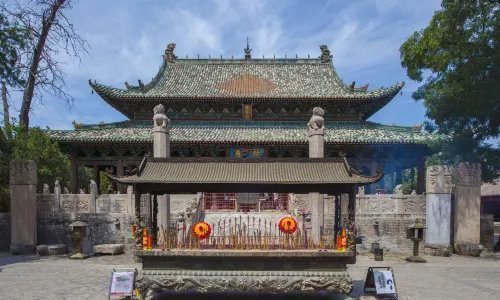
Yuncheng, the hometown of Guan Yu, boasts a rich and profound culture that commands respect! The Jiexiu Guan Yu Temple is magnificent, with ancient cypress trees standing tall, and every building and inscription tells a story of loyalty and righteousness passed down for thousands of years. The scenic area is well-managed, and the explanations are detailed and vivid, allowing visitors to deeply appreciate the inheritance of Guan Yu culture from history to faith. The surrounding facilities are excellent, making for a superb experience. This trip is not just a sightseeing tour, but a soul-stirring cultural pilgrimage, absolutely worth a special trip!
 4.6/5
4.6/5 神经蛙9527
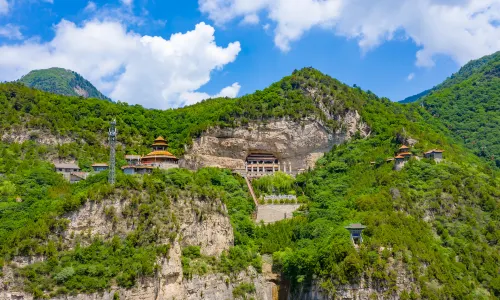
Mianshan is fun, especially Qixian Valley, which is fun and exciting, but there are many people and you have to queue. The management of the scenic area is not in place, and many people who cut in line are ignored. Tourists almost got into a fight. I told the police and the staff, but no one cared.
 4.7/5
4.7/5 M15***70
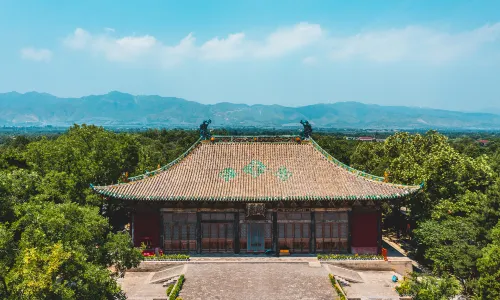
[Yongle Palace Experience: Journey Through a Yuan-Century Taoist Art Hall] Visiting Yongle Palace in Ruicheng, Shanxi, is a truly breathtaking pilgrimage! Though tucked away in a small town, this Taoist temple, built during the Yuan Dynasty, is breathtaking with its unparalleled mural art and architectural style. 🌟 Highlights: 1. Treasure Murals: The "Chao Yuan Tu" in the Sanqing Hall is a pinnacle of Eastern art—286 deities, 4 meters high, dance in graceful robes, their cinnabar and azurite colors remaining dazzling even after 700 years. Standing within the hall, you can almost hear celestial music and experience the harmony between man and nature as captured by Yuan-Cheng painters. 2. Architectural Marvels: The monumental relocation of the palace in the 1950s for the Three Gorges Project adds to its legendary charm. Walking through the hip-and-gable roofed, Yuan-Cheng wooden structure, you can gaze upon the intricate mortise and tenon joints of the caisson ceiling, and every carved chiwen pattern speaks to the wisdom of the ancients. 3. Immersive Experience: The scenic area utilizes a dark-lighting system, making the details of the murals even more sacred under soft lighting. We recommend renting a guide (a great value at 20 yuan) to understand the subtle metaphors within the legendary story of Lü Dongbin. ⚠️ Notes: • Flash photography is strictly prohibited inside the temple. You can purchase the official album (198 yuan) to collect your own. • It is recommended to enter at 9:00 a.m. to avoid the midday tour group rush. • Combine this with a day trip to the Jiezhou Guandi Temple in southern Shanxi. The most profound feeling of this trip: While modern people are accustomed to fragmented visual stimulation, standing before these murals, the product of a lifetime of labor, I suddenly understood the meaning of "timeless aesthetic shock." Perhaps this is the meaning of cultural heritage: allowing us to connect with the Chinese nation's most magnificent artistic soul through the intersection of time and space.

