
Eurostar vs Flying: Which is better?


Eurostar vs Flying: At a glance
When choosing between flying or travelling by train, you need to take into account the time you'll actually spend travelling, including the transfer to the airport, waiting time, controls, etc.
Travelling by Eurostar means that you are dropped off exactly where you'd want to be in the first place: in Paris city centre or in front of Amsterdam’s canals. You walk in, board, and walk out into the city. No detours, no in-betweens.
Flying works differently by design. Airports sit well outside city limits, which means your journey doesn't end when the plane lands. The flight itself might only take an hour, but the journey around it’s often longer and more exhausting.
Which is faster: Eurostar or Flying?
On paper, flying looks like the obvious winner – an hour in the air versus over two hours on a train. But that comparison only holds if you ignore everything that happens before and after.
A flight from London to Paris might only take 60-75 minutes airborne, but then add 45-60 minutes getting to the airport, the recommended check-in and security window of 90-120 minutes before departure, and time to disembark, collect baggage, and travel from the airport into the city centre. Once you tally it all up, a one-hour flight can easily swallow four hours or more.
With Eurostar, the journey itself takes around two hours and 27 minutes, and the company recommends arriving 90 minutes before departure to allow time for security and passport control-though many experienced travellers find 60 to 75 minutes sufficient outside of busy periods.
For short European routes like this one, Eurostar very often wins on total door-to-door time-even though the flight is technically faster in the air.
 New user welcome pack
 -
5% OFF
Europe Train New User Promo Code

-
2% OFF
UK Train New User Promo Code
Is Eurostar cheaper than flying?
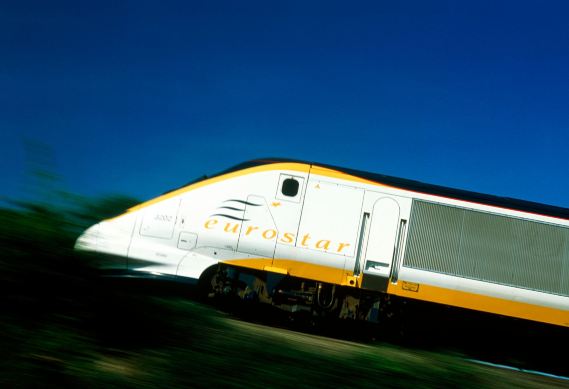
It all depends on when you book, how flexible you are, and what you're willing to overlook in the final total.
Budget airlines are very good at winning the headline price war. Book far enough in advance, and a no-extras flight will often undercut a Eurostar fare on the sticker price alone. If you're comparing the fares on the booking page, flying can look like the cheaper option more often than not.
However, Budget fares are built to be added to; checked baggage, seat selection, priority boarding, and airport transfers all come with their own price tags, and they add up quickly. By the time you've paid to get to and from the airport on both ends and covered the extras the base fare didn't include, the gap between "cheap flight" and Eurostar fare often shrinks or disappears entirely.
Eurostar's pricing is generally more stable and predictable than airlines’, without the same volatility around extras, but it isn't immune to demand; fares climb during peak travel periods, holidays, and as departure dates approach, much like any other form of travel. Booking early still pays off here too.
Convenience comparison: Airports vs Eurostar terminals
Flying tends to involve a lot of waiting in places that don't feel like anywhere in particular: departure lounges, gate areas, baggage carousels, especially when catching an early flight. Eurostar's experience reads more like simply catching a train: you turn up with reasonable time to spare, move through security and passport control easily compared to airport queues, and find yourself sitting down to relax well before departure. For short trips like London to Paris or Brussels, it doesn't feel like the start of a big journey at all. It feels more like commuting somewhere a little further than usual.

Comfort, luggage & onboard experience
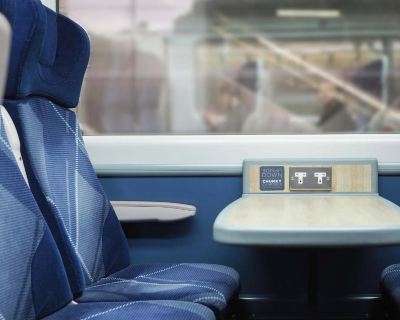
Settle into a Eurostar seat, and the contrast with flying becomes obvious almost immediately. There's actual legroom and space to get up and walk to the dining car without disturbing other passengers. The seats are arranged more like a proper train than the tightly packed rows of a budget carrier.
When boarding a flight, you need to go through queues at a gate before squeezing down a narrow aisle to a seat with little room to spare. Security controls require you to take your shoes off, laptops out, liquids in a clear bag, and a queue that varies wildly depending on the day and the airport. None of it is unbearable on a short flight, but it's a more clipped, functional experience than Eurostar's slower unwind into the journey.
When is Eurostar the better choice?
There are certain trips where Eurostar is clearly the better choice rather than a nice alternative.
Short European city breaks
A long weekend in Paris or Brussels doesn't need the overhead of airport transfers eating into your time. With Eurostar, you can leave London after breakfast and be sitting at a café in the Marais before lunch-the journey barely registers as travel time at all.
Business travel between major cities
For a same-day meeting, Eurostar's city-centre stations make a real difference. You can work right up until boarding, stay productive on board with Wi-Fi and a proper table, and walk straight into the city on arrival-no taxi queue, no jet lag from a short hop, no wasted half-day around a flight.
Sustainability-conscious travellers
For anyone weighing the environmental cost of their trip, train travel has a clear edge over flying on routes like this. If reducing your travel footprint matters to you, Eurostar is the more conscientious option without asking you to sacrifice speed or comfort to get there.
When is flying better than the Eurostar?
Flying remains the more sensible choice in a few cases, when travelling by train would be simply too long or expensive.
Long-haul destinations beyond the Eurostar network
Eurostar only covers a handful of cities-London, Paris, Brussels, Amsterdam, and a few others reachable via connections. The moment your trip extends beyond that network, flying isn't usually more convenient.
Very last-minute cheap fares
Every so often, a budget airline will release a rock-bottom fare that simply can't be matched: a flash sale, an off-peak weekday slot, an airline trying to fill empty seats. If you stumble onto one of these and your dates are flexible, it can beat Eurostar on price alone, even after factoring in the extras.
Regional UK departure airports
Final verdict: Eurostar vs Flying
Eurostar and flying aren't competing to be universally "better"; they're suited to different kinds of trips and different kinds of travellers.
Distance is the first deciding factor. Within Eurostar's network, the train holds up impressively well on time, comfort, and overall ease. Step outside that network, and flying is often the most practical way to travel.
Flexibility versus price sensitivity matters just as much. If your dates are locked in and you'd rather pay a predictable fare than gamble on flight prices, Eurostar's steadier pricing works in your favour. If you can be flexible and you're willing to hunt for a deal, flying can occasionally undercut it.
And ultimately, it comes down to what you value more: convenience or chasing the lowest number. Eurostar trades a bit of price for a smoother, more centrally located experience. Flying trades some of that ease for the possibility of a cheaper fare, if you're prepared to look for it and accept the extra friction along the way.
For short, central European routes, Eurostar tends to come out ahead more often than not. But the honest takeaway is to weigh your own trip against these factors.









- Eurostar vs Flying: At a glance
- Which is faster: Eurostar or Flying?
- Is Eurostar cheaper than flying?
- Convenience comparison: Airports vs Eurostar terminals
- Comfort, luggage & onboard experience
- When is Eurostar the better choice?
- When is flying better than the Eurostar?
- Final verdict: Eurostar vs Flying
Related travel guides
 Updated: September 4, 2026
Cardiff to Bristol: Cheapest vs quickest vs best
 Updated: September 3, 2026
How to get from Manchester to Edinburgh: Train, coach or drive?
 Updated: September 2, 2026
Liverpool to Brighton: Cheapest vs quickest vs best
 Updated: September 1, 2026
How to get from London to Nottingham: Train, coach or car?
 Updated: September 1, 2026
How to get from Manchester to Leeds: Train, coach or car?
 Updated: September 1, 2026
Bristol to Birmingham: Cheapest vs quickest vs best
 Updated: September 1, 2026
Birmingham to Nottingham: Cheapest vs quickest vs best
 Updated: September 1, 2026
Birmingham to Coventry: Cheapest vs quickest vs best
 Updated: October 13, 2026
UK Railcards explained: Which one saves you the most in 2026?
 Updated: October 9, 2026
GroupSave tickets: How to earn discounts on group travel
 Updated: October 8, 2026
TGV flash sale: 45% off SNCF train tickets
 Updated: September 17, 2026
How to apply for a Disabled Persons Railcard: step-by-step
 Updated: September 17, 2026
How much is a Railcard in 2026? Price increases explained
 Updated: September 17, 2026
Can I use my Senior Railcard before 10 am? Rules explained
 Updated: September 17, 2026
Can you buy a Disabled Persons Railcard from the station?
 Updated: September 17, 2026
How to get a Student Railcard: Steps, prices & discounts
 Updated: September 17, 2026
Can you use a Railcard on the Eurostar?
 Updated: September 8, 2026
Our 5 best food cities to visit by Eurostar
 Updated: September 3, 2026
Best time to book Eurostar tickets: Cheapest times revealed
 Updated: September 2, 2026
What is the Eurostar Snow Train (formerly Eurostar Ski)?
 Updated: September 2, 2026
When are the last Eurostar trains to London?
 Updated: August 31, 2026
Trains to Cologne from London: Eurostar guide
 Updated: August 31, 2026
Eurostar check-in, security & passport control: New rules explained
 Updated: August 28, 2026
Trains to Paris from London: Eurostar guide











- Getting the train to Warwick Castle | Stations, Routes & FAQsPublished: October 15, 2026
- Getting the train to Tottenham Hotspur Stadium | Stations & RoutesPublished: October 15, 2026
- Travelling by train to Stamford Bridge | Stations & RoutesUpdated: October 15, 2026
- Getting the train to Thorpe Park | Stations, Routes & FAQsPublished: October 15, 2026
- Getting the train to Stonehenge | Stations, Routes & FAQsPublished: October 15, 2026
- Getting the train to Snowdonia | Stations, Routes & FAQsPublished: October 15, 2026
- Trains to Seven SistersPublished: October 14, 2026
- Getting the train to Old Trafford | Stations & RoutesPublished: October 14, 2026
- Getting the train to Legoland Windsor | Stations, Routes & FAQsPublished: October 14, 2026
- Getting the train to the Etihad Stadium | Stations & RoutesPublished: October 14, 2026
- York weekend break by train: The ultimate itinerary and best hotelsPublished: October 13, 2026
- Manchester city break: best hotels & a 2-day train itineraryPublished: October 13, 2026