
Black Friday Train Deals
🚄New users save 5% (max £5), others get 2%!
Stay longer. Leave earlier
With LNER 70min Flex tickets, board early or late. Read more
Frecciarossa: 10% off Super Economy & FrecciaDAYS
🇮🇹Travel high-speed from 27 Nov 2026 to 14 Mar 2027
How fast do UK trains go? High speeds explained

Brenda Jude

Did you know that some UK trains travel faster than cars on motorways, making rail one of the quickest ways to cover long distances over land? However, not every service reaches the same speeds. The difference comes down to the train model, railway infrastructure, operating conditions, and the fact that traditional routes have limitations, including sharp curves and conventional signalling, which restrict how fast trains can travel.
This guide explains how fast different UK trains can travel, why speed limits differ and what these figures mean for passenger journey times.
How fast do trains go in the UK?
Express intercity trains in the UK can travel at speeds of up to 125 mph on suitable routes. That's already pretty fast, but Eurostar takes things further, reaching up to 186 mph on High Speed 1 (HS1). HS2, meanwhile, is designed to support speeds of up to 200 mph, but it is not yet operating passenger services. Here is how the main train types and railway lines compare:
Train type or railway | Maximum operating speed |
|---|---|
Conventional domestic intercity passenger services | 125 mph |
Eurostar on High Speed 1 | 186 mph |
HS2 (future service) | Planned 200 mph |
Bear in mind that these are maximum operating speeds, not the speeds trains maintain throughout a journey. Station stops, track layouts and speed restrictions can all slow services down.
It is also important to distinguish between a train's technical capability and the speed permitted on the railway line. A train might be engineered to travel faster, but infrastructure and signalling restrictions can prevent it from doing so.
What is the fastest train in the UK?
Eurostar currently operates the fastest passenger trains in the UK, reaching speeds of up to 186 mph on High Speed 1 (HS1). That's faster than conventional domestic mainline services, which peak at 125 mph, and domestic high-speed services, which reach 140 mph.
However, things are set to change when HS2 begins operating passenger services, with trains planned to reach 200 mph. The important distinction is that Eurostar already carries passengers at high speed, while HS2 remains a future railway project. Here's how each type of service compares and what makes these speeds possible.
Eurostar: Britain's fastest passenger services
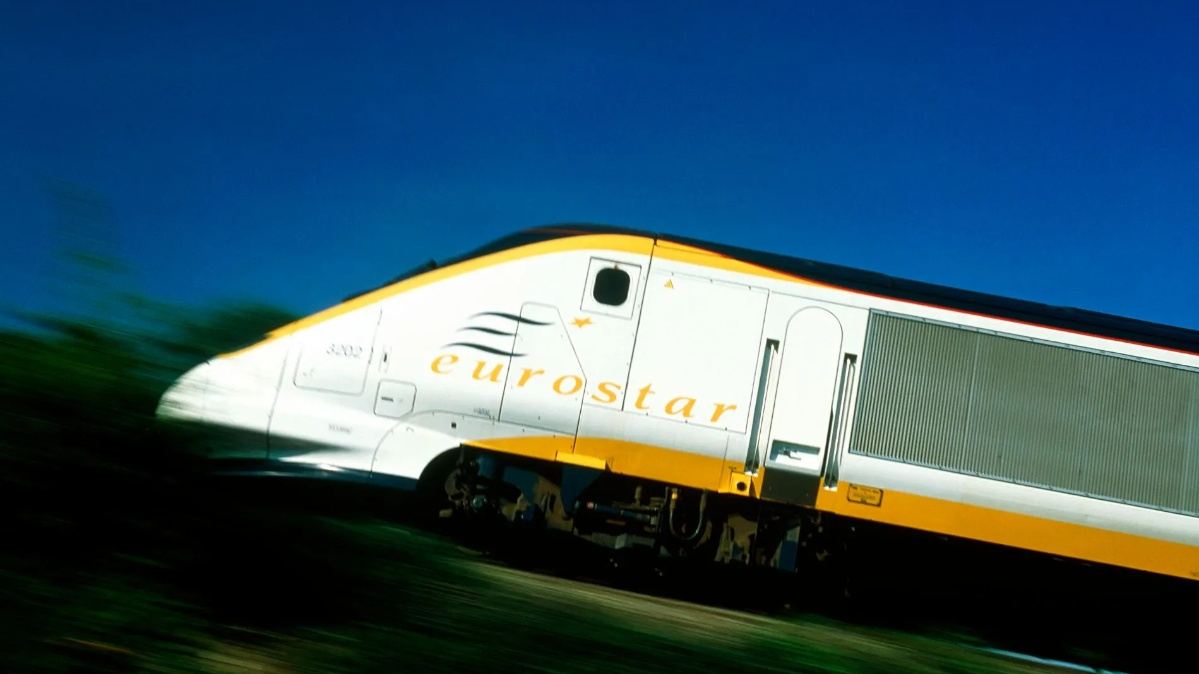
Eurostar holds the record for the fastest passenger services currently operating in Britain, reaching up to 186 mph on High Speed 1 (HS1). This dedicated railway runs between London St Pancras and the Channel Tunnel, allowing international trains to travel much faster than conventional domestic services.
Eurostar's e320 trains are specifically designed for high-speed international journeys and can technically reach even higher speeds under suitable conditions. However, the railway limits their operating speed to 186 mph.
You won't experience that speed throughout the entire journey, either. Trains slow down when leaving HS1, approaching stations and travelling through sections with lower speed restrictions, including the Channel Tunnel.
Domestic trains: how fast can they go?
Domestic passenger trains on Britain's conventional railway network can reach speeds of up to 125 mph on suitable routes. You'll find this speed on some long-distance intercity services operated by LNER, Avanti West Coast and Great Western Railway.
Modern fleets, including the Azuma and Pendolino trains, are designed to handle these demanding routes. However, domestic trains don't all travel at 125 mph. Regional and commuter services operate at lower speeds because of their design, shorter distances between stations and more frequent stops.
Even intercity trains spend considerable parts of their journeys below their maximum permitted speed because of track layouts, signalling restrictions and other services sharing the railway.
How fast will HS2 trains go?
HS2 is planned to carry passengers at speeds of up to 200 mph, which would make it faster than today's conventional domestic services. However, passengers cannot experience these speeds yet because HS2 is not currently operating passenger services.
Following the government's 2026 decision, the planned maximum operating speed was reduced from 225 mph to 200 mph. Its railway infrastructure will support faster journeys through specially designed track layouts, fewer sharp curves and advanced digital signalling.
But speed isn't the only priority. HS2 also aims to increase railway capacity, improve connections between major destinations and free up space on existing lines for other passenger and freight services.
How fast do different types of UK trains go?
Not all UK trains travel at the same speed. Some are built to cover long distances between major cities, while others stop frequently to serve smaller towns and busy commuter routes. International services can travel even faster because they use dedicated high-speed railway infrastructure.
The operator, train design, route and stopping pattern all influence how quickly a service can travel. The table below compares major UK train operators and their indicative maximum speeds.
Train operator | Maximum speed | Main service type |
|---|---|---|
Eurostar | 186 mph | International high-speed |
140 mph | Domestic high-speed | |
Avanti West Coast | 125 mph | Intercity |
LNER | 125 mph | Intercity |
Great Western Railway | 125 mph | Intercity |
125 mph | Intercity | |
CrossCountry | 125 mph | Intercity |
East Midlands Railway | 125 mph | Intercity and regional |
125 mph | Intercity | |
125 mph | Intercity | |
125 mph | Regional intercity | |
1Up to 110 mph | Regional and commuter | |
Up to 100 mph | Regional and commuter | |
Up to 100 mph | Regional and commuter | |
ScotRail | Up to 100 mph | Regional |
Transport for Wales | Up to 100 mph | Regional |
Thameslink | Up to 100 mph | Commuter |
Southern | Up to 100 mph | Commuter |
Up to 100 mph | Commuter | |
Northern | Up to 100 mph | Local and regional |
Up to 100 mph | Local and regional | |
Elizabeth line | Up to 90 mph | Urban and commuter |
Up to 110 mph | Airport express | |
Up to 75 mph | Urban and suburban | |
Up to 75 mph | Urban and suburban |
These are indicative maximum speeds, not guaranteed speeds across every route operated by each company. Actual limits depend on the train, railway infrastructure and permitted line speed.
Intercity trains
Intercity trains connect major cities across Britain, covering substantial distances with fewer stops than regional services. Operators such as Avanti West Coast, LNER, Great Western Railway, CrossCountry and East Midlands Railway run these longer-distance services.
On suitable sections of conventional railway lines, intercity trains can reach speeds of up to 125 mph. However, they won't maintain that speed throughout the journey. Their average speed is lower because they need time to accelerate, slow down for stations and observe restrictions along the route.
Busy junctions, track layouts and other trains sharing the railway can also affect running times. This explains why two intercity journeys covering similar distances can have noticeably different scheduled journey times.
Regional and commuter trains
Regional and commuter trains travel at lower average speeds than intercity services because they stop more frequently. Their main purpose is to connect towns, suburbs and smaller communities with larger cities, instead of maintaining high speeds over long distances. Operators such as Northern, ScotRail, Southern, Thameslink and Transport for Wales serve these networks.
Even if a train can travel faster, frequent station stops leave less time to accelerate and maintain its maximum speed. You can see the difference when comparing express and stopping services along the same railway corridor.
An express train may pass several smaller stations, while a commuter service stops at each one. Track restrictions, congestion and station spacing further influence how quickly passengers reach their destinations.
High-speed international trains
Eurostar operates Britain's fastest passenger services, reaching speeds of up to 186 mph on High Speed 1 (HS1). This is faster than the 125 mph maximum permitted for conventional domestic passenger services.
The difference comes down to railway infrastructure: HS1 was specifically designed to accommodate international high-speed trains, allowing them to travel faster than services using traditional lines.
However, Eurostar does not maintain 186 mph throughout an entire journey. Trains slow down when leaving high-speed track, approaching stations and entering sections with lower speed restrictions, including the Channel Tunnel.
This means the maximum speed advertised for an international service does not represent its average journey speed. The railway line, operating conditions and distance covered all influence the time passengers spend travelling.
Why don't UK trains travel at top speed all the time?
Even the fastest UK trains rarely maintain their maximum speed throughout an entire journey. Several practical factors affect how quickly they can travel, and safety is always a priority. The main reasons include:
- Stops: Every station stop requires a train to slow down, wait for passengers to board and leave, then accelerate again. Services calling at several stations spend less time travelling at higher speeds.
- Track limits: Not every railway line supports high speeds. Sharp curves, older infrastructure, bridges and busy station approaches require trains to slow down.
- Traffic and timetables: Trains share railway lines with other passenger services and freight trains. They must follow their schedules and maintain safe distances from other trains.
- Weather and disruption: Heavy rain, slippery rails, strong winds and extreme heat can affect railway operations. Temporary speed restrictions may apply when conditions become difficult.
- Train type: Different trains have different performance capabilities. Long-distance intercity trains are designed for faster journeys, while regional and commuter trains prioritise frequent stops and local connections.
Does a faster train mean a shorter journey?
Not necessarily. A train's maximum speed is only one part of the journey. A faster service that stops at several stations can take longer than a slightly slower express train travelling directly between the same destinations. Route length, connections and scheduled stops all affect your arrival time.
For example, East Midlands Railway services between London St Pancras and Leicester can have different journey durations depending on how many intermediate stations they serve. An express service may complete the journey faster by skipping smaller stations, even though another service uses similar trains.
Before booking, compare the full timetable instead of relying on maximum speeds. Use Trip.com to review available departures, journey durations and ticket prices, helping you find a service that fits your schedule and budget.
FAQs about UK train speeds
What is the maximum speed of a UK train?
The fastest passenger trains currently operating in the UK are Eurostar services, which can reach 186 mph on High Speed 1 (HS1). Conventional domestic passenger trains have a maximum permitted speed of 125 mph on suitable routes. The actual speed depends on the train, railway line and operating conditions.
Do UK trains travel at 125 mph?
Yes, long-distance intercity services operated by LNER, Avanti West Coast and Great Western Railway can reach 125 mph on suitable sections of track. However, they don't maintain this speed throughout their journeys.
Is Eurostar faster than domestic UK trains?
Yes, Eurostar reaches speeds of up to 186 mph on High Speed 1, compared with the 125 mph maximum on conventional domestic routes. This difference comes from the dedicated infrastructure used by international services. Some Southeastern domestic services also use HS1, so not every domestic train is restricted to conventional railway speeds.
Will HS2 be faster than Eurostar?
Yes, HS2 is planned to operate passenger trains at speeds of up to 200 mph, exceeding Eurostar's current 186 mph maximum on HS1. However, HS2 is not yet operating passenger services, so travellers cannot currently experience these speeds.
Why is my train travelling so slowly?
Several factors can explain a slower-than-expected journey. Your train might be approaching a station, navigating a sharp curve or following a section with a lower speed limit. Congestion, other trains ahead, adverse weather and temporary maintenance restrictions can also affect running speeds. Frequent stops and the train's own performance capabilities make a difference, too.
Top Guides

TGV trains in France: Everything you need to know

What does an overtaken train mean? (UK)

How fast are China’s high-speed trains?

Getting the train to SEA LIFE London: Closest station & routes

Getting the train to Royal Festival Hall: Closest station & routes
Trenitalia discounts: Promos and savings

Getting the train to London Southbank: Closest station & routes
Are trains in Italy cheap? Ticket prices explained
Table of Contents
- How fast do trains go in the UK?
- What is the fastest train in the UK?
- How fast do different types of UK trains go?
- Why don't UK trains travel at top speed all the time?
- FAQs about UK train speeds
Ready to plan your trip?
Fri, Nov 20
14:00
Add return
Open return
Search
1 adult 0 children, 0 Railcards
Explore hotels
Related travel guides
 Updated: November 20, 2026
TGV trains in France: Everything you need to know
 Updated: November 19, 2026
What does an overtaken train mean? (UK)
 Updated: November 18, 2026
Can you add a Railcard to Apple Wallet?
 Updated: November 18, 2026
How fast are China’s high-speed trains?
 Updated: November 13, 2026
Are trains in Italy cheap? Ticket prices explained
 Updated: November 13, 2026
Are trains in France cheap? Ticket prices explained
 Updated: November 10, 2026
What platform is my train? How to quickly check and find it?
 Updated: November 10, 2026
What is an Open Return train ticket? Meaning, benefits and rules
Latest Travel Guides
TGV trains in France: Everything you need to know
Published: November 20, 2026
What does an overtaken train mean? (UK)
Published: November 19, 2026
How fast are China’s high-speed trains?
Published: November 18, 2026

Getting the train to SEA LIFE London: Closest station & routes
Published: November 18, 2026

Getting the train to Royal Festival Hall: Closest station & routes
Published: November 18, 2026
Trenitalia discounts: Promos and savings
Published: November 17, 2026

Getting the train to London Southbank: Closest station & routes
Published: November 13, 2026
Are trains in Italy cheap? Ticket prices explained
Published: November 13, 2026
Are trains in France cheap? Ticket prices explained
Published: November 13, 2026

Liverpool weekend break by train: 2-day itinerary and best hotels
Published: November 12, 2026

Birmingham by train: the ultimate day trip guide
Published: November 12, 2026
What platform is my train? How to quickly check and find it?
Published: November 10, 2026
Latest Travel Guides
- TGV trains in France: Everything you need to knowPublished: November 20, 2026
- What does an overtaken train mean? (UK)Published: November 19, 2026
- How fast are China’s high-speed trains?Published: November 18, 2026
- Getting the train to SEA LIFE London: Closest station & routesPublished: November 18, 2026
- Getting the train to Royal Festival Hall: Closest station & routesPublished: November 18, 2026
- Trenitalia discounts: Promos and savingsPublished: November 17, 2026
- Getting the train to London Southbank: Closest station & routesPublished: November 13, 2026
- Are trains in Italy cheap? Ticket prices explainedPublished: November 13, 2026
- Are trains in France cheap? Ticket prices explainedPublished: November 13, 2026
- Liverpool weekend break by train: 2-day itinerary and best hotelsPublished: November 12, 2026
- Birmingham by train: the ultimate day trip guidePublished: November 12, 2026
- What platform is my train? How to quickly check and find it?Published: November 10, 2026