
🇬🇧 Save 23% on a 1-year Railcard
or 10% off a 3-year Railcard
Off-Peak train times: The full guide

Kieran Read

A two-minute difference in your departure time can be the difference between paying full price and paying a fraction of it. That’s the logic behind Off-Peak train tickets: they offer lower-priced travel outside the busiest periods, subject to the restriction code attached to your ticket.
However, there’s no single Off-Peak clock across the UK rail network. Validity varies by ticket, route, and operator, and some routes carry a second, cheaper tier called Super Off-Peak, with tighter restrictions. Below we set out what Off-Peak actually means, the times you’ll commonly see, and how the rules vary by operator so you know what to check before you book.

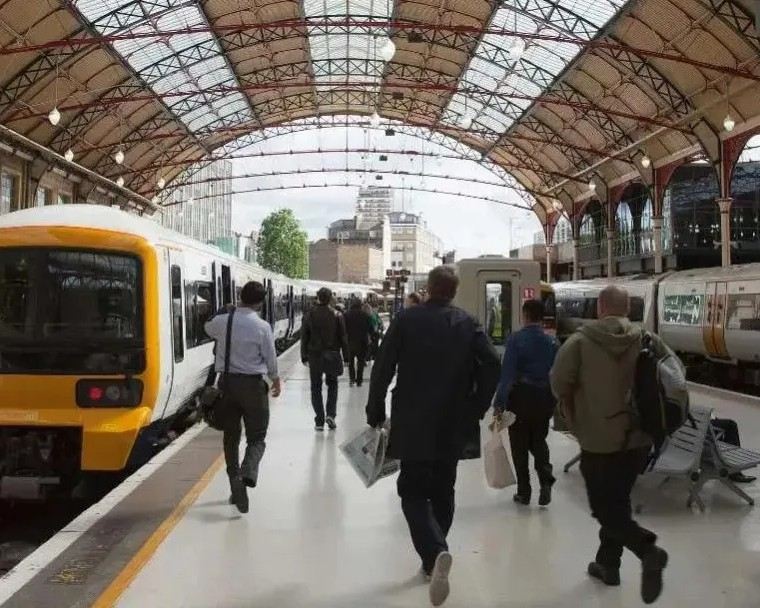
Photo by Alex Liivet
What does Off-Peak mean?
There’s no legal, nationwide definition for Off-Peak. Instead, validity is controlled by the restriction code for the fare you buy. As a general rule of thumb, many operators begin weekday Off-Peak availability after the morning commuter period, but the exact cut-off can depend on where you start and end, and whether the restriction is based on your departure or arrival time:
- Weekdays: 09:30 is a common reference point on many routes, but some fares become valid earlier or later.
- Weekends and bank holidays: Off-Peak fares are typically valid all day, but always check your ticket.
Peak times, by contrast, generally fall before those thresholds in the morning, plus a second window in the late afternoon and early evening (commonly somewhere around 16:00–19:00) on routes in major cities. Exact cut-offs vary by route, so it’s always worth checking your specific journey, especially if you’re travelling into or out of London.
When is Super Off-Peak?
There is no single UK-wide Super Off-Peak window either.
Super Off-Peak times generally sit inside the Off-Peak window, cutting out the late-morning and early-evening ‘shoulder’ periods, when a route is still relatively busy.
As a rough guide, Super Off-Peak generally runs from around mid-morning (typically 10:00–11:00) until approximately mid-afternoon (around 15:00), then again from around the early evening onwards, but some operators use different arrival or departure restrictions. Always check the exact fare for your journey.
On some London and South East train routes where pay-as-you-go contactless has been expanded, Super Off-Peak tickets have been removed and folded into Off-Peak fare savings. For example, London Northwestern Railway say Super Off-Peak tickets are no longer available on journeys where contactless pay-as-you-go is available, but this is not a network-wide rule.
Off-Peak times by provider
Because every train operator publishes its own restrictions, validity can vary even for similar routes, so the table below should be used as a guide rather than a universal timetable. Where an operator does not publish one network-wide start time, we’ve said so rather than applying a single cut-off.
Operator | Weekday Off-Peak travel is available from around: |
From London Euston: Monday to Thursday 09:26–15:00 and from 18:46; Friday after 09:26. Other journeys can have different restrictions. | |
Varies by journey; many London journeys are Off-Peak after 09:30, while some London-bound fares use a 10:00 arrival cut-off. | |
Typically 10:00–16:00 and after 19:00, but exact validity varies by journey and fare. | |
Varies by route and ticket; always check the journey planner. For pay-as-you-go, the weekday morning peak is 06:30–09:30. | |
Around 08:30–09:30 for journeys to London. Generally from 08:45 for non-London journeys. Some routes also have evening restrictions. | |
Varies by journey and restriction code; GWR does not publish one network-wide time. Some London-bound fares use arrival-based restrictions. | |
Varies by route. Off-Peak is not valid northbound from London 06:45–07:58 or 15:58–17:45 Monday to Thursday. No Off-Peak on southbound trains arriving into London before 10:08 Mon-Thurs. | |
Varies by journey and fare. | |
After 09:39, then before 16:01 and after 18:29 Monday to Friday; exact times may vary. | |
No Off-Peak option as peak fares were removed from 1 September 2025. | |
Within the contactless/Oyster area, generally from 09:30, with a 16:00–19:00 restriction on some journeys. Outside: London-bound trains must arrive at 10:00 or later; trains from Waterloo must depart from 09:00. | |
From Kent/East Sussex into London: generally trains arriving after 10:00. Within London Zones 1–6 and from London to Kent/East Sussex: generally departures after 09:30. | |
Varies by journey and restriction code. | |
Varies by route. | |
Varies by ticket and journey. | |
Generally 09:00/09:30–16:00, then after 18:30, depending on location. | |
Within West Midlands Zones 1–5: from 09:30, with certain 16:35–18:00 evening restrictions. London-bound journeys vary; some require arrival at Euston after 10:00. |
For operators that still offer Off-Peak tickets, weekends and bank holidays are commonly unrestricted. For the full picture on any specific company, including Super Off-Peak windows and evening return restrictions, head to the operator-specific guides linked above.
Off-Peak times in London
Off-peak works a little differently once London’s transport network gets involved.
On the London Underground and most TfL rail services, Peak and Off-Peak times are:
- London Peak: Weekdays 06:30–09:30 and 16:00–19:00.
- London Off-Peak: All other times during weekdays, all-day weekends, and bank holidays.
An Off-Peak Day London Travelcard follows a similar pattern, though without the evening block-out. This means you can use the Travelcard all day from 09:30, and all day during the weekends and public holidays, including for journeys that start before 04:30 the next morning.
If you’re combining a National Rail journey with the Tube - say, arriving in a London terminus before continuing on the Underground - your National Rail ticket’s restrictions apply to that leg, while TfL fares apply separately to the Underground portion.
What’s the difference between Off-Peak return, day return, and travelcards?
The names of these can get confusing, so here’s the short version:
- Off-Peak Return: Two Off-Peak journeys, with the return valid within one calendar month of your outbound journey.
- Off-Peak Day Return: Both Off-Peak legs must be completed on the same day.
- Super Off-Peak Return: The same structure as an Off-Peak Return, but restricted to the narrowed Super Off-Peak window, and cheaper as a result.
- London Off-Peak Day Travelcard: Unlimited Off-Peak travel across London’s Tube, bus, and rail network for the day.
If you travel on a service for which your Off-Peak or Super Off-Peak ticket is not valid, you may need to pay an excess fare, buy a new ticket, or, depending on the circumstances and operator, be liable for a penalty fare. Check the restrictions before boarding rather than relying on a general Peak/Off-Peak cut-off.
How to save even more on Off-Peak fares
Off-Peak pricing is only one layer of saving. To find the cheapest way to travel, combine Off-Peak with:
- A Railcard: Most offer around a third off Off-Peak and Super Off-Peak fares, although minimum fares and time restrictions can apply.
- Advance tickets: Booked ahead for a specific train, often cheaper where available.
- Split ticketing: Breaking a longer journey into separate tickets for the same train, which can lower the total price.
Please note: all information in this article was correct at the point of publication.
Off-Peak train times FAQs
What is an Off-Peak train ticket?
An Off-Peak train ticket is a discounted fare for travel outside the busiest periods, but its exact validity is set by the restriction code for your journey. Weekends and bank holidays are often unrestricted where Off-Peak tickets are offered, although route-specific exceptions can apply.
What’s the difference between Off-Peak and Super Off-Peak?
Super Off-Peak is the cheaper of the two, with a narrower travel window restriction that avoids the ‘shoulder’ periods on either side of the core Off-Peak window, roughly late morning to mid-afternoon on weekdays.
What does Off-Peak return mean?
It’s a return ticket where both the outbound and return journeys must be made using Off-Peak (or Super Off-Peak) services, with the return leg valid for up to one calendar month from the outbound date.
Can I use my Railcard on Off-Peak tickets?
Yes, most Railcards offer around a third off Standard Class Off-Peak and Super Off-Peak fares, though minimum fares and time restrictions can apply depending on the Railcard and journey.
Are trains always Off-Peak on weekends?
Generally, yes. Most operators treat Saturdays, Sundays, and bank holidays as Off-Peak all day, though it’s always worth checking your individual route if there are any special events or engineering works going ahead.
Top Guides


Paris Christmas Markets by Eurostar: Full guide


Brussels Christmas Markets (Winter Wonders) by Eurostar 2026


Best Christmas markets in Europe by Eurostar

Getting the train to Excel London: Closest station & routes

Edinburgh Christmas Market by train: Nearest station and routes

Getting the train to Clifton Suspension Bridge: Closest station & routes

Eurostar to Paris for New Year’s Eve: Our guide

Getting the train to Oxford Street: Closest station & routes
Table of Contents
- What does Off-Peak mean?
- When is Super Off-Peak?
- Off-Peak times by provider
- Off-Peak times in London
- What’s the difference between Off-Peak return, day return, and travelcards?
- How to save even more on Off-Peak fares
- Off-Peak train times FAQs
Ready to plan your trip?
Sun, Nov 1
11:00
Add return
Open return
Search
1 adult 0 children, 0 Railcards
Explore hotels
Related travel guides
 Updated: October 19, 2026
Elizabeth Line Off-Peak times: When can I buy cheaper tickets?
 Updated: October 19, 2026
Stansted Express Off-Peak times: When can I buy cheaper tickets?
 Updated: October 16, 2026
When are Transpennine Express Off Peak times?
 Updated: October 16, 2026
Off-Peak train times - West Midlands Railway
 Updated: October 16, 2026
When are Transport for Wales Off-Peak times?
 Updated: October 16, 2026
When are Southern Rail Off Peak times?
 Updated: October 16, 2026
When are Southeastern Off Peak times?
 Updated: October 16, 2026
When are London Northwestern Off Peak times?
Latest Travel Guides

Paris Christmas Markets by Eurostar: Full guide
Updated: October 28, 2026

Brussels Christmas Markets (Winter Wonders) by Eurostar 2026
Updated: October 28, 2026

Birmingham Christmas Market by train: Nearest station and routes
Updated: October 28, 2026

Best Christmas markets in Europe by Eurostar
Updated: October 28, 2026

Bath Christmas Market by train: Nearest station and routes
Updated: October 28, 2026

Getting the train to Excel London: Closest station & routes
Published: October 28, 2026

Edinburgh Christmas Market by train: Nearest station and routes
Updated: October 28, 2026

Getting the train to Clifton Suspension Bridge: Closest station & routes
Published: October 27, 2026

Eurostar to Paris for New Year’s Eve: Our guide
Published: October 27, 2026

Getting the train to Oxford Street: Closest station & routes
Published: October 27, 2026

How to get cheap UK train tickets: 9 easy steps
Published: October 21, 2026

How to add train tickets to your Apple Wallet with Trip.com?
Published: October 21, 2026
Latest Travel Guides
- Paris Christmas Markets by Eurostar: Full guideUpdated: October 28, 2026
- Brussels Christmas Markets (Winter Wonders) by Eurostar 2026Updated: October 28, 2026
- Birmingham Christmas Market by train: Nearest station and routesUpdated: October 28, 2026
- Best Christmas markets in Europe by EurostarUpdated: October 28, 2026
- Bath Christmas Market by train: Nearest station and routesUpdated: October 28, 2026
- Getting the train to Excel London: Closest station & routesPublished: October 28, 2026
- Edinburgh Christmas Market by train: Nearest station and routesUpdated: October 28, 2026
- Getting the train to Clifton Suspension Bridge: Closest station & routesPublished: October 27, 2026
- Eurostar to Paris for New Year’s Eve: Our guidePublished: October 27, 2026
- Getting the train to Oxford Street: Closest station & routesPublished: October 27, 2026
- How to get cheap UK train tickets: 9 easy stepsPublished: October 21, 2026
- How to add train tickets to your Apple Wallet with Trip.com?Published: October 21, 2026