How to Book Shinkansen Tickets Online?

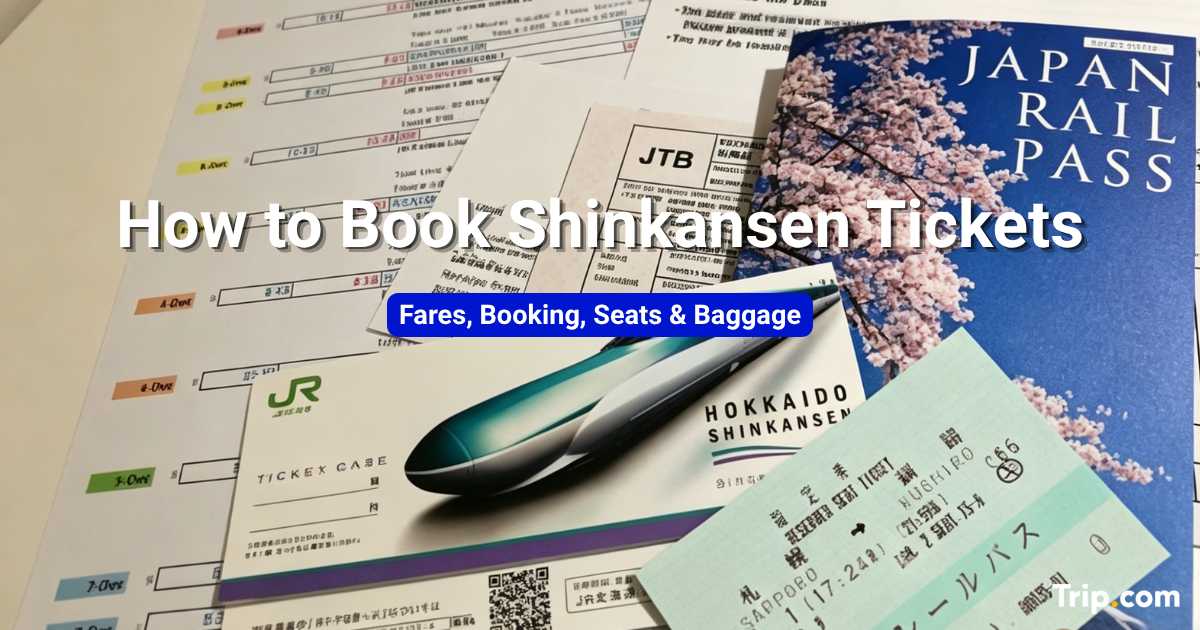
The Shinkansen, or "bullet train", is the backbone of Japan's railway network! With speeds reaching 320 km/h (199 mph), it connects Tokyo to Osaka in just 2 hours and 22 minutes, serving almost every major city across the archipelago. For international travellers, booking a Shinkansen ticket can seem a little daunting at first (with various train types, classes, and booking methods to navigate...).
Don't panic, you're in the right place! Here is a complete guide to everything you need to know about the Shinkansen and how to book your tickets.
What Is the Shinkansen? A Quick Overview
Before we dive into the different ways to book your Shinkansen tickets, here’s a quick refresher on this essential part of Japanese travel.
Launched in 1964 for the Tokyo Olympic Games, the Shinkansen has spent six decades becoming the ultimate symbol of Japanese punctuality and efficiency. Its average annual delay? Just 54 seconds! And that even includes disruptions caused by typhoons and earthquakes.
Today, the network spans over 3,000 km (1,864 mi) of dedicated tracks, connecting Hokkaido in the north to Kagoshima at the southern tip of Kyushu. Several generations of trains have graced the rails: from the legendary original 0 Series to the latest N700S, capable of reaching 285 km/h in commercial service!
The onboard experience is a world away from flying: no security checks, boarding in just 3 minutes, zero turbulence, near-perfect punctuality, and the Japanese countryside whizzing by at high speed. For exploring Japan, it’s simply the most efficient way to travel.
🏨 Best hotels in Japan: most popular cities
❤️ Top 50 best things to do in Japan
🌐 Best eSIM for Japan from just £0.32
Main Shinkansen Lines in Japan
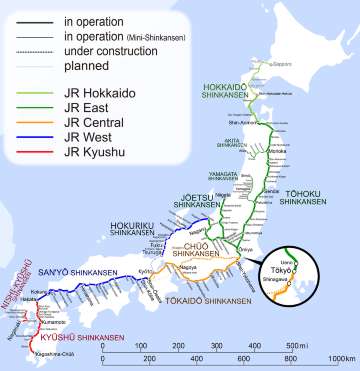
Map source: Wikipedia
Before you book, you'll need to figure out which line to take. The Shinkansen network boasts 9 main lines operated by JR Group companies, covering Honshu, Kyushu, and Hokkaido.
Here’s a quick look at the essential routes for travellers:
Line | Departure | Arrival | Max Speed | Operator |
Tōkaidō Shinkansen | Tokyo | Shin-Osaka | 285 km/h (177 mph) | JR Central |
San’yō Shinkansen | Shin-Osaka | Hakata | 300 km/h (186 mph) | JR West |
Tōhoku Shinkansen | Tokyo | Shin-Aomori | 320 km/h (199 mph) | JR East |
Hokuriku Shinkansen | Takasaki | Tsuruga | 260 km/h (162 mph) | JR East / JR West |
Kyushu Shinkansen | Hakata | Kagoshima-Chūō | 260 km/h (162 mph) | JR Kyushu |
Hokkaido Shinkansen | Shin-Aomori | Shin-Hakodate-Hokuto | 260 km/h (162 mph) | JR Hokkaido |
Train types: Nozomi, Hikari, or Kodama?
On the Tōkaidō line, three different types of trains run regularly, each with its own unique profile. Choosing the right one will determine both your travel time and your budget.
Type | Speed | Stops | Highlights | |
Nozomi | Fastest | Just 4 stops | ~2h 15m | Reserved seat costs more; not covered by the basic JR Pass |
Hikari | Intermediate | Up to 10 stops | ~2h 40m | A great balance of speed and price; covered by the JR Pass |
Kodama | Slowest | All stops | ~3h 40m | Only book this if your station isn't served by the other two. |
💡 Trip.com tip: if you have a Japan Rail Pass, opt for the Hikari; it's covered by the pass and is only 25 minutes slower than the Nozomi on the Tokyo–Kyoto route.
🌐Click for the best eSIM for Japan from just £0.32 🔥
 186537 booked
Shinkansen Ticket Prices
Prices vary depending on the route, train type, and class. Here are the standard fares for the two most popular journeys departing from Tokyo.
Tokyo → Kyoto (~370 km)
Train Type | Unreserved Seat | Reserved Seat | Duration |
Nozomi | ¥13,320 (~£70) | ¥14,170 (~£75) | 2h 15m |
Hikari | ¥13,320 (~£70) | ¥13,850 (~£73) | 2h 40m |
Kodama | ¥13,320 (~£70) | ¥13,850 (~£73) | 3h 40m |
Tokyo → Osaka (~515 km)
Train Type | Unreserved Seat | Reserved Seat | Duration |
Nozomi | ¥13,870 (~£73) | ¥14,720 (~£78) | 2h 22m |
Hikari | ¥13,870 (~£73) | ¥14,400 (~£76) | 3h |
Kodama | ¥13,870 (~£73) | ¥14,400 (~£76) | 3h 50m |
Things to keep in mind 👀
- The base price is the same regardless of the train you choose. Whether you hop on a Nozomi, Hikari, or Kodama, the fare for a non-reserved seat remains identical for the same journey (only the travel time changes).
- Reserving a seat costs a little extra... but not always. Outside of peak periods, a reserved seat is only 200 JPY (~£1.05) more than a non-reserved one. However, during school holidays, New Year, or Golden Week, this supplement increases by an additional 200–400 JPY.
- For extra comfort, why not upgrade? The Green Car (equivalent to first class) and the Gran Class (available on selected lines for a touch of luxury) are available for an additional fee (expect to pay an extra ¥5,000 to ¥10,000 depending on your route and the line).
![1-day tour in northern Okinawa with Cape Manzamo, aquarium and Kouri island [optional bilingual guide, optional admission ticket]](https://ak-d.tripcdn.com/images/0356g12000frephkt038A_C_568_320.png)
![[Can be departed from Kyoto or Osaka] A day trip to Amanohashidate in Kyoto, Chion-ji Temple, and Ine Funaya.](https://ak-d.tripcdn.com/images/0350s12000sbchqup02A9_C_568_320.jpg)
![Travel photography in Kyoto, Japan[Kiyomizu-dera Temple, Sannenzaka, Ninenzaka, Gion + Exquisite Kimono Rental + All Original Photos Included + Family/Couple Photoshoot]](https://ak-d.tripcdn.com/images/0353i12000n5i0u8u2BBC_C_568_320.jpg)

How to Book Shinkansen Tickets?
There are 5 main ways to buy or book a Shinkansen ticket, each with its own advantages depending on your situation.
1. On Trip.com (recommended ✅)
Trip.com offers Shinkansen tickets for non-reserved seats, reserved seats in standard class, and Green Car.
Booking is just a few clicks away, available in English, with your ticket sent straight to your smartphone. Say goodbye to endless queues at the station! You can book up to 1 month before departure.
Want to find out more? Book your tickets right here at the best prices!
2. At the station ticket offices (Midori no Madoguchi)
Head to any major JR station in Japan (such as Tokyo Station, Shinagawa, or Ueno) and make your way to the みどりの窓口 (Midori no Madoguchi, literally the "green window" ticket office).
Simply state your destination, preferred time, and whether you'd like a reserved seat. Staff in major tourist stations often speak English, so you'll be well looked after!
The main downside? Queues can get pretty long during peak hours.
3. At the self-service kiosks at the station
The ticket machines in major stations feature an interface in English, Chinese, and Korean. Here are the steps to follow:
- Select your language at the top right of the screen
- Select "Reserved seat", "Unreserved seat" or "Route search"
- Choose your departure station from the available routes
- Select the date, time, number of passengers, and seat type
- Choose your seat on the train map (for reserved seats) (opt for the right-hand side if you're travelling from Tokyo to Kyoto/Osaka to catch a glimpse of Mount Fuji along the way)
- Confirm and pay by cash or card
4. Via SmartEX (JR Central)
The official JR Central SmartEX app lets you book and buy tickets for the Tōkaidō–San'yō Shinkansen line (Tokyo–Osaka–Hiroshima–Hakata) directly from your phone.
The app is available in English, payment is made by credit or debit card, and your ticket is linked to your IC card (Suica or Pasmo) or credit card, allowing you to breeze through the ticket gates without needing a paper ticket.
5. With the Japan Rail Pass
The Japan Rail Pass is a travel pass sold exclusively to international tourists before they arrive in Japan.
It covers almost all JR trains, including the Hikari and Kodama Shinkansen (but not the Nozomi on the Tōkaidō line).
With this pass, you can reserve seats for free at station ticket counters or self-service machines. It’s available in 7, 14, and 21-day options (it becomes cost-effective from a single Tokyo–Osaka round trip if you’re planning several long-distance journeys).
A summary of the best Shinkansen ticket options
Method | Language | Available before you arrive in Japan | Recommended for |
Trip.com | English ✅ | Yes ✅ | All travellers |
Midori Ticket Office | English available | No | On-site, if you haven't booked in advance |
Self-service kiosk | English / Chinese | No | Last-minute shopping |
SmartEX | English | Yes (registration required) | Tōkaidō–San'yō Line only |
Japan Rail Pass | English available | Yes (purchased outside Japan) | Travellers with multiple journeys |
Reserved vs Non-Reserved Seats: Which Should You Choose?
This is one of the most frequently asked questions. The answer depends on how flexible you are and when you plan to travel.
Opt for an “non-reserved seat ” if:
- You're travelling outside of peak periods (no Golden Week or school holidays);
- Prefer the flexibility of hopping on the first available train;
- You agree to stand if the unreserved carriages are full.
Opt for a "reserved seat" if:
- You're travelling during Golden Weeks (April-May, September-October), New Year, or the summer holidays;
- Travelling with children or bulky luggage?
- Would you like to choose your seat (window, Mount Fuji side, or facing the direction of travel)?
- You're taking a Nozomi train (non-reserved seating is limited).
💡 Trip.com tip: even with a reserved seat, make sure to arrive at least 10 minutes before departure (trains leave right on the second, no exceptions).
Shinkansen Baggage Rules You Need to Know
Since 2020, JR has introduced luggage restrictions on the Tōkaidō, San'yō, and Kyushu Shinkansen lines.
- Standard luggage allowance: up to 2 pieces per passenger, with each piece not exceeding 160 cm (height + width + depth) and a maximum weight of 30 kg;
- Oversized luggage (160–250 cm): you must book a seat with a dedicated luggage space;
- Penalty for failing to reserve: 1,000 JPY (~£5.20) + mandatory upgrade to a reserved seat;
- Exceptions (no booking required): pushchairs, musical instruments, sports equipment.
🏨 Best hotels in Japan: most popular cities
❤️ Top 50 best things to do in Japan
🌐 Best eSIM for Japan from just £0.32
Onboard Services on the Shinkansen
Once you're settled in, you'll discover that the train is far more comfortable than a plane for the same journey.
Service | Details |
Classes | Ordinary seat, Green Car (first class), Gran Class (luxury on selected lines) |
Seats | Spacious, reclining, with plenty of legroom |
Power sockets | Available depending on the train type and class |
Wi-Fi | Free on most modern trains |
Dining | On-board trolley service + bento and drinks available for purchase |
Toilets | Clean and well-maintained Western-style toilets, with wheelchair access. |
Display | Multilingual screens (Japanese + English) showing upcoming stops |
Smokers | Smoking compartments available on selected trains |
👇Book Japan Train Tickets with Trip.com👇
Official JR partner · Wide coverage · Easy changes
FAQ – Booking Shinkansen Tickets
-
How far in advance can you book Shinkansen tickets?
-
Can you change or cancel Shinkansen tickets?
-
Does the Japan Rail Pass cover the Nozomi Shinkansen?
-
Can you use a Suica card to pay for the Shinkansen?
-
Where is the best seat to see Mount Fuji on the Shinkansen?
-
Can you buy Shinkansen tickets outside Japan?
More Japan Travel Guides
Trending Searches
-
Train Blogs
-
Trains in Europe and Asia
- do trains run on bank holidays
- Family & Friends Railcard Discount
- China Night Sleeper Trains
- London to Glasgow
- China Train Types
- Getting from Manchester to Birmingham
- eurostar Amsterdam to Brussels timetable
- how to add train tickets to apple wallet
- How to buy China train tickets at a train station
- lost railcard
- How to Take a Train in China
- How to use Trip.com’s Journey Planner
- Beijing West Railway Station
- LNER Season Tickets
- how to get cheap train tickets italy