





 4.6/5
4.6/5 Anonymous user
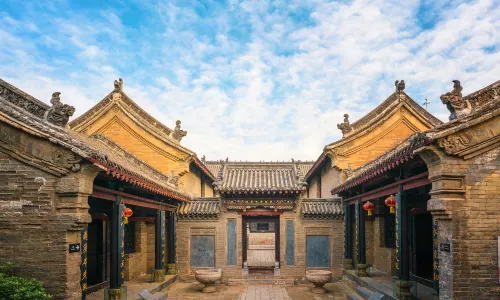
The name "Kang Baiwan" (meaning "Kang the Millionaire") originated from a jest by Empress Dowager Cixi about the Kang family, who were known as the "Living Gods of Wealth in Central China," but the name spread far and wide. The Kang Baiwan Manor, a nationally renowned manor of the wealthy, is now open to the public as a tourist attraction, showcasing a Ming and Qing dynasty manor complex. Facing the Luo River and backed by Mount Mang, the manor's feng shui is undoubtedly auspicious, and the decades-long inheritance of wealth is truly a remarkable story. The manor is not only vast but also incredibly complex. Courtyards connect to courtyards, main roads to side paths, winding and twisting, even revealing secret passages leading up the mountain and hidden treasure vaults—a truly eye-opening experience. There are also performances every day at 11 am, offering a deeper understanding of the history of the Republic of China era, which is quite moving.
 4.7/5Anonymous user
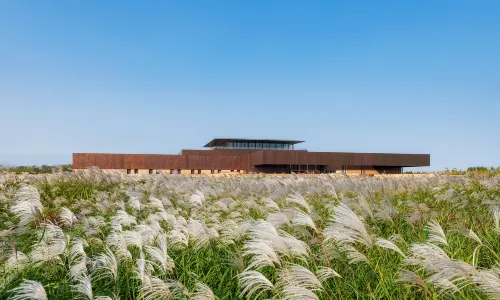
The guide was extremely skilled, speaking quickly but very clearly. Her two-hour explanation was nonstop and incredibly comprehensive. The Erlitou Museum does require a well-structured explanation, as it involves various aspects such as geography, history, archaeology, and research. The guide connected these elements very well. Although she didn't have the most exhibits, her explanations were interspersed with insightful and memorable points. I highly recommend this guide; she was both enthusiastic and professional.
 4.4/5
4.4/5 彤彤公主的大保镖
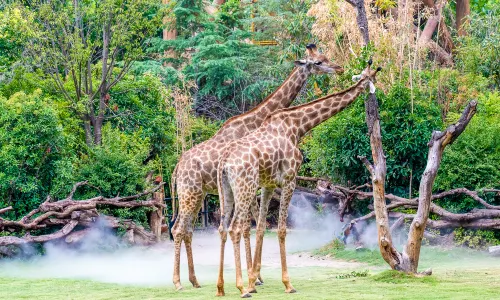
It's really good, one of the better ones in the province. It's like a zoo and amusement park complex. There weren't many people on the weekdays, so there was no need to queue. However, there aren't many animals at the moment, and the rides seem a bit noisy. I wonder if they'll disturb the animals?
 4.6/5
4.6/5 老松行者
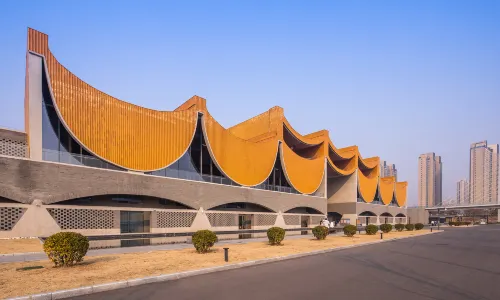
老松行者The Luoyang Grand Canal Museum, located next to the ancient city of Luoyi, is relatively easy to book and is quite suitable for families with young children. Outside the museum is the Chanhe Zhuying Pagoda, one of the eight famous wells of Luoyang, which is very beautiful. In spring, when cherry blossoms bloom and fall on the riverbank, it feels like stepping back into the prosperous Sui and Tang dynasties. In the evening, when the sunset glows and the Zhuying Pagoda is illuminated, it is very magnificent and spectacular.
 4.5/5
4.5/5 M62***31
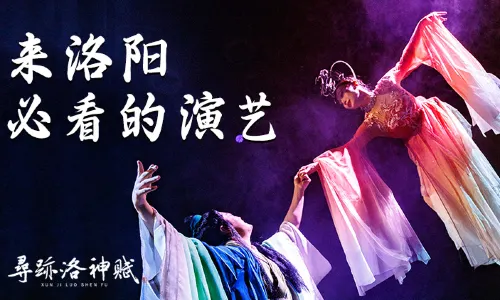
It innovatively creates a form that integrates exhibition, performance, and show. With the help of technologies such as VR, AR, and holographic imaging, and combined with traditional art elements such as guzheng and opera, it allows the audience to say goodbye to fixed seats, walk around and watch, and immerse themselves in the real scene and digital scene.
 4.6/5
4.6/5 wR8023
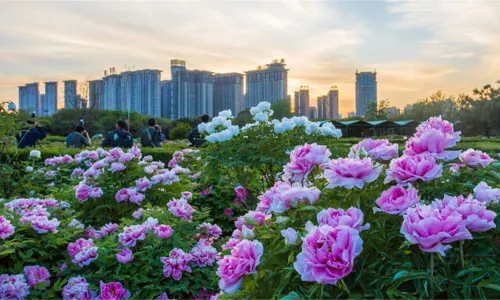
The peonies were absolutely gorgeous!! The first time I went, the flowers weren't in bloom yet, so I went back a month later specifically to see them! There were many varieties, and I even saw the silver thread peonies. The queue was very long, but it was worth it.
 4.7/5Anonymous user
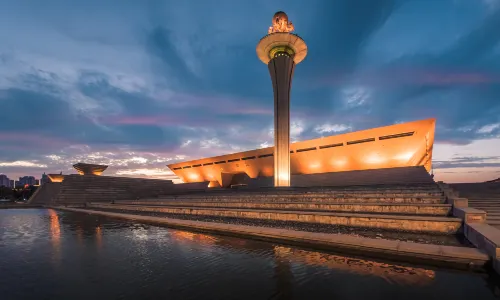
The Luoyang Museum is an absolute underrated treasure! As a concentrated essence of the ancient capital of thirteen dynasties, it tells the story of the "Divine Capital's" glory in the most direct way. The unearthed Northern Wei clay Buddha face, though incomplete, possesses a serene and compassionate beauty that touches the soul—a "Mona Lisa of the East." Be sure to allocate at least 3 hours; the exhibits are incredibly informative! If you are a history enthusiast, this is paradise; if you are just passing through, it is enough to plant a seed of wonder in your heart—that the pulse of Chinese civilization once beat so powerfully here.
 4.3/5
4.3/5 皮卡丘dudu
The entire museum is not big. You can see the burial pit after going up the stairs on the left hand side of the entrance. The first floor is an introduction to the tomb pit and unearthed cultural relics. It is only two minutes away on the left hand side after exiting Zhouwangcheng subway station. You have to go down the stairs to enter the main gate.
 4.8/5
4.8/5 M52***87
*The Analects, Yong Ye*: "When Confucius met Nanzi, Zilu was displeased. The Master swore an oath, saying, 'May Heaven punish you for what you have done! May Heaven punish you!'" The painting of Nanzi in *The Sacred Sites* is rather mediocre… This was a beauty who made Confucius exclaim, "I have never seen anyone who loves virtue as much as he loves beauty!" The State of Wei married many beauties from the State of Qi (the famous Zhuang Jiang and Xuan Jiang). Nanzi herself was a princess of the State of Song, so she should be considered a relative of Confucius? *Records of the Grand Historian* The *Annals of Confucius* states: "The wife of Duke Ling of Wei, a woman named Nanzi, sent someone to tell Confucius, 'Gentlemen from all directions who do not wish to be brothers with my lord must see my wife. My wife wishes to see you.' Confucius declined, but was forced to go. The lady was behind a fine curtain. Confucius entered, faced north, and bowed. The lady bowed twice from behind the curtain, her jade pendants jingling softly. Confucius said, 'I had previously refused to see her, but now I return the courtesy.'" Perhaps Nanzi herself wore such exquisite jade pendants back then. (Henan Museum) The main exhibition hall features more exquisite jade pendants unearthed from the Guo State cemetery in Sanmenxia, as well as jade pendants, bracelets, and rings from the Ying State cemetery in Pingdingshan. Nanzi could perhaps be referenced from Zhou Xun's portrayal in the film (however, the costume was too abstract...). Confucius is played by Chow Yun-fat... Yan Hui seems to be played by Ren Quan... The famous Mi Zixia (the one who shared the peach, actually Duke Ling of Wei's male favorite—considering Duke Ling was surrounded by beauties...) doesn't appear in the film.
 4.5/5
4.5/5 M75***22
I just don't understand why the music is so loud that it almost breaks my eardrums. As soon as the child goes in, he starts clamoring to get out. I coaxed him to watch a few shows, but he covered his ears the whole time.

