





 4.6/5
4.6/5 贝小贝193
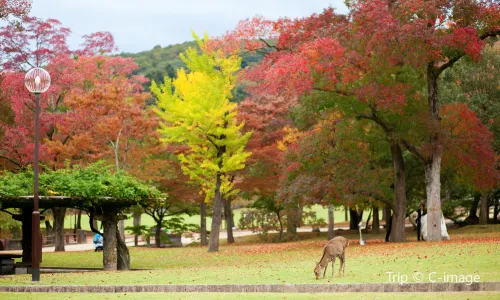
If you're in Japan, you absolutely have to visit the deer. They're incredibly friendly and will follow you if you have a biscuit. When taking photos, try to find does and fawns; males can be aggressive. The park is huge, right next to Todai-ji Temple. It's a great place to wander around and enjoy ice cream, drinks, and snacks.
 4.6/5
4.6/5 到处玩玩
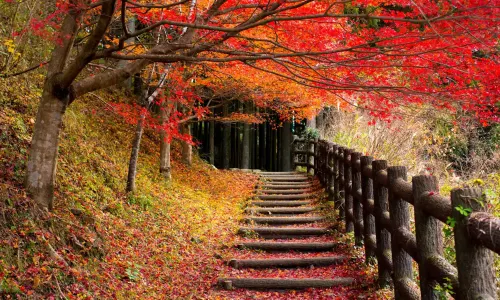
到处玩玩The journey is a truly remarkable one, with world cultural heritage sites intertwined throughout. Many years from now, I might still recall these mountain streams, waterfalls, and creeks, the rain, dew, and gentle breezes, and my reverence for the gods!
 4.4/5
4.4/5 VOVO逍遥行
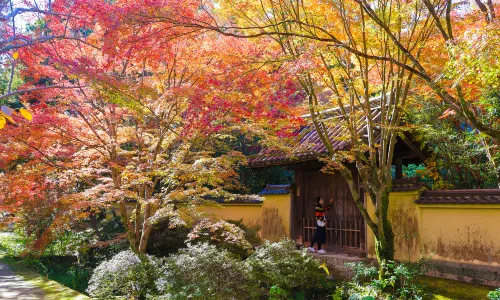
It was built by the Tang Dynasty monk Jianzhen in 759 AD and completed in 770 AD. It is the main temple of the Vinaya School of Japanese Buddhism. It is listed as one of the two major temples for the dissemination and research of Vinaya along with the Kaidan-in of Todaiji Temple. The banner on the gate of the temple, "Tōshōdaiji", was written by the Japanese Empress Koken in the style of Wang Xizhi and Wang Xianzhi. There are lecture halls and ordination platforms from the Tenpyō era, golden halls from the Nara era, and drum towers from the Kamakura era in the temple. The golden hall, sutra collection, drum tower, and statue of Jianzhen are known as national treasures. Jianzhen also brought the high level of civilization of the Tang Dynasty in China, and promoted the improvement of the level of Buddhism, medicine, architecture, and sculpture in Japan. In 1980 and 2010, the statue of Jianzhen returned to Yangzhou twice to "visit relatives". In 1998, Toshōdaiji was listed as a World Cultural Heritage as an important part of the "Cultural Heritage of the Ancient Capital of Nara".
 Achieved a 2-year streak on the annual lists
